

If your daily coffee ritual is starting to feel unusually expensive, you are not imagining it. As a market analyst who tracks global commodities, even I was taken aback by the latest figures.
Below is a full breakdown of how we reached this crisis point—and what the rise of cellular coffee means for the future of your cup.
Table of Contents
Arabica futures just smashed an all-time high at $4.36 per pound, a price point that signals a deep, systemic issue far beyond a single bad harvest. This situation has opened the door for innovative solutions like lab-grown coffee.

This spike is directly linked to a devastating crop collapse in Brazil, the world’s coffee production powerhouse. According to the latest bulletins from Brazil’s agricultural agency (Conab), a “perfect storm” of frost, drought, and extreme heat waves has decimated farms.
As a result, exports are projected to fall by 8 to 9 million bags this year.
This isn’t just a temporary price hike; it’s a supply chain crisis. Importers are reportedly left with just weeks of stock as we head into the high-demand winter season.
This crisis validates stark warnings from organizations like World Coffee Research (WCR), which has modeled that climate change could threaten up to 50% of all land suitable for growing coffee by 2050.
Lab-grown coffee could provide a sustainable alternative that mitigates the impact of climate volatility on our beloved beverage. As lab-grown coffee gains traction, consumers will need to adapt their preferences to this emerging trend.
As prices threaten to escalate further, a new sector is rapidly gaining traction: cellular and synthetic coffee. These innovations are moving from science fiction to serious, ESG-friendly investments that could redefine the entire industry1.
The 2025 Supply Crisis: A Market Deep-Dive
The conversation around lab-grown coffee highlights the need for innovation in food production.
The core of the crisis lies in Brazil’s key growing regions, Cerrado Mineiro and Southern Minas. Independent agronomists (as cited in the Global Coffee Report) are warning of severe, long-term damage to coffee trees that will impact harvests for years to come, potentially crippling the 2026 harvest before it’s even planted.
The transition to lab-grown coffee may redefine our understanding of flavor and sustainability.
This has driven global stock-to-use ratios—a key metric for supply scarcity—to 50-year lows. While the more resilient (and often more bitter) robusta bean has filled some gaps (its price is up 18% since August), it cannot satisfy the market’s demand for high-quality arabica.
Consequently, premium arabica lovers are facing a 32% price surge in the same period.
Lab-Grown Coffee: Innovation in the Coffee Industry
On platforms like X (formerly Twitter), the sentiment among traders and coffee enthusiasts is understandably panicked. We are seeing widespread social media posts warning of a “crop apocalypse” and urging consumers to stock up.
With lab-grown coffee, we can enjoy our favorite beverage while supporting environmental sustainability.
While highly speculative, some market watchers, like @optima_t, are forecasting a “coffee supercycle.” They suggest prices could surge to $15-20 per pound if a “short squeeze” materializes, in which buyers with unhedged positions scramble to secure available inventory at any price.
This level of anxiety, combined with the complex data from Brazil, is creating a powerful incentive for innovation.
Lab-Grown Coffee: From Petri Dish to Pour-Over
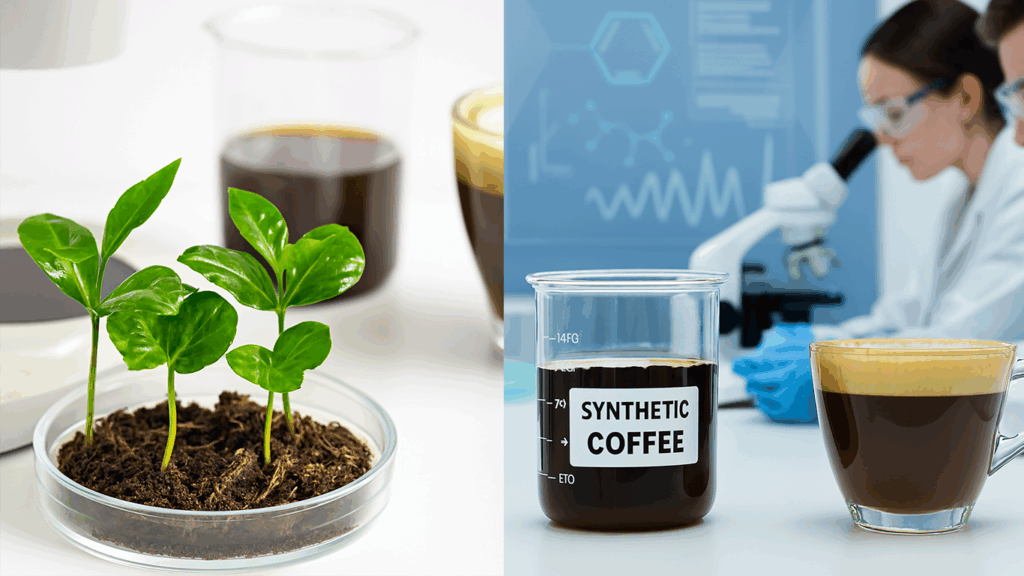
In response to this volatility, “beanless” and “lab-grown” coffee startups are accelerating their market entry. It is crucial to distinguish between the two main categories:
- Cell-Cultured Coffee: This is actual lab-grown coffee. Scientists, like the pioneers at Finland’s VTT Technical Research Centre, cultivate actual coffee cells in nutrient-rich bioreactors. This process bypasses the farm, soil, and climate entirely. The result is genetically identical coffee, which is then roasted and ground just like traditional beans.
- Beanless/Synthetic Coffee: This category, led by innovators such as Atomo Coffee, uses “precision fermentation” and food science to reverse-engineer coffee’s flavor and molecular profile. They often use sustainable, upcycled ingredients like date seeds, chicory root, or grape skins to create a brew that mimics the taste and caffeine kick of the real thing, but without any coffee beans.
This field is accelerating. A 2024 open-source “recipe” published by researchers at UC Davis has significantly lowered R&D barriers, allowing more companies to enter the space. This isn’t a distant fantasy; Barclays, in its 2025 “Future of Food” report, projects this alternative market could capture 5% of the $10B+ coffee industry by 2026.
As traditional coffee production faces challenges, lab-grown coffee emerges as a sustainable alternative that could reshape our coffee culture.
Why Cellular Coffee is the Ethical Pour
The future of coffee is not just in traditional beans, but also in lab-grown coffee, which offers a unique approach to sustainability.
Research into lab-grown coffee is advancing rapidly, offering exciting opportunities for the coffee industry.
Lab-grown coffee is not just a novelty; it’s a serious contender for the future of the coffee market.
The rise of lab-grown coffee is reshaping consumer choices and sustainability practices.
For roasters, investors, and eco-conscious consumers, these alternatives present a compelling ESG (Environmental, Social, and Governance) case.
- Environmental: The benefits are the clearest. This technology directly addresses the deforestation linked to expanding coffee farms. A 2025 analysis by the Stockholm Resilience Centre found that precision fermentation can reduce water use by up to 99% and carbon emissions by over 90% compared to traditional farming, while eliminating the need for pesticides.
- Social & Governance (S&G): The S&G case is more complex but equally important. Cellular coffee offers a transparent, auditable supply chain. This is a huge governance win for major roasters like Nestlé and Starbucks, who face mounting pressure to verify that their supply chains are free of child labor and farmer poverty that can plague the industry.
However, this innovation also sparks critical governance debates about the economic impact on the millions of smallholder farmers whose livelihoods depend on coffee. This remains the central ethical tightrope the industry must walk.
Related: For a related industry trends follow-up, read Beanless Coffee: Lab-Grown Sustainability or Synthetic Flop? next.
Innovation vs. Tradition
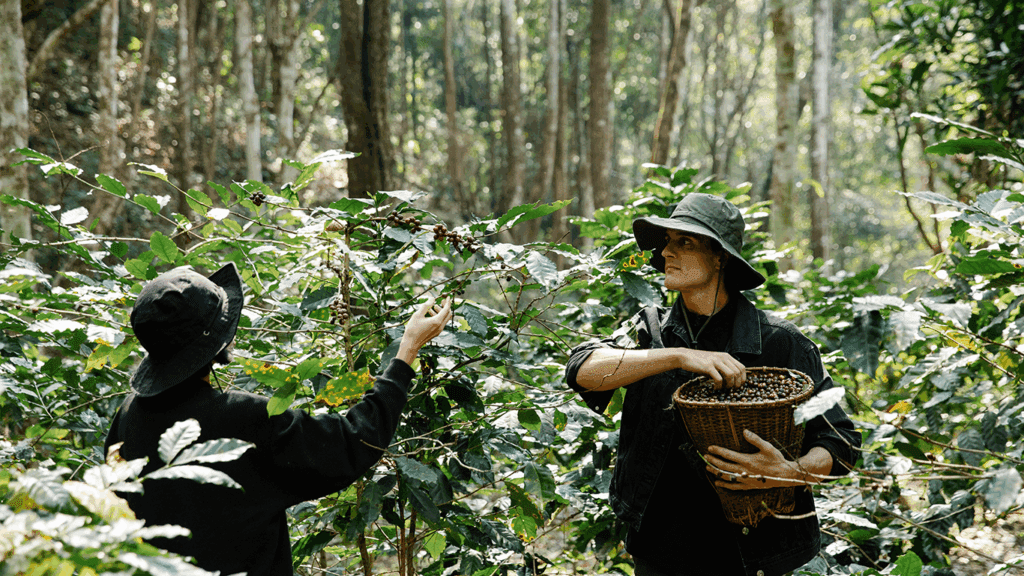
As the 2025 coffee crunch highlights the fragility of our agricultural supply chains, engineered coffee is no longer just a novelty. It’s a viable, scalable solution being built to withstand climate change.
As a coffee lover myself, the idea of a “petri-dish pour-over” is admittedly jarring. But as a market analyst, the data is undeniable. The intersection of climate necessity, extreme market volatility, and ESG demands is creating a robust case for innovation.
The question is no longer if these alternatives will arrive, but how we will integrate them into our daily lives.
Lab-grown coffee technology can address the challenges posed by climate change while meeting consumer demand.
Ultimately, lab-grown coffee may be the key to preserving our beloved morning ritual.
