
9 min read
Brewing cold brew by the gallon is a practical way to keep smooth, low-acid coffee on hand for days. A good baseline for a 1-gallon batch is to combine about 1 pound (450 grams) of freshly roasted coffee beans with one gallon (3.8 liters) of cold, filtered water.
Quick ratio: For 1 gallon of cold brew concentrate, use 1 pound / 450 grams of coarse-ground coffee with 1 gallon / 3.8 liters of cold filtered water. Steep 16 to 20 hours, strain well, then dilute the concentrate 1:1 with water or milk before serving.
| Batch goal | Coffee | Water | Steep | Serve |
|---|---|---|---|---|
| Strong concentrate | 1 lb / 450 g | 1 gal / 3.8 L | 16-20 hours | Dilute 1:1 |
| Milder ready-to-drink batch | 10-12 oz / 280-340 g | 1 gal / 3.8 L | 14-18 hours | Serve over ice |
Table of Contents
This 1:8 coffee-to-water ratio produces a strong concentrate that you can later dilute to your liking. To make the most of those beans, start with a medium-coarse grind (about the size of kosher salt) and weigh both the coffee and water to maintain accuracy.

Combine the grounds and water in a big jar or beverage dispenser, stir thoroughly to saturate the grounds, and refrigerate for 16–20 hours. Once the brew is filtered, mix it with an equal amount of water or milk for a balanced drink, or use less water or milk for a richer cup.
For readers who are new to immersion brewing, our core Coffee Brewing Methods & Techniques hub covers everything from French press to pour-over.
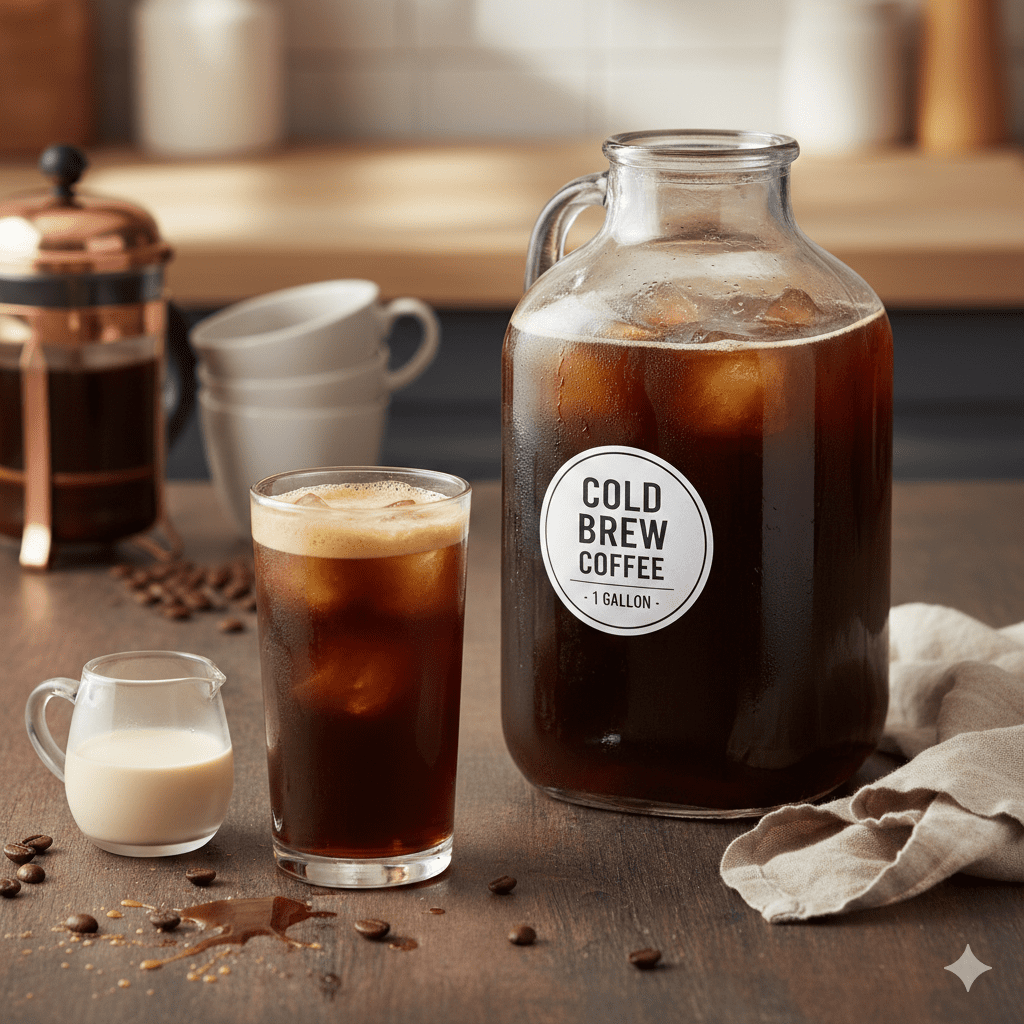
Gallon Cold Brew Concentrate (1:8 Ratio)
Equipment
- Long spoon (for stirring)
- Coffee filters (or reusable cold brew filter bag)
- cheesecloth (optional, for faster straining)
Ingredients
Cold Brew (1-Gallon Batch)
- 1 lb freshly roasted coffee beans, whole About 450–500 g. Grind medium-coarse (kosher-salt texture).
- 1 gallon cold, filtered water About 3.8 L.
Instructions Cook Mode
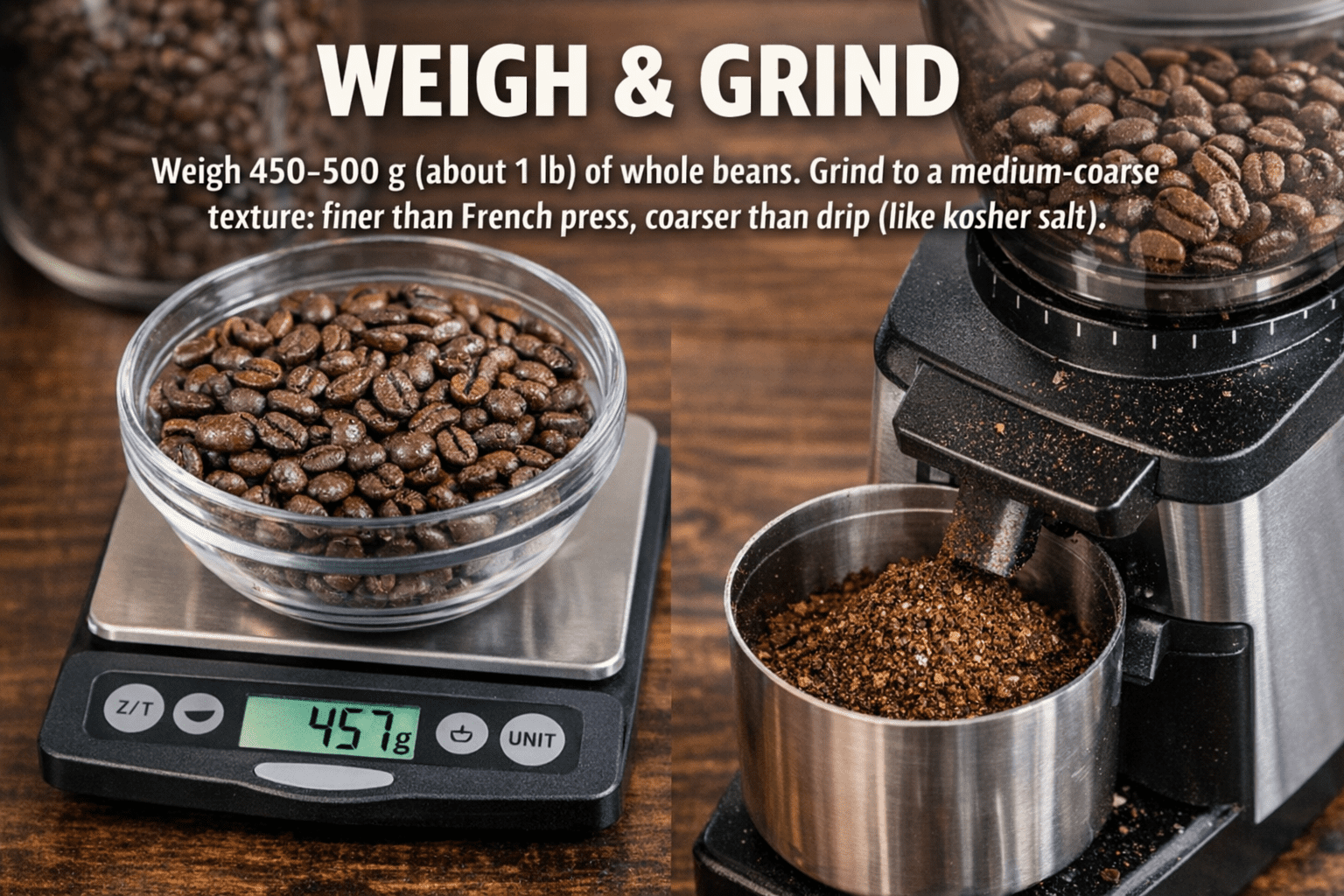
- Weigh & grind. Weigh 450–500 g (about 1 lb) of whole beans. Grind to a medium-coarse texture: finer than French press, coarser than drip (like kosher salt).

- Combine. Add the grounds to a 1-gallon jar or beverage dispenser.
- Add water & stir. Pour in 1 gallon (3.8 L) of cold, filtered water while stirring thoroughly to fully saturate the grounds and eliminate dry pockets.
- Steep cold. Cover and refrigerate for 16–20 hours. Avoid going past 24 hours, which can push the brew toward harshness.
- Strain. Strain through a fine-mesh sieve lined with a rinsed paper coffee filter or cheesecloth into a pitcher. (Rinsing helps remove papery flavors.)
- Filter again (optional) & dilute. For a cleaner cup, filter a second time through a fresh paper filter. Serve by diluting with water or milk: 1:1 for a bold cup, or 1:2 for a lighter cup.
Notes
Nutrition
The Right Ratio & Grind
Cold brew is forgiving, but starting with the correct ratio and grind size makes a big difference in flavor and strength. A classic concentrate uses one part coffee to eight parts water (1:8), yielding a potent brew that you can dilute later.
1 gallon batch ≈ 450–500g coffee + 3.8L water
Designed for dilution after brewing
Best for large daily batches
Grind Size Matters
Target: medium-coarse, like kosher salt
Finer than French press but coarser than drip.
Pre-ground supermarket coffee is usually too fine and extracts bitterness.
Grinding fresh preserves sweetness and aroma.
If you’re after a rocket‑fuel concentrate for cocktails or energy drinks, shorten the water to a 1:4 ratio. On the other hand, if you want a ready‑to‑drink batch, a gentler 1:12 ratio works well. For a one‑gallon recipe, the 1:8 ratio translates to roughly 450–500 grams of coffee and 3.8 liters of water.
Step‑by‑Step: Brewing a Gallon of Cold Brew
Making a large batch is straightforward once you have the gear. You’ll need a burr grinder, a digital scale, a one‑gallon glass jar or beverage dispenser, and either a coffee filter or cheesecloth for straining. Follow these steps for a smooth concentrate:
- Weigh & grind. Measure 450–500 grams of whole beans and grind them to a medium‑coarse consistency. Accurate weighing ensures a consistent strength every time.
- Combine & stir. Add the grounds to your jar and pour in 3.8 liters of cold, filtered water while stirring constantly to eliminate dry pockets. Tapping the jar helps distribute the grounds evenly.
- Steep cold. Cover the jar and refrigerate for 16–20 hours. Cold temperatures slow the extraction process, yielding a sweeter, lower-acid brew. Avoid exceeding 24 hours, or the coffee can taste harsh and over‑extracted.
- Adjust brew time. For a stronger, sweeter brew, steep for 1‑2 hours longer. If the concentrate tastes too bitter, shorten it by 1‑2 hours.

Filtering & Diluting the Concentrate
Once the cold brew has finished steeping, it’s time to separate the liquid from the grounds. Fit a fine‑mesh sieve over a large pitcher or another container and line it with a rinsed paper coffee filter or a double layer of cheesecloth. Rinsing the filter removes papery flavors.
Slowly pour the concentrate through the lined sieve; the process can take up to an hour, so be patient. For a smoother cup, filter again through a fresh coffee filter; for more body, stick with cheesecloth.
Cold brew concentrate is potent, so you’ll usually dilute it. Common dilution ratios include 1 part concentrate to 1 part water or milk for a robust brew, or 1 part concentrate to 2 parts water for a lighter drink.
Milk, half‑and‑half or plant‑based milks add creaminess, while water keeps it clean and bright. Adjust the dilution to match your taste—if a cup tastes too intense, add more water; if it feels weak, splash in more concentrate.
Serving, Storing & Variations
Store your freshly filtered concentrate in a sealed jar or carafe in the refrigerator. It will taste best within a week; after that, the flavors start to fade. You can also freeze the concentrate in ice cube trays for quick single‑serve portions or for chilling iced coffee without dilution.
When serving, pour the desired amount of concentrate over ice and top it with cold water, milk, or alt‑milk. For a sweeter twist, stir in simple syrup, maple syrup, or vanilla extract.
Variations & Options
French Press Option No gallon jar?
Brew in a large French press using the same 1:8 ratio. Scale the coffee and water to fit your press. After steeping, press the plunger to separate grounds, then filter again for extra clarity.
Flavor Infusions Subtle, not bitter
Add one infusion during steeping: a cinnamon stick, a split vanilla bean, or a strip of orange peel. Cold extraction captures aroma without pulling harsh flavors.
Dairy & Alt-Milk Choose your base
Dilute with water for black cold brew, or use milk (dairy, oat, almond) for a creamier drink. Adjust dilution until it tastes balanced to you.
Use the Spent Grounds Don’t dump them
Compost the used grounds, or repurpose them as a gentle body scrub. Skip the drain, they’re too coarse and can cause clogs.

FAQs & Troubleshooting
What’s the difference between cold brew and iced coffee?
Iced coffee is brewed hot then chilled, often tasting sharper and more acidic. Cold brew is steeped in cold water over many hours, producing a smoother, lower‑acid cup.
Can I brew at room temperature?
Yes, but refrigeration minimises bacterial growth and gives you more control. At room temperature, shorten the brew time to about 12 hours to avoid over‑extraction.
Why does my cold brew taste bitter?
It’s likely over‑extracted or ground too fine. Shorten the brew time by 1‑2 hours or adjust to a coarser grind.
How long does concentrate last?
Keep it refrigerated and sealed; it’s best within a week. After that, make a fresh batch.
Can I use decaf or flavored beans?
Absolutely. Decaffeinated beans work just as well, and flavored beans (think hazelnut or chocolate) impart their character into the brew.
Related Cold Brew Guides
- cold brew coffee: how to make it, ratios, storage, and serving tips
- cold brew coffee science: why it tastes smoother than hot brew
- best Starbucks coffee for cold brew
Conclusion
A 1-gallon batch of cold brew is the ultimate make‑ahead beverage, giving you smooth coffee on demand for busy mornings, brunch parties, or warm‑weather afternoons. By sticking to a precise ratio, choosing the right grind and steeping long enough to extract sweetness without bitterness, you’ll craft a concentrate that rivals your favourite café.
Experiment with dilution ratios, milk alternatives, and flavor infusions until you find your signature brew. And if this recipe sparks your curiosity about other immersion methods, explore our Coffee Brewing Methods & Techniques guide for more hands‑on tips. Enjoy your chilled coffee journey!
Continue Into the Cold Extraction Hub
Bulk cold brew is one practical spoke in the larger cold extraction cluster. These links connect the batch recipe here to the broader strategy and newer specialty techniques.
