

7 min read
Espresso beans and coffee beans come from the exact same plant. There is no hidden species reserved for espresso. The real difference comes down to how the beans are roasted, blended, and optimized for high-pressure extraction. If you understand those three levers, you can choose the right bag with confidence—and avoid wasting time and money dialing in the wrong one.
Quick answer
Any coffee bean can be used for espresso. However, bags labeled “espresso” are typically roasted and blended to produce balanced sweetness, stable crema, and a wider margin for dialing in—especially on home machines.
If you want the broader light-versus-medium-versus-dark framework first, start with coffee roast levels explained. This page is about how those roast choices behave specifically under espresso pressure.
Why You Can Trust This Guide
- We evaluate espresso beans vs coffee beans based on real home equipment constraints, not ideal lab conditions.
- We separate repeatable outcomes from edge cases so you can make fast, practical decisions.
- We focus on daily usability, consistency, and machine compatibility—the factors that actually determine results.
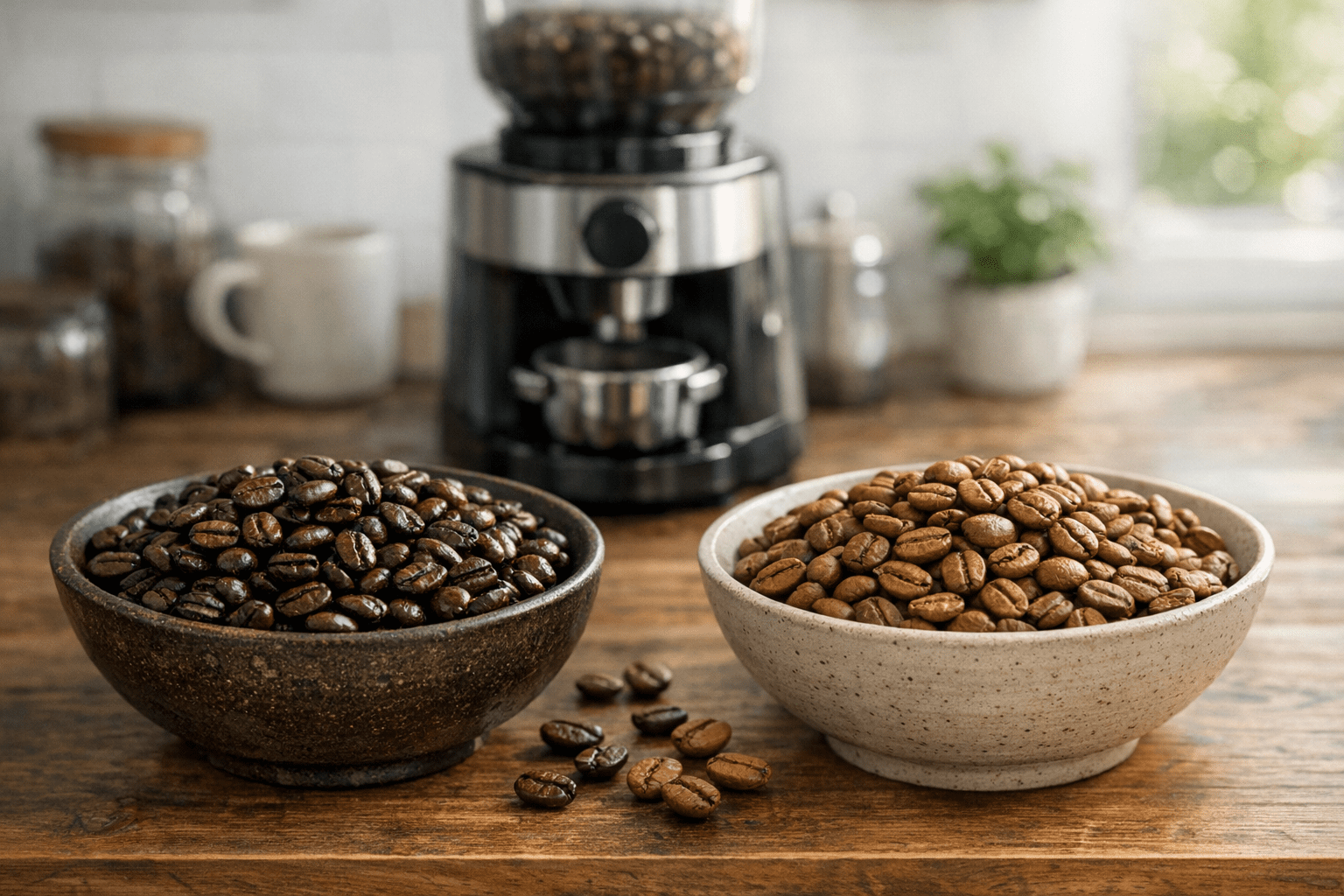
| Feature | Espresso Beans | Regular Coffee Beans |
|---|---|---|
| Taste | Bold, smoky, caramelized, low acidity | Varied (fruity, bright, floral, nutty) |
| Body | Heavy, syrupy | Light to medium |
| Acidity | Very low | Can be high (especially light roasts) |
| Oil | Visible oily sheen on the surface | Generally matte/dry |
What “espresso beans” really means
When a bag says “espresso,” it’s not describing the species. It’s describing intent and roast strategy. Espresso extraction uses high pressure, fine grind size, and short contact time. That combination magnifies acidity and bitterness. Roasters compensate by designing beans that produce balanced sweetness, syrupy body, and controlled acidity under pressure.
Most espresso-labeled beans are roasted medium to medium-dark. This slightly deeper development reduces sharp acidity and increases solubility, making the coffee easier to extract evenly. The result? Fewer sour shots, more crema stability, and a flavor profile that holds up in milk.
By contrast, beans labeled only as “coffee” are often optimized for drip or pour-over. They may be lighter roasted to highlight origin characteristics. While these can taste incredible as espresso, they typically have a narrower dialing window and require a grinder capable of precise adjustment.
Espresso beans vs coffee beans decision matrix
Use this table as your first filter. Match your machine and drinking style to the recommended starting point. This reduces guesswork and speeds up your dialing process.
| Home setup | Best starting bean style | Why | Watch out for |
|---|---|---|---|
| Beginner semi-auto | Medium espresso blend | Forgiving extraction window and balanced sweetness | Very light single-origins |
| Milk drink focused | Chocolate-forward espresso blend | Cuts through milk and maintains body | Thin, citrus-heavy roasts |
| Straight espresso drinker | Specialty medium single-origin | Higher complexity and origin character | Tight dialing margin |
| Superautomatic machine | Dry medium roast | Protects grinder longevity and reduces residue | Oily dark roasts |
How to evaluate beans without getting misled
Marketing language can distract from what actually matters. Terms like “artisan,” “bold,” or “premium” are not operational. Instead, focus on roast date, roast level, and blend intent. These directly influence extraction behavior.
Start with freshness. Beans are typically best for espresso between 5 and 30 days after roast, depending on roast level and storage. Too fresh and they may produce excessive crema and unstable flow. Too old and they lose aromatics and extraction consistency. Always check the roast date before origin notes.
Next, evaluate roast level in relation to your grinder. Lighter roasts are denser and harder to extract. If your grinder struggles to produce consistent fine adjustments, a very light roast may lead to persistent sourness and channeling. Choose beans that match your equipment capability—not just your flavor ambition.
Dialing strategy that actually works
The biggest mistake when comparing espresso beans vs coffee beans is changing too many variables at once. Precision wins. Lock in your dose and yield first. Then adjust grind size in small increments.
- Step 1: Fix your dose and target yield (for example, 18g in, 36g out).
- Step 2: If the shot runs too fast and tastes sour, grind finer.
- Step 3: If the shot runs too slow and tastes bitter, grind coarser.
- Step 4: Change only one variable per attempt.
Espresso blends typically give you a wider sweet spot. Single-origins may taste exceptional but demand tighter control. Neither is better universally. The right choice depends on your tolerance for experimentation.
Common mistakes to avoid
- Assuming espresso beans contain more caffeine: Caffeine content is driven by dose and extraction ratio, not label.
- Ignoring roast date: Freshness affects crema, flavor clarity, and dialing ease.
- Using oily dark beans in sensitive grinders: Excess surface oil can accelerate residue buildup.
- Changing dose, yield, and grind simultaneously: This prevents clear troubleshooting.
- Expecting café results from inconsistent grinders: Grinder quality has more impact than bean label.
When troubleshooting, think like a technician. Isolate variables. Test methodically. Record changes. This approach saves beans and builds skill quickly.
Seven-day implementation plan
| Day | Action | Why it matters |
|---|---|---|
| Day 1 | Choose one espresso-focused blend and document dose/yield. | Establishes a stable baseline. |
| Day 2 | Dial grind until flow time matches target. | Improves extraction consistency. |
| Day 3 | Taste and record flavor notes. | Builds sensory awareness. |
| Day 4 | Test the same bean in a milk drink. | Evaluates versatility. |
| Day 5 | Switch to a lighter roast coffee bean. | Compare dialing difficulty. |
| Day 6 | Adjust grind only to compensate. | Highlights roast density differences. |
| Day 7 | Decide which bean style fits your routine. | Optimizes for sustainability. |
This process turns abstract differences into lived experience. Instead of debating labels, you’ll understand how each style behaves in your machine.
Who should be more cautious
If you rely on a superautomatic machine, prioritize dry, medium roasts with minimal surface oil. This protects internal grinders and reduces maintenance frequency. If you prefer very dark roasts, confirm your manufacturer’s cleaning recommendations.
Individuals sensitive to caffeine should remember that espresso concentration does not automatically equal higher total caffeine. Dose size matters more than brew method. For personalized dietary guidance, consult a licensed healthcare professional.
Myths to ignore
- Myth: Espresso beans are a different species. Reality: They are defined by roast and intent.
- Myth: Dark roast guarantees better crema. Reality: Freshness and extraction technique are equally important.
- Myth: Single-origin is always superior. Reality: Blends often deliver better balance for daily use.
- Myth: Label matters more than equipment. Reality: Grinder quality drives shot quality.
FAQ
Can I use regular coffee beans for espresso?
Yes. With proper grind adjustment and dialing, most coffee beans can produce good espresso. Expect more trial and error with lighter roasts.
Are espresso blends better for beginners?
In most cases, yes. They’re designed for balanced extraction under pressure and tend to be more forgiving.
Why do my shots taste sour?
Sourness usually signals under-extraction. Grind finer, increase contact time, or evaluate whether the roast is too light for your setup.
Should I freeze beans?
Freezing can preserve freshness if beans are sealed airtight in portioned bags and protected from moisture. Avoid repeatedly thawing the same batch.
What should I prioritize when buying beans?
Prioritize roast date, roast level, and machine compatibility before marketing language or origin storytelling.
Final verdict
“Espresso beans” is not a botanical category. It’s a performance-focused roast and blend strategy. If you want easier dialing and consistent results, start there. If you enjoy experimentation and flavor exploration, try specialty coffee beans and refine your technique.
Choose based on extraction behavior, equipment capability, and flavor goals—not just the label. When those three align, both espresso beans and coffee beans can produce exceptional shots.
Editorial note: This article is for educational purposes and does not replace personalized medical or dietary advice.
