

11 min read
Liberica Coffee Guide
Why Roasters Are Reconsidering This Climate-Resilient SpeciesLiberica coffee is gaining new attention for its bold flavor and climate resilience. Here’s how it tastes, roasts, and fits into the future of specialty coffee.
For decades, Liberica coffee sat at the edge of the global conversation — overshadowed by Arabica’s elegance and Robusta’s productivity. Now it’s back in view.
As climate pressure reshapes coffee farming and specialty roasters look beyond familiar flavor maps, Liberica is being reconsidered not as a novelty, but as a serious bean with distinct strengths and trade-offs.
This guide focuses on the practical side: how it tastes, how it roasts, why it’s difficult to source, and where it realistically fits in coffee’s future.
What Is Liberica Coffee?
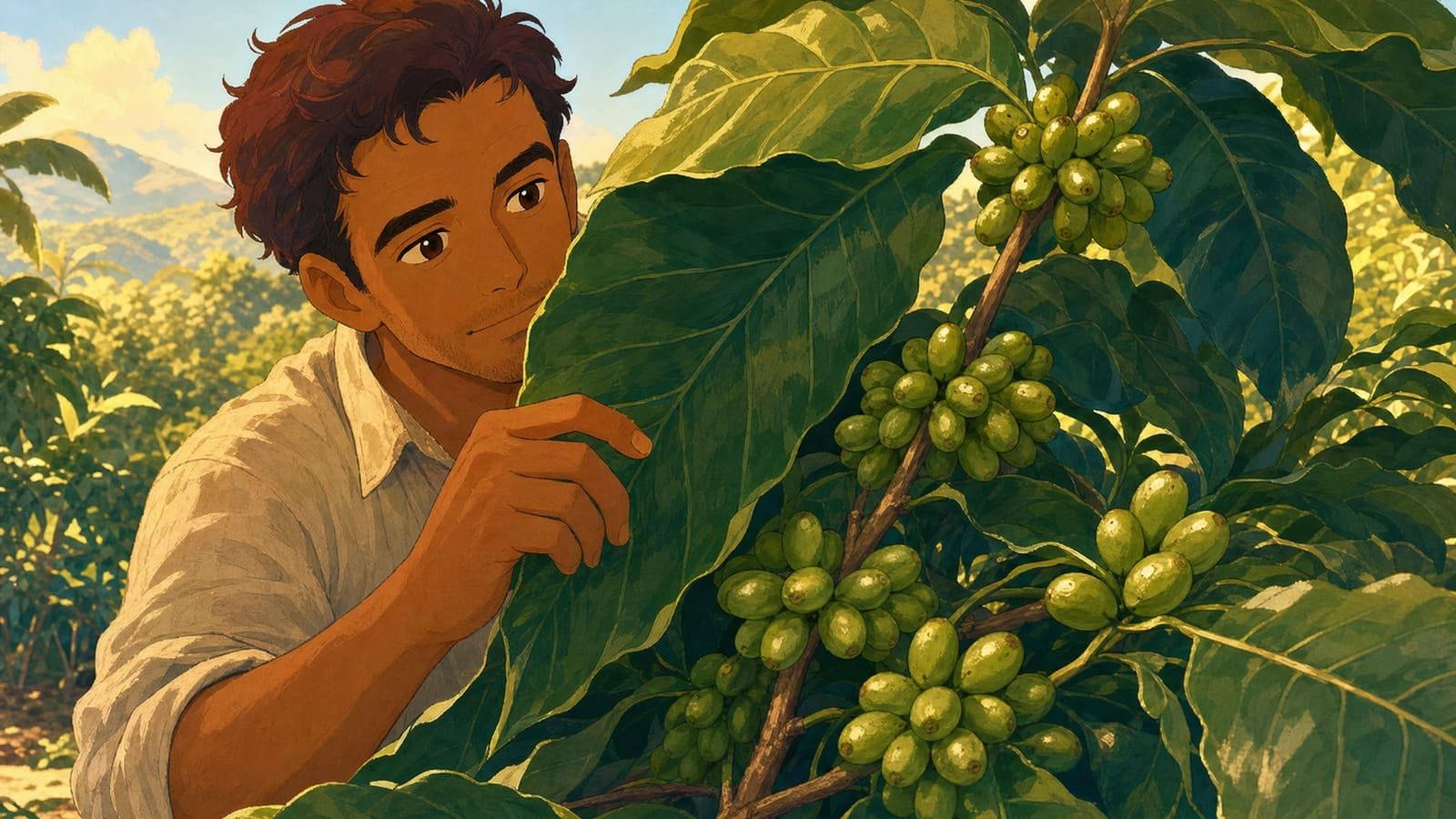
Liberica is one of the four main cultivated coffee species, alongside Arabica, Robusta (Canephora), and Excelsa — now technically classified as a variety within Liberica. It originated in West Africa and is grown primarily in parts of Southeast Asia, including the Philippines, Malaysia, and Indonesia. Compared to Arabica, Liberica trees grow taller, produce larger cherries, and tolerate hotter, more humid conditions. Production remains small relative to Arabica and Robusta, which is part of why it feels rare in specialty settings.
Liberica vs. Arabica vs. Robusta
| Characteristic | Liberica | Arabica | Robusta |
|---|---|---|---|
| Origin | West Africa | Ethiopia / Arabia | Central & West Africa |
| Tree Height | Up to 9 m (very tall) | 3 – 4.5 m (pruned) | 4 – 6 m |
| Bean Shape | Large, teardrop / asymmetric | Oval, relatively uniform | Round, small – medium |
| Flavor Character | Bold, floral, tropical, sometimes smoky | Nuanced, bright, clean | Bitter, earthy, harsh |
| Body | Full, heavy, lingering | Medium | Heavy, dense |
| Acidity | Low | Medium – high | Very low |
| Climate Tolerance | High heat & humidity | Moderate (sensitive to heat) | High & versatile |
| Global Production | ~1 – 2% | ~60% | ~40% |
What Does Liberica Actually Taste Like?
Liberica’s flavor is not subtle — and that’s the point. The first thing most people notice is the aroma. Liberica often presents intense floral, fruity, sometimes smoky or woody aromatics. Depending on processing, it can lean toward jackfruit, overripe tropical fruit, dark sugar, or even a slightly fermented edge. It is rarely neutral.
| Category | What to Expect |
|---|---|
| Aroma | Floral, tropical fruit, jackfruit — sometimes smoky, woody, or fermented at the edges |
| Body | Heavy and full — noticeably more textured than most Arabica |
| Acidity | Low; lacks the bright citrus snap of high-elevation washed Arabica |
| Sweetness | Dark sugar, caramelized, sometimes molasses-adjacent |
| Finish | Lingering, sometimes resinous — depth and texture over sparkle |
| Processing Impact | Natural → more intense fruit; washed → slightly cleaner but still bold |
Compared to Arabica, Liberica shows less refined acidity, more aromatic intensity, and sometimes wilder cup profiles. Versus Robusta, it is far more complex aromatically, generally less harsh in bitterness, but still bold and assertive.
It can be polarizing. Some tasters love its intensity; others find it unfamiliar or challenging. That tension is part of why roasters are experimenting with it in small lots rather than full menu conversions.
How Liberica Behaves in the Roaster
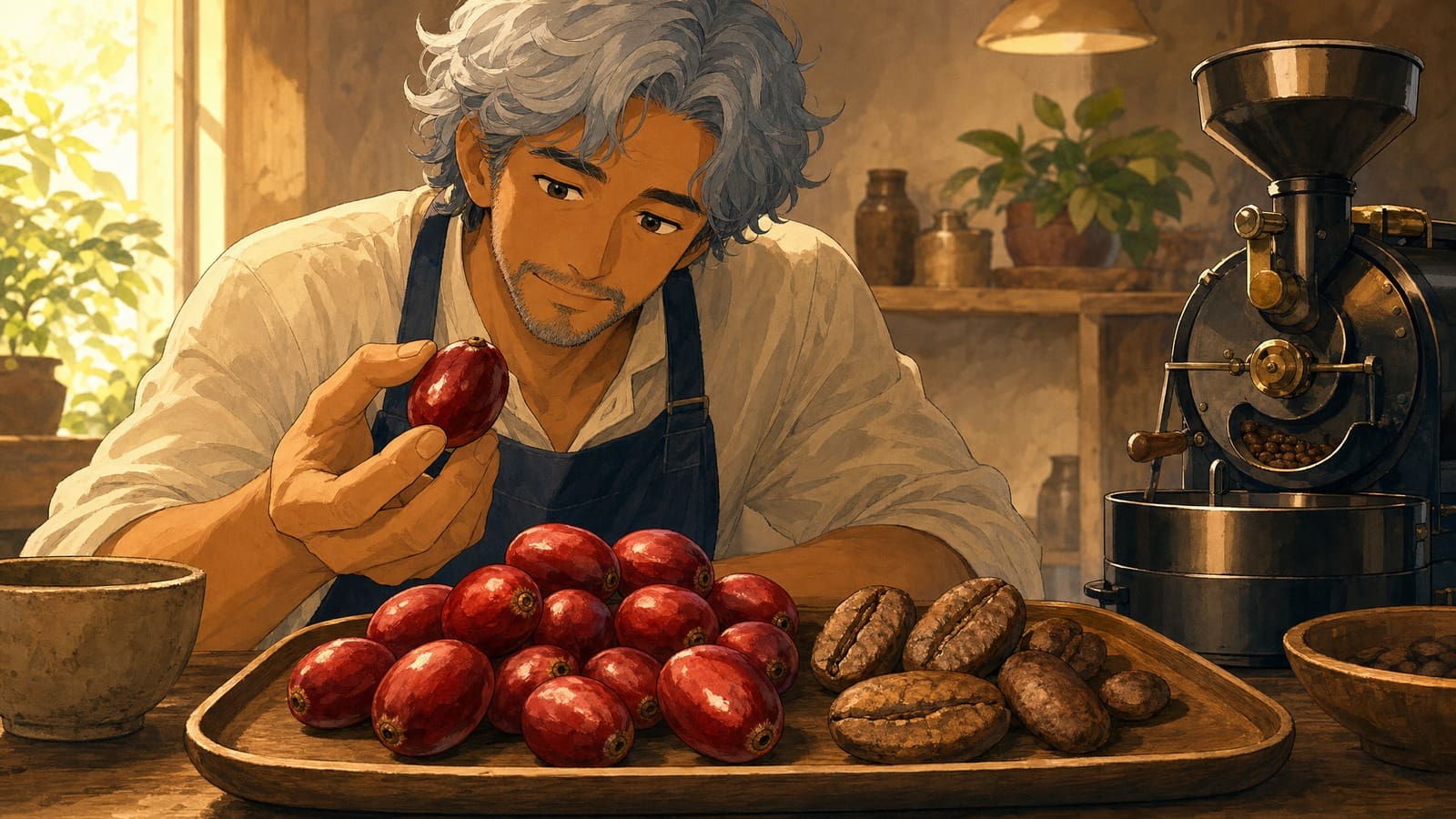
From a roasting perspective, Liberica demands attention. Its beans are noticeably larger and more irregular than typical Arabica beans, with a distinct teardrop shape. This directly affects heat transfer, batch consistency, and airflow behavior in drum roasters. Uniformity can be a challenge, especially in mixed-grade lots.
Because of its density and structure, Liberica often benefits from careful heat application early in the roast. Too aggressive, and you risk scorching the exterior before proper internal development. Too gentle, and you flatten its aromatic potential.
Key Behaviors Roasters Report
- Medium to medium-dark profiles highlight body and sweetness without masking aromatics — the most reliable starting point.
- Very light roasts can emphasize vegetal or woody notes rather than fruit — less predictable than with Arabica.
- Dark roasts amplify smoke and intensity but can mask the floral complexity that makes Liberica interesting.
- Too aggressive early heat risks scorching the exterior before the interior has developed. Ease into the roast.
- Dialing in requires test batches and cupping discipline — it’s not as forgiving as commodity Arabica.
Liberica can excel in experimental single-origin releases, blend components for body and aromatics, and natural or honey-processed showcase lots. It may struggle in ultra-light, acidity-driven profiles where clarity and brightness are the primary goals.
Roasters who put in that test-batch work report genuinely distinctive results — a cup that doesn’t taste like anything else on the menu.
Why Is Liberica So Hard to Find?
If Liberica is this interesting, why isn’t it everywhere?
Because it’s produced at smaller scale, processing standards vary widely. One lot may be beautifully handled and expressive; another may taste muddy or inconsistent. This variability makes importers cautious and forces roasters to cup carefully before committing.
Global coffee markets are also built around Arabica and Robusta benchmarks. Pricing structures, grading systems, and buyer expectations don’t always align neatly with Liberica’s unique characteristics. That friction keeps it niche — for now.
Why Specialty Roasters Are Reconsidering Liberica
This isn’t just about novelty. There are strategic reasons.
Specialty coffee has matured. Washed Ethiopian? Natural Colombian? Honey Costa Rican? Many consumers have seen the menu. Offering a well-sourced Liberica release creates genuine differentiation — not marketing spin, but a different species with a different sensory experience.
Today’s serious coffee drinkers are more educated than ever. They understand species, processing, and terroir. Liberica fits naturally into that curiosity-driven ecosystem.
It’s not positioned as a replacement for Arabica. It’s positioned as a new chapter — one with its own rules, its own learning curve, and its own distinct reward.
Liberica Coffee and Climate Resilience
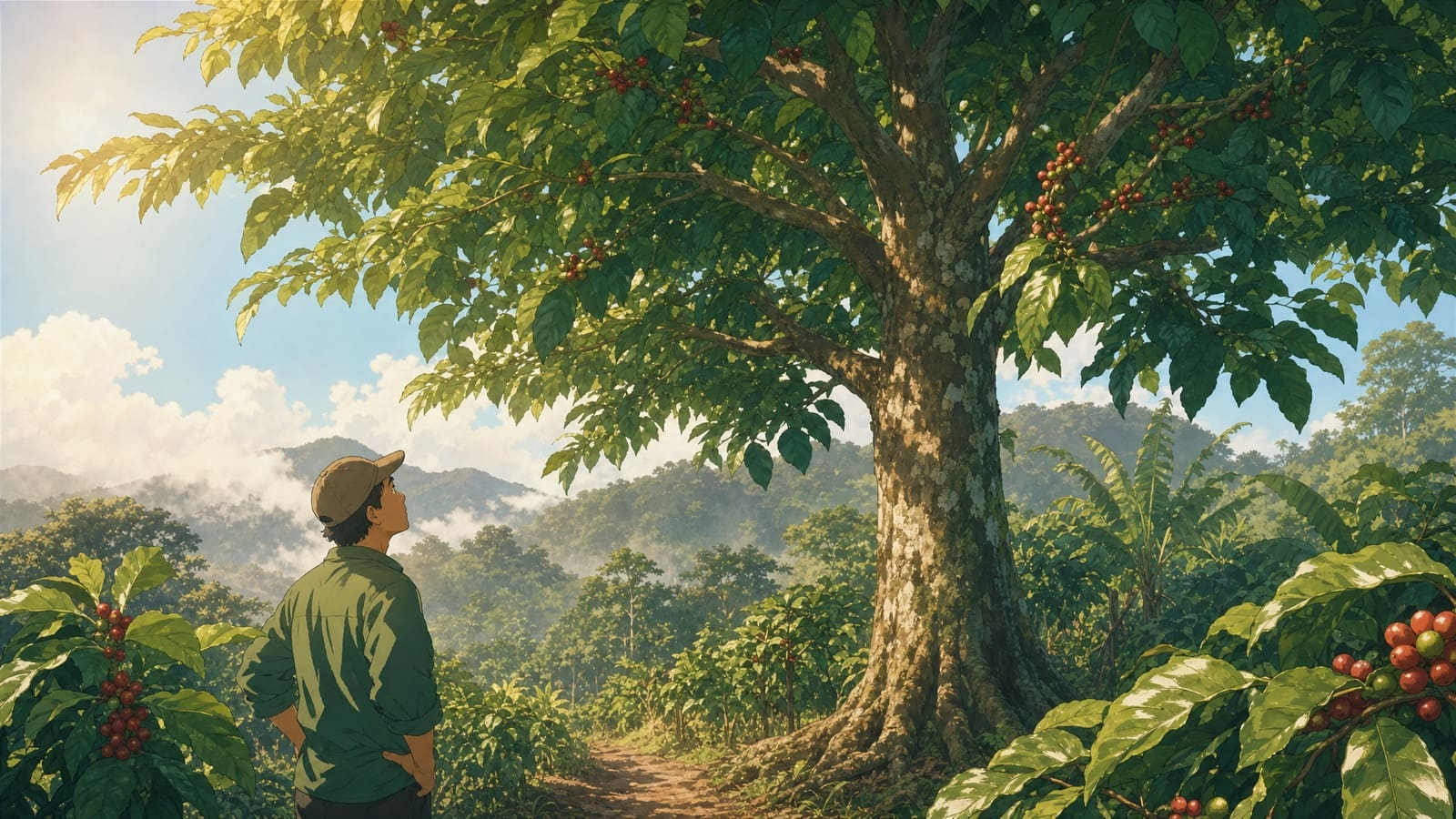
This is where the conversation gets bigger. Liberica trees generally tolerate higher temperatures, humid environments, and certain pests and diseases that threaten Arabica crops. As climate change increases heat stress in traditional growing regions, species diversification becomes critical — not optional.
Diversification, Not Replacement
It’s unrealistic to suggest Liberica will overtake Arabica globally. Infrastructure, consumer preference, and yield economics all favor Arabica in many regions. But species diversification is a risk-management strategy. Farmers planting small percentages of Liberica alongside Arabica create resilience against climate volatility and disease outbreaks. That makes Liberica relevant even if it remains niche — and the relevance is growing.
Liberica is not a silver bullet. Yields, quality control, and market demand all shape viability. But as part of a broader strategy that includes hybrid varieties and improved farming practices, it’s a meaningful piece of the puzzle.
Who Should Try Liberica Coffee?
Liberica is not for everyone. If you prefer delicate, tea-like washed coffees, it may feel too heavy or aromatic. But if you appreciate bold aromatics and layered sweetness, it can be genuinely compelling.
You’ve worked through Ethiopian, Kenyan, and Panamanian Arabica. You want something genuinely different — a new species, not just a new origin.
You’re looking for a limited-edition release that creates real differentiation — distinct cup character, a real roasting challenge, and a story worth telling.
You care about sustainable sourcing and want your purchasing decisions to support diversification in coffee farming. Well-sourced Liberica creates demand that matters.
You want body, aromatic intensity, and a shot that holds up through milk — and you’re open to longer dial-in sessions to get there.
Frequently Asked Questions
What does Liberica coffee taste like?
Liberica coffee often tastes bold and aromatic, with notes ranging from floral and tropical fruit to smoky, woody, or dark sugar tones. It typically has lower acidity and fuller body than Arabica — and the aromatics tend to be more intense and less predictable across lots.
Is Liberica coffee stronger than Arabica?
In flavor intensity, it can feel stronger due to its bold aromatics and heavier body. Caffeine content varies, but Liberica is generally not dramatically higher in caffeine than Arabica in typical cup preparation. “Stronger” here usually refers to flavor impact rather than caffeine.
Why is Liberica coffee rare?
Liberica represents a small share of global coffee production and is grown mainly in select regions of Southeast Asia. Limited scale, variable processing, and less established export infrastructure make it harder to source consistently. Market systems haven’t developed around it the way they have for Arabica.
Is Liberica coffee climate resistant?
Liberica trees are generally more tolerant of heat and humid conditions than Arabica. While not a cure-all for coffee farming under climate pressure, they are part of broader resilience and diversification strategies. Yields, quality control, and market viability still shape how realistic that role is in practice.
A Niche Worth Knowing
Liberica coffee is unlikely to replace Arabica. But that’s the wrong benchmark.
Its value lies in three areas: flavor distinctiveness, agricultural resilience, and strategic diversification. For specialty roasters, it offers differentiation. For farmers in hot climates, it offers adaptability. For curious drinkers, it offers a new sensory lane.
The real shift isn’t hype — it’s seriousness. Liberica is no longer just a footnote species. It’s a bean worth understanding, sourcing carefully, and roasting with intention.
And in a coffee world facing climate uncertainty, that alone makes it relevant.
