

11 min read
The Golden Lamb Coffee · Recipes & Buying Guide
Best Monin
Syrups
Flavors that actually work in coffee
Walk into almost any independent coffee shop and you’ll spot Monin behind the bar. Here are the flavors worth buying — and a few honest notes on what to skip.
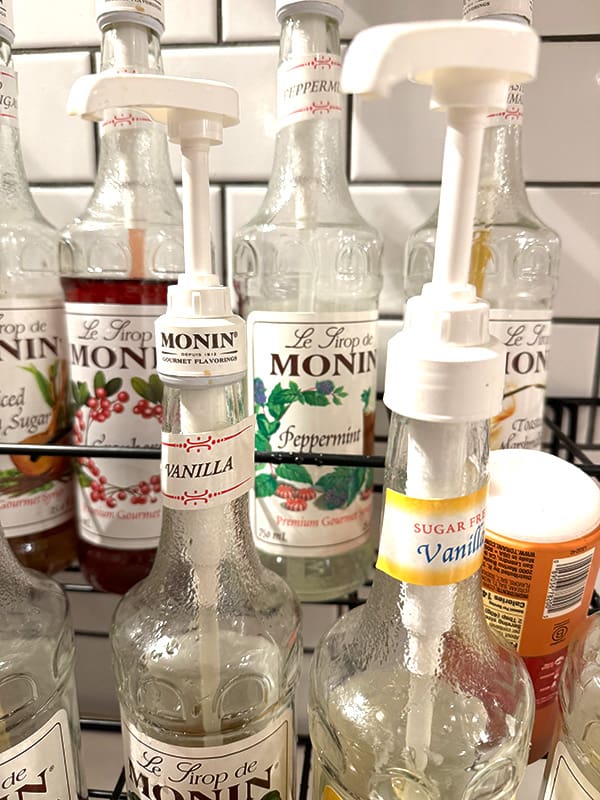
Walk into almost any independent coffee shop in the United States and there’s a good chance you’ll spot a row of Monin bottles lined up behind the bar.
The brand has been a professional staple for decades — the syrups are consistent, well-made, and designed to blend cleanly into both hot and cold drinks. But the lineup is enormous, and not every flavor translates equally well to coffee. This guide cuts through the noise.
The strongest Monin flavors for coffee are French Vanilla, Caramel, and Hazelnut — they’re classic for a reason and hold up beautifully in both hot lattes and iced drinks. Brown Sugar is an excellent modern pick that mirrors specialty café drinks. If you want something more distinctive, Lavender is a surprisingly good pairing with espresso. The sugar-free line is solid, though the flavor depth is noticeably lighter than the standard versions.
Get the 21-Day Coffee Glow-Up Recipe Book
Make your morning coffee feel like a treat again: 21 coffee-shop-style recipes you can make at home, with hot, iced, creamy, cozy, and Java Burn-friendly options.
- 21 craveable coffee recipes
- Simple flavor formulas and shopping list
- 7-day coffee glow-up plan
You are in. Grab the recipe book, then check your inbox to confirm the coffee newsletter.
Download the free recipe bookAlready subscribed? Open the recipe book here.
Why readers save it: It gives them recipes first, not hype first. Java Burn stays optional and label-directed, while the download gives them a better coffee routine they can use right away.
What happens next: MailPoet adds them to the Golden Lamb Coffee Newsletter, sends the welcome email, and includes them in the weekly coffee tips nurture sequence.
Educational download. Not medical advice. Java Burn is a dietary supplement; read the label and ask a qualified professional if you use supplements, take medication, or manage a health condition.
Why Monin Works in Coffee
Not all coffee syrups are created equal — and the difference shows in the cup.
Many budget options rely on high fructose corn syrup and artificial flavors that taste sharp or synthetic once they hit hot milk or espresso. Monin’s standard line uses pure cane sugar and natural flavors, which gives the syrups a cleaner sweetness that integrates rather than fights with the coffee underneath.
The brand also avoids the artificial sweeteners that leave a chemical aftertaste — a common complaint with lower-cost options. Long shelf life and consistent viscosity make Monin practical for home use too; a 750ml bottle lasts a long time without degrading in flavor. It’s not the cheapest option on the shelf, but it’s priced fairly for what you’re getting, and it’s the same product your local coffee shop is likely already using.
Prefer homemade? Start with lavender coffee syrup, pistachio coffee syrup, or the healthy coffee syrups guide.
Monin at a Glance
Everything you need to know before you pour — flavor intensity, dosing, and what to pair.
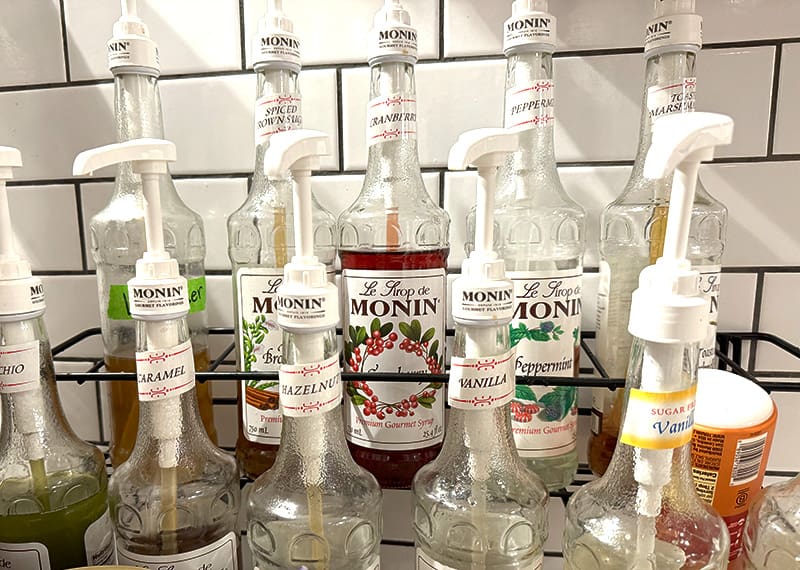
The Best Monin Flavors for Coffee
Six flavors that hold up in espresso-based drinks, cold brew, and iced coffee — with honest notes on each.
Richer and slightly more custardy than plain vanilla — adds depth without sweetness overload. Works in hot lattes, iced coffee, and cold brew. More potent than it looks; start with one pump per 6 oz.
Genuine buttery-caramel character — not the flat, candy-like sweetness of cheaper versions. Pairs especially well with dark roast espresso, where bitterness and caramel richness balance each other beautifully.
Warm, molasses-forward sweetness that feels more complex than standard simple syrup. Rose to prominence with brown sugar shaken espresso drinks at chain cafés. Works in both iced and hot drinks.
Toasty, nutty character — not overly sweet. Complements medium roasts particularly well. Pair it with oat milk for a combination that’s become a staple at specialty cafés. Reliable without being boring.
One of the better versions of this flavor on the market. Leans into the spice blend — cinnamon, nutmeg, clove — rather than just delivering sweetness. Actually tastes like pumpkin pie rather than a scented candle.
Sounds risky, actually works. A single pump in a latte or iced americano adds a floral note that softens coffee’s acidity without tasting like soap. Use it sparingly — this one is very easy to overdo. Best with lighter roasts.
Sugar-Free Monin Syrups: Are They Worth It?
The honest answer: for some people yes, for most people no.
Monin’s sugar-free line uses a blend of erythritol and other non-caloric sweeteners rather than artificial sweeteners like sucralose alone — which puts them ahead of brands like Jordan’s Skinny Syrups in terms of aftertaste. That said, the flavor depth is lighter than the standard versions and the mouthfeel is thinner.
You’re monitoring blood sugar, reducing overall sugar intake, or want to add flavor without significant caloric impact. The sugar-free Vanilla and Caramel are the strongest options in this format.
You prioritize flavor first and don’t have a dietary reason to avoid cane sugar. The standard versions simply taste better — more depth, more mouthfeel, more accurate flavor representation.
How Monin Compares to Torani and Jordan’s Skinny
Three brands targeting three different buyers. Here’s the honest breakdown.
| Brand | Best for | Ingredients | In Espresso |
|---|---|---|---|
| Monin | Specialty home baristas and anyone who wants coffee-shop flavor at home | Pure cane sugar, natural flavors. No HFCS. | Integrates cleanly. Best overall performance in milk-based drinks. |
| Torani | Everyday use when Monin isn’t available; fans of slightly sweeter profiles | Similar to Monin. Touch sweeter, slightly thinner viscosity. | Solid. Noticeable but not dramatic difference from Monin. |
| Jordan’s Skinny | Zero-calorie priority buyers; novelty flavors; drinks other than espresso | Heavily sweetener-forward. Designed for calorie reduction over flavor. | Struggles in straight espresso drinks. Better in blended or cold drinks. |
Tips for Using Monin at Home
Small adjustments that make a meaningful difference in how the syrup performs in your cup.
-
Start with less than you think you need. One pump (roughly 7.5ml) is a good baseline for a 6–8 oz drink. Most people over-pour on their first try — Monin is more potent than budget syrups, and you can always add more.
-
Add syrup to the cup before pulling your espresso shot. The heat and pressure help the syrup bloom into the coffee, creating better integration than stirring it in after the fact.
-
For iced coffee and cold brew, shake or stir well. Sugar-based syrups dissolve more slowly in cold liquid than simple syrup does. A quick shake in a shaker or vigorous stir ensures even distribution.
-
Store bottles at room temperature, out of direct sunlight. Opened bottles stay fresh for several months — no refrigeration needed. Avoid storing near heat sources like a stove or sunny window.
-
Don’t limit Monin to coffee. The syrups work beautifully in sparkling water, lemonade, and cocktails — which means you get more use out of a 750ml bottle and the cost-per-use improves significantly.
Frequently Asked Questions
French Vanilla is consistently the top-selling Monin syrup for coffee. It’s versatile, well-balanced, and works in both hot and iced drinks alike.
Both are quality brands. Monin tends to have slightly more complex flavor profiles and is the more common choice in specialty coffee shops. Torani is a solid alternative, especially if it’s more accessible or affordable in your area. The difference is noticeable but not dramatic.
Monin’s standard line uses natural flavors and pure cane sugar, with no high fructose corn syrup. Some specialty or limited-edition flavors may vary, so it’s worth checking the label on specific bottles.
A standard starting point is one to two pumps (7.5–15ml) for a 6–8 oz drink. Adjust based on your sweetness preference and the intensity of the flavor you’re using. Lavender and Pumpkin Spice especially benefit from a lighter hand.
They’re among the better sugar-free options available — less artificial aftertaste than many competitors. They don’t match the depth and mouthfeel of Monin’s regular syrups, but they’re a reasonable choice for people with dietary restrictions.
Start with the classics.
Build from there.
Monin earns its reputation as a go-to coffee syrup brand. The ingredient quality is genuinely better than most mass-market alternatives, and the flavors integrate cleanly into espresso and milk. Start with French Vanilla, Caramel, or Brown Sugar — they’re the most versatile and the most forgiving. Add Hazelnut if you want a nutty option, and reach for Lavender or Pumpkin Spice once you’re comfortable with the brand’s potency. Skip the sugar-free line unless you have a specific reason to use it.
