

12 min read
Coffee Recipes Hub · Equipment & Gear · Buying Guide
Best Coffee
Scales
For better espresso and pour over
The difference between a coffee scale and a kitchen scale comes down to milliseconds of response time, 0.1-gram resolution, and a timer that runs while your hands are busy pouring.
If you’re dialing in espresso or chasing a cleaner pour over, a good kitchen scale isn’t enough.
The difference between a precise coffee scale and a generic food scale comes down to milliseconds of response time, 0.1-gram resolution, and a built-in timer that runs while your hands are busy pouring. Those details matter more than most gear upgrades you’ll make. This guide covers the best coffee scale options for home baristas, what the key features actually mean, and how to match a scale to your brew method.
For most people: The Timemore Black Mirror is the best value — accurate to 0.1g, fast response, built-in timer, rechargeable USB-C, at a fraction of the Acaia price.
For espresso and serious baristas: The Acaia Pearl is the benchmark — Bluetooth, real-time flow rate, and the companion app that coffee shops and barista trainers reach for.
Best budget pick: The Hario V60 Drip Scale is the reliable no-frills option with a built-in timer that pairs naturally with pour over.
Get the 21-Day Coffee Glow-Up Recipe Book
Make your morning coffee feel like a treat again: 21 coffee-shop-style recipes you can make at home, with hot, iced, creamy, cozy, and Java Burn-friendly options.
- 21 craveable coffee recipes
- Simple flavor formulas and shopping list
- 7-day coffee glow-up plan
You are in. Grab the recipe book, then check your inbox to confirm the coffee newsletter.
Download the free recipe bookAlready subscribed? Open the recipe book here.
Why readers save it: It gives them recipes first, not hype first. Java Burn stays optional and label-directed, while the download gives them a better coffee routine they can use right away.
What happens next: MailPoet adds them to the Golden Lamb Coffee Newsletter, sends the welcome email, and includes them in the weekly coffee tips nurture sequence.
Educational download. Not medical advice. Java Burn is a dietary supplement; read the label and ask a qualified professional if you use supplements, take medication, or manage a health condition.
Why a Coffee Scale Changes How You Brew
Most home brewers measure coffee with a scoop and eyeball the water. Here’s why that makes your results inconsistent.
Coffee grounds vary in density — a scoop of light roast weighs differently than a scoop of dark roast — and water volume from a kettle is almost impossible to pour consistently without weighing it. A digital coffee scale solves both problems. You measure your coffee grounds by weight, set your target brew ratio, and pour to a number rather than a guess.
The built-in timer matters because extraction time is part of the recipe. For espresso, a 25–30 second pull at the right yield tells you whether your grind is dialed in. For pour over, you’re tracking bloom time and total brew time in the same motion as pouring.
Which Scale Fits Your Brew Method
What to Look for in a Good Coffee Scale
Five features that actually separate a good coffee scale from a frustrating one.
0.1g is the standard minimum for serious coffee brewing. Generic food scales often read to 1g — too coarse. For espresso, where a half-gram shift changes the shot, 0.1g is the floor.
Non-negotiable for pour over and espresso. You need both hands free to pour. A scale that starts timing automatically when it detects weight keeps your workflow clean without phone management.
How quickly the scale updates as you add water. Slow response means you overpour before the number catches up. Especially critical for espresso shots where yield matters by the gram.
Rechargeable (USB-C) scales are more convenient for daily use. AAA-powered scales are simple and reliable but add ongoing cost. Check reviews specifically for battery life and auto-off behavior.
Your scale needs to fit under your brewer. Espresso scales need to fit on the drip tray — a tight footprint. Check platform dimensions before buying, not just weight capacity.
Some scales shut off mid-brew — genuinely disruptive. Better scales let you disable the auto-off or extend the window. Look for scales with active-use detection that stay on while the timer runs.
Best Coffee Scales Worth Buying
Four picks across every budget — from the daily-driver value pick to the professional benchmark.
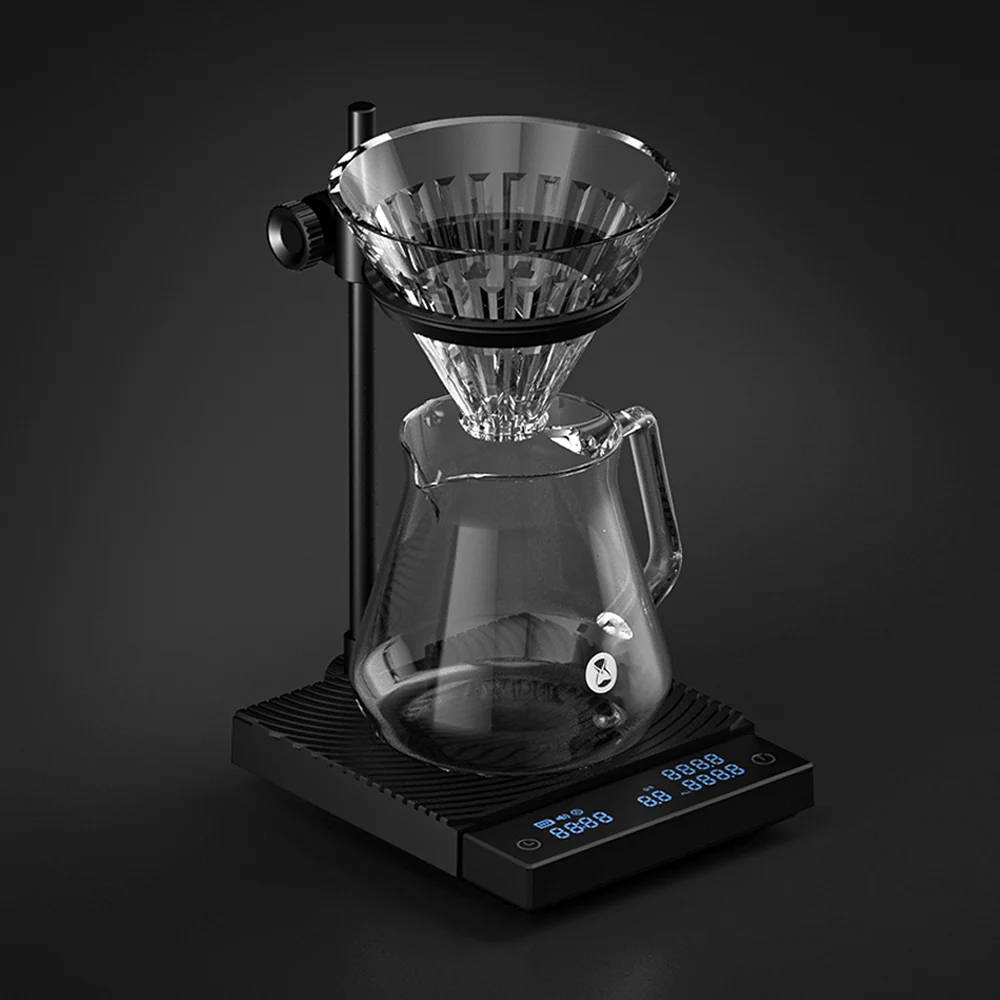
The Timemore Black Mirror punches well above its price point. It offers 0.1g resolution, fast response time, a built-in timer, and a rechargeable USB-C battery — features that used to cost twice as much. The clean design fits both pour over setups and espresso drip trays, and the flow rate display adds real-time feedback on your pour speed.
If you want a great coffee scale without spending Acaia money, the Black Mirror is the honest answer. Consistent praise from home baristas who want precision without the premium. The one limitation: grams only — no ounces for US brewers who prefer imperial measurements.
Pour over, espresso, value-conscious daily home use — the clearest recommendation for most buyers
You need imperial ounce measurements, or want Bluetooth connectivity and the Acaia app ecosystem
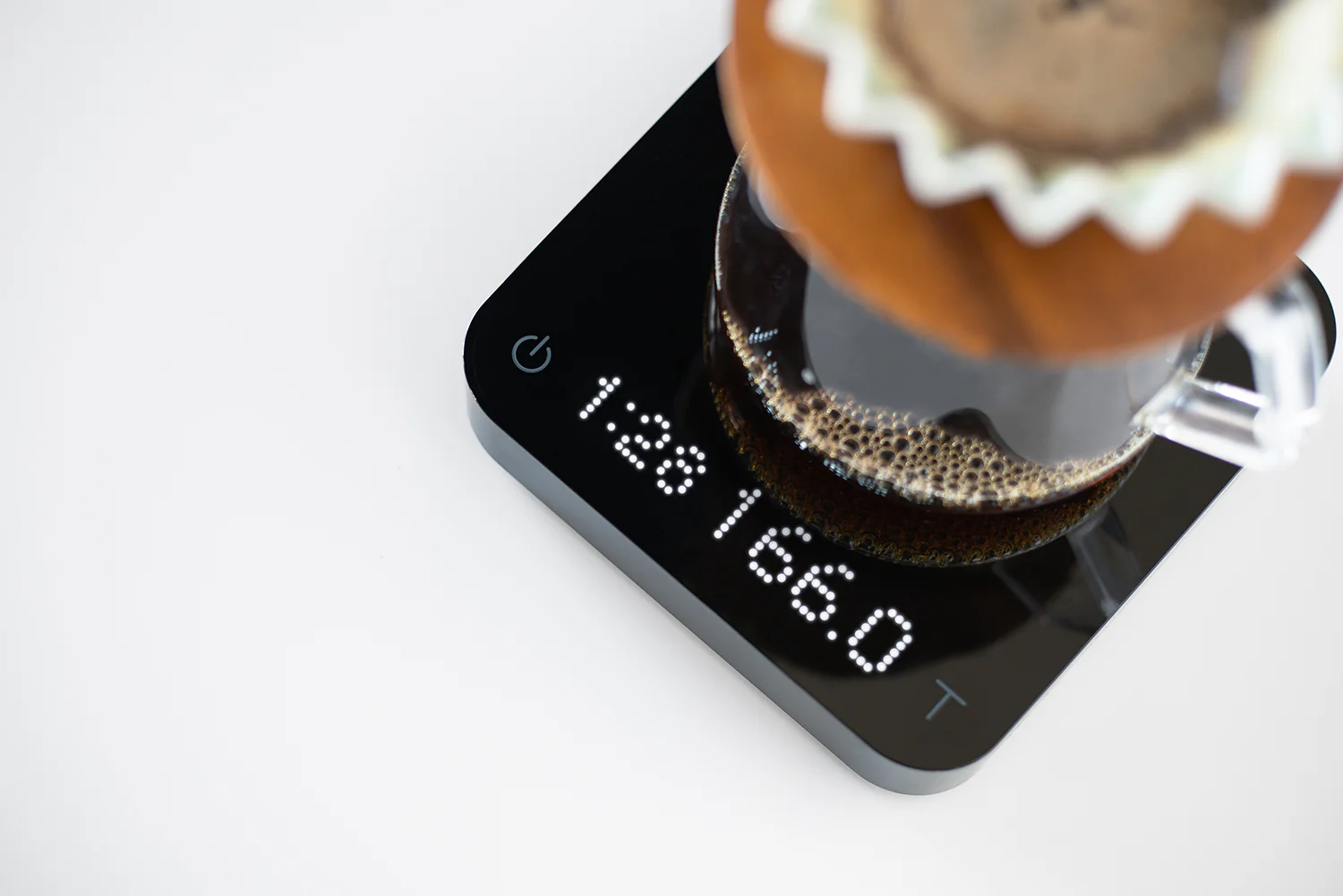
The Acaia Pearl is the scale most specialty coffee shops use, and for good reason. It has near-instant response time, Bluetooth connectivity to the Acaia app, and a real-time flow rate display showing grams per second as you pour. That last feature is genuinely useful for pour over consistency — you’re watching extraction dynamics, not just a number.
The app lets you track sessions, graph your pour, and customize the auto-off behavior so the scale never shuts off mid-brew. Expensive, but it’s the benchmark everything else is measured against. The black version has a notably brighter LED display than the white.
Espresso, pour over, serious home baristas, anyone who wants the coffee shop experience at home
You brew occasionally or can’t justify spending more on a scale than on your grinder
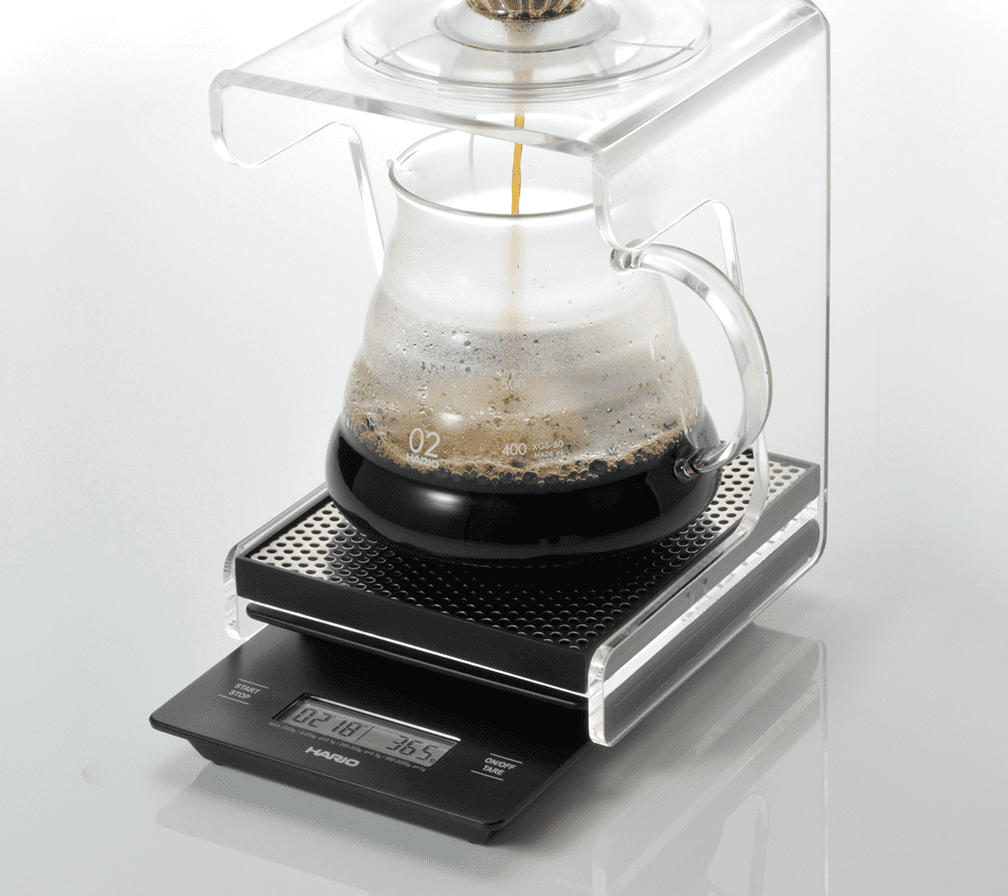
The Hario V60 Drip Scale is the reliable workhorse of the mid-range market. It reads to 0.1g, includes a built-in timer, and runs on AAA batteries — which means months of use before needing attention. It’s not the fastest responder and lacks Bluetooth, but it does exactly what a pour over scale needs to do without complication.
The platform fits naturally under V60s, Chemex brewers, and most pour over setups. The 5-minute auto-off extends to 99:59 when the timer is running, which means it won’t shut off mid-brew. The LCD screen is clear and easy to read in low morning light.
Pour over, drip coffee, French press, first-time scale buyers, anyone who prefers AAA batteries
You’re pulling espresso shots and need a tighter footprint or faster response time
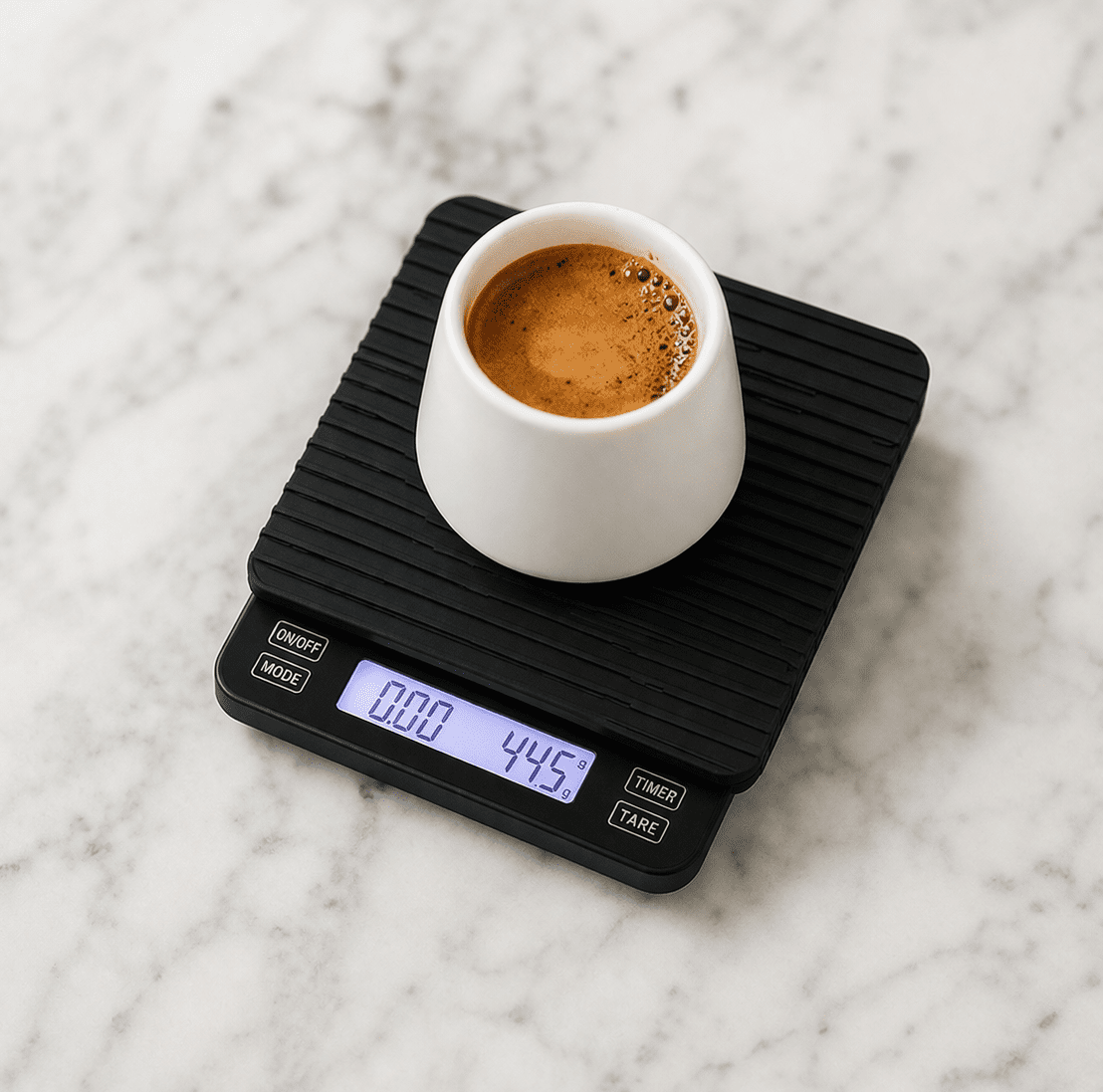
The Brewista Smart Scale II is built specifically for pour over, with multiple brew modes, a built-in timer, and a flow rate indicator. It’s rechargeable, reads to 0.1g, and the platform is wide enough for larger brewers like the Chemex. It sits between the Hario and the Acaia in both price and features — a solid middle ground.
If you want flow rate feedback without Acaia pricing and you’re primarily a pour over brewer, the Brewista earns its price step up over the Hario. The multiple brew modes let you customize timing sequences for different pour methods.
Pour over enthusiasts who want flow rate feedback and multiple brew modes without Acaia pricing
You primarily pull espresso shots — the Timemore or Acaia is a better fit for espresso workflows
Who Should Skip a Specialty Coffee Scale
Not everyone needs a dedicated coffee scale. If you’re brewing drip coffee from a machine with a built-in water reservoir, or you’re happy with a rough scoop-and-pour routine, a specialty scale won’t change your cup meaningfully.
A basic food scale works fine for French press if you’re just measuring coffee grounds by weight and aren’t tracking extraction time. The investment in a proper coffee scale pays off most clearly when you’re doing pour over or espresso — brew methods where precision and timing are directly tied to quality.
Frequently Asked Questions
The Hario V60 Drip Scale is the most straightforward starting point — accurate to 0.1g, simple to use, and affordable. The Timemore Black Mirror is worth the small price step up if you want a rechargeable battery and faster response time.
For pour over and espresso, yes. Tracking brew time while pouring is much easier when the timer is on the same device you’re already watching. It keeps both hands free and reduces the number of variables you’re managing at once.
0.1 gram resolution is the standard for home espresso — precise enough to catch meaningful dose variations. Scales with 0.01g resolution exist but offer diminishing returns for most home setups. Start with 0.1g and you’ll have everything you need.
You can, but most food scales only read to 1 gram, update slowly, and don’t have a built-in timer. For casual brewing it’s fine. For espresso or serious pour over, the limitations become obvious quickly — especially when you overpour because the number didn’t update in time.
AAA-powered scales like the Hario V60 can last months with moderate use. Rechargeable scales like the Acaia Pearl (20–30 hours per charge) and Timemore Black Mirror (approximately 10 hours) have solid battery life. Check current user reviews for the most accurate picture on the model you’re considering.
A common starting point for pour over is 1g of coffee to 15–16g of water. For espresso, a 1:2 ratio — 18g in, 36g out — is the standard baseline. A coffee scale lets you dial these in precisely and repeat them every morning without relying on memory or muscle memory.
Measure once.
Repeat forever.
The Timemore Black Mirror is the clearest recommendation for most home brewers — accurate, fast, rechargeable, and priced honestly. The Acaia Pearl is the gold standard if budget isn’t a barrier and you’re pulling espresso daily. The Hario V60 Drip Scale remains a dependable, fuss-free option for pour over.
Whatever you choose, a good digital coffee scale with a built-in timer and 0.1g resolution will improve your brewing more reliably than almost any other single gear upgrade.
Continue Into the Technical Brewing Hub
Scales matter most when they plug into a larger brew system. These next reads connect this gear page to the newer extraction and grinder-workflow cluster.
