
13 min read
Coffee Recipes Hub · Equipment & Gear · Buying Guide
Best Breville
Coffee Makers
Espresso, Drip, and Daily Use
Five machines across every price point — with honest tradeoffs for every budget and skill level so you buy the right one the first time.
Start here: For more equipment & gear reading, Equipment & Gear is the best hub before you branch into narrower guides.
Breville has earned a serious reputation in home coffee — and for good reason.
Walk into any kitchen store or scroll through any coffee forum and you’ll find Breville machines recommended with genuine enthusiasm. Not just because they’re well-marketed, but because they consistently deliver café-quality results at a price point most home brewers can actually reach. The challenge is that the lineup is broad. Breville makes everything from compact beginner-friendly machines to semi-professional setups with built-in grinders and PID temperature control. This guide does the sorting for you.
| Use Case | Recommended Model | ~Price |
|---|---|---|
| Best overall espresso | Barista Express BES870XL | ~$700 |
| Best for upgraders | Barista Pro BES878 | ~$850 |
| Best compact espresso | Bambino Plus BES500 | ~$500 |
| Best fully automatic | Oracle Touch BES990 | ~$1,500 |
| Best drip coffee maker | Precision Brewer BDC450 | ~$330 |
Get the 21-Day Coffee Glow-Up Recipe Book
Make your morning coffee feel like a treat again: 21 coffee-shop-style recipes you can make at home, with hot, iced, creamy, cozy, and Java Burn-friendly options.
- 21 craveable coffee recipes
- Simple flavor formulas and shopping list
- 7-day coffee glow-up plan
Download the recipe book directly below. No embedded newsletter form is loaded inside this article body.
You are in. Grab the recipe book, then check your inbox to confirm the coffee newsletter.
Download the free recipe bookAlready subscribed? Open the recipe book here.
Why readers save it: It gives them recipes first, not hype first. Java Burn stays optional and label-directed, while the download gives them a better coffee routine they can use right away.
What happens next: Readers can download the recipe book immediately and continue with the coffee tips and Java Burn guidance in the article.
Educational download. Not medical advice. Java Burn is a dietary supplement; read the label and ask a qualified professional if you use supplements, take medication, or manage a health condition.
What Makes Breville Different
Breville occupies a specific and valuable middle ground — above cheap pod machines, below commercial equipment that requires a plumber and a dedicated circuit.
Higher-end Breville machines reach brewing temperature in 3 seconds using a ThermoJet heating system. Budget machines take 30–60 seconds. That difference is noticeable in a daily morning routine.
PID control actively regulates water temperature throughout the entire brew — not just at the start. It’s the difference between a good espresso shot and a consistently great one.
Most Breville espresso machines include a conical burr grinder, eliminating a separate appliance. Grind settings range from 16 (Barista Express) to 30 (Barista Pro) — more settings means finer flavor control.
Stainless steel construction, solid drip trays, clearly labeled controls. Breville machines are designed to be used every morning for years — and they generally hold up to that expectation.
Best Breville Espresso Machines
Four machines covering beginner through fully automatic. The right pick depends on your skill level and how hands-on you want the process to be.
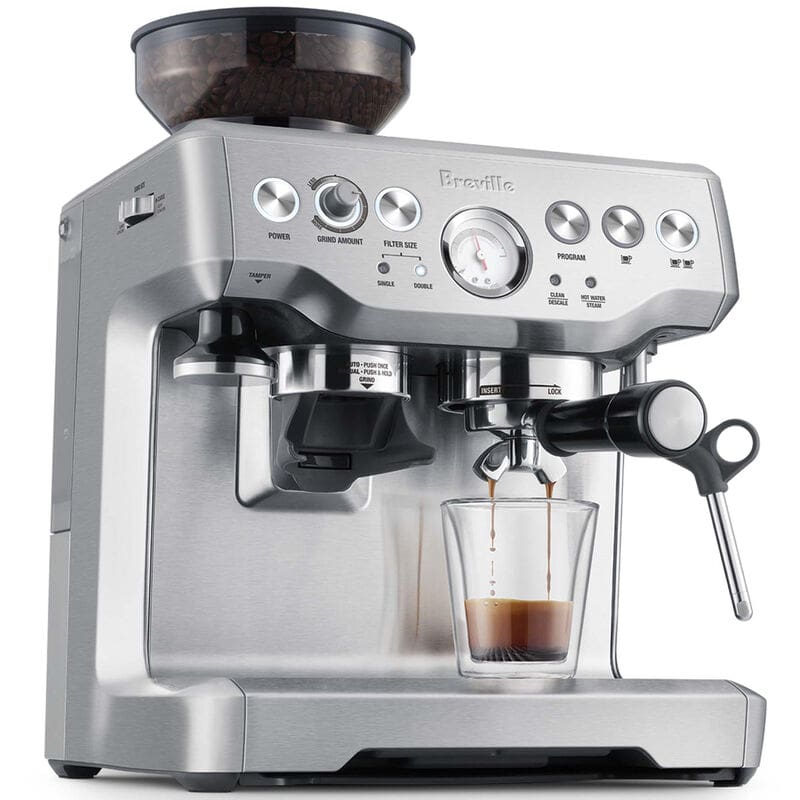
The Barista Express is the machine that built Breville’s reputation. It combines a built-in conical burr grinder with a full semi-automatic espresso machine — meaning you go from whole beans to a finished shot without a separate grinder on the counter. The 16-setting grinder gives enough range to dial in espresso properly, and the front-facing pressure gauge provides real feedback while you’re learning.
Heat-up is 30 seconds — slower than the Barista Pro, but fine for most morning routines. The manual steam wand requires technique but gives you more control over milk texture than an automatic frother.
Anyone starting with home espresso who wants everything in one machine and doesn’t own a grinder
You already own a quality standalone grinder — you’d be paying for a feature you don’t need
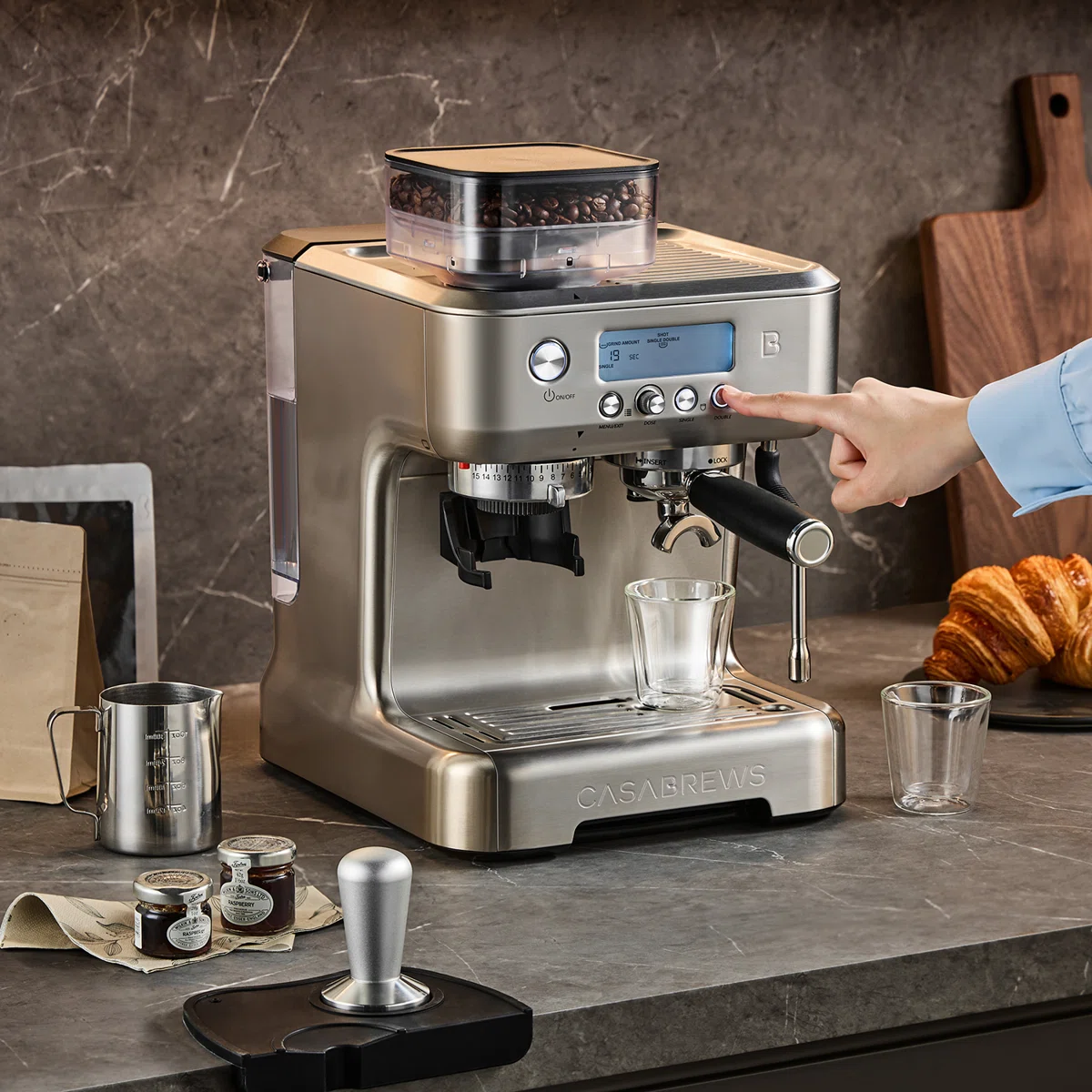
The Barista Pro is the Barista Express’s more refined sibling. The ThermoJet heating system reaches brewing temperature in three seconds rather than 30 — a meaningful difference for anyone who makes espresso before they’re fully awake. It replaces the Express’s analog dials with an LCD display and digital controls, and the grinder steps up from 16 to 30 settings, giving finer adjustment when you’re chasing a specific flavor profile.
The interface has a slightly steeper learning curve than the Express’s tactile dials. Worth it once you’re comfortable — not ideal if this is your first espresso machine.
Home baristas who’ve outgrown entry-level machines and want faster heat-up and tighter grind control
This is your first espresso machine — the Express is a better value and a friendlier starting point
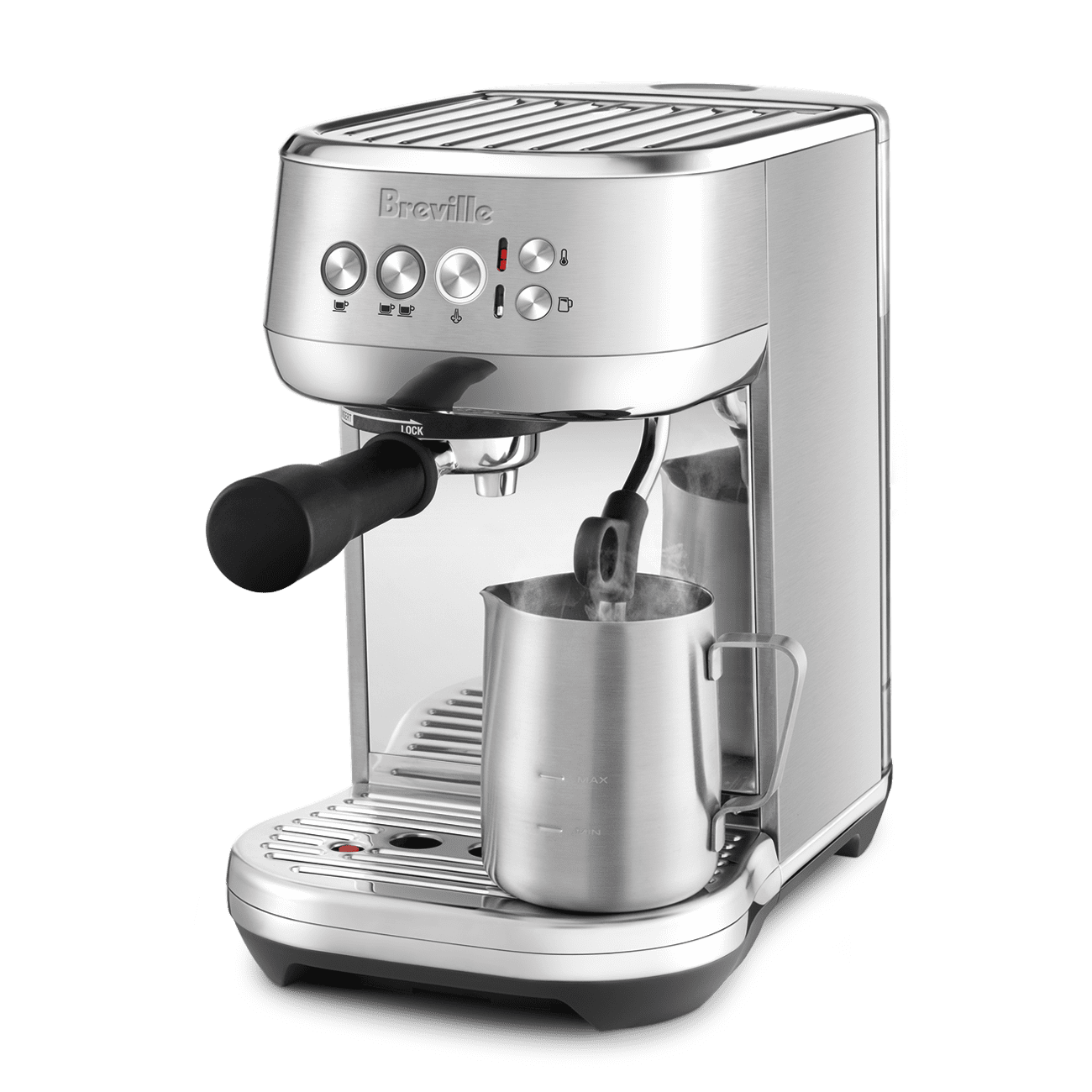
The Bambino Plus is Breville’s answer to small kitchens and tight budgets. Significantly smaller than the Barista Express, it heats up in three seconds and includes an automatic steam wand that froths milk to a set temperature — making flat whites and lattes genuinely easy without requiring technique.
The major difference from the Barista series: no built-in grinder. You’ll need to grind separately or use pre-ground espresso. But the machine itself pulls clean, well-extracted shots, and the auto-frother removes the biggest friction point for beginners.
Limited counter space, espresso beginners who want easy milk frothing, or anyone who already owns a grinder
You want everything in one machine — without a grinder, it’s an incomplete setup for most buyers
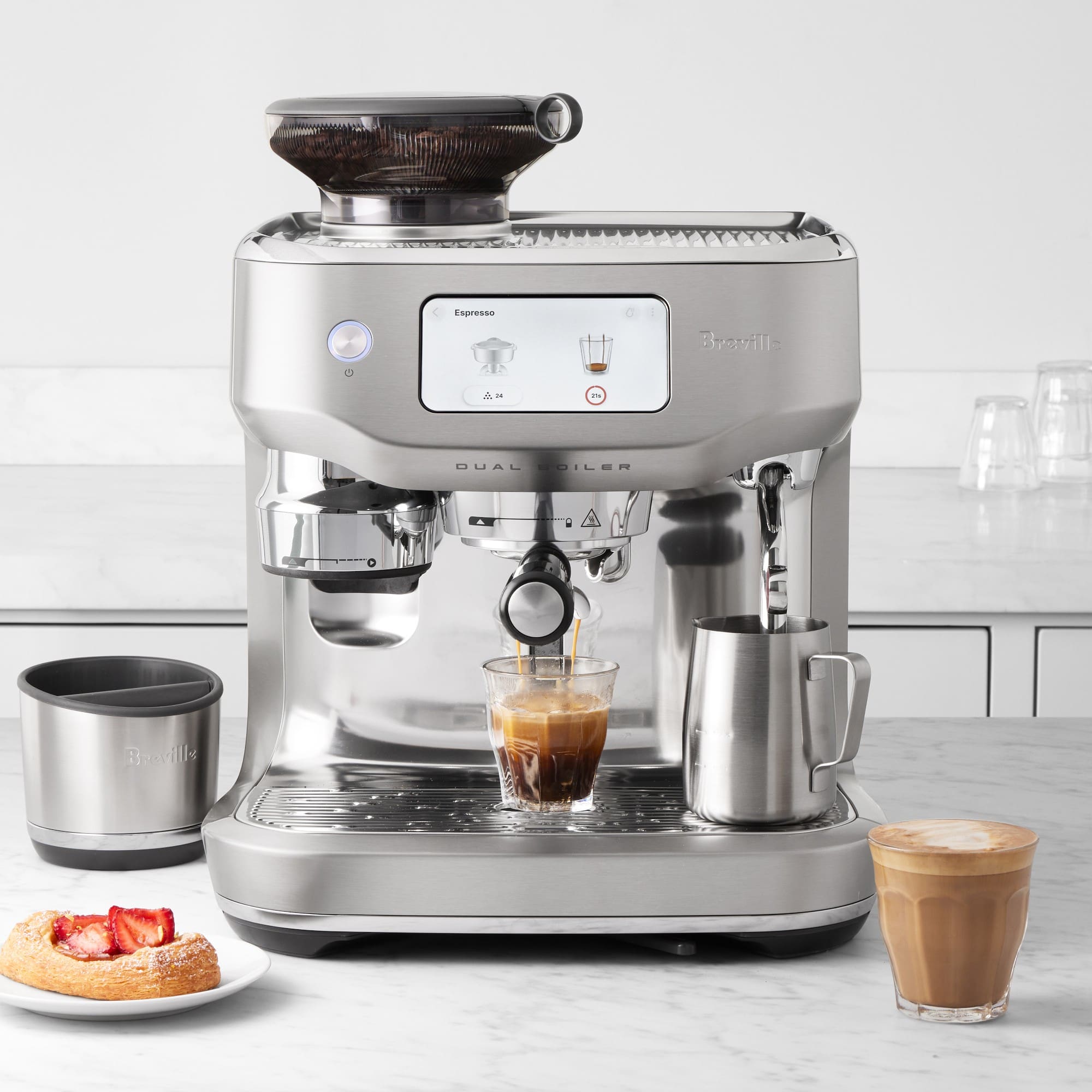
The Oracle Touch is in a different category from everything else on this list — both in capability and price. It grinds, doses, tamps, extracts, and steams milk automatically, guided by a touchscreen with programmable drink settings you can save per recipe. Dual PID boilers control brew and steam temperature simultaneously, a feature usually reserved for commercial equipment.
The result is café-quality espresso at home with almost no manual skill required. What you’re paying for is the removal of every learning curve — the machine handles all of it.
Buyers who want genuine café-quality espresso without any manual skill, and are willing to pay a significant premium for it
You enjoy the hands-on process of pulling shots — or if budget is a real constraint
Best Breville Drip Coffee Maker
Not everyone wants espresso. The Precision Brewer is Breville’s honest answer for drip coffee drinkers.
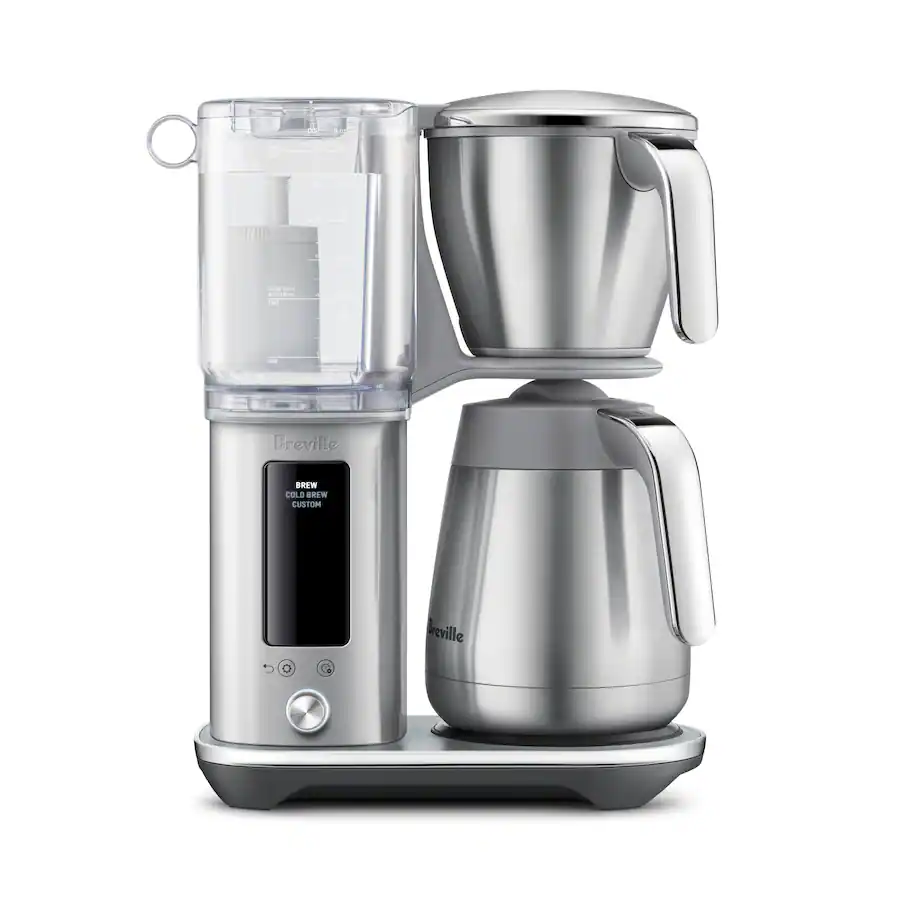
The Precision Brewer is one of the few home drip machines with SCA (Specialty Coffee Association) certification — meaning it consistently brews within the gold cup standard of 197°F–205°F water temperature and the correct contact time. Those two variables account for most of the flavor difference between a good and mediocre cup of drip coffee.
It includes a stainless thermal carafe (no warming plate degrading coffee quality over time), a bloom function that pre-wets grounds before full extraction, and multiple brew modes including a fast brew setting and a gold cup mode that optimizes extraction time. A serious machine for drip coffee drinkers who want to actually taste their beans.
Households that primarily drink drip coffee and want a machine that takes water temperature and extraction time seriously
You primarily want espresso — this machine is purpose-built for drip and doesn’t overlap with Breville’s espresso lineup
Key Features to Compare Before You Buy
When you’re narrowing down Breville machines, these are the specs that actually change the daily experience.
| Feature | Barista Express | Barista Pro | Bambino Plus | Oracle Touch | Precision Brewer |
|---|---|---|---|---|---|
| Built-in grinder | ✓ 16 settings | ✓ 30 settings | ✗ | ✓ auto | N/A |
| Heat-up time | ~30 sec | 3 sec | 3 sec | 3 sec | N/A (drip) |
| PID temp control | Partial | ✓ | Partial | ✓ Dual | ✓ |
| Steam/frother | Manual wand | Manual wand | Auto wand | Auto wand | N/A |
| Interface | Analog dials | LCD digital | Buttons | Touchscreen | Buttons |
| Fully automatic | ✗ | ✗ | Partial | ✓ | ✗ |
| Approx. price | ~$700 | ~$850 | ~$500 | ~$1,500 | ~$330 |
Who Should Buy a Breville — and Who Shouldn’t
- You want to make real espresso at home and are willing to learn the basics
- You’re upgrading from a pod machine and want actual flavor depth
- You drink enough coffee daily to justify a quality machine
- Counter space and budget are reasonable constraints, not dealbreakers
- You want the absolute cheapest option — Breville machines are mid-to-premium priced
- You’re a professional barista needing commercial-grade output
- You want a pod machine for pure convenience with zero involvement
Frequently Asked Questions
The Barista Express (BES870XL) is the best starting point. It combines a built-in grinder with a full semi-automatic machine, so you go from whole beans to a shot without a separate appliance. The pressure gauge and 16-setting grinder provide genuine feedback while you’re learning — without the complexity of the Barista Pro’s digital interface.
Yes, if you’ve already been making espresso and want more precision. The Pro heats up in 3 seconds instead of 30, has 30 grind settings versus 16, and uses a digital LCD interface. The upgrade cost is only justified if you’re actively experimenting with beans and brew parameters — not for everyday convenience brewing.
No. The Bambino Plus does not include a built-in grinder — you’ll need to grind separately or use pre-ground espresso. The machine itself pulls excellent shots, but the missing grinder is the key functional difference from the Barista Express lineup.
The Precision Brewer is one of the few home drip machines with SCA certification, meaning it reliably brews at 197–205°F — the temperature range that actually extracts coffee properly. Most cheap machines brew too cool, which produces flat, under-extracted flavor. The Precision Brewer also adds a bloom function and thermal carafe, both of which meaningfully improve the final cup.
Only if automation is your primary goal and price is not a constraint. The Oracle Touch automates every step of espresso production using dual PID boilers and a programmable touchscreen. What you’re paying for is the removal of every manual step — which is a real benefit if you want café-quality results without learning to be a barista, but wasted money if you enjoy the hands-on process.
Keep Reading
Next guide: Best Coffee Scales for Better Espresso and Pour Over
Popular in this topic:
Match the
machine to
your mornings.
For most people starting out with home espresso, the Barista Express is the right call — the most complete package at a reasonable price. If you want faster heat-up and tighter control, the Barista Pro earns its upgrade cost. If space is tight or you’re new to espresso, the Bambino Plus removes friction without sacrificing shot quality. The Oracle Touch is for buyers who want café results with zero manual skill. And if you mostly drink drip, the Precision Brewer is one of the few machines that takes the science of drip coffee seriously.
Breville doesn’t make a bad machine. The question is which one fits your mornings.
Sources and Nutrition Note
For nutrition and health-related choices, use the current Starbucks nutrition information and ingredient details as the source of record. This guide is editorial and informational; talk with a qualified medical professional if caffeine, sugar, allergies, pregnancy, diabetes, or another health condition changes what is safe for you.
