

14 min read
The Thermodynamics
of the Carajillo
Why Licor 43 and espresso work — and what happens when you pour them wrong
The Carajillo does something that almost no other cocktail attempts: it keeps its ingredients deliberately separate, and calls that a feature. Pour order, temperature, and density are not just technique — they are the mechanism of the drink itself.
The modern Carajillo — the version that spread from Spanish cafes through Mexico and into cocktail bars worldwide — is built on a specific chemical relationship between Licor 43 and fresh espresso. Licor 43 is denser than espresso. Espresso is hotter. When you pour correctly — liqueur over ice first, hot espresso gently layered over the back of a spoon — the two liquids stratify visually and thermally. They coexist in the same glass without mixing, until the drinker decides to break the layers.
Get it wrong and the drink is still fine. But you lose the one thing that makes a Carajillo worth ordering over just adding Licor 43 to your espresso: the theatrical, measured pour that turns coffee into something architectural.
⚡ Short Answer
Pour Licor 43 over a large ice cube first. Pull your espresso immediately and pour it slowly over the back of a spoon held just above the surface. The density difference — Licor 43 is heavier at around 1.12 g/mL versus espresso at roughly 1.01 g/mL — keeps them layered. Serve immediately, unstirred. The drinker stirs it themselves, or sips through both layers as they naturally merge from the bottom up.
Get the 21-Day Coffee Glow-Up Recipe Book
Make your morning coffee feel like a treat again: 21 coffee-shop-style recipes you can make at home, with hot, iced, creamy, cozy, and Java Burn-friendly options.
- 21 craveable coffee recipes
- Simple flavor formulas and shopping list
- 7-day coffee glow-up plan
You are in. Grab the recipe book, then check your inbox to confirm the coffee newsletter.
Download the free recipe bookAlready subscribed? Open the recipe book here.
Why readers save it: It gives them recipes first, not hype first. Java Burn stays optional and label-directed, while the download gives them a better coffee routine they can use right away.
What happens next: MailPoet adds them to the Golden Lamb Coffee Newsletter, sends the welcome email, and includes them in the weekly coffee tips nurture sequence.
Educational download. Not medical advice. Java Burn is a dietary supplement; read the label and ask a qualified professional if you use supplements, take medication, or manage a health condition.
The Science of
Staying Separate
Most cocktail science is about combining ingredients. The Carajillo is a study in deliberate stratification — keeping two liquids visibly and thermally distinct in the same glass. Three physical properties make this possible.
Density Differential
Licor 43’s high sugar content — roughly 300g per litre — gives it a density of approximately 1.12 g/mL. Fresh espresso sits at around 1.01 g/mL, close to water. This 10% density gap is large enough that a carefully poured espresso will float on top of the liqueur without immediately mixing, provided the pour is slow and the surface is not disturbed by vigorous contact.
Thermal Gradient
Hot espresso (approximately 160–175°F at the moment of pouring) sits on cold Licor 43 that has been chilled by ice. The temperature boundary between the two layers acts as an additional stabiliser — warm liquid naturally resists sinking into cold, denser liquid through a mechanism called stratified thermal resistance. The cold layer below pulls heat from the espresso at the boundary, which maintains the visual separation for longer.
Viscosity Gap
Licor 43 is noticeably more viscous than espresso — its sugar concentration makes it flow more slowly, like a light syrup. This viscosity difference means that even where turbulence occurs at the pour point, the two liquids resist blending. The lower layer essentially holds its shape under light disturbance. The spoon technique further diffuses kinetic energy, reducing the momentum of the pour at the point of contact.
The Flavour Bridge
Licor 43’s dominant compound is vanillin — the primary aroma molecule in vanilla. Espresso’s roast produces hundreds of volatile aromatic compounds, including aldehydes and ketones that pair naturally with vanillin through complementary molecular geometry. This is why Licor 43 works so specifically with espresso where other sweet liqueurs do not: the vanilla chemistry is structurally compatible with roasted coffee aromatics, not just superficially sweet.
🌡️ Why Temperature Is Not Optional
The Carajillo demands hot espresso for reasons beyond preference. The heat drives aromatic volatilisation — it forces the scent compounds in the espresso upward, toward the nose of the drinker, before the drink is even sipped. When cold espresso is used, this aromatic lift disappears, and the drink smells mainly of Licor 43’s vanilla. The sensory experience is fundamentally different. Fresh, hot espresso is a functional requirement, not a stylistic one.
The Recipe
& The Ratios
The traditional Spanish Carajillo used a 1:1 ratio — equal parts spirit and espresso. The modern version, built around Licor 43’s sweetness, skews slightly toward the liqueur to balance the espresso’s bitterness. A 1.5:1 ratio (liqueur to espresso) is the most commonly served proportion in contemporary bars.
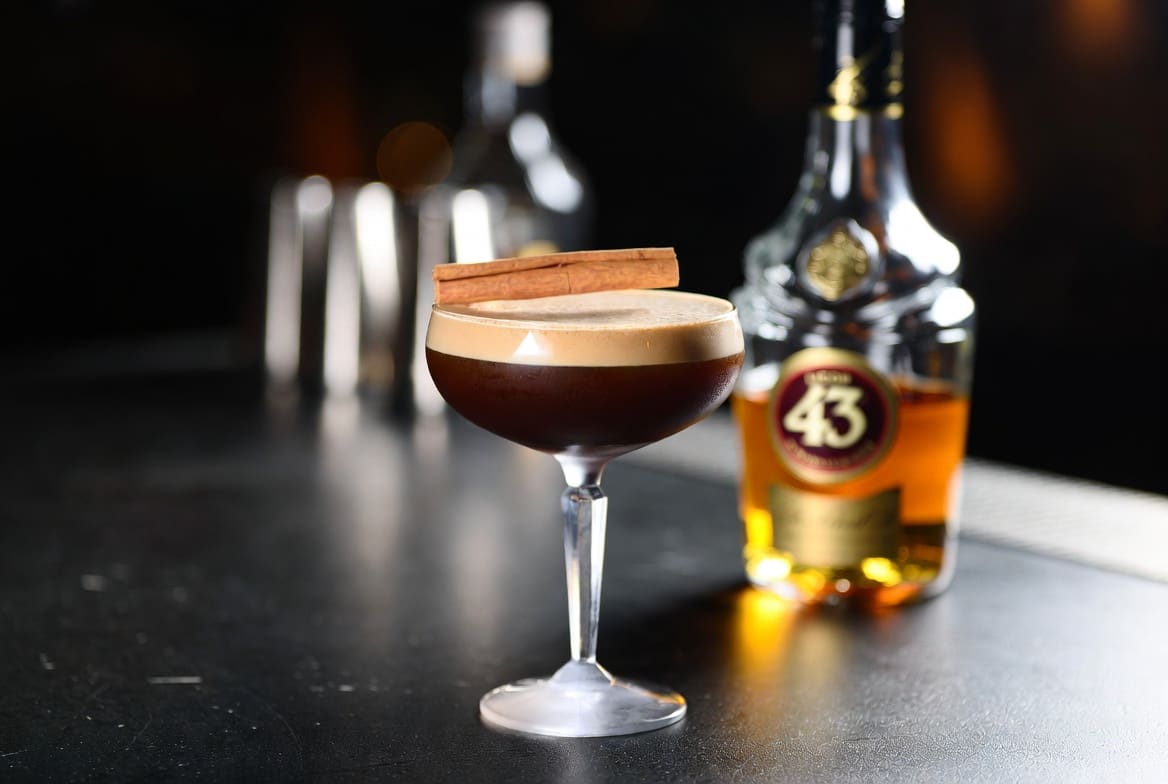
The Carajillo with Licor 43
- 1.5 oz Licor 43
- 1 oz freshly pulled espresso (hot)
- 1 large ice cube or sphere
- Orange peel, optional garnish
- 01
Place large ice cube in a rocks glass or short tumbler.
- 02
Pour Licor 43 over the ice first. Let it settle 10 seconds.
- 03
Pull espresso. Use it immediately — heat is the mechanism.
- 04
Hold a spoon just above the Licor 43 surface, convex side up. Pour espresso slowly over it.
- 05
The espresso floats. Serve immediately, unstirred.
- 06
Express orange peel over the top and drop in, if using.
🔬 Why the Layers Stay Separate
🍊 What the Orange Peel Actually Does
Expressing an orange peel over a Carajillo is not merely decorative. The peel’s oils — primarily limonene — form a mist of citrus aromatics above the drink that the nose encounters before the first sip. Limonene is chemically similar in structure to some of Licor 43’s citrus-derived compounds, so it reinforces rather than contrasts the drink’s existing aroma profile. It also cuts through the heaviness of the vanilla-espresso combination, making the first sip feel brighter than the drink’s ingredients alone would suggest.
When the Layers
Won’t Hold
The layered Carajillo is not difficult, but each of the following mistakes will collapse the stratification before the drink reaches the table.
Layers Merge Immediately
Cause: the espresso was poured directly rather than over a spoon, generating too much momentum on contact. Fix: hold the spoon just above the Licor 43 surface and pour very slowly. The spoon diffuses kinetic energy so the espresso lands gently on the denser liquid below.
No Visual Separation at All
Cause: the ice melted too much before Licor 43 was added, diluting it enough that the density gap closed. Use a large format cube or sphere — the reduced surface area means much slower melt. Add Licor 43 immediately after the ice, not after it has been sitting.
Drink Tastes Too Sweet
Cause: ratio is off — too much Licor 43 relative to espresso, or the espresso was under-extracted. Licor 43 is extremely sweet at 300g/L sugar. Adjust to a 1:1 ratio if you prefer a drier drink, and make sure the espresso shot is pulled to full volume without under-extraction.
Espresso Layer Looks Thin or Pale
Cause: the espresso cooled before pouring, or was a ristretto pulled too short. The visual separation depends partly on colour contrast. Use espresso at full 1 oz volume pulled at 9 bars. The crema layer on top also adds visual drama — if the crema is gone, the espresso has been sitting too long.
Drink Smells Flat
Cause: espresso was left to cool before pouring. The aromatic compounds in espresso are highly volatile — they dissipate within 30–60 seconds after the shot is pulled. The thermal contrast that makes a Carajillo aromatic requires fresh, hot espresso used immediately. This is not negotiable.
Want a Stronger Drink
Some bars serve a double-shot Carajillo at 2 oz espresso to 1.5 oz Licor 43 — inverted ratio. The espresso volume increases but you lose some of the layering stability. The drink becomes more of a coffee-forward, spirit-accented drink than a layered presentation. Both are valid. Know which one you are making.

What Breaks
This Drink
- ✗ Pouring espresso first. Licor 43 is denser — it must go in first or it will sink through the espresso and pull the layers together in the wrong direction. Pour order is not a preference; it is physics.
- ✗ Using cold or pre-made espresso. Room-temperature or cold-brew espresso eliminates the thermal gradient that stabilises the layers. It also kills the aromatic interaction with Licor 43’s vanilla compounds. The heat is doing real chemistry, not just keeping things warm.
- ✗ Substituting another sweet liqueur. The chemistry here is specific. Kahlúa has a different density profile and a coffee flavour that competes with rather than complements espresso. Amaretto’s almond compounds clash with roasted coffee aldehydes. Licor 43’s vanillin is the correct molecular pairing for this drink.
- ✗ Using crushed ice or small cubes. Crushed ice melts almost immediately, diluting the Licor 43 fast enough to close the density gap before you can finish the pour. A single large cube or ice sphere is the correct format — the reduced surface-area-to-volume ratio gives you the time you need.
- ✗ Stirring before serving. The visual stratification is the point. Serving it pre-stirred is like pouring a layered cocktail into a blender — technically the same ingredients, completely different experience. If a customer asks for it stirred, stir it in front of them. The ritual matters.
Carajillo Myths
Worth Correcting
Any espresso spirit works — it’s all just coffee and booze.
✓ RealityLicor 43’s vanillin content is a specific molecular match for espresso’s roast aldehydes. The flavour integration is not accidental — it is the reason the modern Carajillo uses Licor 43 specifically, not brandy or rum as the original recipe did.
The layers are just aesthetic — they mix immediately anyway.
✓ RealityThe layers hold for 2–4 minutes when correctly executed. The thermal boundary slows convective mixing, and the density gap resists turbulence. The drink genuinely delivers different flavour experiences at different stages of consumption — sweet and cold at the bottom, bitter and aromatic at the top.
A Carajillo is basically an espresso martini — same thing, different name.
✓ RealityFundamentally different drinks built on opposite principles. The espresso martini is shaken to combine; the Carajillo is poured to separate. One is about emulsion and foam, the other about density stratification and thermal contrast. The only overlap is that both contain espresso.
More Licor 43 makes it better — it is the main flavour.
✓ RealityLicor 43 at 300g/L sugar is extremely sweet. Past a 1.5:1 ratio the drink becomes cloying and the espresso bitterness can no longer balance it. The espresso is not the supporting player — it is the structural counterweight. Without adequate espresso volume, the drink collapses into syrup.
Frequently
Asked Questions
What is a Carajillo?
A Carajillo is a Spanish cocktail made with espresso and a spirit — traditionally brandy or rum, but the modern version built around Licor 43 has become the dominant form worldwide. The name likely derives from the Spanish word for courage (coraje). The modern Licor 43 version is built on thermal contrast: cold liqueur layered beneath hot espresso, served unstirred.
Do you stir a Carajillo?
Traditionally, no. The layered presentation — dark espresso floating above golden Licor 43 — is part of the drink’s identity. Serving it unstirred lets the drinker experience the temperature and flavour contrast as the layers slowly merge from the bottom up. Some bars serve it pre-stirred for uniformity; that is a valid choice, but you lose the theatre and the staged tasting experience.
Can you make a Carajillo with cold espresso?
You can, but you lose the thermal contrast that defines the drink. Cold espresso also loses its aromatic volatiles within a minute of pulling. The heat of fresh espresso is what drives the sensory interaction with Licor 43’s vanilla compounds. Cold brew lacks crema proteins entirely. Use fresh, hot espresso — it is not a preference, it is the mechanism.
What does Licor 43 taste like?
Sweet, syrupy, and strongly vanilla-forward, with supporting notes of citrus peel, warm spice, and a faint herbal undercurrent. It contains 43 natural ingredients — hence the name — though the formula is proprietary. The high sugar content at roughly 300g/L is what gives it the density to layer beneath espresso. That vanilla character is the primary flavour bridge with coffee.
Is a Carajillo the same as an espresso martini?
No. An espresso martini is shaken, served cold, and built around emulsification — the goal is a uniform, creamy texture with foam. A Carajillo is unshaken, served with thermal contrast intact, and built around layering. The espresso martini combines its components into a unified drink. The Carajillo deliberately keeps them separate. The only thing they share is espresso.
⚕️ Caffeine + Alcohol Note
A Carajillo contains a full espresso shot (approximately 60–70mg caffeine) and approximately 1.5 oz of 31% ABV spirit. The caffeine can mask perceived intoxication. Drink responsibly. If you have cardiovascular concerns or caffeine sensitivity, consult a healthcare professional. This content is educational only.
Pour Order
Is the Recipe
Every other variable is secondary to getting the layers right on the first pour.
The Carajillo is unusual among cocktails in that the technique does not just affect quality — it determines whether the drink is even the correct drink. Licor 43 first, ice already in the glass. Espresso pulled and used immediately, poured over a spoon. No stirring. That is the complete instruction. What you get is not just espresso and liqueur in a glass; it is a temperature gradient, a density boundary, and a flavour arc that changes from first sip to last. The science behind it is real, but so is the simplicity of executing it correctly. Once you understand why the spoon matters and why the ice cube size matters, every variable clicks into place.
Educational content only. Drink responsibly. Consult a healthcare professional regarding caffeine and alcohol.
