

12 min read
Why Cream Makes the
White Russian Work:
The Fat Science
It’s not just texture. Heavy cream is doing active chemistry in your glass — binding aroma molecules, softening bitter compounds, and layering by density. Here’s exactly how it works.
The White Russian is deceptively simple on the surface — three ingredients, no shaking, no heat. But the cream layer is not decorative. Fat molecules are physically altering the flavour compounds in the glass, and the pour order and density physics are what make the whole thing work.
⚡ Quick Answer
A White Russian works because heavy cream’s fat content (35%+) acts as a lipid solvent — it binds fat-soluble aroma compounds in the coffee liqueur and releases them more slowly on the palate, extending the flavour experience. The cream floats because it is slightly less dense than the vodka-liqueur mix beneath it (approximately 0.994 g/mL vs 1.05–1.10 g/mL).
The standard ratio is 2 oz vodka : 1 oz coffee liqueur : 1 oz heavy cream. Pour the cream slowly over a spoon. Do not stir immediately — the layered consumption is part of how the drink is designed to taste.

What Fat Actually Does
in the Glass
Most cocktail writing treats cream as texture. That undersells it significantly. Fat is a solvent for a specific class of flavour compounds — the lipophilic (fat-loving) aroma molecules that make up a large portion of coffee’s aromatic complexity.
When heavy cream contacts the coffee liqueur beneath it, fat molecules begin binding to these aromatic compounds. They don’t dissolve the drink — they slow and extend the release of aroma into the air above the glass and onto the palate during each sip.
Fats Carry Coffee’s Best Molecules
Coffee contains hundreds of volatile aroma compounds — many of them lipophilic, meaning they dissolve preferentially in fat rather than water. In an uncreamed coffee liqueur, these compounds dissipate quickly.
In a White Russian, the fat fraction of heavy cream acts as a carrier — binding these molecules and releasing them more gradually as the cream warms in the mouth.
Cream Suppresses Perceived Bitterness
Coffee liqueur contains bitter alkaloids — caffeine, trigonelline, and chlorogenic acid degradation products. These are water-soluble and bitter on the palate when unmodified.
Fat molecules coat the tongue’s bitter receptors (type II taste cells) with a physical barrier, reducing bitter signal intensity. The drink tastes smoother not because the bitter compounds are gone — but because the fat gets there first.
Texture as Flavour Delivery
Heavy cream adds viscosity to the sip — the physical sensation of thickness slows how quickly liquid moves across taste receptors. Slower contact means longer flavour exposure per sip.
This is why cream-based cocktails feel “longer” on the palate than equivalent alcohol-forward drinks. It’s not richness for its own sake — it’s a delivery mechanism.
Where the Layers Meet
At the boundary between the cream layer and the Kahlúa below it, a partial emulsion forms — fat droplets begin to disperse into the aqueous phase and vice versa. This interface layer has the most complex flavour in the glass.
It’s the reason the first sip — pulling through the cream into the liqueur — tastes different from the fully stirred version. The interface is the most interesting part of the drink.
☕ Why Kahlúa Specifically?
Kahlúa’s higher sugar content (around 20% by weight) makes it noticeably more viscous and denser than a typical spirit. This helps it sit cleanly between the vodka below and the cream above — the density gradient is steeper than it would be with a drier coffee liqueur.
Tia Maria and Mr. Black both work but behave differently. Tia Maria is less sweet and less viscous, so the layers are less stable. Mr. Black is more bitter and more coffee-forward, which creates a sharper contrast with the cream layer — some people prefer it; others find the cream-bitterness clash jarring.
The Density Physics
of Floating Cream
The cream layer doesn’t float because of magic or careful pouring technique alone. It floats because of density physics — specifically, the fact that heavy cream is slightly less dense than the alcohol-sugar mixture beneath it.
Density gradient — lightest at top, heaviest in middle
Notice that vodka is actually less dense than cream — which is why the standard recipe pours vodka first, then coffee liqueur, then cream on top. The Kahlúa sinks through the vodka layer and settles in the middle, creating the characteristic density stack.
If you pour in the wrong order — cream first, for example — the denser liqueur punches straight through it. The pour sequence is not a preference; it is the physics of the drink.
Cream fat content determines float stability
Higher fat content means lower density and more stable float. Whole milk barely floats at all — its density is close enough to the liqueur layer that any slight agitation will mix it immediately. Half-and-half floats, but thinly. Heavy cream gives you the clean layer that holds through the first half of the drink.
🥛 Cream Temperature Matters
Cold cream (straight from the fridge) is denser than room-temperature cream by a small but meaningful margin. Using cold cream gives you a slightly more stable float — the temperature differential between the cold cream and the room-temperature liqueur also slows mixing at the interface.
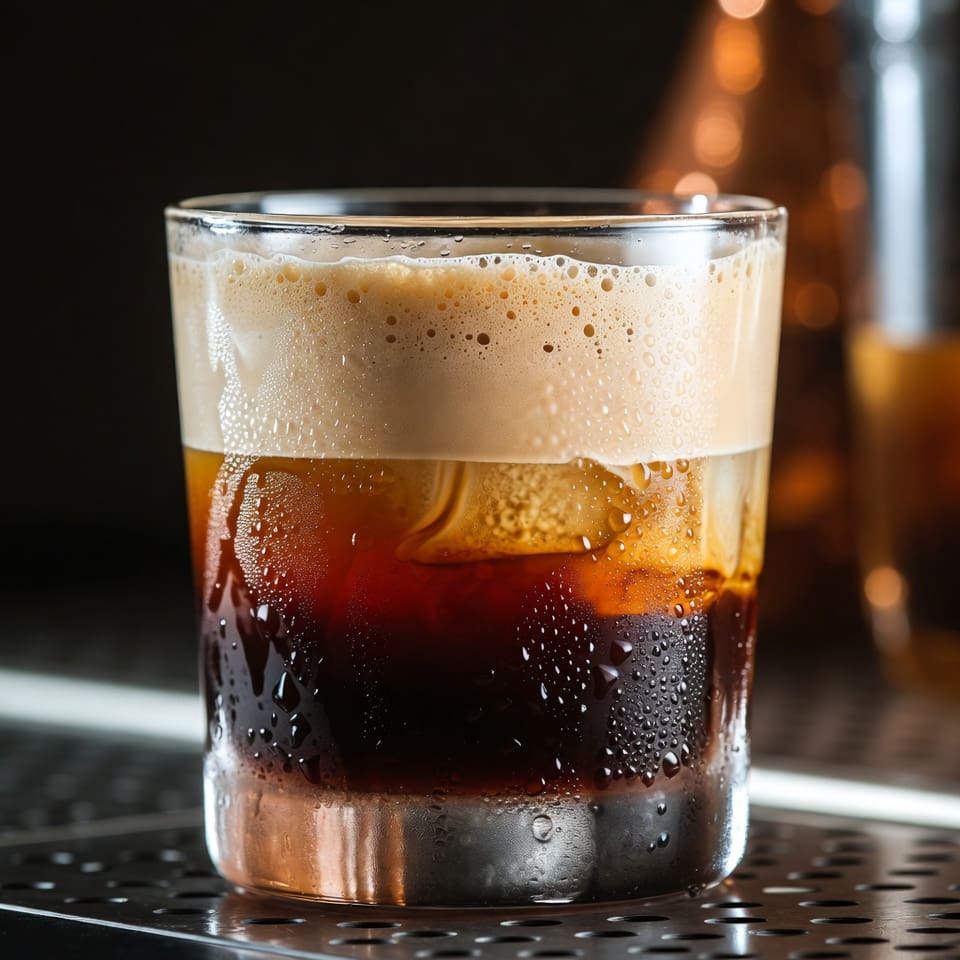
Pouring cream slowly over the back of a bar spoon disperses kinetic energy from the pour, preventing it from punching through the layer below. The spoon technique isn’t tradition — it’s fluid dynamics.
The Recipe
& The Method
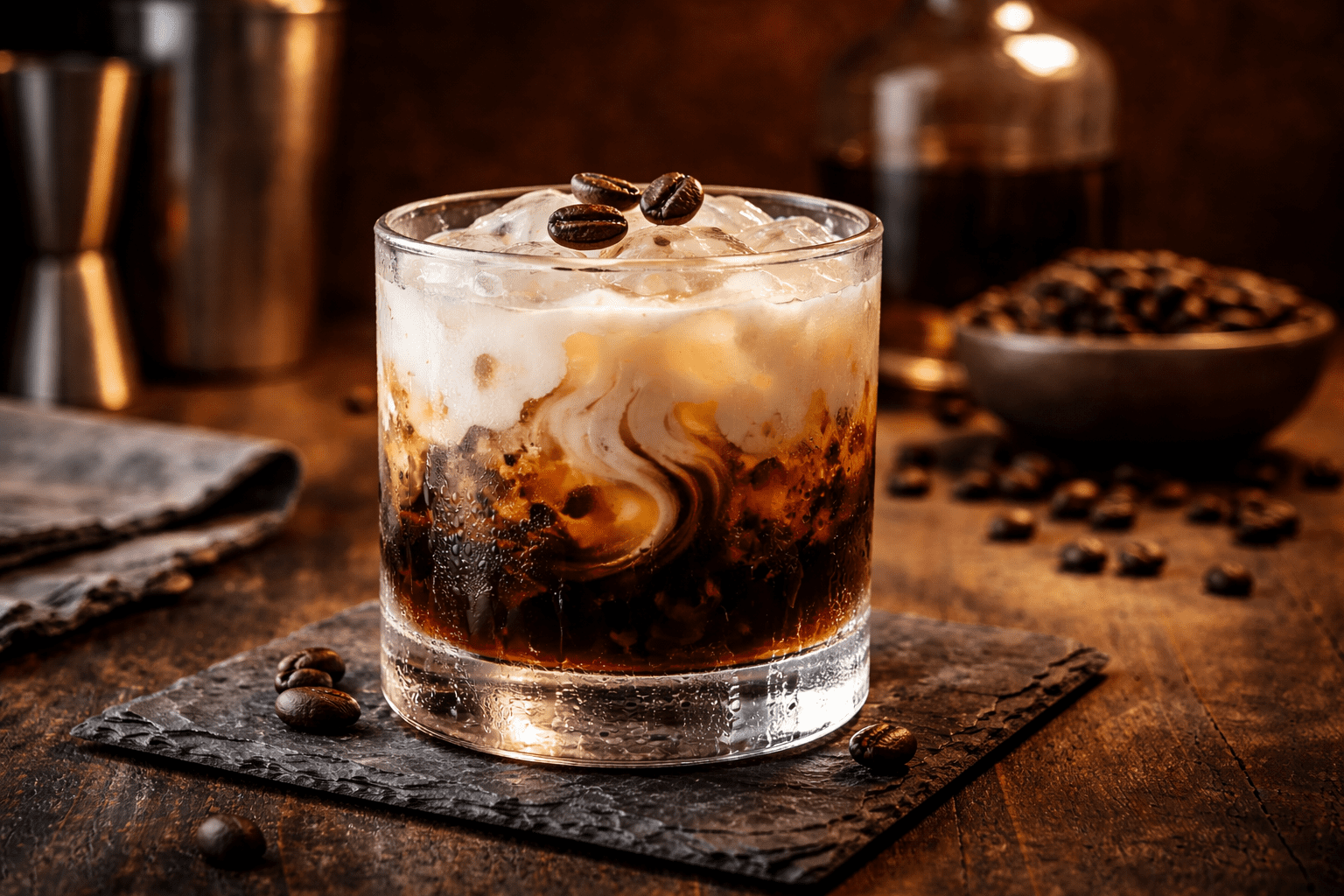
The standard ratio is 2:1:1 — vodka, coffee liqueur, heavy cream. That ratio reflects a specific balance: enough alcohol to keep the drink from being dessert-heavy, enough liqueur to carry the coffee character through the cream, and enough cream to do the lipid chemistry without drowning the drink.
White Russian
- 2 oz vodka
- 1 oz coffee liqueur (Kahlúa)
- 1 oz heavy cream
- Large ice cubes
- 01 Fill rocks glass with large ice
- 02 Pour vodka over ice
- 03 Add coffee liqueur on top
- 04 Float cream over bar spoon
- 05 Serve immediately, unstirred
The pour technique — step by step
Large cubes melt slower than small — they chill the glass without diluting the drink rapidly. Two or three large cubes rather than crushed ice or small cubes.
Vodka goes first because it’s the least dense of the two base spirits. Pouring it over ice chills it immediately and gives the Kahlúa something slightly lighter to sink through.
Kahlúa is denser than vodka due to its sugar content. Poured directly over vodka, it sinks naturally and settles between the vodka below and the cream above. No need to float it — gravity handles this one.
Hold a bar spoon or regular spoon concave-side up, touching the inside edge of the glass just above the liqueur surface. Pour cold cream slowly over the back of the spoon. The spoon disperses kinetic energy so the cream lands gently rather than punching through the layer below.
The layered experience is intentional. The first sip pulls through cream then into liqueur — the interface between them is the most complex part of the drink. Let the drinker decide when to stir.
Choosing Your
Cream
Not all cream behaves the same way in a White Russian. Fat percentage is the key variable — it determines float stability, aroma binding capacity, and the degree to which bitter compounds are suppressed.
Heavy Cream
35%+ fat. Floats cleanly, highest aroma-binding capacity, best bitter suppression. The density gap relative to Kahlúa is large enough that the layer holds through normal drinking. This is what the drink was designed around.
Half-and-Half
10–18% fat. Floats but less stably. Thinner mouthfeel and reduced aroma carry. A good option if you want a lighter drink — the chemistry still works, just less pronouncedly. Pour even more slowly.
Whole Milk
3.5% fat. Does not float reliably — the density difference is too small. Mixing is nearly immediate. You lose the layered presentation and most of the lipid chemistry. The drink becomes thin and flat-tasting.
🌱 Dairy-Free Options
Oat milk creamer and full-fat coconut cream are the two credible dairy-free alternatives. Full-fat coconut cream (not coconut milk) has a fat content of around 20–22% and floats reasonably well. It adds a faint tropical character that changes the drink’s flavour profile noticeably — some people love it.
Oat milk creamer floats poorly and has minimal fat content — the lipid chemistry is largely absent. The drink will taste sweeter and thinner. Cashew cream sits in between — fat content varies by brand, check the label before using it.
What Ruins
This Drink
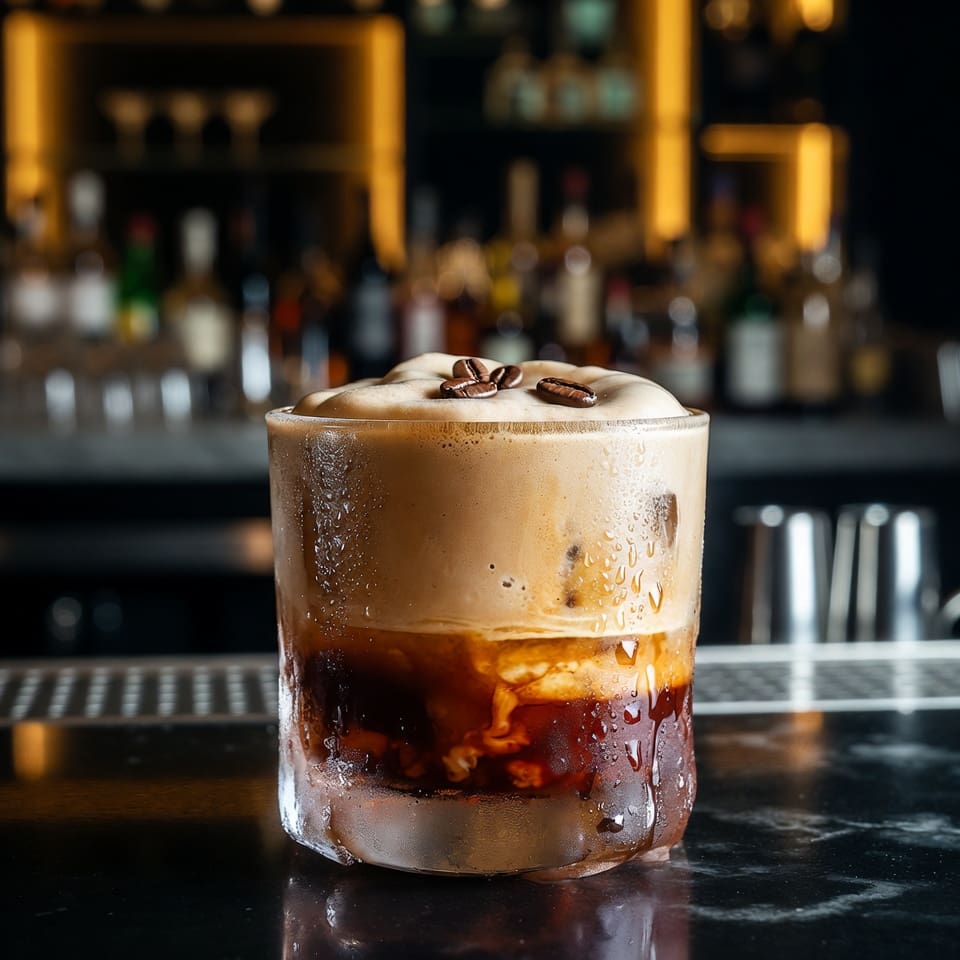
- ✗ Using small ice or crushed ice. Small ice has vastly more surface area, meaning it melts faster and dilutes the drink within minutes. The vodka-to-water ratio shifts rapidly, lowering the density of the base layer and destabilising the cream float. Always use large cubes — two or three maximum.
- ✗ Pouring cream too fast. A fast pour gives the cream too much kinetic energy and it punches straight through the liqueur layer, creating an instantly mixed drink. You lose the layered presentation and the sequential flavour experience. The spoon technique only works at slow, steady pour speed.
- ✗ Using warm cream. Room-temperature cream is less dense than cold cream — the density gap with the liqueur layer narrows and the float is less stable. Keep your cream refrigerated right up to the pour. The temperature difference also slows mixing at the interface.
- ✗ Too much coffee liqueur. Increasing the Kahlúa ratio beyond 1 oz makes the drink saccharine without adding more coffee complexity — Kahlúa is a sweetened product, not a concentrated espresso. If you want more coffee character, add a few drops of cold brew concentrate to the vodka layer instead.
- ✗ Stirring before serving. The whole point of the float is the drinking experience of pulling through the cream into the liqueur. If you stir immediately, you’ve made a beige cocktail with no textural interest. Let the drinker stir when they choose — not before.
Frequently
Asked Questions
What is the correct ratio for a White Russian?
The standard ratio is 2:1:1 — two parts vodka, one part coffee liqueur, one part heavy cream.
Some bars serve 2:1:0.75 for a slightly drier result. The vodka-to-liqueur ratio matters more than most people realise: too much Kahlúa and the drink becomes saccharine; too little and the cream has nothing to carry.
Can you use milk instead of cream in a White Russian?
You can, but the drink changes significantly. Milk has much lower fat content (around 3.5%) versus heavy cream (35%+), so it does not float reliably and does not provide the same aroma-binding capacity.
Half-and-half at around 10–18% fat is a reasonable middle ground. The chemistry still works, just less pronouncedly.
Why does the cream float in a White Russian?
Density. Heavy cream (approximately 0.994 g/mL) is slightly less dense than the vodka-liqueur mixture beneath it (approximately 1.05–1.10 g/mL).
Poured slowly over a spoon, it sits on top rather than mixing immediately. The density gap is small — which is why technique matters. A fast, direct pour will break the layer.
Does it matter what coffee liqueur you use?
Yes, more than most people assume. Kahlúa is sweeter and more viscous, which helps it float cleanly below the cream and above the vodka. Tia Maria is drier, producing a less dessert-forward drink.
Mr. Black is coffee-forward and bitter, which creates a more intense coffee character but can clash with sweet cream if the ratio is off.
Should you stir a White Russian?
Not at the table — let the drinker decide. The first sip through the cream layer is a different flavour experience from the blended version halfway through.
If you stir immediately, you lose both the visual effect and the flavour evolution. The drink was designed to be consumed as the layers gradually combine.
⚕️ Alcohol & Dairy Note
A standard White Russian contains approximately 2 oz of 40% ABV spirit plus 1 oz of 20% ABV liqueur — a meaningful total alcohol load. The cream does not slow alcohol absorption significantly. Drink responsibly.
If you are lactose intolerant, full-fat coconut cream is the most functionally similar substitution. This content is educational only. Consult a healthcare professional if you have dietary concerns.
Cream Isn’t Garnish —
It’s the Whole Point
The White Russian is a lipid delivery mechanism in a rocks glass.
The reason a White Russian tastes the way it does is not nostalgia and not simplicity. It’s that heavy cream’s fat fraction is doing active chemistry — binding aroma molecules, suppressing bitter receptor signals, and extending flavour release across the palate in a way that no other cocktail component can replicate.
Get the ratio right, use large ice, keep the cream cold, pour slowly. Those four variables are all that separates a good White Russian from a mediocre one. The chemistry is already there — your only job is not to disrupt it.
Educational content only. Drink responsibly. Consult a healthcare professional regarding alcohol and dietary concerns.
