

12 min read
The Physics of
the Irish Coffee
Temperature isn’t a detail — it’s the actual ingredient
The cream layer in an authentic Irish Coffee is not a garnish. It is a thermal barrier, a flavour delivery mechanism, and a density physics problem — all three at once. Understanding why it works tells you exactly why most homemade versions fall short.
⚡ Quick Answer
An authentic Irish Coffee works because temperature gradient maintains physical separation between the hot coffee and cold cream layers. Hot coffee (190–200°F) is less dense than cold, lightly whipped cream — the cream floats not just because of density, but because the temperature differential actively slows mixing at the interface.
The four critical variables: preheat the glass, use freshly brewed coffee at full temperature, whip cream to melted-ice-cream consistency, and do not stir. The drink is engineered to be sipped through the cream layer — not mixed.

The Thermal Gradient:
Why It’s the Whole Drink
Most cocktails are designed around flavour balance — sweetness against bitterness, spirit against mixer. Irish Coffee is designed around temperature balance. The drink has two distinct thermal zones that must stay separate for as long as possible, and every step in the recipe exists to maintain that separation.
The hot coffee layer sits at 185–195°F when properly assembled. The cold cream floats above it at roughly 40–45°F. That 150-degree gap is not incidental — it is actively doing work. It is the reason the cream doesn’t immediately sink, and the reason each sip delivers the experience it is supposed to.
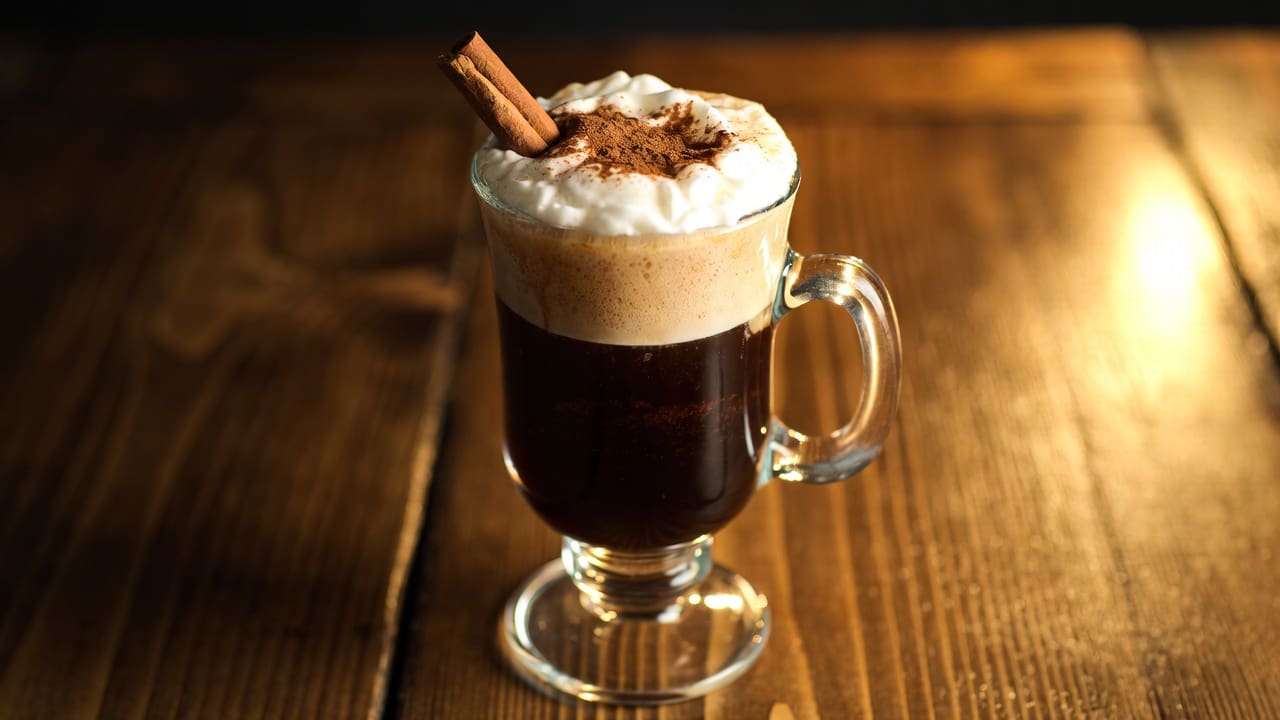
Sipping pulls through both zones — cool cream first, then warming whiskey coffee
Heat Reduces Liquid Density
Hot coffee is less dense than cool cream. As temperature rises, molecules move faster and expand, reducing the liquid’s density. At 190°F, coffee’s density drops enough that cold cream — with its fat content and incorporated air — floats naturally above it.
The cream isn’t floating upward — the hot coffee is sinking away from it. The same principle explains why hot water rises in a pot while cooler water sinks.
Thickness Slows the Mix
Lightly whipped cream has significantly higher viscosity than hot coffee. Viscosity is a fluid’s resistance to flow — thick liquids don’t readily mix with thin ones at their shared interface.
This viscosity gap is the secondary mechanism. Even after the density gap narrows as the drink cools, viscosity continues to resist mixing for several additional minutes.
The Gradient Degrades Slowly
Heat transfers upward from the coffee into the cream through conduction at the interface. This is what eventually collapses the thermal gradient as the cream warms and the coffee cools.
A preheated glass dramatically slows this process. Without preheating, the glass draws heat downward from the coffee, accelerating cooling and collapsing the gradient from below — before you’ve even taken a sip.
Whipping Changes the Physics
Whipping incorporates air bubbles, reducing cream’s effective density and increasing its viscosity — both of which favour floating. Under-whipped cream is too liquid and sinks. Over-whipped cream is too stiff and clumps on the surface rather than spreading smoothly.
The target — consistency of melted ice cream — is the precise point where the fat network holds air but the cream is still pourable.
How the thermal gradient changes as you drink
This is why an Irish Coffee demands to be consumed promptly. Nursing it for 15 minutes is not the same drink as drinking it in the first six to eight minutes. The physics degrade, and the flavour experience degrades with them.
🥃 Why Glass Shape Matters
A tulip-shaped Irish coffee glass is not just tradition. The narrowing rim concentrates aromatic compounds rising from the hot coffee — you smell the whiskey and coffee before you taste the cream. That olfactory priming changes how the first sip registers.
The curved sides also slow heat loss versus a straight-walled glass by reducing the exposed surface area. A tulip shape buys you more time with an intact thermal gradient — which is the whole point.
Choosing the
Right Whiskey
The whiskey choice is not about prestige — it is about how the spirit’s flavour profile interacts with both the coffee and the cream. You are building a three-way flavour system. The whiskey needs to support the coffee character, not compete with it.
Triple-Distilled Irish
Smooth and light, with vanilla and malt notes. Triple distillation removes harsh congeners — the spirit integrates cleanly into the coffee without friction. The lightness lets the coffee lead.
Try: Jameson · Tullamore D.E.W. · BushmillsSingle Pot Still Irish
More grain character and spice than triple-distilled. Works alongside a bold, high-extraction coffee, but can overpower a more delicate roast. Experiment carefully.
Try: Redbreast 12 · Green SpotScotch / Bourbon / Rye
Peat smoke fights bitterly with coffee bitterness. Bourbon’s vanilla-caramel sweetness distorts the sugar balance. High-rye spice creates a harsh edge that cream cannot smooth out. These work in other coffee cocktails — not here.
Not recommended for Irish Coffee🍬 The Sugar Variable
Brown sugar is standard — and not interchangeable with white for sweetness alone. Brown sugar’s molasses content adds a faint caramel depth that bridges the roasted coffee notes and the vanilla character of Irish whiskey.
Demerara or turbinado sugar works even better — more pronounced molasses, coarser crystals. Dissolve it fully in the whiskey before adding any coffee. Undissolved sugar sinks, making the last sip cloying and the first one undersweetened.

The Recipe
& The Method
Every step in this recipe exists for a specific physical reason. None of it is arbitrary. The order of operations matters as much as the ingredients themselves — get either wrong and the drink fails.
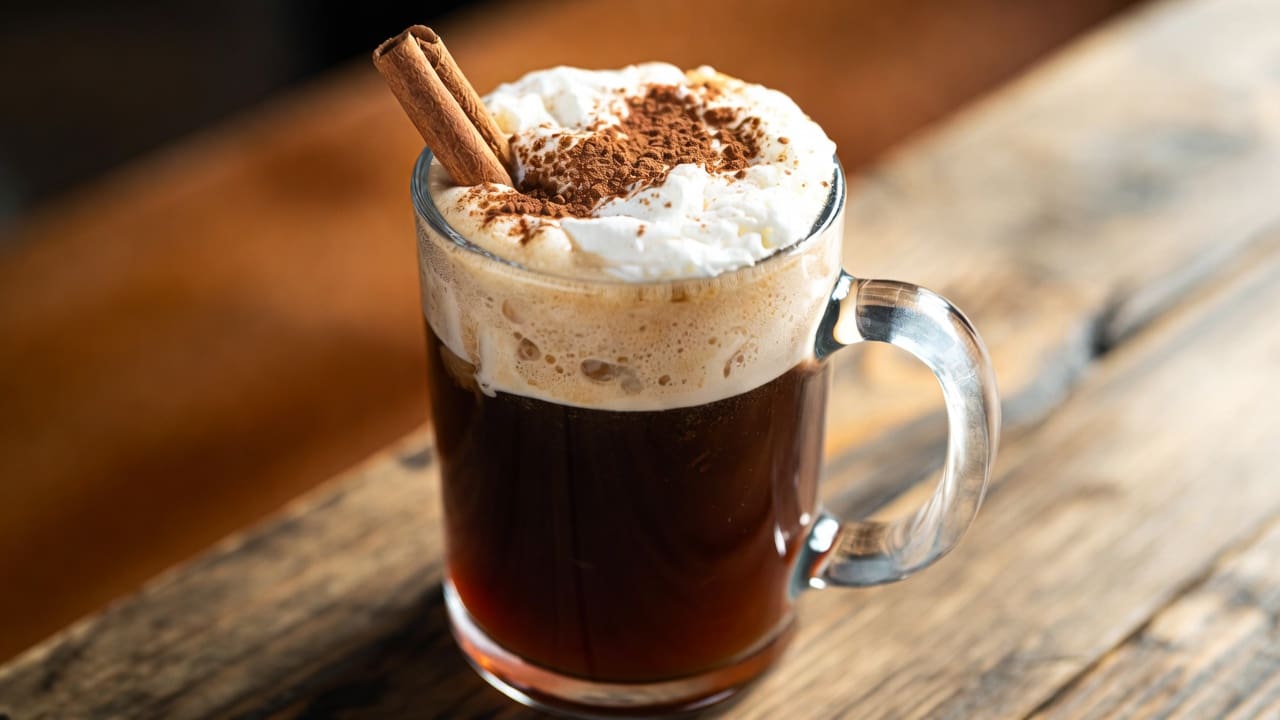
Authentic Irish Coffee
- 1.5 oz Irish whiskey
- 4–5 oz hot coffee (190–200°F)
- 1 tbsp brown sugar
- 1.5 oz heavy cream, lightly whipped
- Hot water to preheat glass
- 01
Preheat glass with hot water for 30 sec — empty and dry
- 02
Stir whiskey and brown sugar until fully dissolved
- 03
Add hot coffee — leave 1 inch headspace
- 04
Float cold lightly-whipped cream over a bar spoon
- 05
Serve immediately — do not stir
Step-by-step — the physics behind each action
Fill with hot water for 30 seconds, then empty and dry. A cold glass is a thermal sink — it draws heat from the coffee by conduction and drops its temperature 15–25°F within the first minute. Preheating brings the glass into thermal equilibrium so it stops competing with the drink.
Empty and dry the warm glass. Add whiskey and brown sugar together — stir until fully dissolved before any coffee is added. Undissolved sugar sinks to the bottom and creates a sweet dead zone: sharp sweetness on the last sip, undersweetened experience on the first.
Pour freshly brewed coffee — 190–200°F — directly over the whiskey-sugar base. Leave about one inch of headspace for the cream. Coffee that has cooled below 165°F has partially lost the density advantage needed to sustain the cream layer above it.
Lightly whip cold heavy cream to soft peaks — pourable but thickened. Hold a bar spoon convex-side up at the rim and pour the cream slowly over the back of it. The spoon disperses the kinetic energy of the pour so the cream lands gently rather than punching through the coffee surface.
The first sensation is cool, slightly sweet cream; the second is the warming wave of sweetened whiskey coffee. Stirring immediately collapses both the thermal gradient and the flavour sequence. The drink is designed to be consumed as the two layers meet naturally in the mouth — not pre-combined in the glass.
What Ruins
This Drink
- ✗ Skipping the glass preheat. The single most common reason home Irish Coffees fail. Without preheating, a cold glass draws 15–25°F out of the coffee within the first minute — the cream layer collapses early because the thermal gradient was compromised before the first sip. Takes 30 seconds. Always do it.
- ✗ Using fully whipped or stiff cream. Stiff peaks incorporate too much air and too much structural rigidity — the cream sits in a clump rather than flowing smoothly across the surface. It cannot spread evenly over the coffee. Target lightly whipped: thick but still pourable.
- ✗ Using coffee that has been sitting. Coffee left on a warmer for 10 minutes drops 25–30°F. At that temperature it has lost significant density advantage. Brew coffee immediately before assembling the drink. This is not a cocktail you can prep ahead.
- ✗ Adding sugar directly to the hot coffee. Sugar added to hot coffee creates an uneven saturation layer as it dissolves. Without pre-dissolving in the whiskey, the sweetness distribution is unpredictable — sharp at the bottom, flat at the top. Dissolving in whiskey first guarantees consistency throughout.
- ✗ Pouring cream without a bar spoon. A direct pour gives the cream too much downward momentum — it punches through the coffee layer rather than floating on top. The spoon is not decorative; it is the mechanism that makes the float physically possible by dispersing the pour’s kinetic energy.
Frequently
Asked Questions
Why does cream float on Irish coffee?
Lightly whipped cream floats because of density and viscosity working simultaneously. Whipping incorporates air, reducing the cream’s effective density below that of the hot coffee beneath it.
The viscosity difference also slows mixing at the interface — thick cream resists being pulled into the thinner liquid below. Hot coffee’s lower density (due to thermal expansion) reinforces the separation. All three effects compound each other.
Do you stir an Irish coffee?
No. The cream layer is the first thing you taste, followed by the hot sweetened whiskey coffee beneath it. Stirring immediately collapses the thermal gradient and the flavour sequence the drink is engineered around.
Sip through the cream — let the drinker decide whether to stir after experiencing the drink as intended.
What is the best whiskey for Irish coffee?
A triple-distilled Irish whiskey — Jameson, Tullamore D.E.W., or Bushmills — is the standard. Triple distillation removes harsh congeners and produces a light, smooth spirit that integrates into coffee without overpowering it.
Avoid peated Scotch, bourbon, or high-rye expressions. The whiskey should support the coffee — not replace it as the dominant flavour.
Why do you preheat the glass for Irish coffee?
A cold glass draws heat from the coffee through conduction — dropping its temperature 15–25°F within the first minute. At lower temperatures, the thermal gradient that keeps the cream floating narrows much faster than it should.
Preheating with hot water for 30 seconds brings the glass thermal mass into equilibrium with the drink, dramatically slowing heat loss and preserving the layered experience throughout.
Can you use canned whipped cream for Irish coffee?
Not for a properly layered result. Canned whipped cream is aerated with nitrous oxide to very low density — it melts and collapses within 30–60 seconds of contact with the hot coffee beneath it.
Hand-whipped heavy cream holds significantly longer because it has less incorporated air and more structural integrity in its fat network. The 90 seconds of whipping by hand is genuinely worth it.
⚕️ Alcohol & Caffeine Note
An Irish Coffee contains approximately 1.5 oz of 40% ABV spirit alongside a full coffee serving (80–120mg caffeine depending on roast and brew method). Caffeine can partially mask perceived intoxication from the alcohol.
Drink responsibly. If you have cardiovascular concerns, caffeine sensitivity, or other health considerations, consult a healthcare professional. This content is educational only.
The Cream Layer Isn’t Optional —
It’s the Physics
This is not a whiskey coffee. It is a thermal system in a glass.
Every element of a properly made Irish Coffee exists to maintain one thing: the temperature gradient between hot coffee and cold cream. Preheat the glass so it stops stealing heat. Keep the cream cold so the density gap stays wide. Pour slowly so the layer lands intact. Do not stir.
Get those four variables right and the drink takes care of itself. The flavour sequence — cool cream first, then the warming wave of sweetened whiskey coffee — is only available for the first six to eight minutes. That is the window the physics give you. Use it.
Educational content only. Drink responsibly. Consult a healthcare professional regarding alcohol and caffeine consumption.
