
14 min read
Dilution Control:
The Coffee Old Fashioned
Ice isn’t just cooling the drink — it’s finishing the recipe
The Old Fashioned is one of the few cocktails where the ice is not background noise — it is an active ingredient. In a Coffee Old Fashioned, that matters even more. The addition of cold brew creates a flavour balance so precise that getting the dilution wrong by even 10 percent tips the drink from excellent to undrinkable.
⚡ Quick Answer
A Coffee Old Fashioned fails when it is either under-diluted (harsh, alcohol-forward, coffee getting lost) or over-diluted (flat, watery, bitters disappearing). The fix is deliberate dilution in two stages: a controlled stir with mixing-glass ice to hit 20–25% dilution, then a large clear serving cube that continues the process slowly as you drink.
Cold brew, not hot coffee. Large clear ice, not standard cubes. Gentle stir, not a shake. These three variables are what separates a Coffee Old Fashioned that works from one that doesn’t.
The Dilution Problem:
Why Coffee Changes Everything
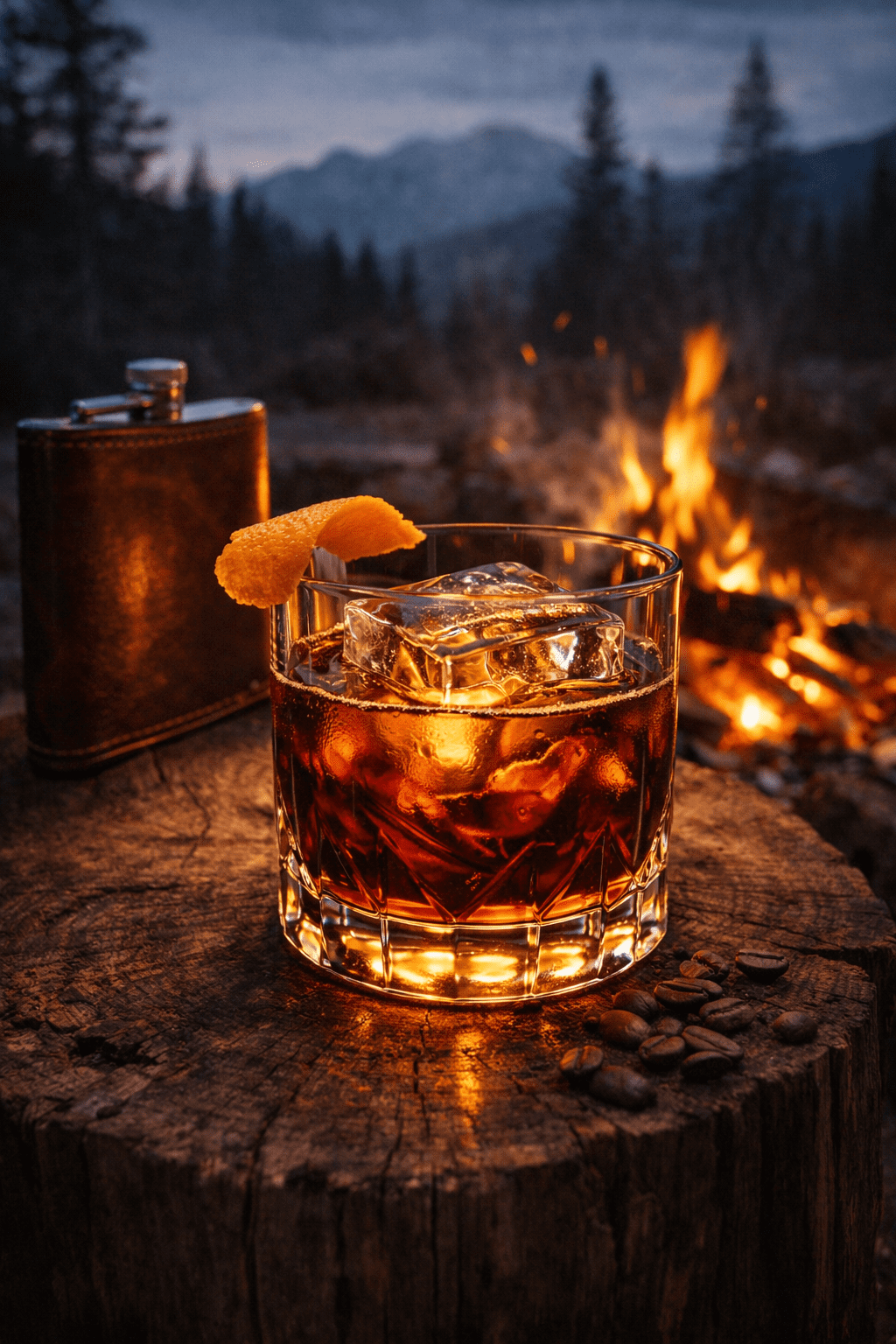
A classic Old Fashioned — whiskey, sugar, bitters — has a relatively wide tolerance for dilution error. It is a robust drink. The Coffee Old Fashioned is not. Cold brew adds a third major flavour pillar with its own bitterness, acidity, and aromatic compounds, and each of those responds differently to water addition.
Under-dilute, and the high-proof whiskey overwhelms the more delicate coffee aromatics — you taste alcohol first and coffee as an afterthought. Over-dilute, and both the coffee character and the bitters wash out, leaving a flat, thin drink with no spine. The target window is narrow: 20–25% water addition by volume, achieved through a controlled stir, then sustained through careful ice selection in the serving glass.
Ice Absorbs Heat, Produces Water
When ice contacts warmer liquid, it absorbs heat energy through conduction. That heat drives the phase change from solid to liquid — the melting process. The rate of dilution is directly proportional to the temperature differential and the surface area of ice in contact with the cocktail.
More surface area = faster dilution. This is why ice selection is not a stylistic choice — it is a rate-of-dilution decision.
Melting Cools Without Chilling
The conversion of solid ice to liquid water requires significant energy — 334 joules per gram. This energy is pulled from the cocktail as heat, simultaneously chilling the drink and diluting it. The two effects are inseparable: you cannot chill this cocktail without also diluting it.
This is why pre-diluting slightly during the stir step is deliberate — it gives you control over how much additional dilution happens from the serving ice.
Coffee Compounds Are Water-Sensitive
Cold brew’s roasted aromatic compounds — primarily furans, pyrazines, and lactones — are volatile and dilution-sensitive. At higher concentrations (low dilution) they can read as harsh or astringent. At the right water ratio, they open up and integrate with the caramel notes in bourbon.
Over-diluted coffee in a cocktail doesn’t taste mild — it tastes flat and slightly stale. The sweet spot is remarkably precise.
Water Unlocks Flavour Compounds
Pure undiluted spirit masks many of its own aromatic compounds — ethanol suppresses the olfactory perception of delicate volatiles. Adding water (dilution) literally unlocks flavours that were chemically bound and inaccessible at higher ABV.
This is why a neat whiskey tastes different from the same whiskey with a few drops of water. The 20–25% dilution target is where the bourbon’s best flavour compounds become perceptible alongside the coffee.
What happens at each dilution level
A 20-second stir with large mixing ice typically produces approximately 20% dilution. A 30-second stir approaches 25%. Do not stir beyond 30 seconds — the remaining dilution should happen slowly in the serving glass, not in the mixing step.
🧫 Why Bitters Are Dilution-Sensitive
Angostura bitters are highly aromatic and used at 2 dashes — a tiny quantity with outsized flavour impact. Their bitter and spice compounds are volatile: at low dilution they can feel sharp and medicinal, but at the right water ratio they bloom into the background complexity that ties a cocktail together.
Over-diluted bitters disappear entirely. This is one of the subtler signs of an over-diluted Old Fashioned — you stop tasting the bitters without realising they’ve gone. The drink tastes sweeter and flatter than it should.
Ice Selection:
The Variable You Control
Ice is the only active ingredient that changes throughout the life of the drink. Every other component is fixed once assembled. The ice you choose determines the dilution trajectory — how fast it moves, and whether the drink stays in the ideal zone long enough to enjoy.
Large Clear Cube
Minimum surface area relative to volume — melts slowly and predictably. Clear ice has no trapped air bubbles, so it melts more evenly than cloudy ice. A 2-inch cube keeps the drink in the ideal dilution zone for 12–18 minutes. This is what serious cocktail bars use.
Large Cloudy Cube
Melts slightly faster than clear ice due to trapped air bubbles creating internal hot spots. Still much better than standard ice. Dilution is adequate if you drink promptly — within 8–10 minutes of serving. Widely available in silicone trays.
Standard Cubes or Cracked Ice
High surface area, fast and uncontrolled dilution. A Coffee Old Fashioned built over standard ice will be over-diluted within 4–5 minutes — before most people have finished it. Coffee character washes out first, bitters second, leaving a flat, watery drink.
🧊 How to Make Large Clear Ice at Home
Fill a small insulated cooler with water — no lid — and place it in the freezer. Because the insulation slows freezing from all sides except the top, ice forms directionally from the top down, pushing dissolved gases and impurities to the bottom. After 24 hours, remove the cooler. The top portion will be perfectly clear; cut away the cloudy bottom section. Score and break into large cubes with a serrated knife and rubber mallet.
Choosing the
Right Whiskey
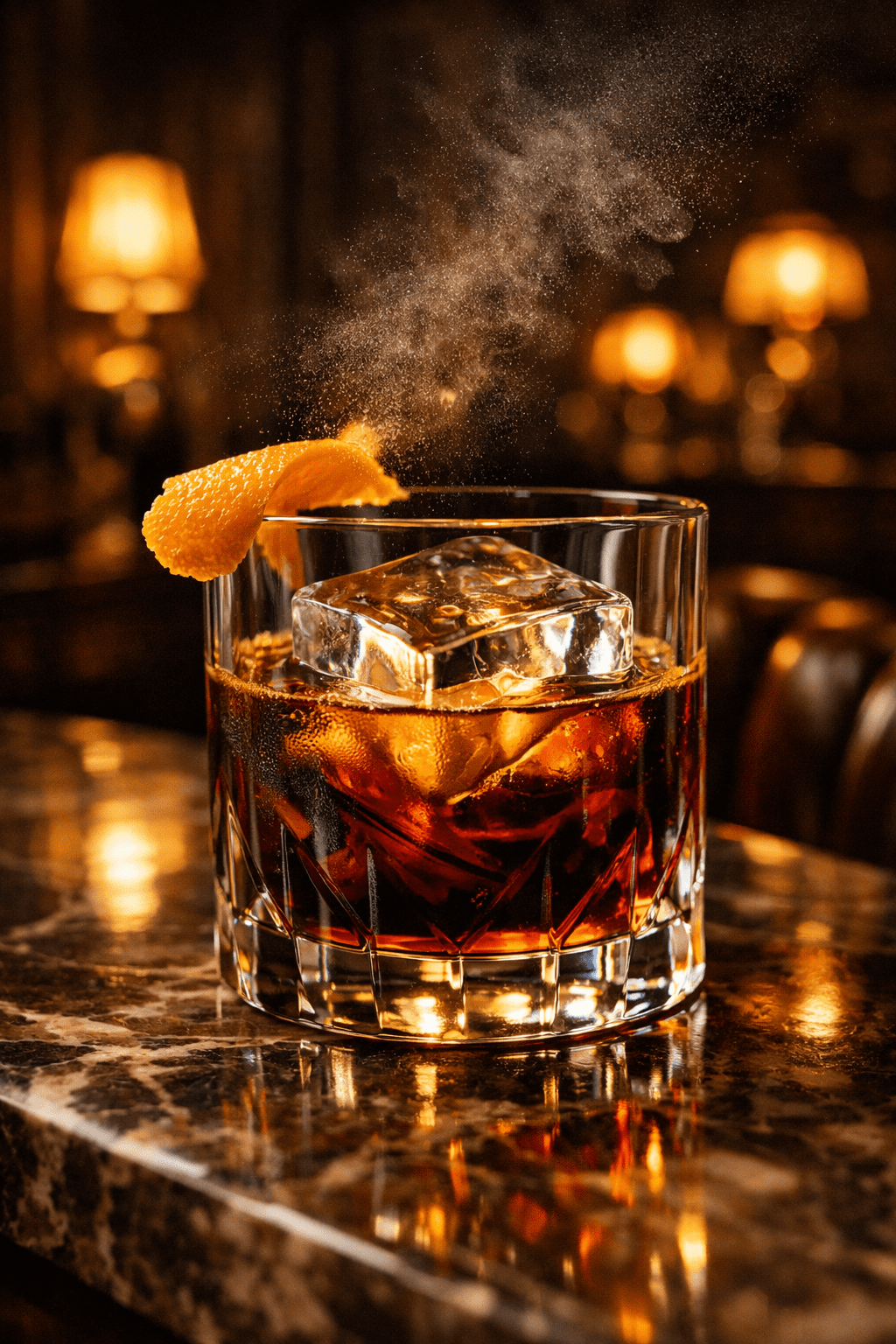
The whiskey in a Coffee Old Fashioned has to carry more weight than in the original — it is competing with coffee’s strong aromatic identity. A thin or delicate spirit gets swallowed by the cold brew. You need something with enough backbone to stay present.
Wheated Bourbon
Vanilla, caramel, and soft fruit notes pair naturally with cold brew’s roasted character. The wheat grain softness means the whiskey integrates rather than fights. Strong enough to coexist with coffee without becoming abrasive.
Try: Maker’s Mark · Buffalo Trace · W.L. WellerRye or High-Rye Bourbon
Adds spice and dryness that pushes back against the coffee’s natural sweetness — producing a more complex, less dessert-like drink. Works well with lighter-roast cold brew. Requires a slightly more generous sugar component to stay balanced.
Try: Bulleit Rye · WhistlePig 10Peated Scotch / Light Irish
Peat smoke creates a bitter-on-bitter clash with cold brew that no amount of sugar can bridge. Light Irish whiskeys are too delicate and disappear entirely behind the coffee. This cocktail requires a spirit with genuine flavour presence.
Not recommended for this application☕ Cold Brew Ratio — Why 0.5 oz
Cold brew concentrate at 0.5 oz in a 2 oz spirit drink represents roughly 20% of the liquid volume before dilution. That ratio keeps the coffee as a supporting character, not the lead. At 0.75 oz, the coffee starts to dominate and the whiskey becomes a carrier. At 0.25 oz, you lose the coffee character to dilution before the drink is half-finished.
Use true cold brew concentrate — not cold brew ready-to-drink or chilled espresso, both of which are weaker and less consistent. The concentrate gives you precision.
The Recipe
& The Method
Every choice in this recipe — sugar form, stir duration, ice type, garnish technique — exists for a documented reason. Understanding why each step works makes it possible to adapt the recipe rather than follow it blindly.
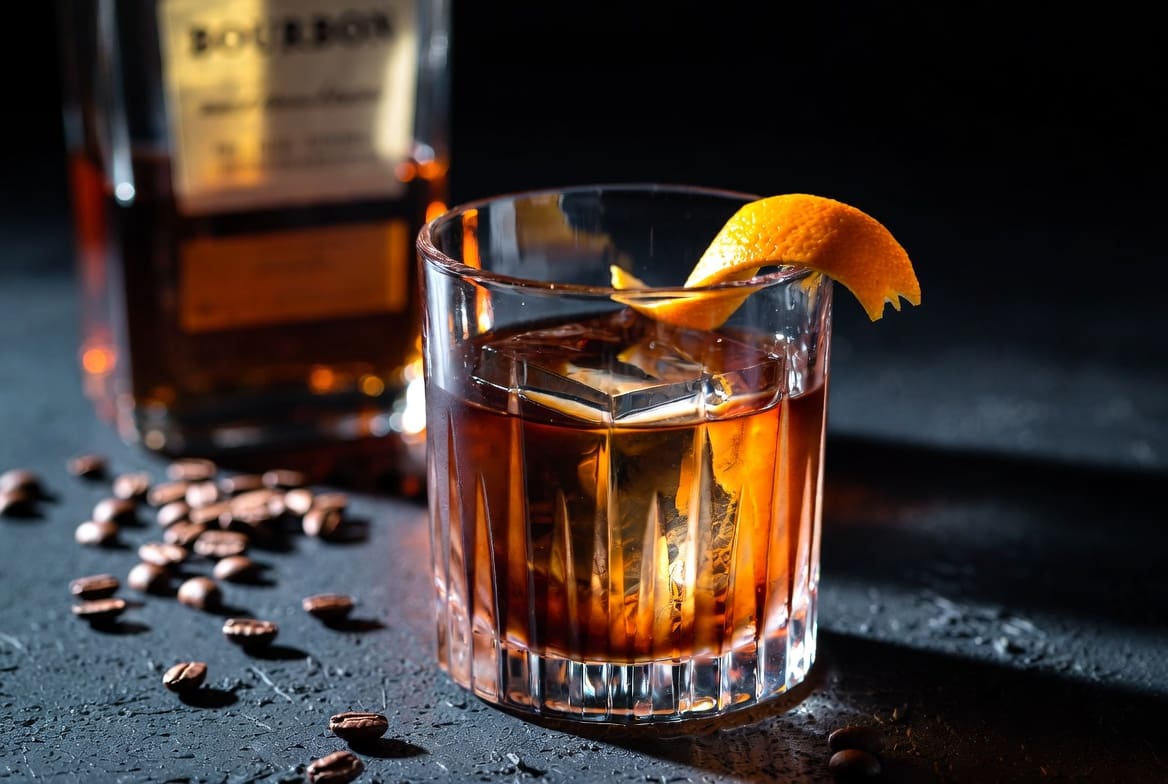
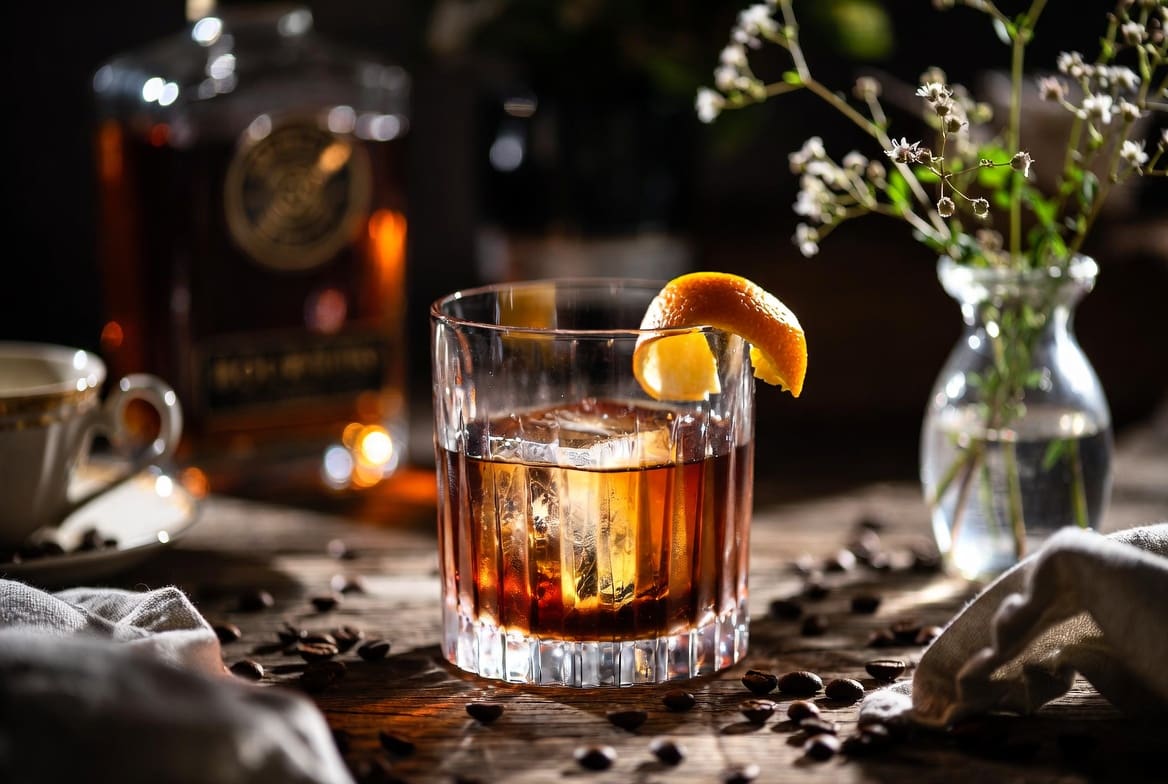
Coffee Old Fashioned
- 2 oz bourbon or rye whiskey
- 0.5 oz cold brew concentrate
- 1 sugar cube (or 0.25 oz simple syrup)
- 2 dashes Angostura bitters
- 1 large clear ice cube
- Orange peel, for garnish
- 01
Muddle sugar cube and bitters until dissolved
- 02
Add whiskey and cold brew to mixing glass
- 03
Stir gently 20–30 sec over mixing ice
- 04
Strain into rocks glass over large clear cube
- 05
Express orange peel, rim glass, garnish and serve
The science behind each step
A sugar cube muddled with bitters creates an aromatic paste before any liquid is added — the bitters compounds bind to the sugar granules and distribute more evenly than when added to diluted liquid. Simple syrup works but integrates faster and gives slightly less aromatic complexity in the base. Either works; the cube is a small but real advantage.
Adding whiskey to the sugar-bitters base first allows the spirit’s alcohol to help dissolve and distribute the aromatics before the coffee’s more assertive compounds enter the mix. Cold brew added to whiskey integrates more smoothly than whiskey added to cold brew — the direction of addition affects aromatics distribution in ways that are small but perceptible in a simple cocktail like this one.
Shaking aerates the cocktail, creates foam, and over-dilutes rapidly — none of which are desirable here. Stirring chills and dilutes without aeration, preserving clarity and the precise flavour layering. Count: 20 seconds for 20% dilution, 30 seconds for 25%. Beyond 30 seconds, stop — additional dilution comes from the serving ice, intentionally and slowly.
The stirring ice is partially melted and at equilibrium temperature — it has done its job. Straining over a fresh large cube gives you a new block of maximum density that will dilute slowly and predictably. Serving over spent stirring ice continues over-dilution immediately and collapses the window the two-stage process was designed to create.
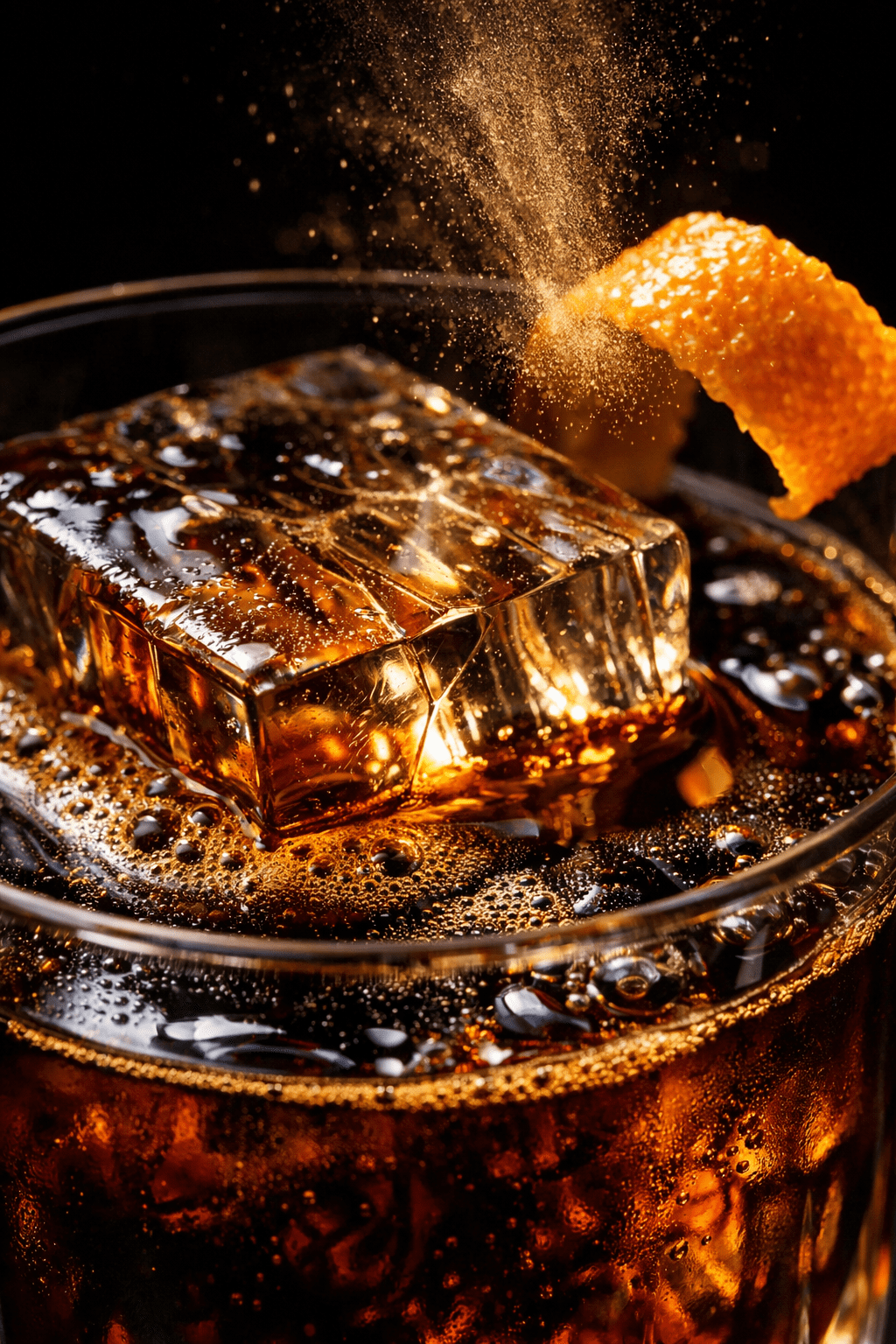
Squeezing the orange peel sharply over the glass releases a fine mist of citrus oils — limonene and other terpenes — across the surface of the drink. These aromatics settle on the liquid surface and prime the nose before the first sip. The orange peel is not decorative. It changes the olfactory experience of every sip that follows. Run it around the rim for residual oils, then drop it in.
What Ruins
This Cocktail
- ✗ Using hot or warm brewed coffee instead of cold brew. Hot coffee raises the temperature of the cocktail, causing the ice to melt faster and producing uncontrolled dilution. It also introduces more acidity and more bitterness than cold brew, which swings the flavour balance toward harshness. Cold brew’s lower acidity and higher extraction consistency make it the correct tool here.
- ✗ Shaking instead of stirring. Shaking aerates aggressively, creates a foam layer that obscures the drink’s clarity, and over-dilutes in seconds rather than the controlled 20–30 second stir. A Coffee Old Fashioned should be crystal clear — shaking destroys that immediately and produces a completely different drinking experience.
- ✗ Serving over standard ice cubes. Standard ice cubes have 3–4x the surface area of a single large cube. They melt in minutes, producing rapid and uncontrolled dilution. The coffee character washes out first, followed by the bitters, leaving a flat and formless drink within 5 minutes of serving. The large cube is non-negotiable.
- ✗ Over-stirring in the mixing glass. More than 30 seconds of stirring puts dilution past 25% before the drink reaches the glass — the serving ice then pushes it further into over-diluted territory. The cocktail’s flavour trajectory from 30+ seconds of stir is flat and never recovers, regardless of how large or clear the serving cube is.
- ✗ Skipping the orange peel expression. A lemon twist or pre-cut peel sitting in the glass does not deliver the same effect. The peel must be squeezed firmly over the surface to release its oils into the aromatic space above the drink. A garnish placed without expression contributes almost nothing.
Frequently
Asked Questions
What is a Coffee Old Fashioned?
A Coffee Old Fashioned is a riff on the classic Old Fashioned — bourbon or rye, sugar, bitters — with cold brew coffee as a fourth component. The coffee adds bitterness, roasted depth, and caffeine. The challenge is dilution control: coffee makes the balance more fragile than the original, so ice quality and stir technique matter more.
Why use cold brew instead of hot coffee?
Cold brew has lower acidity and higher extraction consistency than hot-brewed coffee, making it far more controllable in a cocktail. Hot coffee introduces temperature variance that causes unpredictable dilution and can dull delicate whiskey compounds. Cold brew concentrate at 0.5 oz delivers clean coffee character without acidity spikes.
What whiskey works best in a Coffee Old Fashioned?
Bourbon is the standard — its vanilla and caramel notes complement both cold brew bitterness and the orange garnish. High-rye bourbon or straight rye works well if you want a drier, spicier result that pushes back against the coffee’s sweetness. Avoid lightly-flavoured whiskeys or peated Scotch.
Wheated bourbons like Maker’s Mark or Buffalo Trace are reliable starting points.
How much should you dilute a Coffee Old Fashioned?
Target 20–25% dilution by volume from the stirring step — roughly 20–30 seconds of gentle stirring with large mixing ice. This drops ABV enough to open up flavour compounds without washing out coffee or whiskey character.
The serving cube continues slow dilution as you drink — this is intentional. The cocktail is designed to evolve over 12–15 minutes, not stay static.
Why does ice size matter in an Old Fashioned?
Ice size controls the surface area exposed to the warmer liquid. Small cubes have more total surface area relative to volume, so they melt fast and over-dilute within minutes. A single large clear cube has minimal surface area relative to volume — it melts slowly and predictably, keeping the cocktail in the ideal dilution zone far longer.
⚕️ Alcohol & Caffeine Note
A Coffee Old Fashioned contains 2 oz of 40–50% ABV spirit alongside cold brew concentrate with significant caffeine content (approximately 100–200mg depending on concentrate strength and brand). Caffeine can partially mask the subjective sensation of intoxication.
Drink responsibly. Consult a healthcare professional if you have cardiovascular concerns, caffeine sensitivity, or other relevant health considerations.
The Ice Isn’t Decoration —
It’s the Final Ingredient
Get the dilution wrong and the recipe is wrong, regardless of what went in before it.
A Coffee Old Fashioned built correctly is not a complicated drink — but it requires deliberate choices at every step. Cold brew for consistency. A controlled 20–30 second stir for the initial dilution. A large clear cube for the sustained slow evolution. An expressed orange peel to prime every sip that follows.
Skip any one of those and the drink works against itself. Hit all four, and what you have is a cocktail that improves for the first 12 minutes in the glass — opening up, integrating, softening exactly the way it was designed to.
Educational content only. Drink responsibly. Consult a healthcare professional regarding alcohol and caffeine consumption.
