

7 min read
A skinny vanilla latte usually lowers calories and sugar compared with a regular version, but it also changes texture, sweetness, and how satisfying the drink feels. This page is for the comparison question: which version makes more sense for your routine, goals, and taste. If you only want the exact Starbucks numbers by size, use our skinny vanilla latte calorie guide.
Quick answer
Skinny versions are usually better for daily calorie control. Regular versions often deliver richer texture and sweetness. The best choice is the one you can sustain without rebound snacking, oversized upgrades, or “I deserve it” add-ons. For exact calorie counts by size, jump to the nutrition lookup page.
Why You Can Trust This Guide
- We evaluate skinny vanilla latte vs regular using real-world ordering constraints, not idealized nutrition labels.
- We separate daily habits from occasional treats so you can make a fast, confident choice.
- We focus on repeatable behavior: what you can order consistently across busy mornings and different cafés.
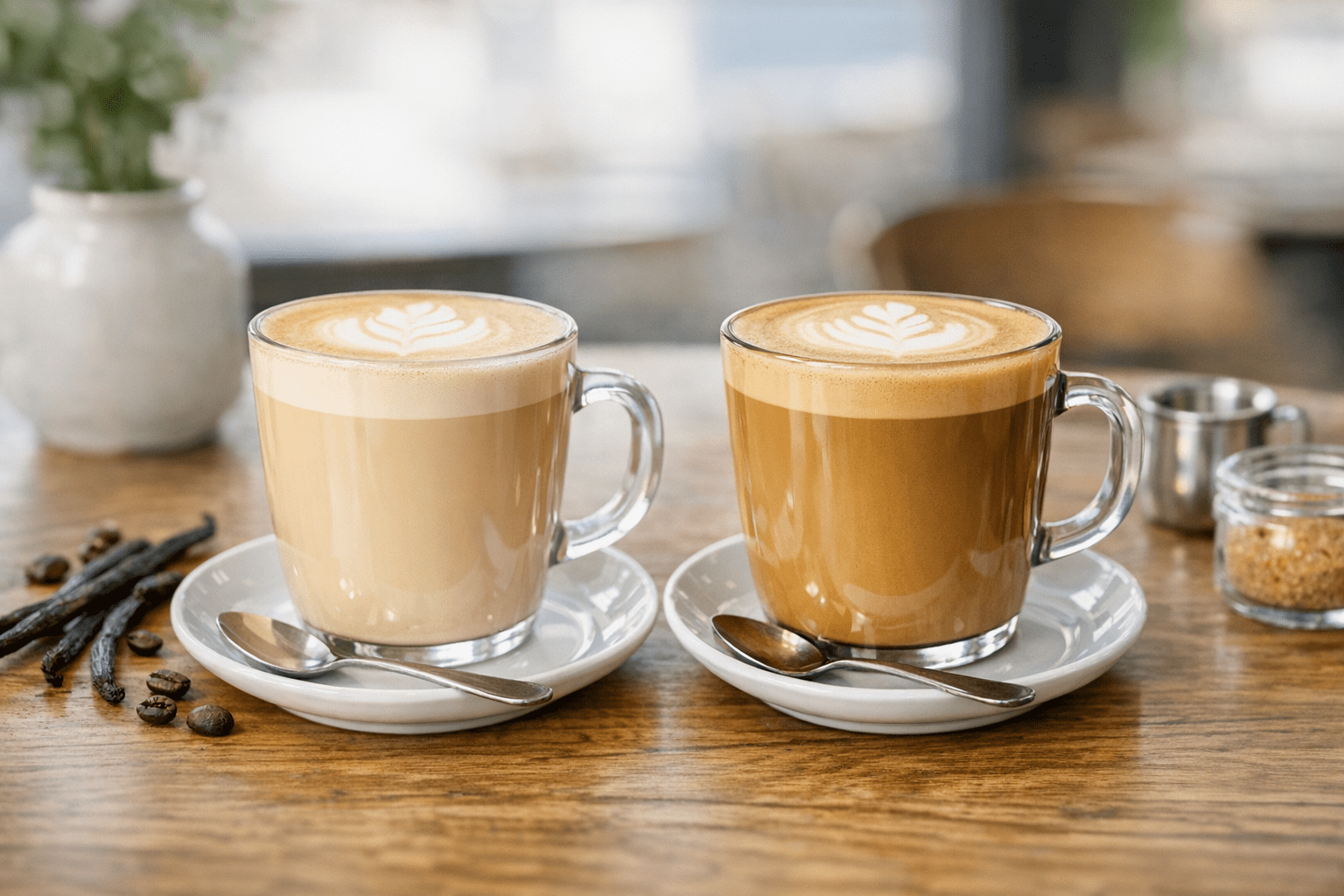
Skinny vanilla latte vs regular decision matrix
Start with your primary goal. Are you optimizing for calorie control, flavor satisfaction, or long-term adherence? Choose the row that matches your priority, then use the customization column to lock in a repeatable order. Clarity beats complexity.
| Preference | Choose | Customization | Expected outcome |
|---|---|---|---|
| Strict calorie budget | Skinny | Cap syrup and size | Lower daily intake |
| Flavor priority | Regular | Reduce size first | Higher enjoyment, higher calories |
| Compromise | Hybrid | Half nonfat + alt milk | Improved texture with moderate calories |
| Weekly treat model | Regular occasionally | Plan frequency | Better adherence long term |
How to evaluate skinny vanilla latte vs regular without getting misled
The biggest mistake in the skinny vanilla latte vs regular debate is obsessing over a single calorie number. Nutrition labels don’t capture behavior. A drink that looks “light” can quietly expand in size, sweetness, or frequency. Small daily creep beats good intentions.
Use a simple three-part filter. First: baseline nutrition—calories, sugar, protein, and milk type. Second: adherence—do you actually enjoy it enough to avoid modifying it? Third: downstream effects—energy stability, appetite, and sleep quality. If one layer fails, the system fails.
Also translate marketing language into operational instructions. “Skinny” typically means nonfat milk plus sugar-free syrup, but definitions vary. Never rely on branding alone. Convert it into specifics: size, milk, number of syrup pumps, shot style, and toppings. If you can’t repeat the recipe exactly, you can’t track it.
What actually changes between skinny and regular
A regular vanilla latte usually includes 2% or whole milk and standard vanilla syrup. A skinny version swaps in nonfat milk and sugar-free syrup. The calorie difference comes primarily from milk fat and sugar volume. Espresso content often stays the same.
Milk fat affects more than calories. It changes mouthfeel, sweetness perception, and satiety. Whole milk creates creaminess and natural sweetness. Nonfat milk produces a lighter body and slightly sharper finish. Texture influences satisfaction. If texture drops too far, you may compensate with extra syrup or larger sizes.
Sugar-free syrup reduces sugar intake, but sweetness intensity remains. For some people, that’s ideal. For others, artificial sweeteners increase cravings or create aftertaste fatigue. Your personal response matters more than theoretical savings.
Practical ordering and preparation playbook
Consistency starts with a script. Decision fatigue drives calorie creep. Lock one primary weekday order, one backup for limited menus, and one treat-day version. Simplicity increases compliance.
Give instructions in this sequence: remove defaults, set milk, cap syrup, then confirm size. That order reduces errors during rush hours. Clear constraints prevent accidental upgrades.
- Daily lean script: Tall skinny vanilla latte, one pump, no topping.
- Balanced script: Grande latte, half nonfat half oat milk, one pump vanilla.
- Flavor-first script: Ristretto shots, standard milk, fewer syrup pumps.
- Treat-day script: Regular latte, smallest size, no pastry pairing.
After two weeks, review your behavior. Are you adding extra pumps? Upsizing under stress? If you constantly modify the order, it’s too restrictive. Adjust slightly and retest. Sustainable beats extreme.
Common mistakes and how to fix them
Most setbacks are subtle. Use this checklist to tighten your system:
- Ordering skinny then adding whipped cream or extra syrup: Keep the base simple and avoid “reward” toppings.
- Choosing large by default: Size reduction often saves more than milk swaps.
- Picking a version you dislike: Dissatisfaction leads to compensatory snacks.
- Assuming all cafés define skinny the same way: Verify ingredients at each location.
- Focusing on one drink instead of weekly totals: Patterns determine impact.
Change one variable at a time. Adjust sweetness first. Then size. Then milk blend. Isolate improvements so you know what actually increases satisfaction without excess calories. Optimization requires clean experiments.
7-day implementation plan
| Day | Action | Why it matters |
|---|---|---|
| Day 1 | Choose your default order and document exact customizations. | Eliminates ambiguity and decision fatigue. |
| Day 2 | Reduce sweetness slightly from your usual level. | Taste buds adapt quickly to lower sugar. |
| Day 3 | Audit size and frequency. | Portion control drives meaningful savings. |
| Day 4 | Track afternoon energy and cravings. | Identifies sugar or caffeine rebounds. |
| Day 5 | Test your backup order at another café. | Builds consistency across environments. |
| Day 6 | Calculate weekly beverage calories. | Weekly totals reveal real impact. |
| Day 7 | Lock your refined script for the next month. | Systems create sustainable results. |
This loop matters more than finding a perfect drink. You are building a repeatable framework: choose, test, adjust, stabilize. Consistency compounds.
Who should be more cautious
If your strategy relies on high caffeine doses, aggressive artificial sweetener use, or skipping meals to “offset” calories, reset your baseline. Extreme tactics increase volatility. A moderate, predictable approach supports energy and appetite stability.
Individuals with diabetes, GERD, anxiety disorders, cardiovascular conditions, pregnancy, or medication interactions should confirm appropriate sugar and caffeine ranges with a licensed clinician. Personalized limits are protective, not restrictive. Long-term health always outweighs short-term calorie math.
Myths to ignore
- Skinny always tastes bad. Shot quality, temperature, and spice additions can dramatically improve flavor.
- Regular is automatically unhealthy. Portion size and frequency define impact.
- One drink determines progress. Weekly patterns matter more than single orders.
- Sugar-free means zero calories. Milk still contributes energy.
If a claim cannot be translated into a measurable action, ignore it. Convert everything into size, milk type, syrup count, and frequency. That’s how you turn debate into data.
FAQ
What does skinny usually mean?
Typically nonfat milk plus sugar-free syrup, but definitions vary. Always confirm the exact recipe.
Can I keep vanilla flavor with fewer calories?
Yes. Reduce syrup pumps, add cinnamon, and control size. Flavor intensity does not require maximum sugar.
Is regular ever the better choice?
If a strict skinny version leads to cravings or larger later meals, a smaller regular latte may be more sustainable. Adherence determines outcomes.
How do I improve skinny texture?
Use ristretto shots or blend nonfat with a small amount of higher-fat or plant milk. Strategic blending improves mouthfeel without dramatic calorie increases.
Should I remove all sweetness?
Not necessarily. A modest sweetness level can preserve satisfaction. The goal is control, not punishment.
Related skinny vanilla latte guides
Final verdict
A skinny vanilla latte is worth it when it supports consistency. A regular latte is worth it when it’s portioned intentionally and planned. The winner in the skinny vanilla latte vs regular debate is the option that aligns with your weekly totals, your taste preferences, and your long-term goals.
Editorial note: This content is educational and not personal medical advice. For diagnosed conditions or medication-related concerns, consult a qualified healthcare professional.
