

7 min read
You can order Starbucks under 100 calories—consistently—without feeling restricted or settling for bland coffee. The key is not luck. It’s understanding the base drink, removing hidden defaults, and locking in a repeatable ordering script you can use every day.
Quick answer
Start with brewed coffee, Americano, cold brew, or espresso-forward drinks. Keep syrup to one pump max, skip drizzles and sweet foams, choose tall when possible, and control milk portions. These simple constraints keep most drinks under 100 calories without complicated math.
Why You Can Trust This Guide
- We evaluate real-world ordering behavior, not theoretical lab numbers.
- We account for default recipes, portion creep, and seasonal changes that affect calorie totals.
- We focus on sustainable daily habits, not one-time “perfect” orders.
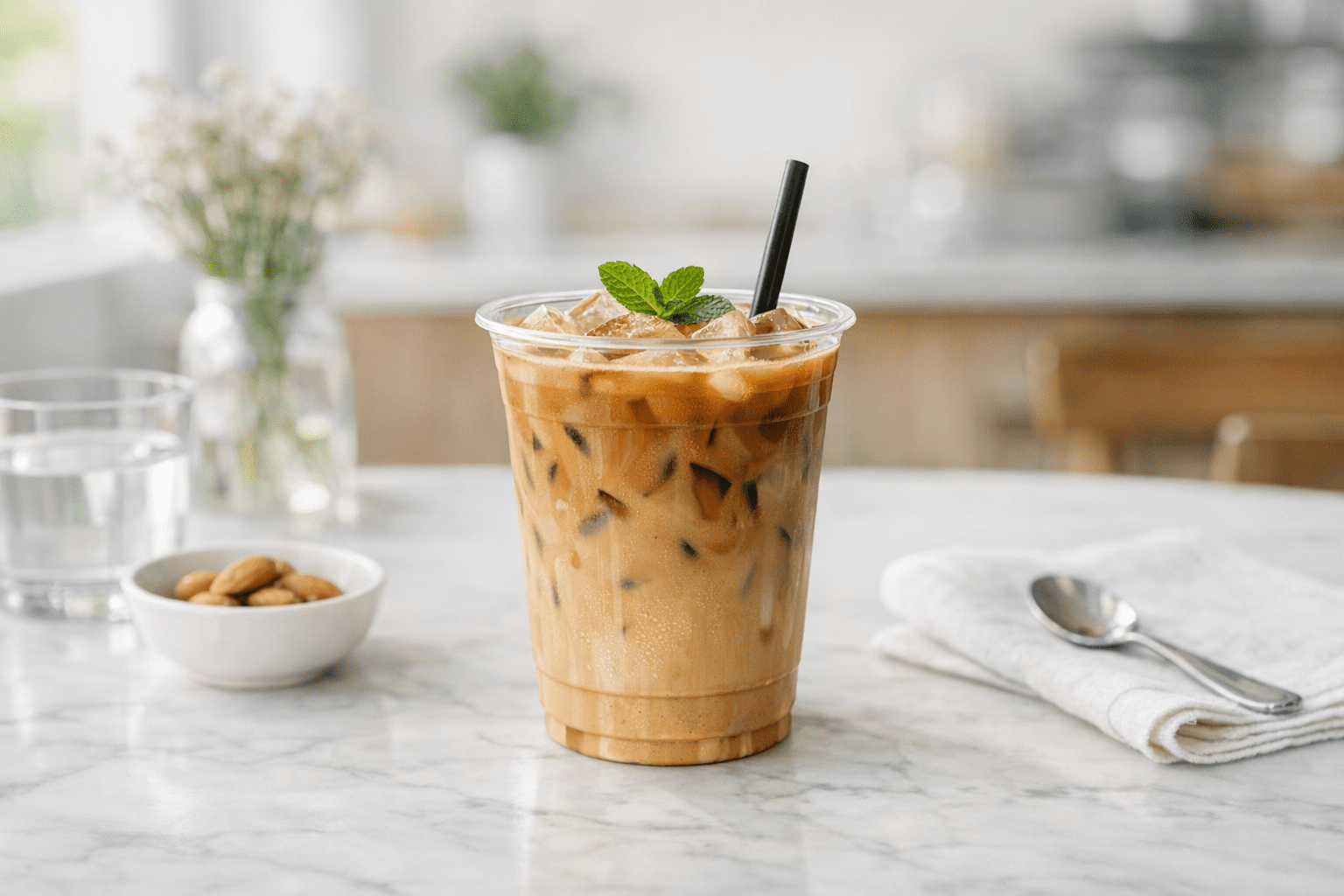
How to consistently order Starbucks drinks under 100 calories
Most people fail with low-calorie Starbucks drinks because they chase a single number. They see “90 calories” on a menu board, order it once, then slowly add syrups, larger sizes, or sweet foam until the drink no longer fits their goal. Calories are controlled at the customization level, not the marketing level. If you control the inputs, you control the outcome.
Start with drinks that have a low baseline calorie load. Brewed coffee, espresso, Americanos, and unsweetened cold brew are naturally minimal. From there, every addition—milk, syrup, drizzle—should be treated as a deliberate choice. No automatic sweeteners. No default toppings. If it isn’t specified, it can inflate your total without you noticing.
Cup size matters more than most people think. A tall with one pump of syrup often stays under 100 calories. The same drink in a grande with two or three pumps rarely does. Choose size after you choose the recipe, not before. Recipe quality first. Volume second.
Low-calorie Starbucks drinks decision matrix
Use this table as your first filter. Match your primary goal to the drink family, then apply the customization rules. This keeps decision-making fast and prevents impulse upgrades at the counter.
| Your Goal | Best Drink Family | Smart Customization | Why It Stays Under 100 Calories |
|---|---|---|---|
| Daily habit | Americano | Splash of nonfat or light milk | Espresso + water has almost no calories |
| Iced coffee preference | Cold brew | No sweet cream, one pump max if flavored | Strong flavor reduces need for sugar |
| Creamy texture | Caffè Misto or light latte | Nonfat or unsweetened almond milk | Balanced milk volume controls calories |
| Afternoon energy | Iced tea or decaf coffee | Unsweetened | Lower sugar + flexible caffeine |
Best Starbucks drinks under 100 calories (with practical examples)
Americano (hot or iced) is the simplest option. Espresso and water create a bold profile with virtually no calories. Add a small splash of nonfat milk and you’re typically still well under 50 calories. This is the most predictable low-calorie order on the menu.
Brewed coffee is equally reliable. Ask for room if you plan to add milk yourself. One to two tablespoons of milk keeps the drink comfortably below 100 calories. The mistake to avoid: turning it into a dessert with multiple sugar packets or heavy cream. Milk choice and portion size determine the outcome.
Cold brew works well because its natural smoothness reduces bitterness. Many people find they need less added sugar compared to iced coffee. Keep it unsweetened or cap flavor at one pump. Skip vanilla sweet cream cold foam. Foams and drizzles are where calories spike fast.
Tall nonfat latte can fit under 100 calories depending on milk choice and flavor additions. Plain is often within range. If flavored, keep it to one pump and no whipped cream. This option satisfies those who want texture and warmth without abandoning calorie control.
Unsweetened iced tea (black, green, or passion) is often under 5 calories. If you want sweetness, request a single pump of syrup or a zero-calorie sweetener. This gives you flavor flexibility with almost no caloric impact.
How to evaluate a drink before you order it
Before committing to any drink, run it through a three-part filter. First, check the baseline recipe: how many pumps, what milk, what size. Second, consider repeatability: will you actually enjoy this daily without adding more sweetness? Third, assess downstream effects: does high caffeine late in the day affect sleep and increase next-day cravings?
This framework protects you from marketing language. Terms like “skinny” or “light” only matter if they translate into specific measurements. Convert every label into a recipe. For example: tall, nonfat milk, one pump, no whip. If you cannot clearly state the recipe, you cannot reliably control the calories.
A simple ordering script that works
Consistency beats complexity. Create one primary weekday order, one backup order, and one travel fallback. Keep each script short. Clarity reduces mistakes, especially during busy morning rushes.
- Primary script: Tall Americano, splash of nonfat milk, no syrup.
- Latte script: Tall nonfat latte, one pump vanilla, no whip.
- Iced script: Cold brew, light milk, no sweet foam.
- Craving script: Smallest size first, add sweetness only if necessary.
Place constraints in this order: remove default sugar, choose milk, cap sweetness, then evaluate toppings. This sequence prevents accidental calorie creep. After two weeks, review your behavior. If you consistently add sweetness, adjust the script slightly rather than abandoning it.
Common mistakes that push drinks over 100 calories
- Forgetting default syrups in shaken or flavored iced drinks.
- Choosing size first instead of controlling the recipe.
- Adding sweet foam or drizzle without counting it.
- Stacking multiple coffee runs in one day.
- Assuming low-calorie means low-caffeine or vice versa.
When troubleshooting, change one variable at a time. Reduce syrup first. Then adjust milk. Then adjust size. Single-variable testing helps you identify what actually improves adherence without sacrificing enjoyment.
7-day reset plan for better beverage control
| Day | Action Step | Purpose |
|---|---|---|
| 1 | Choose one primary under-100-calorie order. | Eliminates decision fatigue. |
| 2 | Reduce sweetness slightly below your norm. | Taste buds adapt quickly. |
| 3 | Audit cup size. | Portion control often matters most. |
| 4 | Monitor afternoon energy and cravings. | Checks caffeine timing impact. |
| 5 | Test your backup drink at another location. | Builds flexibility. |
| 6 | Review total weekly beverage calories. | Aligns drinks with goals. |
| 7 | Lock in a stable script for the next month. | Consistency drives results. |
This loop matters more than finding a “perfect” drink. Systems outperform one-time decisions. Small adjustments, repeated weekly, create durable change.
Who should be more cautious
If your strategy relies on high caffeine intake, aggressive sweetener cycling, or extreme restriction, slow down. Stability and sleep quality influence appetite and energy more than minor calorie differences in coffee. Consistency beats intensity.
Individuals managing diabetes, GERD, anxiety disorders, pregnancy, cardiovascular conditions, or medication interactions should confirm caffeine and sugar targets with a licensed clinician. Personalized limits are protective, not restrictive.
Myths about low-calorie Starbucks drinks
- Myth: Only black coffee fits under 100 calories. Reality: Several milk-based drinks can qualify with proper customization.
- Myth: Sugar-free automatically means healthy. Reality: Total dietary pattern matters more.
- Myth: One higher-calorie drink ruins progress. Reality: Weekly averages drive results.
- Myth: Oat milk is always lighter. Reality: Many oat options are higher in carbs and calories than expected.
Treat beverage choices like adjustable inputs. If it cannot be measured, it cannot be managed. Clear scripts and portion awareness turn coffee from a liability into a controllable habit.
FAQ
Can I drink Starbucks daily and still lose weight?
Yes. Weight loss depends on total calorie balance. If your standard order remains under 100 calories and fits within your daily targets, it can be part of a sustainable plan. Consistency matters more than perfection.
Which drink is easiest to keep under 100 calories?
An Americano is typically the most straightforward choice because its base is nearly calorie-free. Add minimal milk if desired and avoid syrups. Simple recipes are easier to control.
Can flavored drinks stay under 100 calories?
Yes, if you strictly cap syrup at one pump, skip whipped cream, and avoid sweet foam or drizzle. Flavor is compatible with calorie control when portion size is managed carefully.
Is oat milk always lower calorie?
No. Some oat milk options contain more carbohydrates and calories than nonfat or almond milk. Always check the specific preparation. Milk choice significantly affects totals.
What is the single best first change?
Remove default syrups and drizzles before modifying anything else. That one step often drops a drink below 100 calories immediately. Eliminate hidden sugars first.
Final verdict
Low-calorie Starbucks drinks are not a gimmick. They are the result of clear constraints, smart customization, and repeatable scripts. Once you control base drinks and sweetness, staying under 100 calories becomes predictable.
This guide is educational and not a substitute for individualized medical advice. For medical conditions or medication considerations, consult a licensed healthcare professional for personalized guidance.
