
9 min read
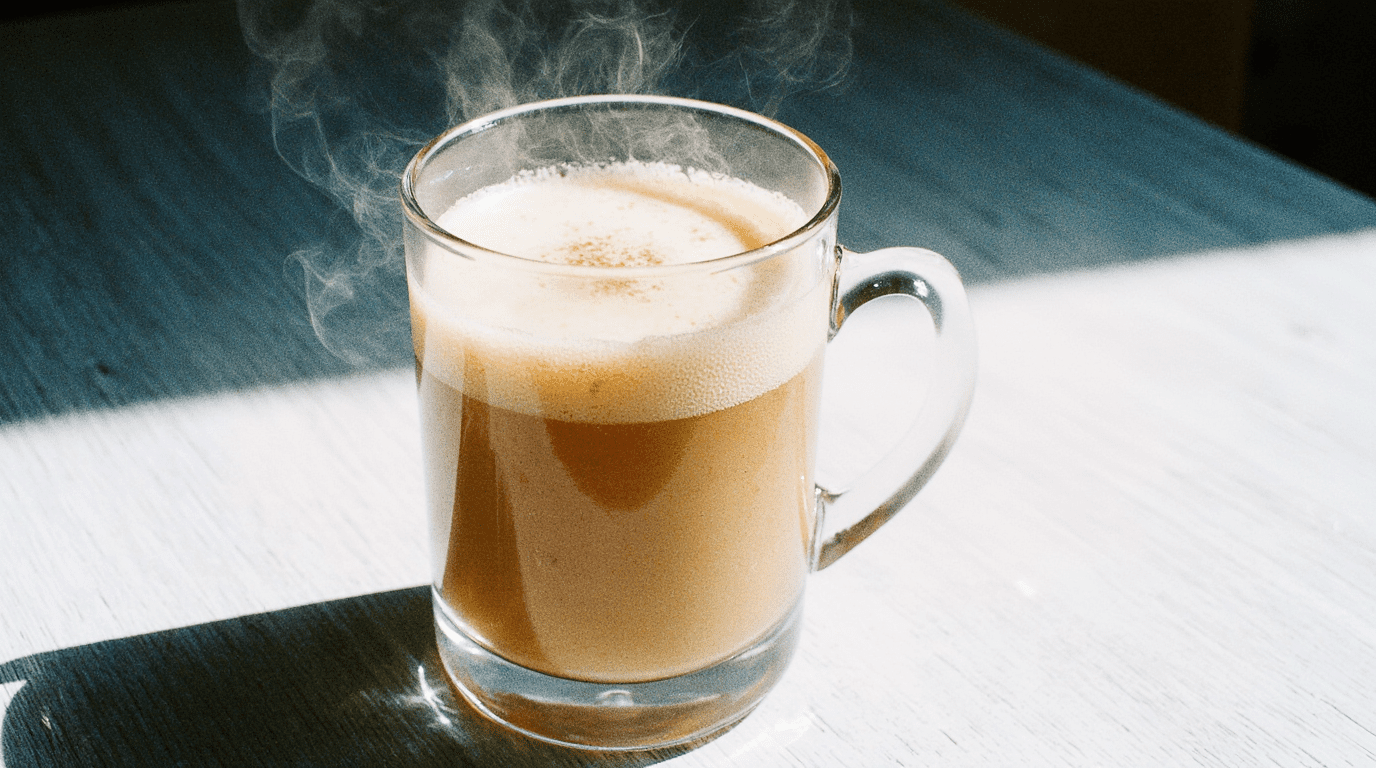
A galao coffee, spelled galão in Portuguese, is a tall espresso-and-milk drink from Portugal made with about one part coffee to three parts foamed milk. It looks a little like a latte, but it is usually served in a tall glass and built around Portuguese cafe culture.
This guide explains galao meaning, the classic 1:3 ratio, how to order it in Portugal, and how it differs from a latte, cafe au lait, cafe con leche, and cappuccino.
Galao Coffee Quick Facts
Pronunciation: galão is roughly “gah-LAOW,” with a soft nasal ending on the final syllable. Searchers often type it without the accent as galao.
| Feature | Galão coffee |
|---|---|
| Origin | Portugal |
| Classic ratio | About 1 part espresso or strong coffee to 3 parts foamed milk |
| Serving style | Tall glass, often at breakfast or with a pastry |
| Taste | Mild, creamy, warm, and milk-forward |
| Closest comparisons | Latte, café au lait, café con leche, and flat white |
| At-home version | Espresso or strong coffee plus plenty of steamed, foamed milk |
Start here: For more on Portuguese and milk-based coffee drinks, Coffee Glossary is the best next hub; start with this galão guide, then compare it with other espresso-and-milk drinks before ordering.
Table of Contents
Related milk-drink guides: Compare the galão with the latte, café au lait, café con leche, and cappuccino.
What is a Galão?
A traditional Portuguese hot drink made from one part espresso and approximately three parts foamed milk, characteristically served in a tall glass. The Galão is a staple enjoyed at breakfast or as a soothing afternoon pick-me-up. Its high milk-to-coffee ratio makes it one of the mildest and creamiest espresso-based drinks, designed for a smooth, gentle experience.
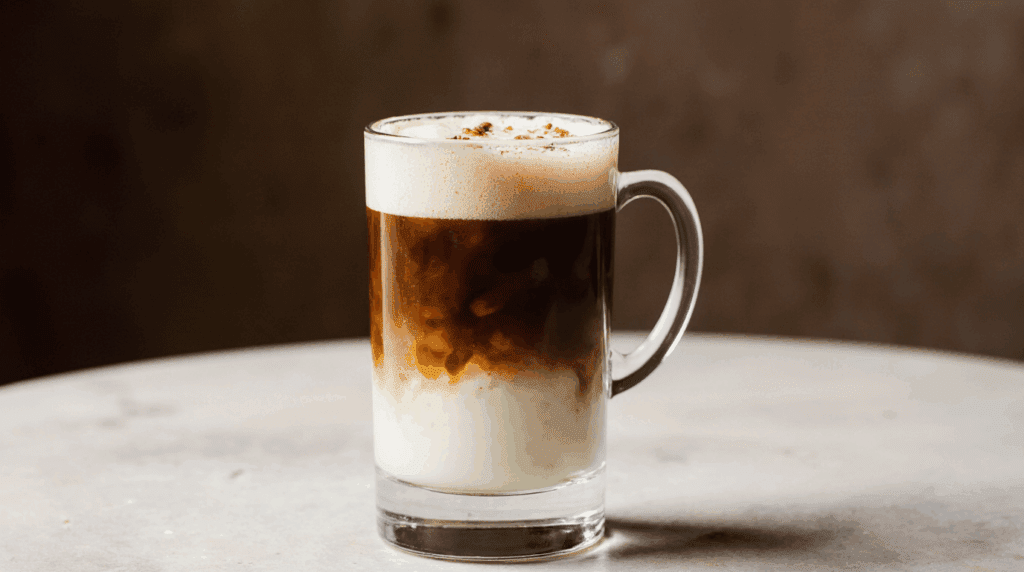
The Ratio (1:3)
The single most defining feature of a Galão. The accepted composition is one part espresso to three parts foamed milk (25% coffee, 75% milk), though some preparations may be even milkier (1:4). This milk-dominant ratio isn’t arbitrary; it’s a sophisticated culinary adaptation, precisely engineered to soften the harsh, bitter notes of traditional Portuguese espresso and create a perfectly harmonious beverage.
Bica / Cimbalino
The Portuguese terms for a shot of strong espresso, which forms the foundation of every Galão. You would ask for a bica in Lisbon or a cimbalino in Porto. This coffee is typically a robust blend of Arabica and Robusta beans, a legacy of Portugal’s colonial history and its sourcing from territories like Angola and Brazil.
Torrefacto
A traditional coffee roasting process crucial to the classic Portuguese flavor profile. It involves roasting lower-grade Robusta beans with a small amount of sugar, which caramelizes and coats the beans. Developed as a preservation method, the Torrefacto process imparts a distinctively strong and bitter flavor that defines the espresso base used in a Galão.
The Vessel
Perhaps the most non-negotiable aspect of the Galão‘s identity. It is always served in a tall, clear, heat-resistant glass. This presentation is integral to the experience, showcasing the drink’s inviting, uniform color and light, frothy texture. The visual appeal is as important as the taste.
The Portuguese Coffee Family
The Galão exists on a spectrum of coffee-and-milk beverages, each with a specific ratio and name.
- Meia de Leite: Translating to “half of milk,” this is the balanced middle ground. It has a strict 1:1 ratio of coffee to milk and is served in a large cup (chávena grande). It is often considered the Portuguese equivalent of a flat white.
- Garoto: Meaning “little boy,” this is a small but potent coffee served in a tiny demitasse cup. It consists of an espresso shot with just a “pingo” (drop) of foamed milk, making it very similar to an Italian Macchiato.
Galão Variations
While the classic Galão is well-defined, it can be customized to suit different tastes.
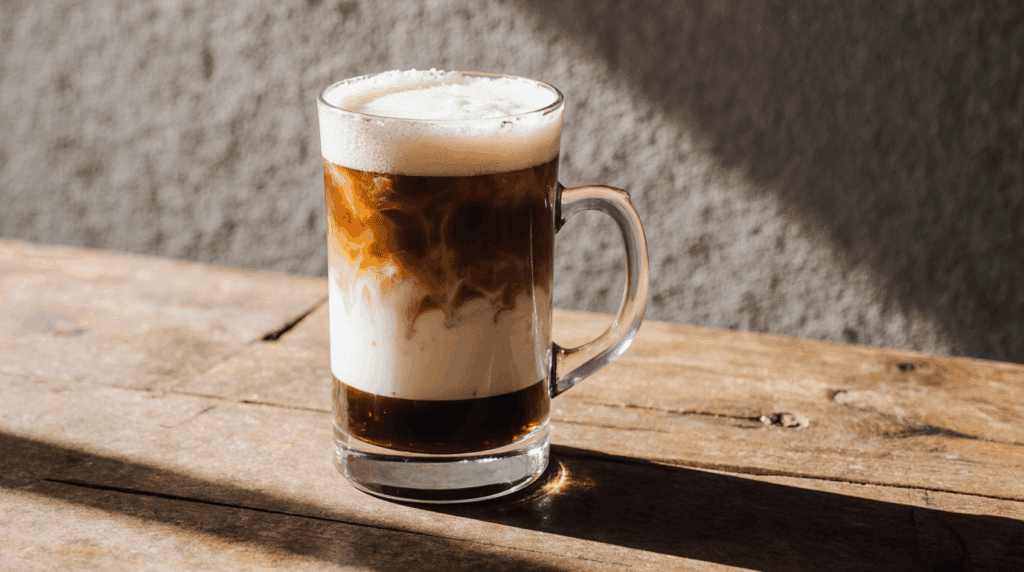
- Galão Escuro (Dark Galão): A stronger version with a higher proportion of coffee for those who prefer a bolder flavor.
- Galão Claro (Light Galão): An even weaker, milkier version for an exceptionally mild coffee experience.
The Café: Portugal’s Living Room
The stage where the Galão ritual unfolds. More than just a business, the Portuguese café functions as a vital social hub—an accessible “shared living room” where community life happens. With over 80% of coffee in Portugal consumed in cafés (the inverse of the rest of Europe), these establishments are an essential part of the social infrastructure.
The remarkably low price of coffee is widely regarded as a “democratic right,” ensuring that this social space remains accessible to everyone. Ordering a Galão and lingering for hours is a cherished part of the day.
How Does a Galão Compare?
The Galão‘s identity becomes clearer when contrasted with its international counterparts.
- vs. Caffè Latte (Italy): A Galão is typically milkier (1:3 or 1:4) than a latte (1:2 or 1:3) and is always served in a tall glass, whereas a latte is served in a wide ceramic cup.
- vs. Cappuccino (Italy): The difference is stark. A cappuccino consists of equal parts espresso, steamed milk, and a thick, stiff cap of foam (1:1:1). In contrast, a Galão is predominantly milk-based, with only a light foam crown.
- vs. Café au Lait (France): A Galão is espresso-based, whereas a classic Café au Lait is made with brewed or filtered coffee, resulting in a distinctly different body and flavor.
| Feature | Galão | Meia de Leite | Garoto | Caffè Latte | Cappuccino |
| Country of Origin | Portugal | Portugal | Portugal | Italy | Italy |
| Coffee Base | Espresso | Espresso | Espresso | Espresso | Espresso |
| Standard Ratio | 1:1 (Coffee: Milk) | 1:2 or 1:3 (Coffee: Milk) | Espresso with a “drop” of milk | 1:1:1 (Espresso:Milk: Foam) | 1:1 (Coffee:Milk) |
| Milk Texture | Lightly foamed, velvety | Steamed milk | Small amount of foam | Steamed milk with thin microfoam | Thick, stiff layer of foam |
| Standard Vessel | Tall Glass | Large Cup | Demitasse Cup | Wide Cup or Mug | Small Cup |
| Defining Trait | Mild, milky, and served in a signature tall glass. | Balanced, stronger than a Galão. | A small, potent “macchiato-style” drink. | Espresso-forward with latte art possibilities. | Distinct separation of liquid and thick foam. |
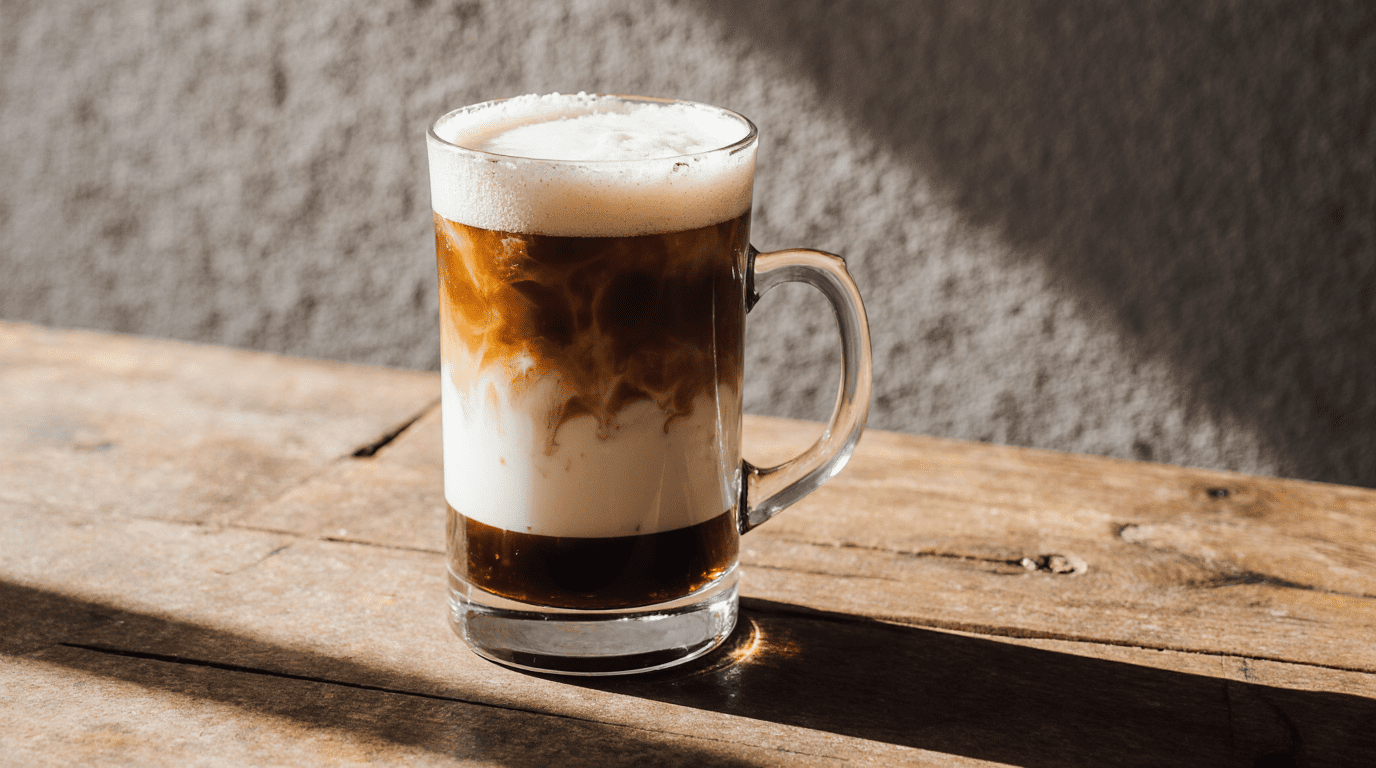
lassic Galão (Portuguese Milky Coffee)
Equipment
- 1 Espresso Machine (this or a Moka Pot)
- 1 Moka Pot (this or an espresso machine)
- 1 Milk frother
- 1 10 oz Glass
Ingredients
- 1 shot strong espresso For the most authentic flavor, use a traditional Portuguese blend containing Robusta and/or Torrefacto beans.
- ½ cup whole milk Whole milk provides the best creamy texture.
- 1 tsp sugar (to taste)
Instructions
- Brew the Espresso: Brew one shot of strong espresso directly into your tall, heat-resistant serving glass.
- Steam the Milk: Heat the milk to between 140–160°F (60–70°C). Steam it until it is velvety and smooth, creating only a light, airy foam on top. The goal is integrated, creamy milk, not the thick, stiff foam of a cappuccino.
- Combine: Slowly and steadily pour the steamed milk over the espresso in the glass. The two liquids should blend into a uniform, light-brown color.
- Serve Immediately: Serve hot, with sugar on the side for sweetening to taste.
Notes
- The Vessel is Key: Serving the Galão in a tall, clear glass is essential to the authentic experience. It showcases the drink’s signature color and texture.
- Homogenous Blend: For a perfectly mixed Galão, some baristas pre-mix the espresso and steamed milk in a steaming pitcher before pouring the combined liquid into the serving glass.
- Authentic Coffee Base: The traditional bitter and strong flavor of a Portuguese espresso (bica or cimbalino) is what makes the high milk ratio necessary. Using a 100% Arabica bean will result in a milder, but less traditional, taste.
-
Variations:
- Galão Escuro (Dark Galão): For a stronger coffee flavor, use slightly less milk for a ratio closer to 1:2 (coffee:milk).
- Galão Claro (Light Galão): For an even milkier drink, use more milk for a ratio closer to 1:4.
- Um Galão Clarinho: For a richer, sweeter version, steam a small amount of condensed milk with the whole milk
Nutrition
A Final Word: A Statement in a Glass
In a globalized world, Portugal’s coffee habits have shown remarkable resistance to homogenization. The continued dominance of the traditional menu—the specific lexicon of bica, galão, and garoto—is more than a matter of taste; it is an act of cultural preservation.
By continuing to embrace this simple, affordable, and profoundly social beverage, the Portuguese people actively preserve a way of life centered on community, leisure, and local identity. The simple act of ordering a Galão is a daily vote for a different, and distinctly Portuguese, set of values.

It’s just so good.