
6 min read
If you’ve browsed the shelves of a specialty coffee shop, you’ve likely seen the label: “Honey Process.” And if you’re like most people, you probably had one of two thoughts:
“Is this coffee flavored with honey?”
“Do they feed the coffee beans to bees?”
Let’s clear this up right away: Honey-processed coffee has nothing to do with bees or honey as an ingredient.
Instead, it’s one of the most fascinating and nuanced methods of processing coffee, resulting in a cup that is often spectacularly sweet, balanced, and complex. It’s a method that requires incredible skill from the farmer, and the name refers to something much more fundamental to the coffee bean itself.
So, let’s peel back the layers and discover one of coffee’s sweetest secrets.

What is Honey Processed Coffee?
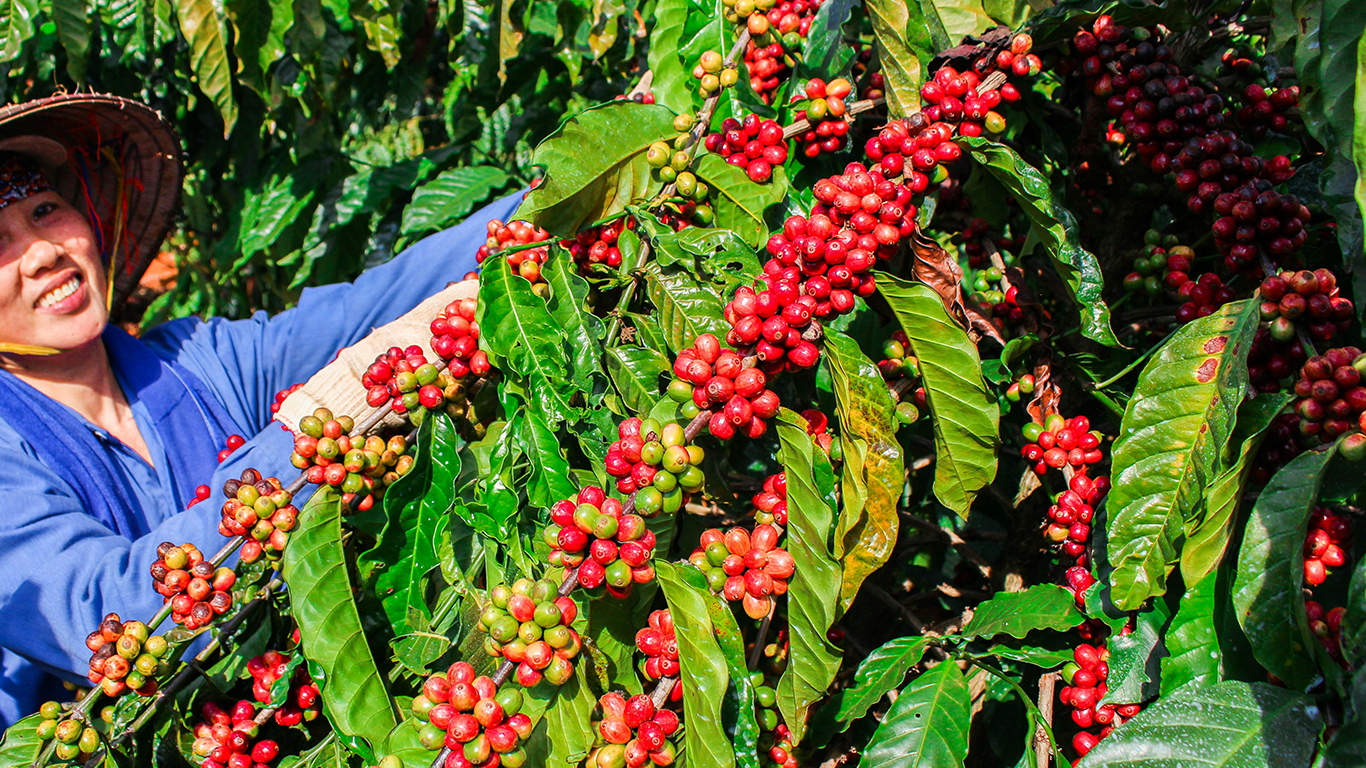
First, a quick primer. A coffee “bean” is actually the seed of a fruit called a coffee cherry. Before you can roast it, you must remove the bean from the cherry. How you remove that fruit—and what you do with it—is called “processing.”
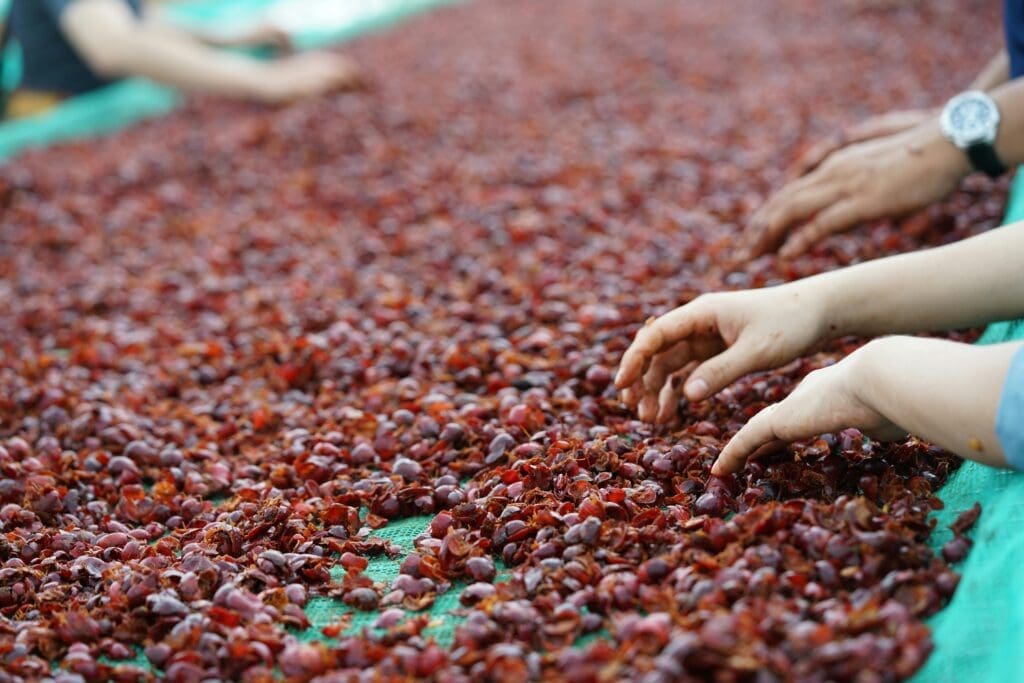
This step has a massive impact on the final taste of your coffee. The two most common methods are:
- Washed (or Wet) Process: The entire fruit (skin, pulp, and mucilage) is washed off the bean, usually with fermentation, before the bean is dried. This results in a very “clean,” bright, and acidic cup, where the coffee’s origin flavors shine through.
- Natural (or Dry) Process: The entire coffee cherry is left intact and dried in the sun, like a raisin. The bean absorbs flavors from the drying fruit, resulting in a heavy-bodied, sweet, and intensely fruity or “funky” cup.
The honey process exists in the beautiful, complex world that lies between these two.
The “Honey” is the Mucilage
So, what is the honey process?
Also known as the “pulp natural” method, this process starts by “pulping” the coffee—meaning the skin and some of the fruit pulp are removed, much like in the washed process.
But here’s the crucial difference: The sticky, sugary layer of fruit flesh directly surrounding the bean, called mucilage, is left on.
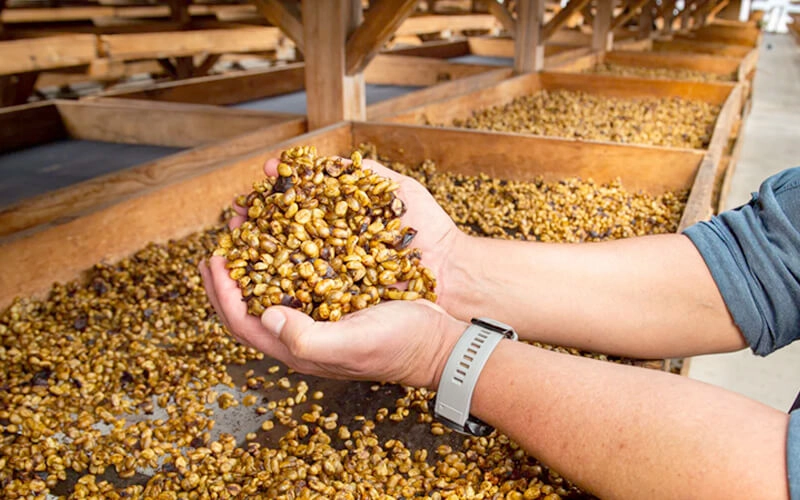
This mucilage is the “honey.” It’s sweet, it’s sticky, and it’s packed with sugars and acids. The beans are then taken directly to drying beds or patios with this sticky mucilage layer still intact.
As the beans dry, the mucilage’s sugars and nutrients get absorbed into the bean. This gives the final coffee…
- The sweetness and body of a natural process.
- The softer, more balanced acidity of a washed process.
It’s truly a “best of both worlds” approach, creating an incredibly well-rounded cup.
Not All Honey is Created Equal: The Colors of the Process
This is where true expertise in coffee farming becomes clear. Farmers can control the intensity of the honey process by deciding exactly how much mucilage to leave on the bean and how to dry it.
This results in a “color” classification that reveals a great deal about the coffee’s potential flavor.

- Black Honey: This is the most intense and difficult method. 100% of the mucilage is left on, and the beans are dried very slowly in the shade, often covered. This maximizes sugar absorption and fermentation, resulting in a cup that is incredibly sweet, syrupy, and complex, often with deep, jammy fruit notes.
- Red Honey: A significant amount of mucilage (around 50-75%) is left on. The beans are dried more slowly, often under cloud cover or in shade, to prolong the drying time. This develops a complex, balanced cup with prominent sweetness and stone-fruit flavors.
- Yellow Honey: Less mucilage is left on (around 25-50%), and the beans are dried more quickly with more direct sunlight. This results in a cleaner, brighter cup that’s closer to a washed coffee but with a distinct, silky body and a lovely, delicate sweetness.
- White Honey: A minimal amount of mucilage is left on. This coffee is dried quickly and will taste the closest to a fully washed coffee, but with a slightly rounder body.
What Does Honey Processed Coffee Actually Taste Like?
This is the most important part, right? While every coffee’s flavor is unique to its origin, the defining characteristic of a honey processed coffee is its balance.
- Sweetness: This is the star. Expect a deep, nuanced sweetness that’s more complex than simple sugar. Think raw brown sugar, molasses, or even a floral honey-like quality (which is where the name really earns its keep).
- Acidity: The acidity is typically softer and more rounded than in a washed coffee. Instead of a zesty, bright “pop,” you’ll get a more integrated acidity, like that of a ripe plum, cherry, or apricot.
- Body (Mouthfeel): This is a huge benefit. Honey processed coffees have a silky, “juicy,” or “syrupy” mouthfeel that is incredibly satisfying. It coats your palate in a way a washed coffee often doesn’t.
If you find natural-processed coffees too “funky” or “boozy,” and washed coffees a bit too “thin” or “acidic,” a honey processed coffee is the perfect bridge for you.
A Labor of Love (and Risk)
If this process makes such delicious coffee, why isn’t all coffee honey processed?
Simply put: it is incredibly difficult and risky for the farmer.
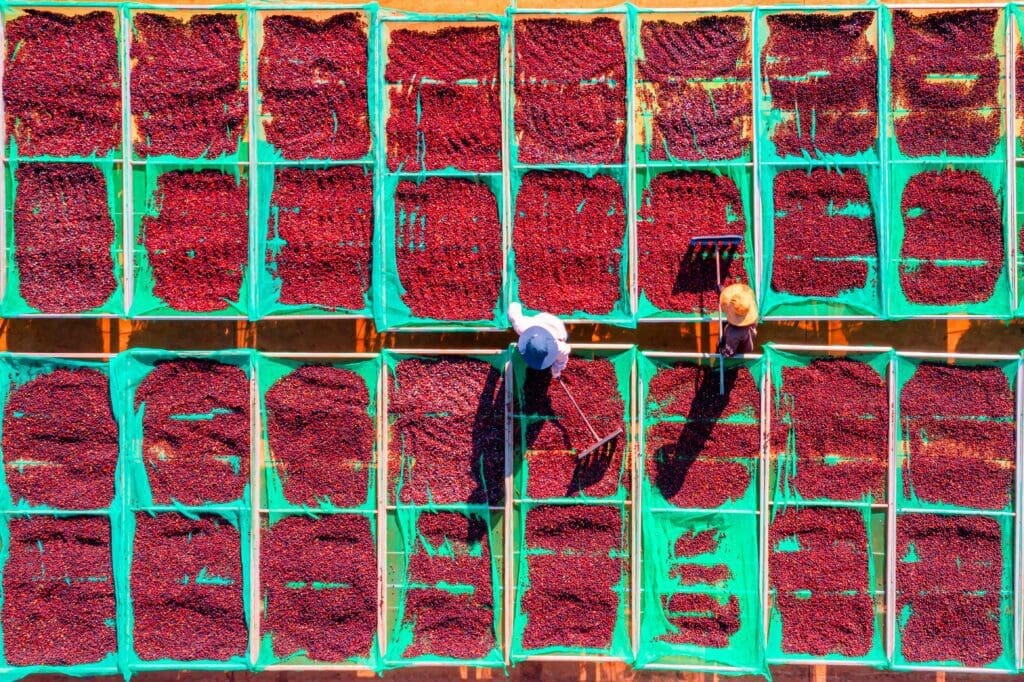
That sticky, sugary mucilage is the perfect food for mold and bacteria. During the 10-20 day drying period, the beans must be turned constantly (sometimes every hour) to ensure even drying and prevent mold or over-fermentation, which would ruin the entire batch.
This process requires a stable, dry climate and a huge amount of manual labor, skill, and attention. It’s a true craft, and the farmers who do it well (like those in Costa Rica and El Salvador, who have pioneered the method) are masters of their trade.
How to Brew Your First Honey Processed Coffee
Have I convinced you to try one? When you’re ready to brew, I recommend a method that highlights its unique balance of sweetness and clarity.

- Best Brew Methods: A pour-over (like a V60 or Chemex) is my top recommendation. It will allow the delicate fruit notes and silky body to shine without any “mud.”
- A Close Second: An AeroPress or French Press will emphasize the rich, syrupy body and deep sweetness.
Pro-Tip: Pay close attention as it cools. Many of the most complex flavors in a honey processed coffee—like apricot, red berries, or molasses—become much more apparent as the cup drops from hot to warm.
Honey processed coffee is more than just a name. It’s a testament to farmer innovation and a beautiful expression of the coffee cherry’s full potential. It’s the perfect cup for anyone looking to explore the world beyond “just coffee” and taste something truly special.
