
12 min read
The Golden Lamb Coffee · Equipment & Gear · Comparison
9 Bar vs 15 Bar
Espresso
What pressure actually matters?
More bars isn’t better espresso. Here’s what those numbers really mean — and how to use them when buying a machine.
If you’ve been shopping for an espresso machine, you’ve almost certainly seen “15-bar pump pressure” stamped on the box like a badge of honor. More bars, better espresso — that’s the implied promise.
Spend five minutes in a serious coffee forum or a professional café kitchen, and you’ll hear the opposite: 9 bars is the sweet spot, and 15-bar marketing is largely noise. The debate comes down to a gap between how machines are rated and how espresso is actually extracted.
9 bars is the professional standard for pulling espresso — what commercial machines in coffee shops are calibrated to, validated by decades of research and practice. A 15-bar rating on a budget machine refers to the pump’s maximum rated output, not the actual pressure used during brewing. The number on the box tells you very little about cup quality.
The group head target. What commercial machines, the SCA, and decades of professional practice have converged on as the optimal extraction pressure for balanced espresso.
Industry StandardThe pump’s ceiling. Maximum pressure the vibration pump can theoretically generate — not what it delivers at the group head during a normal shot. Actual brewing pressure is typically lower.
Marketing SpecWhat Is a Bar of Pressure?
A bar is a metric unit of pressure roughly equal to atmospheric pressure at sea level — about 14.5 PSI.
To put it in context: a typical car tire runs at 2–3 bars. Household water pressure sits well under 1 bar. Espresso requires significantly more force than either, which is why machines use a pump — either a vibration pump in most home machines or a rotary pump in commercial and high-end home equipment — to push hot water through tightly packed coffee grounds at elevated pressure.
Why 9 Bar Is the Industry Standard
Not an arbitrary number — the result of decades of practical refinement and scientific validation.
The original espresso machines of the mid-20th century helped establish 9 bars as the target through years of hands-on refinement. Since then, the Specialty Coffee Association and the professional coffee industry have consistently pointed to 8–9 bars at the group head as the ideal pressure range during extraction.
At this pressure, hot water moves through the coffee puck at a rate that dissolves the right balance of oils, acids, and soluble compounds. The result is a shot with good body, crema, and flavor complexity:
Under-extraction — the shot is thin, watery, and sour. The water moves too quickly through the puck and doesn’t dissolve the compounds that create body and sweetness.
Balanced extraction — good crema, body, and flavor complexity. Water saturates the puck evenly and moves at the right rate through the grounds.
Over-extraction and channeling — water finds the path of least resistance through the puck rather than saturating it evenly. The result is harsh, bitter, and uneven.
Nine bars isn’t the sweet spot because of tradition. It’s where the extraction process consistently produces a balanced, well-developed shot across a wide range of beans and grind sizes.
Get the 21-Day Coffee Glow-Up Recipe Book
Make your morning coffee feel like a treat again: 21 coffee-shop-style recipes you can make at home, with hot, iced, creamy, cozy, and Java Burn-friendly options.
- 21 craveable coffee recipes
- Simple flavor formulas and shopping list
- 7-day coffee glow-up plan
You are in. Grab the recipe book, then check your inbox to confirm the coffee newsletter.
Download the free recipe bookAlready subscribed? Open the recipe book here.
Why readers save it: It gives them recipes first, not hype first. Java Burn stays optional and label-directed, while the download gives them a better coffee routine they can use right away.
What happens next: MailPoet adds them to the Golden Lamb Coffee Newsletter, sends the welcome email, and includes them in the weekly coffee tips nurture sequence.
Educational download. Not medical advice. Java Burn is a dietary supplement; read the label and ask a qualified professional if you use supplements, take medication, or manage a health condition.
Why Machines Advertise 15 Bar
The gap between pump ratings and brewing reality — and why budget machines rarely tell you what’s actually happening.
Most budget and entry-level espresso machines use a vibration pump rated to a maximum of 15 bars. That 15-bar figure is the pump’s ceiling — the maximum pressure it can generate under ideal conditions — not the pressure it delivers at the group head during a normal shot.
In practice, pressure drops between the pump and the portafilter due to tubing, valves, and resistance in the system. Many 15-bar machines actually deliver somewhere between 8 and 12 bars at the puck, depending on build quality, grind size, and dose. Some deliver less. The advertised number is a pump spec, not a brewing spec.
If a 15-bar machine happens to deliver 9 bars at the group head, the shot can be excellent. If it’s delivering 12 or 13 bars with no pressure regulation, the extraction is likely to be harsher and less nuanced. The number on the box tells you very little about cup quality on its own.
Variables That Matter More Than Peak Pressure
Once you understand that 9 bars is the target and most machines can approach it, the conversation shifts to what actually differentiates shot quality.
A coarser or finer grind changes resistance in the puck and effectively changes extraction pressure. A quality burr grinder matters more than most machine upgrades — it’s the variable that most home baristas underinvest in.
The SCA recommends brewing between 90–96°C (195–205°F). Machines with good thermal stability or PID temperature control hold this range reliably. Even a machine hitting 9 bars will pull a poor shot if water temperature is off.
How much coffee you use and how evenly it’s packed in the filter basket affects flow rate and extraction evenness. Inconsistent distribution causes channeling regardless of pressure.
Stale beans produce flat shots regardless of machine pressure. Freshly roasted, properly stored coffee is the most cost-effective upgrade available to most home espresso setups.
A 15-bar label typically means the pump can hit a higher ceiling than the shot actually needs. A solid 15-bar machine can still make excellent espresso if it regulates extraction pressure near 9 bars and holds temperature well.
A 20-bar rating is usually just a louder version of the same marketing message. More peak pressure does not mean better espresso. If a machine actually pushed a puck at a full 15 to 20 bars during extraction, the shot would usually run bitter, harsh, and uneven.
Which Machine Should You Buy?
Matching pressure knowledge to actual buying decisions — at every budget level.
Don’t let 15 bar decide
A well-built 15-bar vibration pump machine that actually delivers 9 bars at the puck will outperform a cheaper one running unregulated at higher pressure. Look at build quality, thermoblock vs. boiler design, and whether the machine has any pressure regulation — not the spec sheet number.
Look for real controls
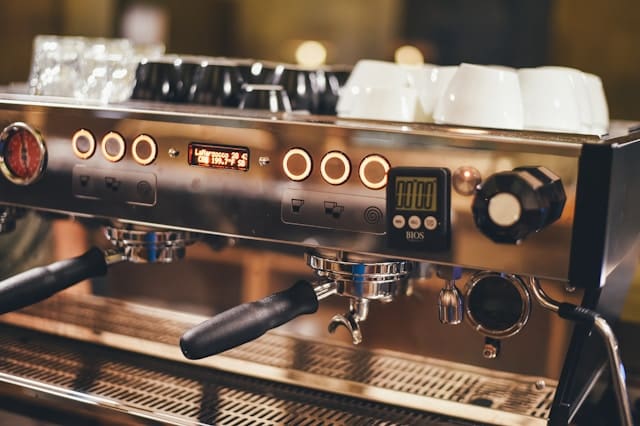
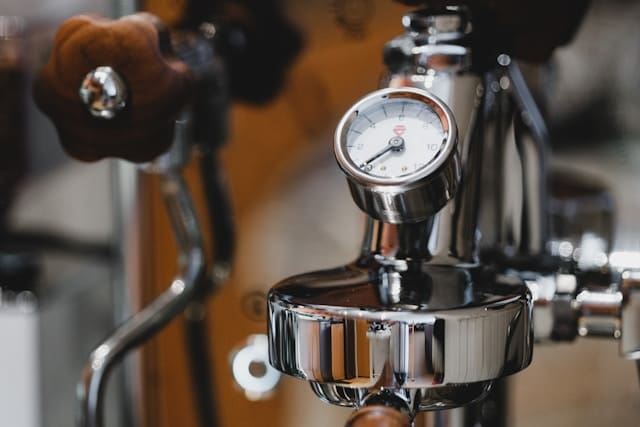
Prioritize machines with a pressure gauge, PID temperature control, and ideally some form of pre-infusion or pressure profiling. These give you actual control over extraction rather than relying on factory defaults. A gauge alone is worth a significant price premium.
Precision is the point
Manual espresso machines and high-end pump machines with rotary pumps and OPV adjustment allow precise pressure control. At this level, 9 bars is a starting point — some users experiment with pressure profiling, varying pressure throughout the shot to develop flavor complexity.
Frequently Asked Questions
No. Nine bars is the professional standard for espresso extraction. A machine advertised at 15 bars is citing its pump’s maximum rated output, not the pressure it delivers during brewing. What matters is whether the machine consistently delivers around 9 bars at the group head.
A good espresso machine should generate and sustain 8–9 bars at the group head during extraction. Most pump espresso machines — even budget ones — can technically reach this range, though build quality affects consistency significantly.
Not in the way most people assume. Pressure affects extraction rate and flavor balance, not simply strength. Excessively high pressure causes over-extraction and bitterness. Strength is more directly influenced by your coffee-to-water ratio and grind size.
A moka pot generates roughly 1–2 bars of steam pressure — far below the 9 bars needed for true espresso. It produces a strong, concentrated brew but it’s not technically espresso, which requires at least 7–9 bars of pump-driven pressure.
On most budget and mid-range machines, no — pressure is fixed by the pump and internal OPV (over-pressure valve). On higher-end machines the OPV can often be adjusted, and some offer full pressure profiling with variable pressure throughout the shot.
Usually no. Both numbers are typically pump ceiling ratings, not the pressure that reaches the puck. A better-built 15-bar machine that regulates pressure well will usually outperform a cheaper 20-bar machine.
Look for pressure regulation, an OPV, a pressure gauge, stable temperature control, and pre-infusion or pressure profiling on higher-end machines. Those features affect extraction far more than a 15-bar or 20-bar badge.
A marketing problem,
not a brewing problem.
Nine bars is the established, research-backed standard for pulling a balanced espresso shot — it’s what professional coffee shops use, and what the Specialty Coffee Association recommends. The 15-bar figure you see on most home machines is a pump rating: a ceiling, not a target.
When choosing an espresso machine, focus on temperature stability, build quality, and consistent pressure near 9 bars — not a higher number on the spec sheet. Pair any decent machine with a quality grinder, fresh beans, and the right grind size, and you’ll get far better results than any bar rating alone can promise.
