
7 min read
Café crema is a long espresso-style coffee, usually about 4 to 8 ounces, brewed under pressure with more water and a slightly coarser grind than a standard espresso. It tastes milder than espresso, fuller than an Americano, and is common in Switzerland, Austria, Germany, and northern Italy.
This guide covers what café crema is, where the name comes from, how it differs from espresso, lungo, and Americano, and how to make one at home.
Two drinks, one name
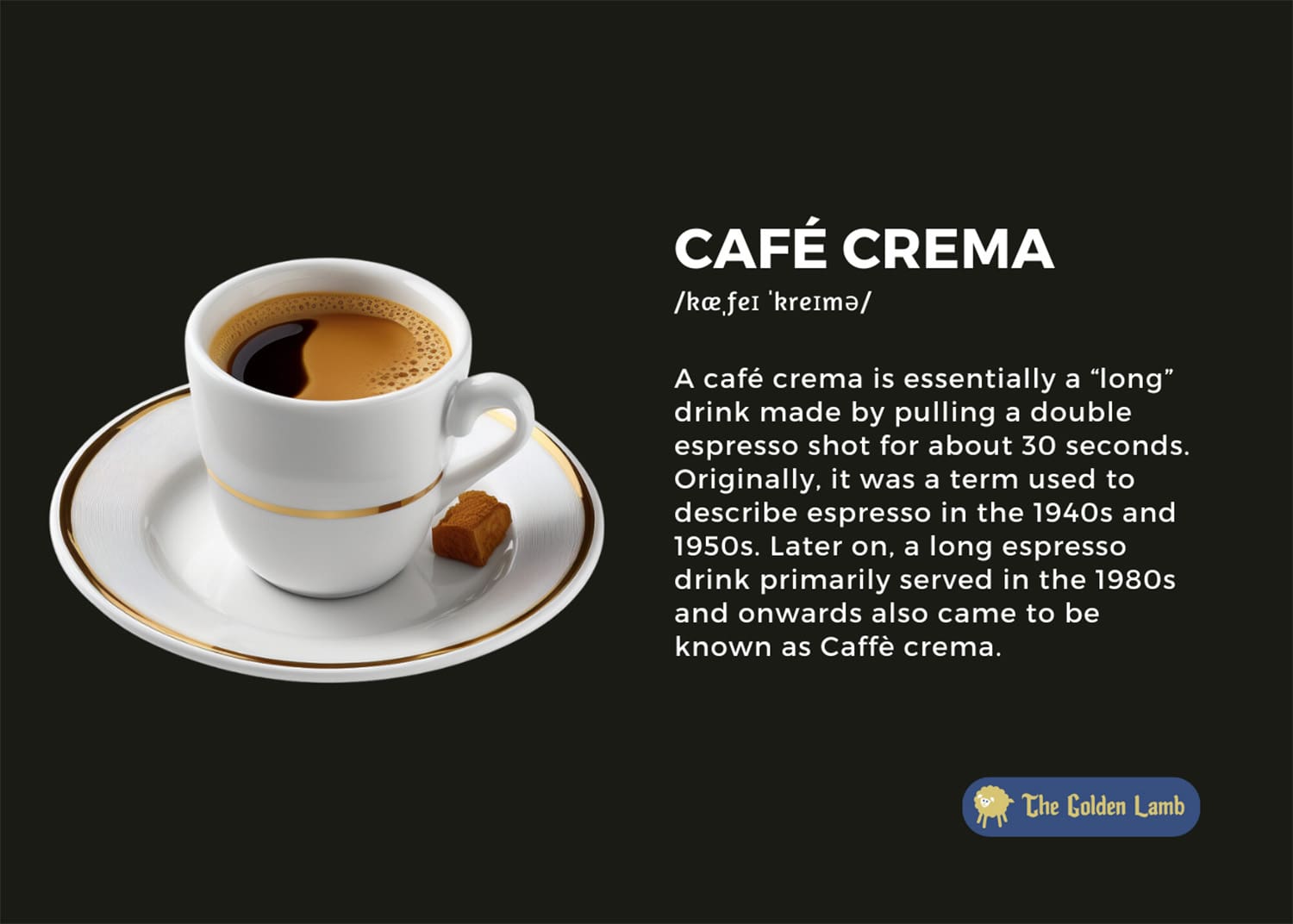
“Caffè crema” has meant two different things over the years. In the 1940s and 1950s it was simply a name for espresso, a nod to the creamy foam the new machines produced. From the 1980s onward it came to mean something more specific: a long espresso drink served along the Italian-Swiss and Italian-Austrian borders, made by brewing a much larger volume of water through the puck.
That second meaning is the drink this article is about. Depending on where you order, it goes by café crème, caffè crema, or crema caffè. In Switzerland, café crème is the standard morning cup, the Swiss counterpart to Germany’s beloved filter coffee.
The name comes from the Italian for “cream coffee,” and the crema itself is the point. That thin reddish-brown foam forms when an espresso machine forces hot water through ground coffee at roughly 9 bars of pressure, emulsifying the bean’s oils and trapped carbon dioxide into a silky layer on top.
Where the crema came from
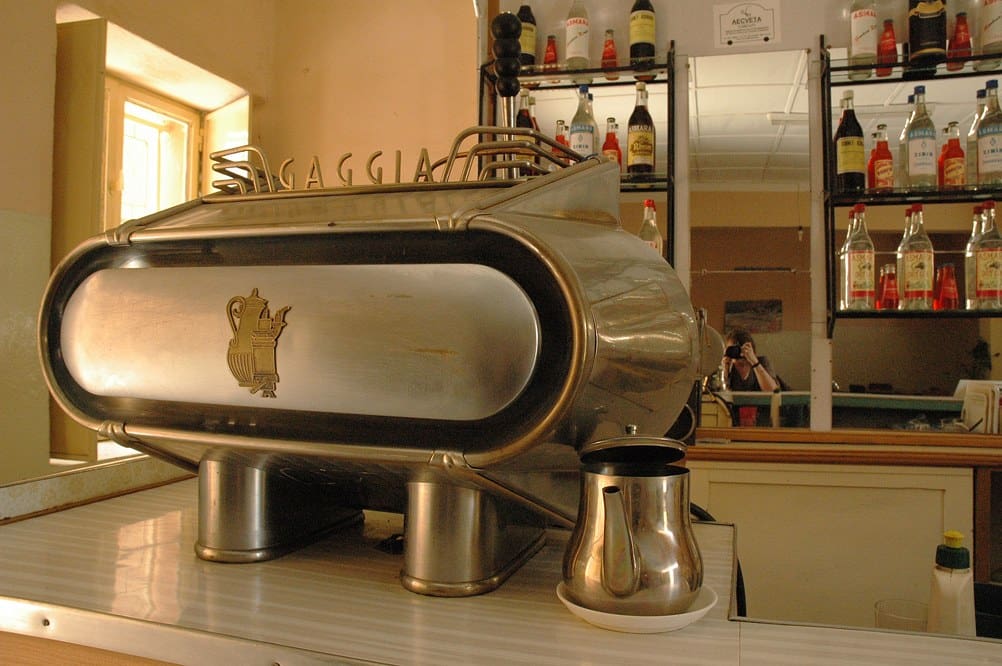
The word “espresso” dates to the early 20th century, describing the fast, pressurized brewing method. But crema as we know it arrived in the 1940s with Achille Gaggia, whose lever-driven machines pushed water through the coffee at far higher pressure than the old steam machines could manage. The result was a richer shot crowned with that now-iconic foam layer.
Gaggia’s invention turned the foam from a curiosity into a badge of quality. Over time, the longer café crema became a popular alternative to straight espresso in northern Italy and across the Alps, and the name stuck as a marker of good taste.
A thick, even crema is the visual proof of a well-extracted shot.
Baristas still read the crema like a gauge. A thin, pale layer suggests a poorly extracted shot. A dense, reddish-brown layer that holds together signals the pressure, grind, and freshness all lined up.
What a good one requires
Café crema rewards attention to the basics. The grind should be a little coarser than espresso but finer than filter coffee, which lets the larger water volume flow through without over-extracting. Beyond that, the checklist looks like good espresso practice:
- Fresh beans Foundation
- Recently roasted beans carry the carbon dioxide that builds crema. Stale beans pour flat.
- Grind Coarser than espresso
- Consistent and slightly coarse. Some baristas tamp lighter or use larger portafilter baskets to keep the flow steady.
- Temperature 195 to 205 F
- Hot enough to extract fully, not so hot it scorches. That is 90 to 96 C.
- Pressure About 9 bars
- The pressure is what emulsifies the oils into foam. Without it there is no crema at all.
- Clean gear Often skipped
- Old coffee residue in the machine or portafilter taints both the flavor and the foam.
- Water Filtered
- Coffee is mostly water. Off flavors in the tap come straight through to the cup.

How to make one at home
If you have an espresso machine, you can make a café crema tonight. The whole thing takes about two minutes.

Equipment
Ingredients
- 4 oz espresso, pulled long
Instructions
- Grind your beans a bit coarser than for espresso.
- Pack the grounds into the portafilter basket and tamp evenly.
- Brew a long shot, 25 to 35 seconds, and stop when the stream blonds.
Notes
My beans of choice here are Spirit Animal Coffee’s Espresso Roast if you like it dark, or their Bourbon Blend on the lighter side.
Nutrition (per 4 oz serving)
Crema photo by HSwaff, CC BY-SA 4.0, via Wikimedia Commons. Some links above are affiliate links. If you buy through them we may earn a small commission at no extra cost to you.
For an iced take, Italian cafes serve a summer version called crema caffè or caffè del nonno, a chilled, creamy espresso treat. And if you are making an Americano-style drink instead, pour the hot water into the cup first and add the espresso on top to preserve the crema.
Crema vs. the other long coffees
The drinks in this family differ on just two levers: how much water goes through the coffee, and whether it goes through under pressure or gets added afterward. Café crema brews all of its water through the puck. An Americano brews a normal espresso and dilutes it. A lungo sits in between, a stretched espresso shot with the same dose but more water, still finer ground than a crema.
| Drink | Preparation | Taste | Size |
|---|---|---|---|
| Espresso | Fine grind under high pressure | Strong and bold | Small cup |
| Caffè crema | Coarser grind, all water brewed under pressure | Milder, smooth, full crema | 4 to 8 oz |
| Lungo | Espresso grind, longer pull with more water | Milder than espresso, stronger than crema | Varies |
| Americano | Hot water added to espresso, about 1:3 | Mild, thinner body | Varies |
| Cappuccino | Espresso, steamed milk, milk foam | Strong and creamy | Varies |
The one-line version: espresso is the concentrate, lungo is a stretched espresso, café crema brews even more water through coarser grounds, and an Americano just adds water afterward.

Frequently asked questions
Is caffè crema the same as espresso?
No. The name once meant espresso, but today it refers to a long espresso drink with more water and a coarser grind. It is also different from an Americano or long black, which are diluted espresso.
Can you make caffè crema at home?
Yes, if you have an espresso machine. Grind coarser than for regular espresso and stop the shot when it blonds, the same cue you use for espresso.
What is the volume of a caffè crema?
Generally about twice as long as a lungo, anywhere from 4 to 8 oz (120 to 240 ml) for a double shot, depending on the machine and your taste.
How does caffè crema taste?
Milder than espresso and fuller than an Americano. In concentration it lands between a lungo and a non-pressure brew like drip coffee.
Is caffè crema popular in English-speaking countries?
Not really. Cafes rarely offer it because it needs a significantly different grind than their standard espresso, so Americanos and long blacks fill that role instead.
Is there an iced version?
Yes. In Italy during the summer, traditional cafes serve an iced, creamy variant called crema caffè, crema fredda di caffè, or caffè del nonno.
The bottom line
Café crema is what happens when espresso relaxes: same pressure, coarser grind, a lot more water, and a smooth cup crowned with real crema. It is everyday coffee across Switzerland, Austria, Germany, and northern Italy, and with an espresso machine and a small grind adjustment, it is an easy drink to add to your home rotation.
