

Coffee Recipes Hub · Health & Nutrition
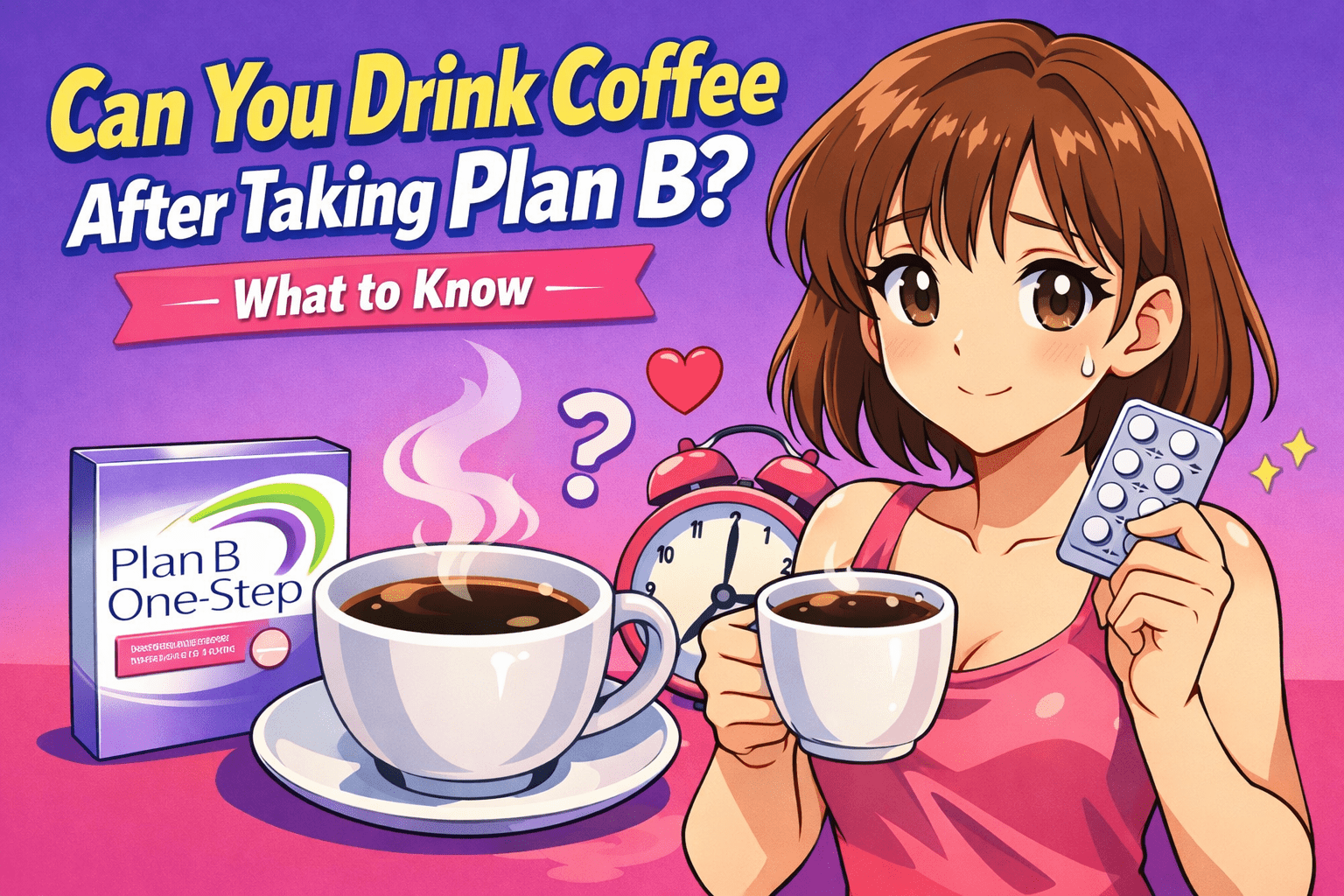
Coffee After
Plan B?
What’s Actually Known — and What to Watch For
There is no known interaction between caffeine and levonorgestrel. Here’s what that means in practice.
If you’ve just taken Plan B and you’re wondering whether your morning coffee is going to cause a problem — that’s a completely reasonable thing to want to know. The answer is more straightforward than you might expect.
The short version: there is no known interaction between caffeine and Plan B. But there are a few comfort considerations worth knowing, and a handful of things that do affect how well emergency contraception works.
There is no known interaction between caffeine and Plan B (levonorgestrel). Drinking a normal amount of coffee after taking the morning-after pill is not expected to reduce its effectiveness or cause a dangerous reaction. That said, if you’re already dealing with nausea — one of the more common side effects — a strong coffee on an empty stomach might not be the most comfortable choice in the moment.
What Plan B Is and How It Works
Understanding the basics matters, especially since Plan B is commonly confused with other medications.
Plan B One-Step is an over-the-counter emergency contraceptive that contains levonorgestrel, a synthetic hormone used in many regular birth control pills at lower doses. Taken within 72 hours of unprotected sex — and most effective within the first 24 — it works primarily by delaying or preventing ovulation. It does not terminate an existing pregnancy.
Delays or prevents ovulation. Available without a prescription. Most effective within 24 hours of unprotected sex, up to 72 hours. Does not end an established pregnancy.
ella (ulipristal acetate) is a different emergency contraceptive requiring a prescription. Mifepristone/misoprostol is the abortion pill — a completely different medication that ends an established pregnancy. Guidance around interactions differs between them.
Does Caffeine Interact with Plan B?
What the evidence actually shows — including where the evidence gap is.
There is no documented drug interaction between caffeine and levonorgestrel listed by the FDA, in Plan B’s patient information leaflet, or in clinical pharmacology references. Levonorgestrel is metabolized primarily by the liver via CYP3A4 enzymes. Caffeine is processed by the liver through a different pathway (CYP1A2), which means the two are unlikely to compete or interfere with each other in any clinically meaningful way.
No significant clinical trials have specifically studied caffeine consumption alongside Plan B. The honest answer is that this evidence gap exists — but the absence of a flagged interaction, combined with what’s understood about how each substance is processed, gives reasonable reassurance that a cup or two of coffee is not going to undermine the pill’s effectiveness.
High-caffeine products won’t interfere with Plan B’s mechanism. But they can amplify nausea, raise heart rate, and increase blood pressure — all of which may already be mildly affected as your body responds to a large dose of synthetic hormone. This isn’t a reason to avoid them categorically; it’s just worth knowing if you’re already feeling off.
Side Effects to Be Aware Of
Most are temporary and resolve within a day or two. Knowing what’s normal helps.
- Nausea (most frequently reported)
- Headache
- Fatigue or dizziness
- Breast tenderness
- Abdominal pain or cramping
- Spotting or irregular bleeding
Your next menstrual cycle may arrive earlier or later than expected — this is normal and not a sign that the pill didn’t work. If your period is more than a week late, taking a pregnancy test is the right next step.
Caffeine won’t cause these side effects, but if nausea is already present, a strong black coffee on an empty stomach could make it feel worse. Taking Plan B with food and sticking to mild, familiar drinks in the hours after can make the experience more manageable.
What You Should Actually Avoid
Coffee isn’t the concern. A few things are.
- Certain medications can reduce Plan B’s effectiveness — including some anti-seizure drugs, rifampin (an antibiotic), and St. John’s Wort. If you take any of these regularly, talk to a healthcare provider about your options.
- Alcohol doesn’t directly interfere with levonorgestrel, but heavy drinking when you’re already nauseous and experiencing hormonal effects is uncomfortable and counterproductive.
- Don’t take a second dose thinking it will increase effectiveness. It won’t — and it increases the likelihood of side effects.
- Check the expiration date on any emergency contraceptive you keep on hand. Expired medication may be less effective.
When to Contact a Healthcare Provider
Occasional mild side effects are expected. These are different.
- Severe abdominal pain — in rare cases this can indicate an ectopic pregnancy and warrants prompt evaluation
- A known or suspected allergic reaction to levonorgestrel or any ingredient in the pill
- A period that is significantly late and a pregnancy test that is positive
- Questions about ongoing contraception options — Plan B is not designed for regular use and is less effective than consistent contraception methods
If you’re unsure whether Plan B was the right choice given your medications or health history, a quick call to a pharmacist is free, fast, and genuinely useful. Pharmacists are trained for exactly this kind of question and can flag interactions your doctor might not have discussed.
Frequently Asked Questions
No. There is no known interaction between caffeine and levonorgestrel. Coffee is not expected to reduce Plan B’s effectiveness.
Yes. If you’re feeling nauseous, you may want to wait until your stomach settles first. Taking Plan B with a light meal can help reduce nausea in the first place.
High-caffeine energy drinks won’t interfere with Plan B’s mechanism, but they can worsen nausea or raise your heart rate if you’re already feeling side effects. Moderate consumption is fine — pounding a large energy drink while feeling unwell isn’t ideal, but it’s a comfort consideration, not a medical contraindication.
The most reliable sign is getting your next period, even if it arrives a few days early or late. If your period is more than a week late, take a pregnancy test.
No. Plan B prevents pregnancy by delaying ovulation. The abortion pill (mifepristone) ends an established pregnancy. They are different medications used at different times for different purposes — this is one of the most common misconceptions about emergency contraception.
Coffee and Plan B
Don’t Interact.
Comfort Does Matter.
You don’t need to skip your morning cup or stress about the caffeine. The more practical concern is comfort: if nausea is hitting you, strong coffee on an empty stomach may not help. Eat something light, stay hydrated, and give your body a little time. If anything feels off beyond the expected short-term side effects — especially severe pain — don’t hesitate to contact a healthcare provider.
