
13 min read
Functional Coffee · How-To Guide
CBD Coffee
how to make it blend, taste good, and actually workThe core issue is one sentence: CBD oil is fat-soluble. One ingredient solves it. Everything else follows from there.
Adding CBD to your morning coffee sounds straightforward — drop some oil in, stir, done. In practice, it takes a little more attention if you want it to blend properly and taste the way it should.
The problem is chemistry. CBD oil is fat-soluble, which means it has no natural affinity for water — and most of your coffee cup is water. Without something to bridge them, the oil floats on the surface, sticks to the side of your mug, and delivers unevenly. You end up with an oily slick and an inconsistent experience rather than a drink.
The solution is simple: add a fat. Cream, coconut milk, butter — any fat-rich ingredient gives the CBD oil something to bind to instead of separating. That one adjustment is the foundation of every method in this guide.
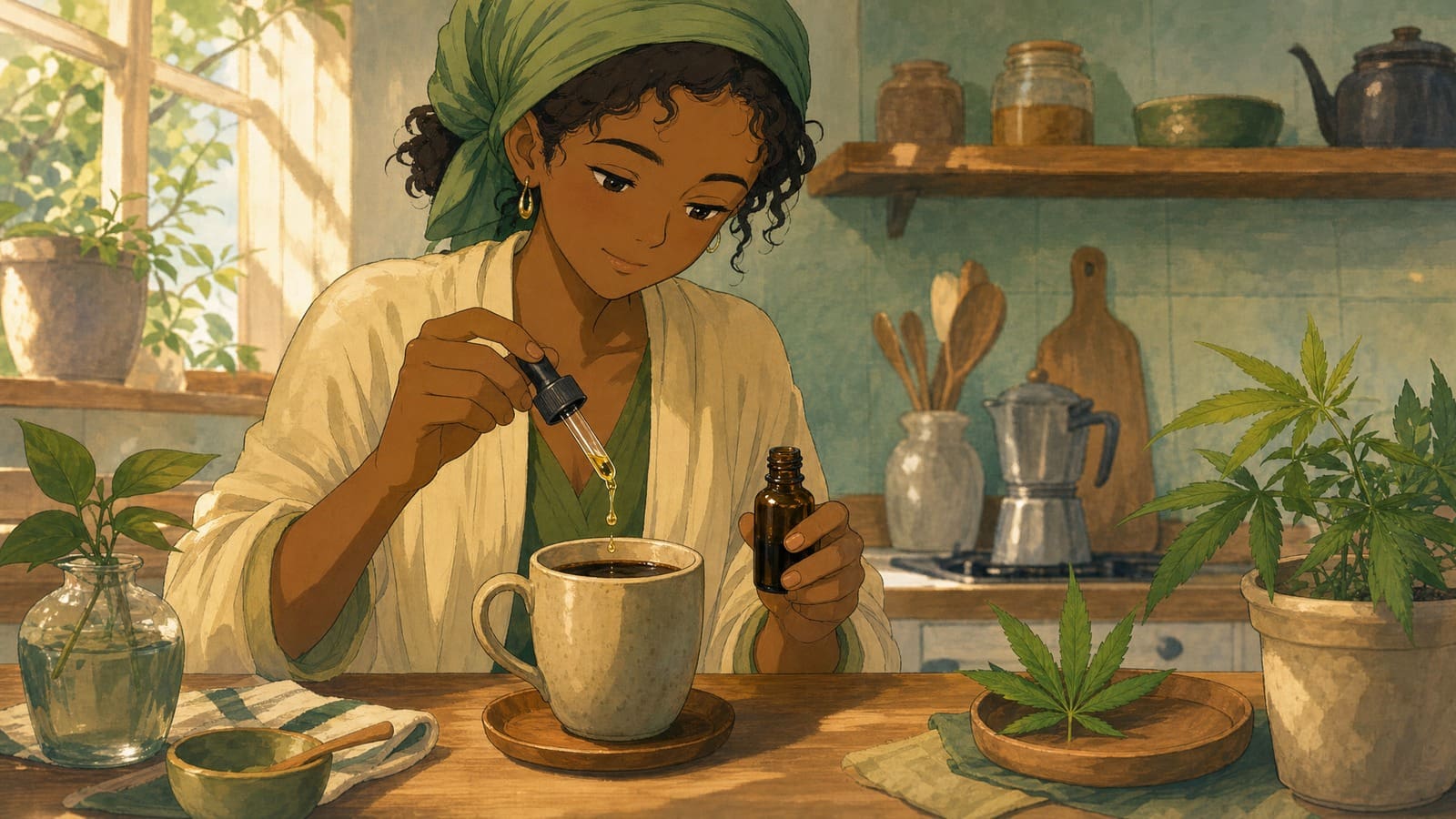
Brew your coffee as normal. Add a fat source — cream, full-fat coconut milk, or a tablespoon of grass-fed butter. Stir in your CBD oil drops. Froth or stir vigorously for 20–30 seconds. Start with 10mg if you’re new to it. Drink immediately before it begins to separate.
In This Guide
Six sections · tap to expand
- 1 Why Mixing Is Trickier Than It LooksFat-solubility, carrier oils, and the fix
- 2 Three Methods Worth UsingDrops in brewed coffee, French press, and cold brew
- 3 What About CBD-Infused Beans?Convenience versus control
- 4 How Much CBD Should You Use?Starting points and label math
- 5 A Few Things Worth KnowingDrug interactions, FDA status, legality
- 6 Frequently Asked QuestionsThe questions that actually come up
Why Mixing CBD Into Coffee Is Trickier Than It Looks

Chemistry, carrier oils, and the single ingredient that changes everything.
CBD oil is extracted from the hemp plant and then suspended in a carrier oil — usually MCT (fractionated coconut), hemp seed, or olive oil. These are all fats. And fats don’t dissolve in water; they separate from it, which is exactly what happens when you drop CBD oil into a plain black coffee.
The oil doesn’t blend — it floats, coats the inside of the mug, and delivers inconsistently from sip to sip. Without a fat bridge, you’re not really drinking the CBD — you’re mostly watching it stick to the ceramic.
The Problem: Oil and Water

CBD extract is dissolved in a fatty carrier oil. When you drop it into black coffee — which is mostly water — the two phases separate immediately. The oil floats, sticks to the mug, and doesn’t deliver evenly.
The Fix: Fat
Add cream, full-fat coconut milk, butter, or any fat-rich ingredient and you give the CBD carrier oil something to blend into. The fat molecules create a stable medium that holds the CBD in suspension rather than letting it ride the surface.
Agitation Matters
Even with fat present, stirring is important. A handheld milk frother — 20 to 30 seconds — creates a genuine emulsion. It’s the difference between fat swirling around the oil and the two actually combining.
Drink It While It’s Hot
CBD oil begins to re-separate as the coffee cools. Even a well-emulsified cup will slowly come apart as the temperature drops. Make it, froth it, drink it — that’s the most consistent approach.
Fat is the ingredient that makes everything else work. All three methods below are just different answers to the same question: which fat and which brewing style suits how you already make coffee?
The core principle behind every method in this guideThree Methods Worth Using
Pick the one that fits how you already brew. All three work — the differences are in effort level, texture, and how naturally the CBD integrates.
This works with any brewing style — drip, pour-over, espresso, Aeropress, whatever you’re already using. You’re not changing your brew at all; you’re just adding two things to the finished cup.
- 1 Brew your coffee as you normally would.
- 2 Add a fat source: a tablespoon of cream, full-fat coconut milk, or grass-fed butter.
- 3 Add your CBD oil drops — start with 10mg if you’re new to it.
- 4 Froth with a handheld milk frother for 20–30 seconds, or stir briskly.
- 5 Drink immediately before the oil begins to re-separate.
If you already use a French press, this is a natural fit. The act of pressing and pouring creates mild turbulence that begins the emulsification process before the coffee even hits your cup. And French press coffee’s naturally fuller body pairs well with the earthy undertone that most CBD oils carry.
- 1 Add your grounds and hot water (around 200°F) as usual.
- 2 Steep for 3–4 minutes.
- 3 Before pressing, add your CBD oil drops and a small amount of fat — coconut oil or cream work well here.
- 4 Press slowly, then pour into your cup and stir once more.
Cold brew is a surprisingly good vehicle for CBD. You’re not fighting hot water at all, and cold brew’s naturally smooth, low-acid character pairs well with the mild hemp note most CBD oils carry. Most cold brew drinks already include cream or milk — which means the fat step is already built in.
- 1 Make cold brew concentrate as normal — coarse grounds steeped in cold water for 12–24 hours, then strained.
- 2 Pour over ice and add your preferred milk or cream.
- 3 Stir in your CBD oil drops last and mix well.
If you make CBD coffee regularly, a handheld milk frother is the one upgrade that makes a real practical difference. It takes ten seconds and produces a noticeably smoother, better-integrated cup compared to stirring alone. Any basic model works — look for one with a long battery life and a spare whisk head.
Shop Handheld Frothers on AmazonWhat About CBD-Infused Beans?
They exist, they’re convenient, and the tradeoffs are worth understanding before you commit to a bag.
CBD-infused coffee beans are sold by specialty roasters and several online retailers. The beans are coated or sprayed with CBD during processing, so you brew them as normal without any additional steps or dropper bottles. The appeal is obvious: no measuring, no extra ingredient, no extra step.
There are two real limitations. First, heat degrades CBD. Brewing with hot water subjects the CBD coating to sustained heat, which reduces its potency before the liquid reaches your cup. Second, dosage control is much harder — the coating amount isn’t standardized the way a calibrated dropper is, so knowing what you’re getting per cup is more guesswork than math.
CBD Oil Drops in Coffee

- Precise, measurable dosage
- CBD added after heat — less degradation
- Works with any coffee you already buy
- Freely adjustable dose
- Requires adding oil and frothing
CBD-Infused Coffee Beans
- No separate dropper or measuring
- Simpler morning routine
- CBD potency lost during brewing
- Difficult to control exact dose
- More expensive, narrower selection
If convenience outweighs precision and you’re not using CBD for any specific reason other than general interest, infused beans are a perfectly reasonable option. For anyone who wants to know what they’re actually getting in each cup, adding drops to brewed coffee gives you more control and more flexibility.
How Much CBD Should You Use?
There’s no universal answer. Being honest about that is more useful than pretending otherwise.
Most CBD coffee recipes suggest somewhere between 10mg and 25mg per cup, but the right amount is individual. Body weight, tolerance, sensitivity to cannabinoids, and what you’re hoping to feel all play a role. What works well for one person may do very little for another, and overshooting your dose on day one doesn’t help you find your baseline.
Adjust based on experience, product concentration, and how you feel after a few sessions. Go slow — you can always increase, but you can’t undo an overshot dose.
Start here
Common range
Adjust carefully
Read the label before you pour, not after. A standard full dropper varies widely by product — some deliver 15mg per ml, others deliver 30mg or more. Do the math on your specific product’s concentration so you know what you’re actually adding to your cup.
One thing worth knowing: CBD and caffeine both interact with adenosine receptors in the brain, though differently. Some people find the combination produces a calmer, more focused energy than caffeine alone — less edge, more sustained alertness. Others notice very little difference. Your experience will vary, and it’s worth a few mornings of honest observation before drawing conclusions.
A Few Things Worth Knowing
These aren’t reasons to avoid CBD coffee. They’re reasons to go into it with accurate information.
CBD is metabolized in the liver using the same enzyme system (CYP450) as many common prescription medications — including certain blood thinners, antidepressants, and anticonvulsants. If you take regular medications, talk to your doctor before adding CBD to your daily routine. This is not an edge case and it’s genuinely worth checking before making this habitual.
The FDA has not approved CBD as a dietary supplement or food additive, which means labeling accuracy and quality standards vary widely between brands. Look for products with a current Certificate of Analysis (COA) from a third-party laboratory. A COA tells you what’s actually in the bottle and at what concentration. No COA is a meaningful red flag — not a minor inconvenience.
CBD derived from hemp — containing less than 0.3% THC — is federally legal in the United States under the 2018 Farm Bill. State laws vary, and some states impose additional restrictions on CBD products. Know your local rules before ordering online or traveling with CBD products across state lines.
This guide is informational only. It is not a substitute for professional medical advice, diagnosis, or treatment. If you have a health condition and are considering CBD, speak with a qualified healthcare provider before starting.
Frequently Asked Questions
The practical questions that actually come up when you start making CBD coffee at home.
Can I just add CBD oil directly to black coffee?
Technically yes, but it won’t blend well. CBD oil is fat-soluble, so it floats on top of black coffee rather than mixing in. You’ll get an oily layer on the surface and inconsistent delivery from sip to sip. Adding cream, coconut oil, or full-fat milk gives the CBD something to bind to and helps it distribute more evenly through the drink.
Does heat destroy CBD?
Sustained high heat can degrade CBD over time. Adding CBD oil to already-brewed coffee — rather than brewing with it from the start — keeps heat exposure brief. Stir it in after brewing and drink it promptly. This is also why CBD-infused coffee beans lose some potency compared to adding oil afterward: the grounds are exposed to heat throughout the entire brewing process.
How much CBD should I put in my coffee?
Most people start with 10–25mg per cup. If you’re new to CBD, begin at the lower end — around 10mg — and give it a few sessions before adjusting. The right amount depends on body weight, tolerance, and what you’re hoping to feel. Always check the concentration on your specific product’s label before measuring; a standard dropper varies significantly between products.
What type of coffee works best with CBD?
Any type works, but cold brew and French press tend to produce the smoothest results. Cold brew is especially easy because cream or milk is usually already part of the drink — the fat step is built in. French press coffee’s fuller body also pairs naturally with the mild earthy note some CBD oils carry. That said, having fat in the cup and stirring well matters more than the specific brewing method.
Are CBD-infused coffee beans worth buying?
They’re convenient, but the tradeoffs are real: CBD potency is reduced during brewing due to heat exposure, and dosage control is harder because the coating isn’t precisely standardized. For people who want a low-effort approach and aren’t focused on specific milligrams, infused beans work fine. For anyone who wants to know what they’re getting in each cup, adding oil to brewed coffee is more reliable.
Will CBD coffee make me feel high?
No. CBD derived from the hemp plant contains less than 0.3% THC — well below the threshold for any psychoactive effect. It is non-intoxicating. Some people notice a calmer quality to their energy when pairing CBD with caffeine, but that is not the same as being high. There should be no impairment.
What Actually Matters Most
The whole thing comes down to one principle: CBD oil needs fat to blend. Add cream, coconut milk, or butter to your cup. Stir in your drops. Froth it. Drink it while it’s warm. That handles the blending problem entirely.
The French press and cold brew methods offer slightly cleaner integration than drops stirred into a drip coffee, but all three work well once you understand why they work. Method matters less than having fat in the cup.
Start at 10mg if CBD is new to you. Give it a few sessions before adjusting the dose. Use a product that has a third-party Certificate of Analysis so you know what’s actually in the bottle. And if you take regular medications, check with your doctor before making this a daily habit.
Once you’ve dialed in the method and the milligrams, CBD coffee stops feeling like an experiment and starts feeling like just another version of your morning cup.
