
13 min read
Coffee Recipes Hub · Equipment & Gear · Buying Guide
Best Coffee
Containers
Keep beans fresher, longer
The container you use matters more than most coffee marketing ever mentions. Here’s what actually separates a great canister from a mediocre one.
You buy good coffee. You grind it fresh, dial in your ratio, and pull a careful brew. But if your beans are sitting in the original bag clipped shut with a binder clip, or stored in a clear glass jar on a sunny counter, you’re losing flavor before the water even heats up.
The container you use matters — more than most people realize, and more than most coffee marketing ever mentions. This guide breaks down what the best coffee container actually needs to do, what features separate a great canister from a mediocre one, and which specific options are worth your money.
The best coffee container is airtight, opaque, and sized close to your typical purchase amount. For most home brewers, the Fellow Atmos Vacuum Canister is the top overall pick. If budget is the priority, the Coffee Gator is a reliable, well-designed step down. Avoid clear glass on the counter and skip the freezer unless you’re storing beans for months.
Get the 21-Day Coffee Glow-Up Recipe Book
Make your morning coffee feel like a treat again: 21 coffee-shop-style recipes you can make at home, with hot, iced, creamy, cozy, and Java Burn-friendly options.
- 21 craveable coffee recipes
- Simple flavor formulas and shopping list
- 7-day coffee glow-up plan
You are in. Grab the recipe book, then check your inbox to confirm the coffee newsletter.
Download the free recipe bookAlready subscribed? Open the recipe book here.
Why readers save it: It gives them recipes first, not hype first. Java Burn stays optional and label-directed, while the download gives them a better coffee routine they can use right away.
What happens next: MailPoet adds them to the Golden Lamb Coffee Newsletter, sends the welcome email, and includes them in the weekly coffee tips nurture sequence.
Educational download. Not medical advice. Java Burn is a dietary supplement; read the label and ask a qualified professional if you use supplements, take medication, or manage a health condition.
What Actually Destroys Coffee Freshness
Coffee’s enemies are simple but relentless. Understanding each one makes the container decision obvious.
The primary culprit. Oxidation begins immediately after roasting, breaking down the aromatic compounds that make coffee taste complex and bright.
Accelerates degradation. Clear glass on a counter loses volatile aromatics faster than beans kept in a dark place — it looks great, it’s bad storage.
Condensation — especially from fridge cycling — introduces water into beans and causes uneven extraction. Less of a daily issue than oxygen, but real.
Room temperature is fine, but near a stove, oven, or heating vent speeds staling significantly. Keep containers away from any heat source.
How Long Beans Stay at Peak Flavor by Storage Method
What to Look for in a Coffee Container
Five features that actually change how well your beans hold flavor — and one that’s often overlooked.
Non-negotiable. Look for silicone gaskets, locking tabs, or a vacuum pump mechanism. A loose-fitting lid is almost worse than no lid — it gives a false sense of protection while still letting oxygen reach the beans.
Especially important if you buy freshly roasted coffee. Lets CO₂ escape without letting oxygen in. Without it, fresh beans off-gassing can compromise even a well-sealed container. Less critical for beans more than a week post-roast.
Stainless steel: opaque, durable, odor-resistant, holds seal well — the default strong choice. Ceramic: opaque, inert, good-looking. Glass: fine in a dark cabinet, risky on a sunny counter. Plastic: avoid if possible.
A large canister that’s half-full leaves significant air space — more oxygen exposure every time you open it. Match container size to how much coffee you actually buy. A 250g bag fits a 0.7–1L canister. Buying bulk? Use two containers.
Small but genuinely useful. The Coffee Gator includes a date wheel on the lid to track when you opened or filled the container. Peak flavor for freshly roasted beans is 2–4 weeks from the roast date — the wheel makes this visible.
If your container lives on the counter, opacity is essential. Clear glass or plastic is fine in a dark cabinet. On an open shelf near a window, it’s actively degrading your coffee. Stainless steel and ceramic are fully opaque by default.
Material Comparison
| Material | Airtight | UV Protection | Odor Resistance | Durability | Counter-Ready |
|---|---|---|---|---|---|
| Stainless Steel | ✓ | Full | Excellent | Excellent | ✓ |
| Ceramic | ✓ | Full | Excellent | Good | ✓ |
| Clear Glass | ✓ | None | Excellent | Fragile | Cabinet only |
| Plastic | Varies | None | Absorbs odors | Varies | Not recommended |
Top Picks: Best Coffee Canisters Worth Buying
Four options across every budget and use case — with honest tradeoffs for each.

The Fellow Atmos is the top pick for serious home brewers. It uses an integrated vacuum pump built into the lid — twist to seal and it removes oxygen from the container each time you close it. The result is a genuinely vacuum-sealed container, not just an airtight one. Oxygen removal rather than simply oxygen exclusion is a meaningful difference for beans you want to keep fresh for 3–4 weeks.
The stainless steel body is fully opaque, durable, and looks clean on any counter. The mechanism is simple enough to use daily without thinking about it. Available in three sizes — the 0.7L fits a standard 250g bag comfortably. Note: Fellow recommends whole beans only, as ground coffee can clog the valve mechanism.
Whole bean buyers who go through a bag every 1–2 weeks and want the best possible preservation without overcomplicating the routine
Budget is a hard constraint — there are good alternatives at lower price points, and the vacuum advantage is real but not essential
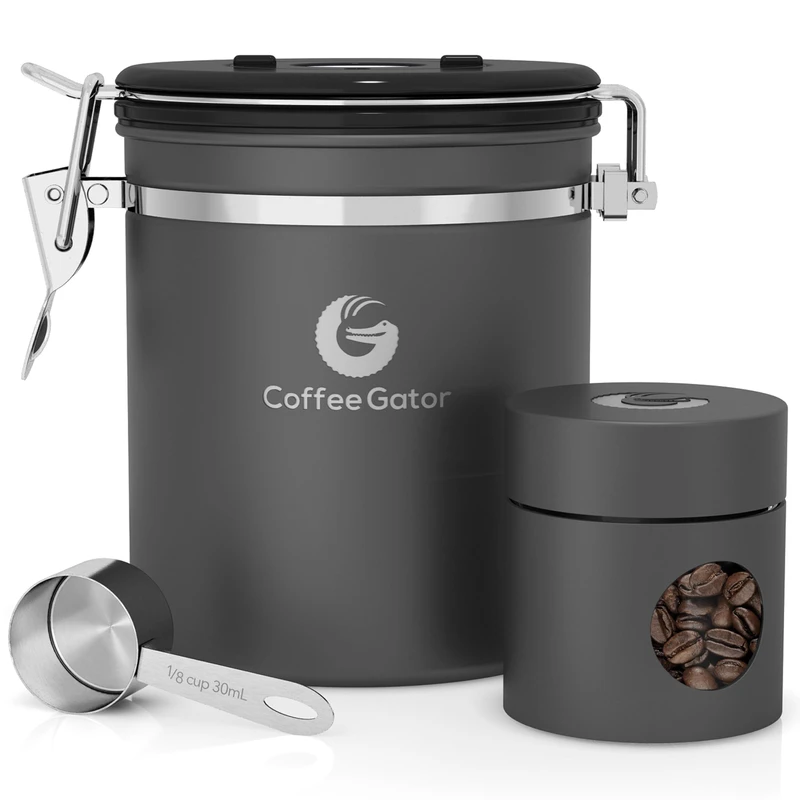
The Coffee Gator is a well-rounded stainless steel canister with a one-way CO₂ release valve, an airtight lid with a silicone seal, and a date-tracking wheel on top. It doesn’t create a vacuum, but it reliably keeps oxygen out and lets off-gas escape. The date wheel is a genuinely useful daily feature that most competing canisters at this price point omit.
Build quality is solid for the price — the stainless body feels substantial, the seal engages cleanly, and it comes in multiple sizes and colors. The 16oz (medium) size fits a standard 250g–340g bag comfortably. Available with a measuring scoop included.
Everyday coffee drinkers who want a significant upgrade from a paper bag without spending Fellow Atmos money
You want true vacuum sealing — the Coffee Gator is airtight, not vacuum-sealed, and that distinction matters for very fresh specialty roasts
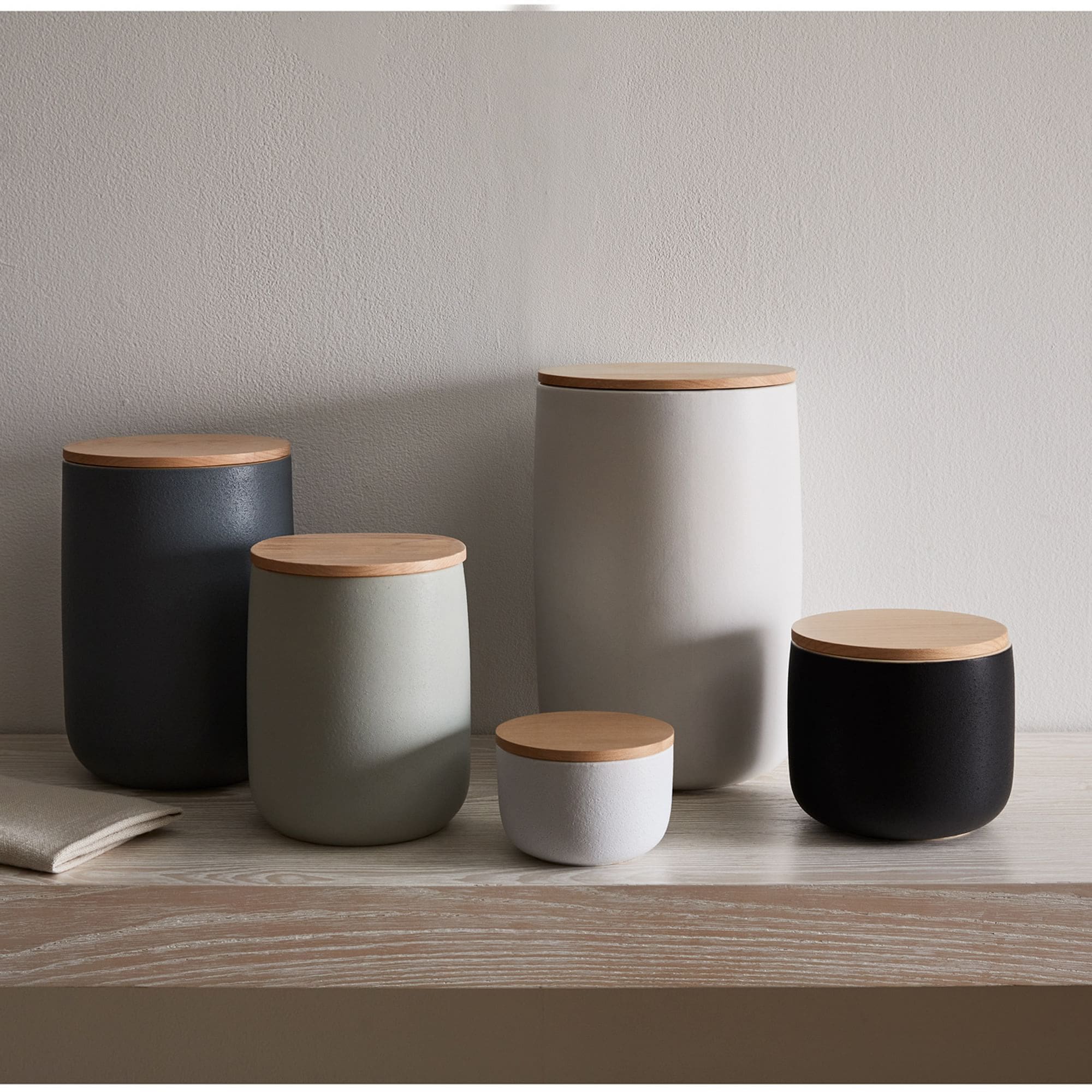
If aesthetics matter and you want something that looks intentional on your kitchen counter, a quality ceramic canister with a tight rubber-sealed lid is a reasonable choice. Ceramic is inert (no odor absorption), fully opaque, and keeps coffee at a stable temperature. Good-looking enough to be a design object, functional enough to be a real storage solution.
Look specifically for a silicone or rubber gasket lid rather than a loose-fitting ceramic lid — the seal quality varies significantly between models. Avoid any ceramic canister with a clear or partially clear lid, which defeats the UV protection advantage.
People who prioritize kitchen aesthetics and keep their coffee in a cool, dark spot away from direct sunlight
You’re buying freshly roasted specialty beans — ceramic lacks the CO₂ valve that matters most in the first week post-roast

Mason jars are airtight, inexpensive, and widely available — and they’re not wrong for coffee storage. The significant limitation is that they’re clear glass, which means UV exposure is a real concern on an open counter. They’re also without a CO₂ valve, so they’re better suited to beans that have had a few days to off-gas post-roast.
If you already own wide-mouth mason jars and have a dark pantry or cabinet to store them in, they’re a genuinely reasonable zero-cost upgrade over an open bag. Keep them in the dark and they’ll serve you well. Just don’t put them on the counter near a window and expect the same results.
Storing coffee in a dark pantry or cabinet when you already own mason jars and don’t want to spend money on a dedicated canister
You’re storing coffee on an open counter or buying very fresh specialty roasts — the UV exposure and missing valve are real limitations
Whole Beans vs. Pre-Ground: Does the Container Change?
The same principles apply to both, but pre-ground coffee is significantly more vulnerable. Grinding dramatically increases surface area, which means oxidation happens much faster. Pre-ground coffee in an airtight container will still go stale faster than whole beans in the same container — that’s physics, not a product failure.
Where to Keep Your Container
The kitchen counter is fine if your container is opaque and away from direct sunlight or heat sources like a stove. A dark cabinet or pantry is slightly better — less temperature variation, no UV risk regardless of container material.
The refrigerator is not recommended for daily-use coffee. Condensation and fridge odors are real problems, and the temperature cycling as you take it in and out creates moisture issues that offset any benefit from the cool temperature.
Frequently Asked Questions
Stainless steel is the most practical choice — opaque, durable, odor-resistant, and holds an airtight seal reliably. Ceramic is a strong aesthetic alternative. Avoid clear glass on open shelves and cheap plastic, which absorbs odors and may not maintain a reliable seal over time.
Not strictly required, but it’s a meaningful feature if you buy freshly roasted coffee. The one-way valve lets CO₂ off-gas without letting oxygen in. For beans more than a week past their roast date, it matters less.
Whole beans in a well-sealed airtight container at room temperature typically stay at peak flavor for 2–4 weeks after the roast date. Pre-ground coffee is best within 1–2 weeks even in an airtight container.
For regular coffee drinkers who care about freshness, yes. The vacuum mechanism is genuinely effective and easy to use daily. If the price is a barrier, the Coffee Gator canister covers the core requirements at a lower price point.
Yes, but keep it in a dark cabinet rather than on a sunny counter. Mason jars are airtight but offer no UV protection, and they lack a CO₂ release valve for very fresh roasts. They’re a reasonable free option for cabinet storage.
Match it to your typical purchase size. A 250g bag fits comfortably in a 0.7L–1L canister. Leaving excess air space in a large canister defeats the purpose of an airtight seal — more headspace means more oxygen exposure every time you open it.
Airtight, opaque,
right-sized.
The best coffee container does three things: keeps oxygen out, blocks UV light, and fits the amount of coffee you actually buy. The Fellow Atmos is the top pick for anyone who wants the most protection with the least friction. The Coffee Gator is the smart buy for most home brewers. And whatever you choose, keep it away from heat, light, and the refrigerator. Good storage won’t make mediocre coffee great, but it will make sure good coffee stays that way.
