
5 min read
Coffee lovers are always searching for new, convenient ways to enjoy their favorite drink. One of the more unusual questions that pops up is: Can you roast coffee beans in a microwave?
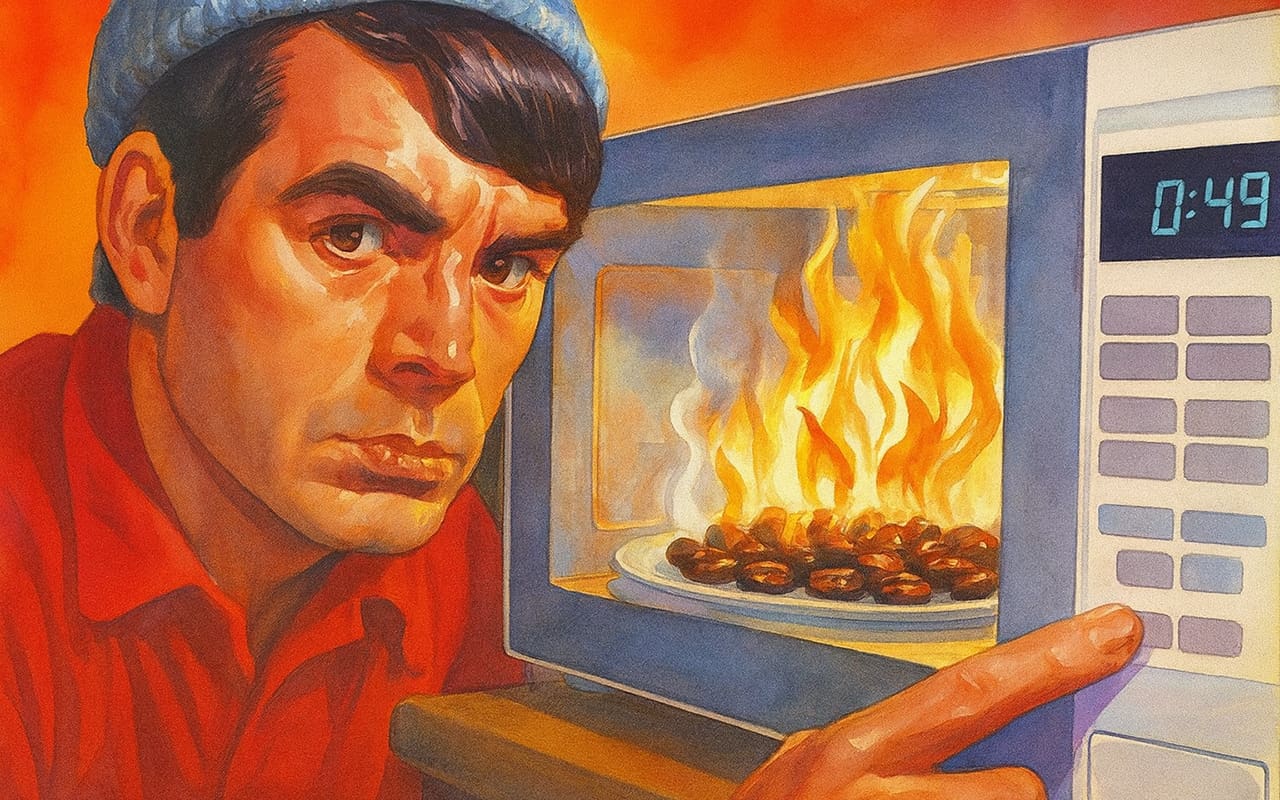
Quick answer: You can technically heat green coffee beans in a microwave, but I do not recommend it. Microwave roasting is uneven, hard to control, smoky, and easy to overshoot. If you want to experiment at home, a stovetop pan, popcorn popper, or small home roaster gives you far better control over color, aroma, and first crack.
| Method | Control | Best for |
|---|---|---|
| Microwave | Poor | Curiosity, not good coffee |
| Stovetop pan | Moderate | Learning roast color and smell |
| Popcorn popper or home roaster | Better | Repeatable small batches |
It may sound unconventional, but curiosity has led many home brewers to experiment with it. This guide explains how microwave roasting works, how it compares to traditional roasting, and what factors influence the final flavor and aroma of your coffee.

Table of Contents
Understanding the Coffee Roasting Process
Before exploring the microwave method, it helps to understand what happens during a traditional roast. Roasting coffee transforms green beans into the aromatic, flavorful ones we grind and brew. This transformation is driven by heat and involves complex chemical reactions that change the color, taste, and aroma of the beans.
During roasting, chlorogenic acids break down through multiple reaction pathways—epimerization, acyl migration, lactonisation, and dehydration—producing new compounds such as chlorogenic acid acetates and O-phenolic quinoyl esters.
In total, roasting creates more than 800 new compounds, many of which contribute to coffee’s aroma. The process also includes two key audible milestones:
- First crack: Caused by steam buildup inside the beans.
- Second crack: Triggered by gases like CO and CO₂ escaping as internal pressure rises.
Typical roasting temperatures range from 350°F to 500°F (175°C–260°C)—the longer and hotter the roast, the darker and bolder the flavor. Achieving balance requires tight control of temperature and timing—a challenge for any home setup.
Can You Roast Coffee Beans in a Microwave?
Microwave roasting is an unconventional but possible method. Instead of using a drum roaster or oven, you rely on microwaves to heat the beans. This process can roast small batches quickly, though it lacks the precision of traditional methods.
For those who enjoy experimenting or want a fast way to roast beans without special gear, the microwave method can be worth trying—with realistic expectations about consistency and flavor.
How to Roast Coffee Beans in a Microwave
What You’ll Need
- Microwave oven (1100W or higher preferred)
- Microwave-safe tray or plate
- Metal mixing bowl (for cooling)
- Wooden spoon or spatula
- Timer
- Kitchen scale
Step-by-Step Instructions
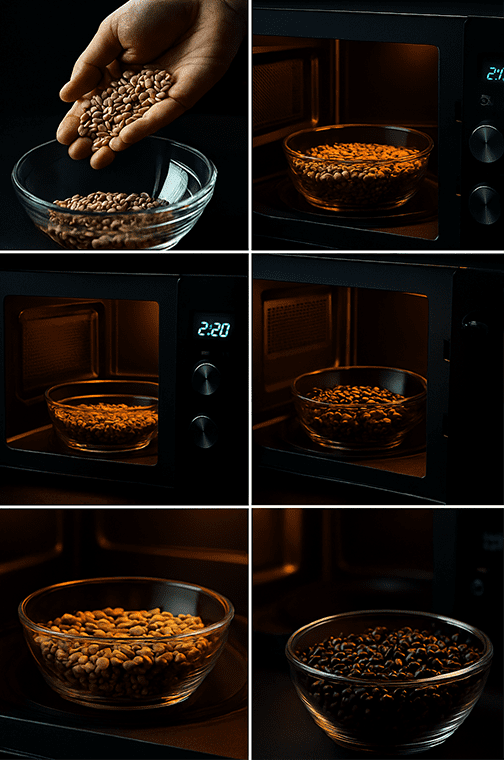
- Measure your beans: Weigh 80–150 grams of green coffee beans for one batch.
- Spread evenly: Arrange the beans in a single layer on a microwave-safe tray or plate.
- Heat in intervals: Microwave on full power in 30-second bursts, stirring between each to promote even roasting.
- Listen for the first crack: Typically around the 4-minute mark.
- Choose your roast level:
- Light roast: pale brown, no oil
- Medium roast: medium brown, balanced aroma
- Dark roast: dark brown, some surface oil
- Cool immediately: Transfer beans to a metal bowl and stir to stop the roast.
- Rest the beans: Let them sit 4–24 hours before grinding to allow degassing and flavor development.
Factors That Affect the Results
Moisture Content
Green beans typically contain 10–12% moisture. Too dry or too wet, and you’ll get uneven roasting or off-flavors.
Microwave Power
Higher wattage microwaves roast faster but increase the risk of scorching. Begin with short bursts and adjust your approach based on the results.
Batch Size
Roast small batches to ensure more even heating. Overloading the tray will lead to unevenly roasted beans.
Timing
Roasting time typically ranges from 4 to 8 minutes, depending on your microwave and roast preference. Constantly monitor color and aroma closely.
Advantages and Disadvantages of Microwave Roasting
Advantages
- Fast and convenient: Roast a small batch in minutes.
- Low cost: No specialized equipment required.
- Customizable: You control the roast level by adjusting the time and intervals.
Disadvantages
- Uneven heating: Microwaves don’t distribute heat evenly, leading to inconsistent roasts.
- Limited control: Fine-tuning roast levels is difficult compared to traditional methods.
- Small capacity: You can only roast a small amount at once.
Common Questions About Microwave Coffee Roasting
Can I use any mug or bowl to roast coffee beans in a microwave?
Only use microwave-safe glass or ceramic containers. Avoid metal or plastic.
Is microwave-roasted coffee as flavorful as regular roasted coffee?
Not exactly. The flavor is typically less complex, but some people enjoy the unique taste.
How long should I roast the beans?
Start with 30-second bursts and check color and aroma frequently.
Can I reach a dark roast?
Yes, but it takes careful timing. Stop before the beans burn or develop a bitter smell.
Can I roast espresso beans in a microwave?
It’s possible, though espresso typically requires darker roasts. Expect to experiment before finding your ideal roast time.
Related: For a related coffee science follow-up, read Decaffeinating Coffee Beans: An Inside Look at the Process next.
Final Thoughts
Roasting coffee beans in a microwave is a fascinating, if imperfect, experiment. It’s quick, cheap, and fun—but it won’t replace traditional roasting for accurate flavor control. If you’re new to home roasting, this method is a simple way to explore the process and appreciate the transformation from green bean to aromatic brew.
So, can you roast coffee beans in a microwave? Yes—but not perfectly. It’s a great way to learn, experiment, and enjoy coffee in a whole new way.
