
10 min read
Coffee Recipes Hub · Equipment & Gear
Best Grinders
Under $50
That Are Actually Worth Buying
A grinder is the single most impactful upgrade you can make to your morning cup. You don’t need to spend a fortune to grind fresh.
If you’re still buying pre-ground coffee, a grinder is the single most impactful upgrade you can make to your morning cup — and you don’t need to spend a fortune.
The best coffee grinders under $50 can deliver noticeably better flavor, more grind control, and long-term savings on beans — as long as you know what to look for and what to skip. This guide cuts through the noise: which grinders are genuinely worth buying at this price point, what separates a good budget grinder from a frustrating one, and who should consider spending a little more.
The Oxo Brew Conical Burr Grinder tops this category when it dips into the $40–$50 range — 15 settings, built-in timer, solid burr mechanism. For manual grinding, the JavaPresse Manual Grinder is a standout with ceramic conical burrs and 18 settings. On a tight budget, the Hamilton Beach Fresh Grind handles basic drip reliably. Prioritize a burr grinder if you can.
Get the 21-Day Coffee Glow-Up Recipe Book
Make your morning coffee feel like a treat again: 21 coffee-shop-style recipes you can make at home, with hot, iced, creamy, cozy, and Java Burn-friendly options.
- 21 craveable coffee recipes
- Simple flavor formulas and shopping list
- 7-day coffee glow-up plan
You are in. Grab the recipe book, then check your inbox to confirm the coffee newsletter.
Download the free recipe bookAlready subscribed? Open the recipe book here.
Why readers save it: It gives them recipes first, not hype first. Java Burn stays optional and label-directed, while the download gives them a better coffee routine they can use right away.
What happens next: MailPoet adds them to the Golden Lamb Coffee Newsletter, sends the welcome email, and includes them in the weekly coffee tips nurture sequence.
Educational download. Not medical advice. Java Burn is a dietary supplement; read the label and ask a qualified professional if you use supplements, take medication, or manage a health condition.
What to Look For Before You Buy
Three decisions determine whether a budget grinder actually improves your coffee.
Blade grinders chop beans unevenly — fine dust and coarse chunks in the same batch. That inconsistency causes uneven extraction: some grounds over-extract (bitter), others under-extract (sour), all in the same cup. Burr grinders crush beans at a fixed distance for a uniform grind. At sub-$50, you can find both electric burr and manual burr options. For anything beyond basic drip coffee, burr is worth the slight premium.
Coarse grinds for French press and cold brew. Medium for most drip. Fine for espresso — though true espresso-quality consistency is difficult under $50. Look for at least 8–12 distinct settings. More flexibility is useful if you switch between brew methods. Stepless adjustment, found more often in manual grinders, gives the most precision for dialing in a specific brew.
A bean hopper holding 2–4 oz is sufficient for most home users. Ease of cleaning matters more than most people expect — burr grinders with removable components stay usable over time. Stale grounds trapped in an unclenable grinder defeat the purpose of grinding fresh. Manual grinders are easiest to disassemble and clean.
The Best Grinders Under $50
Five picks, matched to different use cases. Buy the one that fits how you actually brew.
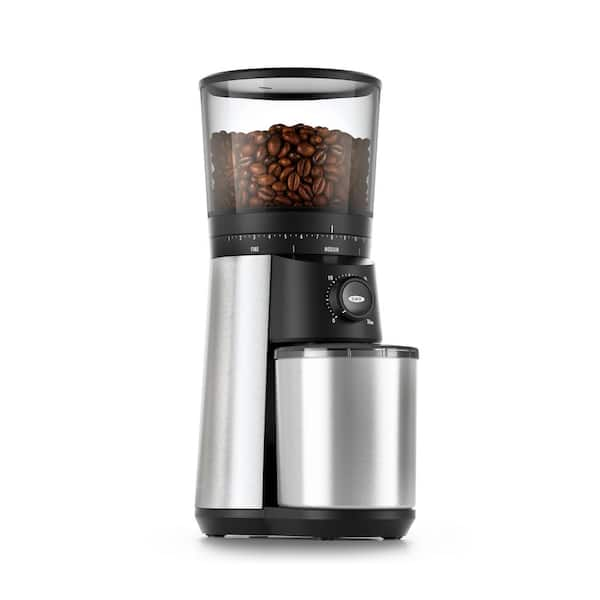
When it’s available in the $40–$50 window, the Oxo Brew is the clear choice for most home coffee drinkers. Stainless steel conical burrs, 15 grind settings from coarse to fine, and a built-in timer for dose consistency. The hopper holds up to 12 oz of whole beans — generous for this price range.
Cleanup is straightforward, and the build quality feels more like a $70–$80 grinder. If the price has crept above $55 at the time you’re reading this, check again — it fluctuates frequently.
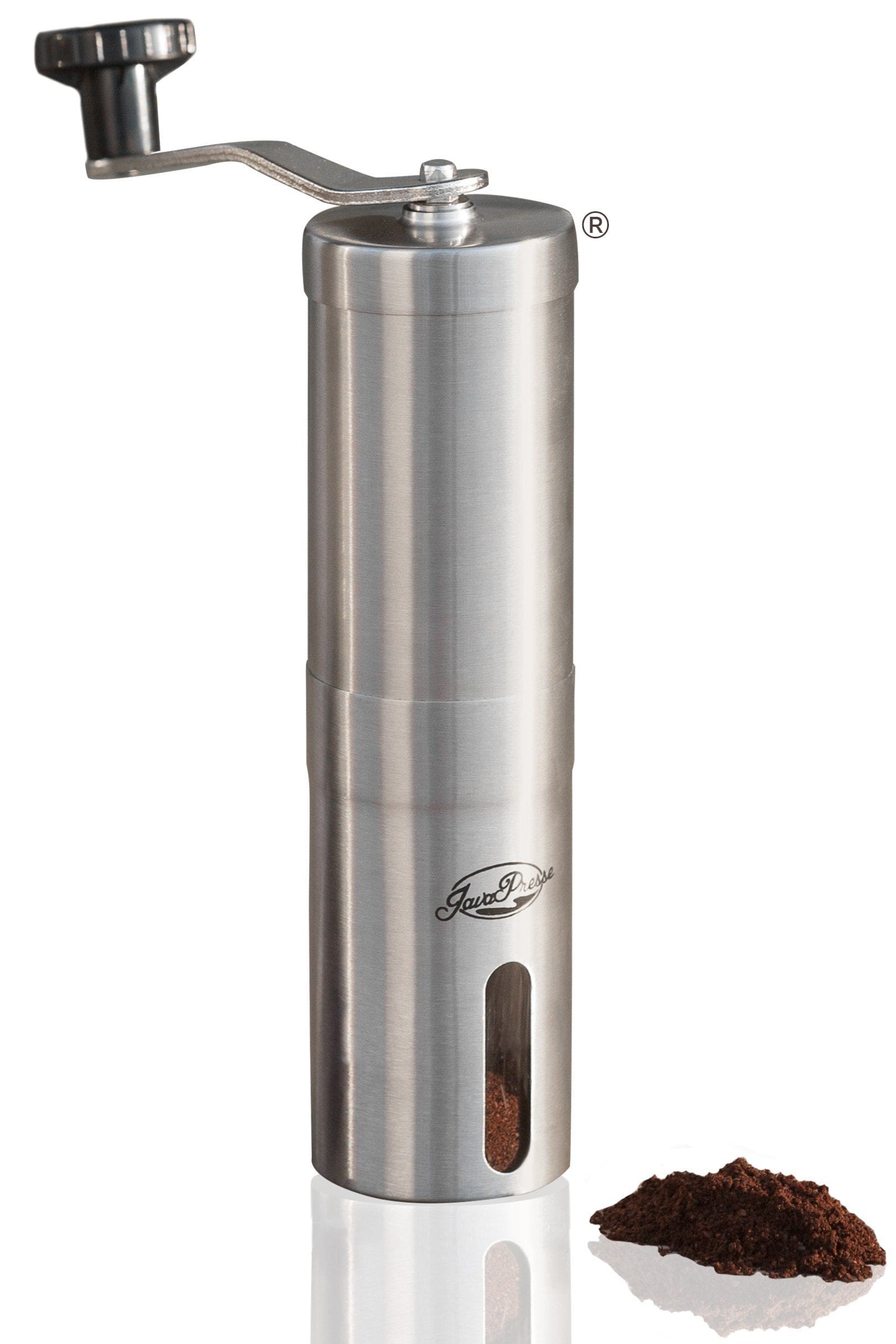
The JavaPresse is one of the most consistently recommended manual grinders at this price for good reason. Ceramic conical burrs, 18 adjustable grind settings, and a slim stainless steel body that travels easily. Ceramic burrs don’t heat up during grinding — some argue this preserves more aroma and flavor.
Grinding manually takes 1–2 minutes per cup, so this suits someone brewing one or two cups at a time. The quiet operation is a genuine bonus for early risers or office use.
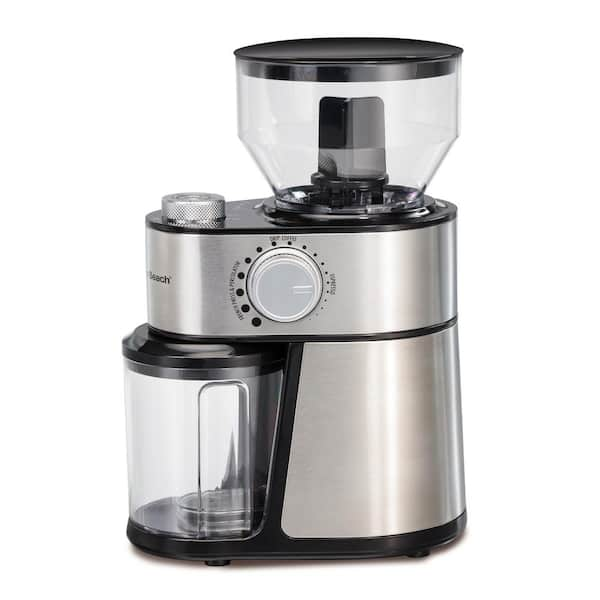
Blade grinders have real limitations — but if your budget is closer to $15–$20 and you’re making standard drip coffee, the Hamilton Beach Fresh Grind is a practical choice. Compact, easy to use, and acceptable results for automatic drip when you pulse it carefully rather than running it continuously.
Don’t expect grind consistency — you won’t get it. But for someone transitioning from pre-ground coffee who isn’t ready to invest more, this gets the job done.
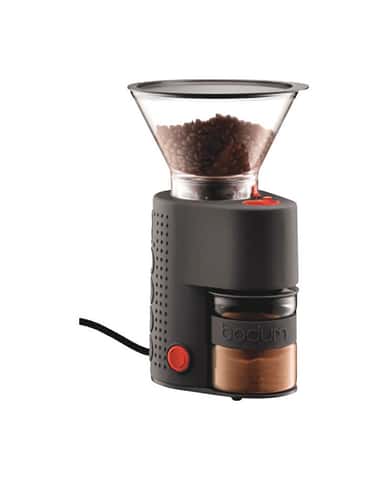
The Bodum Bistro occasionally falls in the $45–$50 range and is particularly well-suited to coarser grind methods like French press and cold brew. It uses a borosilicate glass container to collect grounds, which reduces static cling — a real quality-of-life improvement when you’re grinding daily. 12 grind settings.
Bulkier than some competitors and modest hopper capacity, but the coarse grind output is consistently good for the price — noticeably better French press clarity and cold brew extraction.
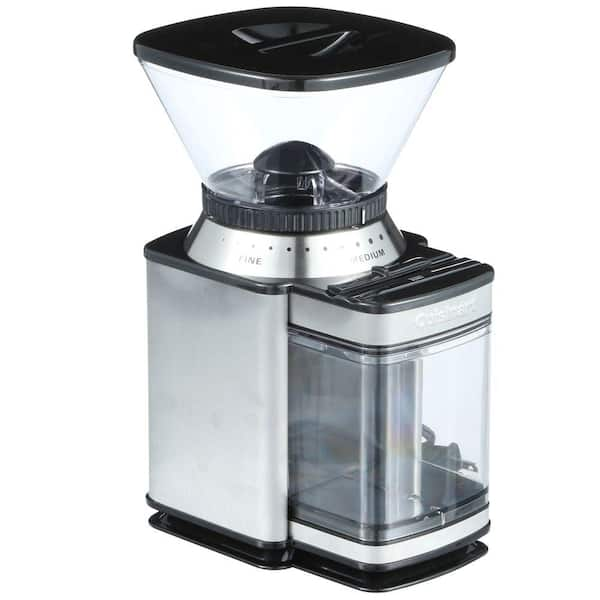
The Cuisinart DBM-8 is a workhorse that’s been around for years. Holds up to 8 oz of whole beans, 18 grind settings, built-in timer so you can set it and walk away. Available in the $35–$50 range depending on sales.
Grind consistency is decent for drip coffee and French press, though it doesn’t quite match the Oxo Brew’s performance. Solid pick for households that need volume and reliability over precision.
Who Should Skip a Sub-$50 Grinder
A budget grinder is a meaningful upgrade for most coffee drinkers — but not everyone.
You’re pulling espresso shots. The grind consistency required for espresso is extremely tight, and most grinders under $50 — even burr models — won’t give you the repeatability a good espresso machine demands. Plan to spend at least $100–$150 on a grinder if espresso is your primary brew method.
You’re a serious pour-over enthusiast chasing precise extraction. You’ll likely outgrow a sub-$50 grinder quickly. The Comandante, 1Zpresso, and similar hand grinders start around $100–$150 and represent a significant quality jump.
For everyone else — drip coffee, French press, cold brew, AeroPress, Moka pot — the grinders in this guide will make a real, noticeable difference in cup quality compared to pre-ground coffee from day one.
Frequently Asked Questions
Yes — even an entry-level burr grinder produces significantly more consistent grounds than a blade grinder, which directly improves coffee flavor. For French press, drip, and pour-over brewing, the difference is easy to taste. The Oxo Brew and JavaPresse are both excellent burr options at this price point.
Most grinders under $50 don’t produce the fine, consistent grind that espresso requires. You can experiment, but results will be inconsistent. For dedicated espresso use, budget at least $100–$150 for a grinder.
Ceramic burrs don’t conduct heat during grinding, which some argue preserves delicate aromatics. Stainless steel burrs are durable and common in electric grinders. At this price range, both perform well for everyday brewing — it’s not a dealbreaker either way.
For general home use, 8–15 settings is plenty. More settings give you flexibility if you switch between brew methods — French press one day and drip the next. Stepless adjustment, found in some manual grinders, gives the most precision.
For grind quality, a good manual burr grinder can match or outperform an electric burr grinder at the same price. The tradeoff is time and effort — manual grinding takes 1–2 minutes per cup. The JavaPresse is the standout manual pick at this price point.
Grind Fresh.
Day One
Tastes Better.
Prioritize a burr grinder over a blade model, look for multiple grind settings, and match the grinder to your brewing method. The Oxo Brew is the top electric pick when it’s in budget. The JavaPresse is the best manual option for single-cup brewing. Either one will make your morning coffee taste better starting on day one. There’s no good reason to keep buying pre-ground.
