
10 min read
The Golden Lamb Coffee · Homemade Creamers
Vanilla
Sweet Cream
The Starbucks Copycat, Explained by Science
That silky, pourable texture isn’t luck — it’s lipid viscosity. Here’s the chemistry behind it, and exactly how to replicate it at home.
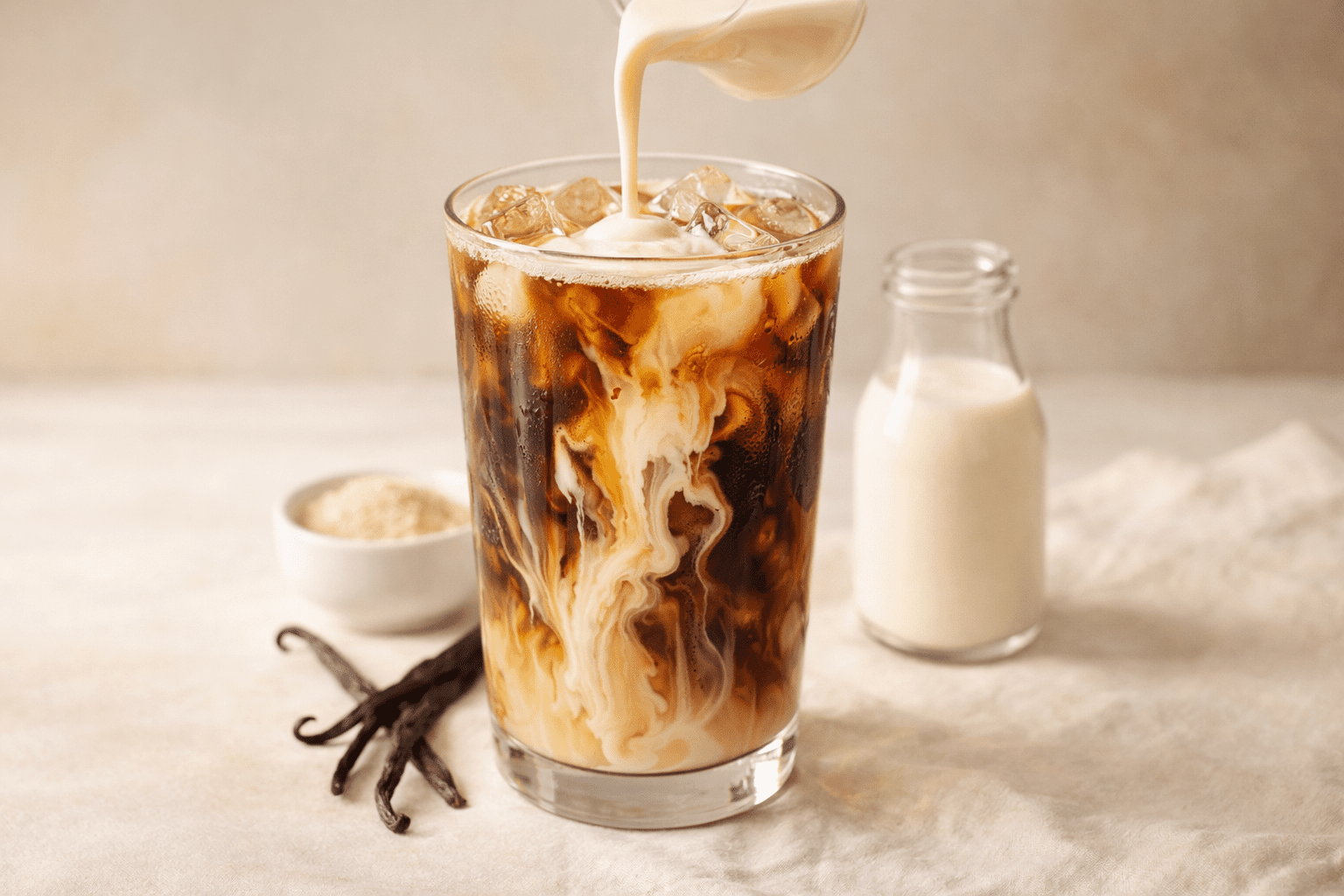
Starbucks Vanilla Sweet Cream pours like a dream and tastes like it shouldn’t be this easy to replicate. But it is — once you understand what’s actually happening between the fat, the liquid, and the sugar.
The texture isn’t a trade secret. It’s lipid viscosity — the way fat molecules at a specific concentration create thickness and cling in liquid without becoming heavy cream or milk on their own. Heavy cream at 36–40% fat behaves differently than the same cream diluted with whole milk. That ratio is the whole recipe, really. Everything else is flavor.
Understanding this lets you adjust with intention rather than guessing — thicker, thinner, sweeter, or more vanilla-forward, all from the same starting point.
This is vanilla sweet cream, not plain vanilla syrup. It belongs on cold brew, iced coffee, and shaken espresso when you want creamy body plus vanilla sweetness. If you only need a pumpable flavor syrup, use one of the coffee syrup recipes linked below instead.
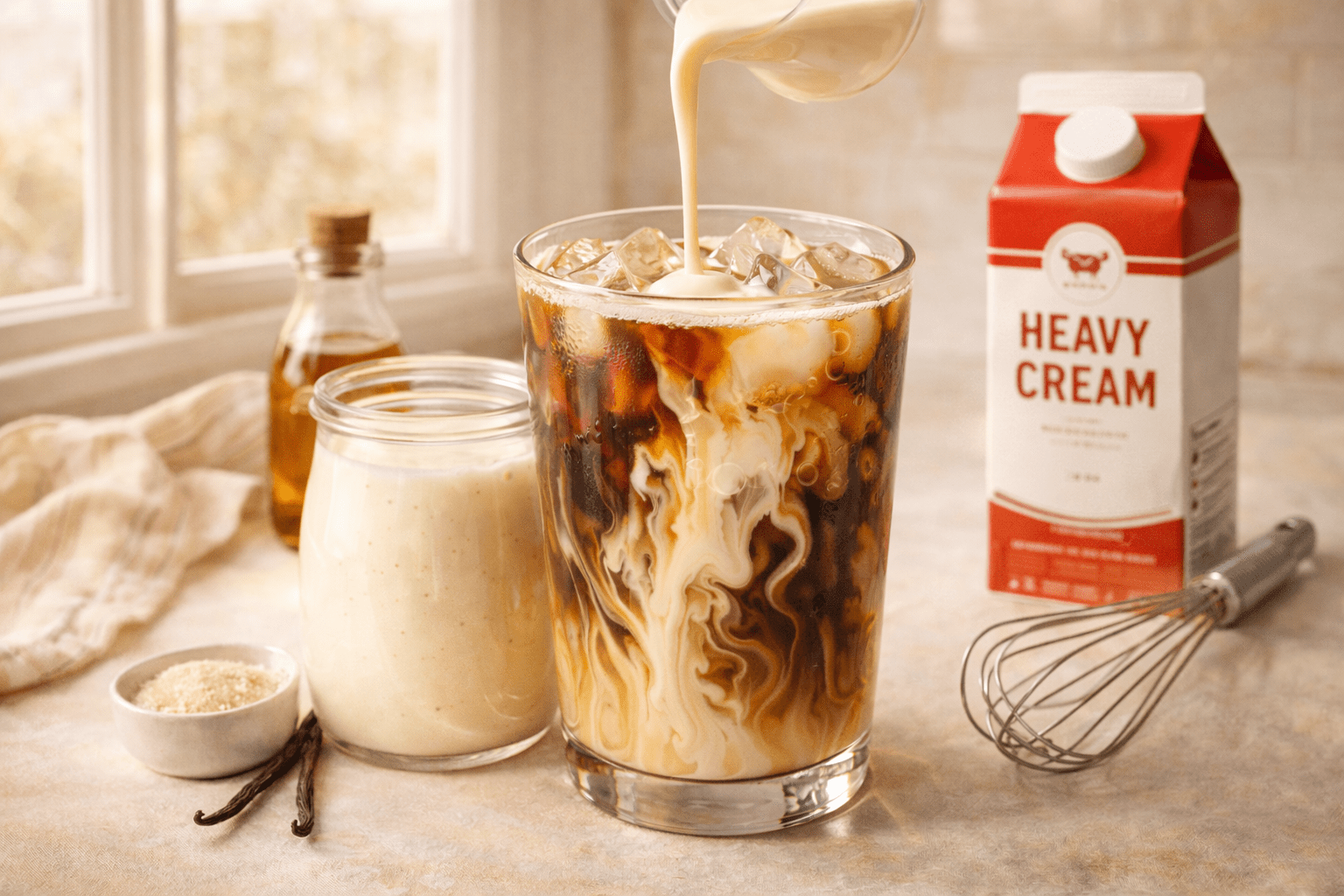
1 cup heavy cream, ½ cup whole milk, ⅓ cup vanilla syrup, pinch of salt. Whisk 2–3 minutes to emulsify, refrigerate at least 1 hour, shake before use. The chilling step is not optional — it’s when the emulsion stabilizes and the texture develops. Stores for up to a week.
Get the 21-Day Coffee Glow-Up Recipe Book
Make your morning coffee feel like a treat again: 21 coffee-shop-style recipes you can make at home, with hot, iced, creamy, cozy, and Java Burn-friendly options.
- 21 craveable coffee recipes
- Simple flavor formulas and shopping list
- 7-day coffee glow-up plan
You are in. Grab the recipe book, then check your inbox to confirm the coffee newsletter.
Download the free recipe bookAlready subscribed? Open the recipe book here.
Why readers save it: It gives them recipes first, not hype first. Java Burn stays optional and label-directed, while the download gives them a better coffee routine they can use right away.
What happens next: MailPoet adds them to the Golden Lamb Coffee Newsletter, sends the welcome email, and includes them in the weekly coffee tips nurture sequence.
Educational download. Not medical advice. Java Burn is a dietary supplement; read the label and ask a qualified professional if you use supplements, take medication, or manage a health condition.
The Science of Lipid Viscosity
Three things are working together in this recipe to create that distinctive Starbucks texture. Each one is adjustable once you understand what it’s doing.
Heavy cream’s fat content — 36 to 40% — is what creates richness and cling. When diluted with whole milk, you get a lower overall fat percentage that’s thick enough to pour in ribbons but light enough not to coat like cream on its own. This ratio is the texture. Changing the cream-to-milk ratio is how you make it thicker or thinner.
Fat and water don’t mix naturally — but whisking forces fat globules into suspension in the water-based liquid. The proteins in whole milk act as emulsifiers, helping hold that suspension stable. This is why whole milk works better than skim here: more protein, more emulsification support. The result is a cream that doesn’t separate immediately.
Sugar does more than sweeten — it increases solution density and contributes to body. A higher sugar concentration in the vanilla syrup makes the cream feel heavier and more substantial on the palate, even at the same fat ratio. This is the difference between vanilla sweet cream and sweetened coffee creamer — the sugar is working on texture, not just flavor.
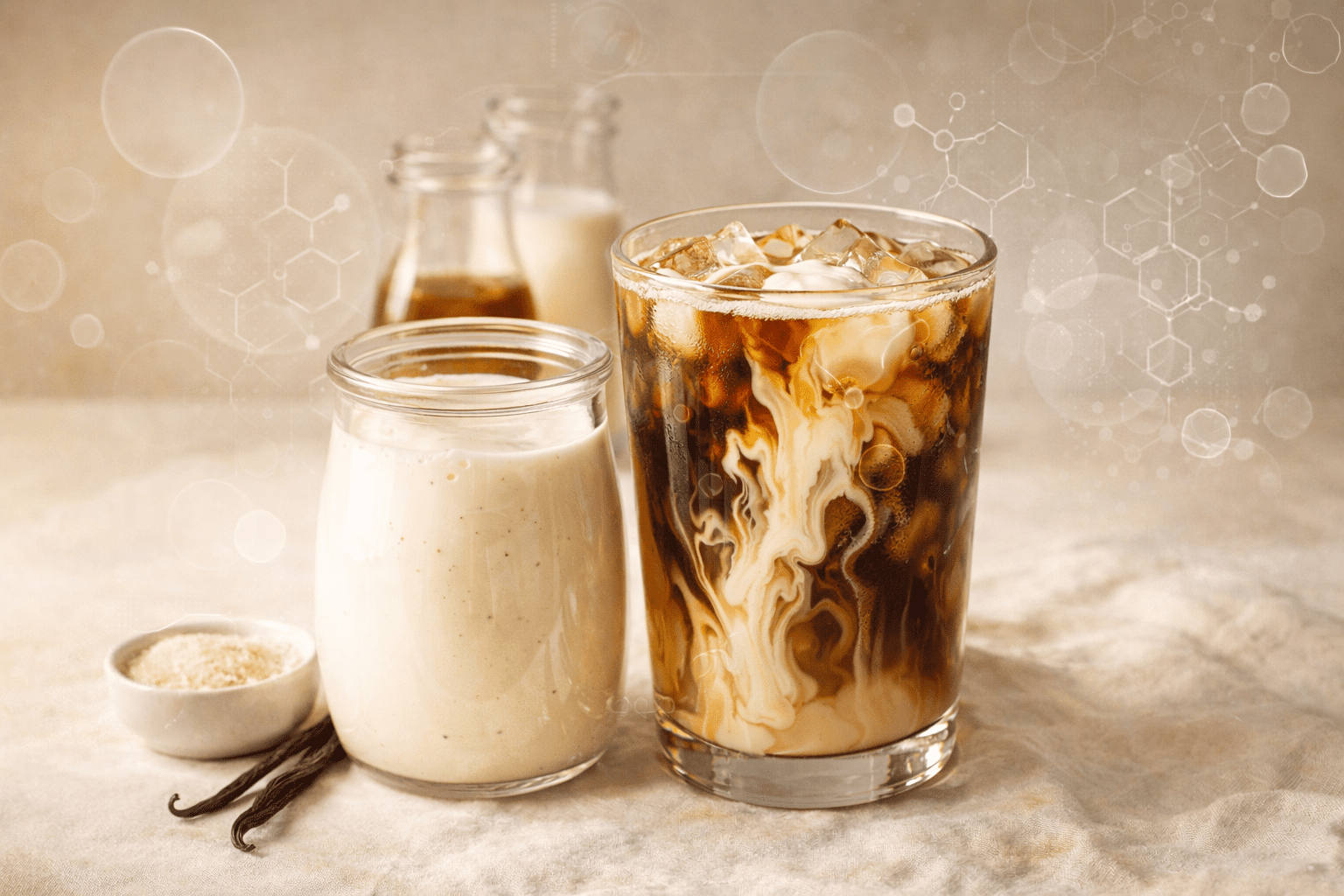
This is the creamy topping path. For pourable syrups, try lavender coffee syrup, pistachio coffee syrup, or cookie butter latte syrup.
The Recipe
Simple enough to memorize after one batch. Precise enough that the technique matters.
Homemade Starbucks Vanilla Sweet Cream
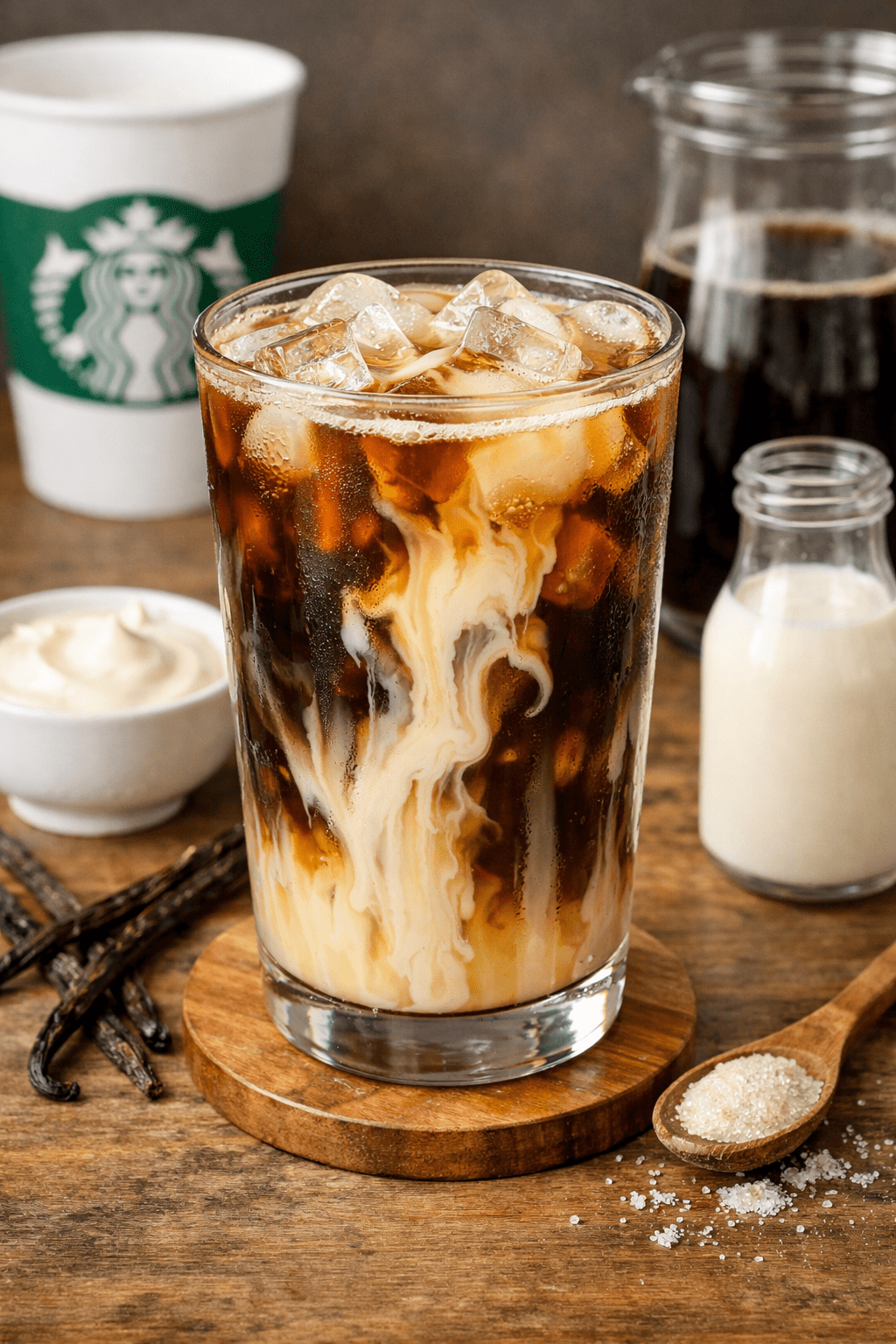
- 1 cup heavy cream 36–40% fat
- ½ cup whole milk not skim — the protein matters
- ⅓ cup vanilla syrup homemade or store-bought
- 1 pinch of salt enhances flavor and emulsion
For homemade vanilla syrup: combine 1 cup water, 1 cup sugar, 1 tbsp pure vanilla extract. Heat until sugar dissolves. Cool fully before using.
- Make syrup if using homemade. Cool completely before adding — warm syrup will thin the emulsion.
- Combine cream, milk, syrup, and salt in a bowl or jar.
- Whisk vigorously 2–3 minutes. You’re breaking up fat globules and creating the emulsion. Don’t rush this step.
- Chill for at least 1 hour. This is when the emulsion stabilizes and viscosity increases. Not optional.
- Shake or whisk before each use. Store airtight up to 1 week.
Tips for Getting It Right
Most failures come from one of four places. Here’s how to avoid them.
Cold cream emulsifies more reliably than room-temperature cream. Take your heavy cream straight from the fridge — don’t let it sit on the counter. Warm fat is more fluid and harder to suspend uniformly in the liquid, which leads to a thinner, less stable result.
A gentle stir won’t emulsify this. You need 2–3 full minutes of vigorous whisking — or a hand mixer on low. The fat globules won’t break down and suspend without mechanical force. If you see visible fat streaks after whisking, keep going.
Refrigerating for at least an hour isn’t just for storage — it’s when the emulsion sets and viscosity develops fully. The cream will be noticeably thinner if you pour it immediately after whisking. One hour minimum, but overnight is better.
A pinch of salt suppresses bitterness perception and makes the vanilla taste more pronounced — even though the cream is never added to bitter coffee directly. It also modestly improves emulsion stability. The cream tastes flatter and less complex without it.
Adjusting Consistency
Every variable in this recipe is adjustable. Here’s what each one changes and how far you can push it.
| If you want… | Change this | Effect |
|---|---|---|
| Thicker, richer cream | Increase cream ratio (try 1¼ cups cream, ¼ cup milk) | Higher lipid viscosity — heavier pour, more coating |
| Lighter, more pourable | Increase milk ratio (try ¾ cup milk, ¾ cup cream) | Lower fat percentage — closer to coffee creamer texture |
| Less sweet | Reduce syrup to ¼ cup, or use a lower-sugar syrup | Lighter body, less sugar density contributing to mouthfeel |
| More vanilla-forward | Add ½ tsp pure vanilla extract directly, or use homemade syrup with more extract | More aromatic top notes without increasing sweetness |
| Dairy-free version | Replace with full-fat coconut cream + oat milk | Similar viscosity, slight coconut note, less stable emulsion |
The “dairy base” as a distinct, engineered component shows up throughout classic Starbucks copycat literature. The Ultimate Starbucks Coffee Recipe Book describes the Frappuccino’s foundation as built on “strong coffee, sugar, a dairy base, and ice” — treating the cream element as its own prepared ingredient rather than an afterthought. The same book notes that authenticity improves when beans are freshly ground just before brewing, which holds equally true here: the better the coffee underneath, the more this cream has to work with.
Questions Worth Answering
Separation happens when the emulsion isn’t stable — usually because the fat wasn’t broken down enough during whisking, or the cream wasn’t chilled long enough afterward. Whisk more vigorously for the full 2–3 minutes, then refrigerate at least an hour before using. Some separation over a week is normal — just shake the container before each pour.
Yes, but the texture will be noticeably thinner. Half-and-half contains about 10–12% fat versus heavy cream’s 36–40%, so the lipid viscosity is significantly lower. The result pours more like flavored milk than a pourable cream. If you want the Starbucks texture specifically, heavy cream is the correct ingredient.
Up to one week refrigerated in an airtight container. The vanilla syrup’s sugar content acts as a mild preservative. Shake or whisk before each use. Discard if it smells sour or the texture becomes stringy or grainy.
Yes. Salt suppresses bitterness perception, making the vanilla and sweetness taste more forward. Sodium ions also interact with the fat globule membrane and modestly improve emulsion stability. The cream tastes flatter and less complex without it — even though you can’t taste the salt itself.
Coconut cream is the closest substitute in terms of fat content and behavior — rich, pourable, with a slight coconut note. Full-fat oat milk and cashew cream work but produce thinner results. The whisking and chilling steps matter just as much for dairy-free versions.
Iced cold brew is the classic — the cream pours in ribbons and slowly integrates as you drink. It also works well on hot lattes (poured on top after brewing), iced Americanos, and as a substitute for half-and-half anywhere you want more body and sweetness. It’s too sweet and rich for straight espresso on its own.
Same Cream.
Better Understanding.
Better Result.
Once you know that the texture is lipid viscosity and the whisking is emulsification, the recipe stops being a list of steps and starts being a system you can control. Adjust the cream ratio for thickness. Adjust the syrup for sweetness. Give it a full hour in the fridge. The rest takes care of itself.
