

9 min read
🍋 Coffee Recipes Hub · History Edition
Lemon Espresso
The Original Iced Coffee
Before cold brew was invented, before iced lattes existed, before any of it — there was Mazagran. The world’s first iced coffee drink. And it had lemon in it.
The combination of espresso and lemon sounds like a modern specialty coffee experiment — the kind of thing that appears on a chalkboard menu in a third-wave café and divides opinion on social media. In reality, it’s older than the espresso machine itself. The Mazagran dates to 1840, born in an Algerian military garrison, and it predates the very concept of “iced coffee” by decades.
What makes it work isn’t novelty. It’s chemistry. Lemon juice and espresso share the same acidic register — both sit in the pH range of 4.5 to 5.5 — which means they don’t clash the way high-acid and low-acid ingredients typically do. Instead, the citric acid in the lemon and the chlorogenic acids in the coffee align, amplify each other’s brightness, and create a flavor that is simultaneously more refreshing and more complex than either ingredient alone.
This is the full story: the 180-year history of the drink, the flavor science behind the acid pairing, and the exact recipe for making a Mazagran that justifies its reputation as the original.
Section 01
The History:
Before Cold Brew, There Was This
The Mazagran has a more specific origin story than most food and drink. It isn’t a gradual folk tradition that emerged over time — it has a place, a date, and a set of circumstances attached to it.
The Battle of Mazagran, Algeria
French Foreign Legion soldiers stationed at the garrison town of Mazagran ran out of milk for their coffee rations during a prolonged siege. With only water available — and water they were reluctant to drink unboiled — they mixed their coffee with cold water and local lemon. The drink kept them going through the summer heat. They called it by the name of the town.
Paris Café Culture Adopts It
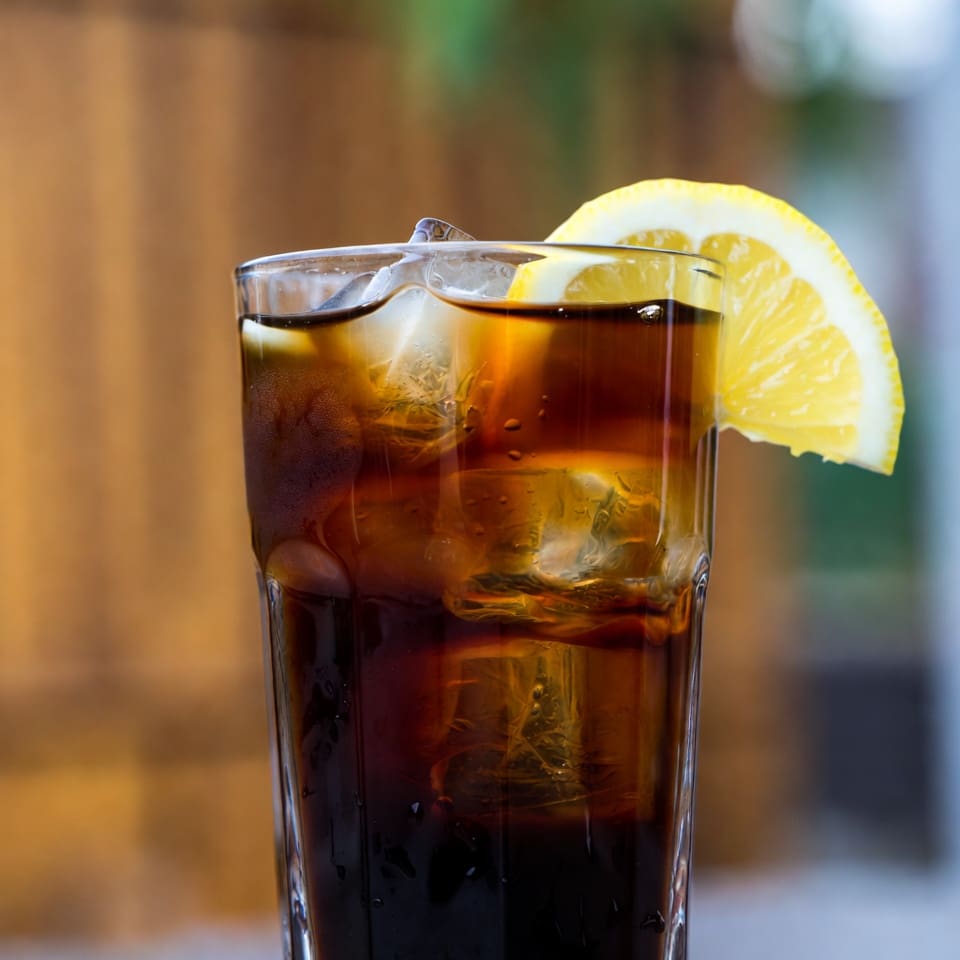
Returning soldiers brought the drink to Paris, where café culture was at its peak. Mazagran became fashionable in Parisian cafés — typically served in a tall glass with sugar syrup and cold water or ice. It was, for several decades, the standard reference point for a cold coffee drink in France.
Starbucks Attempts a Relaunch
In the early 1990s, Starbucks partnered with PepsiCo to bottle and sell a Mazagran-inspired canned coffee-lemon drink. It was tested in California and quietly discontinued. The flavor combination was ahead of the market — the specialty coffee movement that would eventually validate it didn’t fully arrive until the 2010s.
The Third Wave Rediscovery
Specialty cafés across Europe, Australia, and increasingly the US have rediscovered the Mazagran as both a historical artifact and a genuinely excellent drink. The acidity-forward flavor profile aligns well with the light-roast, fruit-forward coffees that define contemporary specialty culture.
Section 02
Why It Works:
The Acid Pairing
The instinct when pairing flavors is usually to look for contrast — sweet against bitter, rich against sharp. The Mazagran does something more interesting: it pairs like with like. Lemon and espresso are both acidic, and that shared chemistry is precisely what makes them work together.
🔬 The Flavor Chemistry
Why Acid + Acid = Harmony, Not Clash
Coffee’s primary acids — chlorogenic acid and quinic acid — are long-chain organic acids with relatively mild, rounded flavor profiles. Lemon’s primary acid is citric acid, which is shorter-chain, brighter, and more immediately sharp. When they combine, something counterintuitive occurs: the citric acid’s brightness amplifies the perception of the coffee’s own fruit notes (naturally present in most espressos as malic and tartaric acids), while the coffee’s longer-chain acids round and temper the lemon’s sharpness. They extend each other rather than competing. The result is a drink that tastes more refreshing than coffee alone and more complex than lemonade alone.
Bitterness Suppression
Citric acid from lemon juice suppresses bitter taste receptor activation — a different mechanism from salt, but the same result. The espresso tastes noticeably less bitter when lemon is present, even at small quantities.
Volatile Aroma Amplification
Lemon’s volatile aromatic compounds — limonene and citral — are highly soluble in the acidic coffee environment. They don’t compete with coffee’s aromatics; they lift and carry them, making the combined drink smell more complex than either component alone.
Cold Temperature Changes Everything
Bitter taste receptors are less sensitive at lower temperatures. Serving the Mazagran over ice isn’t just a refreshment choice — it’s flavor engineering. The cold suppresses bitterness further, letting the citrus and coffee fruit notes dominate.
The Sweetness Bridge
A small amount of simple syrup acts as a mediator between the lemon’s brightness and the coffee’s depth. It doesn’t make the drink sweet — it prevents either acid from reading as sour, keeping both ingredients in the refreshing rather than puckering register.
Section 03
The Recipe:
The Classic Mazagran
There are many variations — some with sparkling water, some with mint, some with cold brew instead of espresso. This is the classic preparation: simple, balanced, and true to the original. The only requirement worth being strict about is using freshly squeezed lemon rather than bottled — the difference in flavor is significant, and the volatile aromatics in fresh juice are what make the combination sing.
Ingredient Ratios at a Glance
Classic Mazagran
Algerian-origin · 1840 · The original iced coffee
-
1
Pull a double espresso and let it cool briefly
Brew two shots of espresso — a medium or light-medium roast works best for this drink, as its naturally brighter, more fruit-forward notes harmonize with the lemon better than a heavy dark roast. Let the shots cool for about 60 seconds. You’re not looking for cold espresso — just off the peak boil, around 70°C — before combining with the lemon to avoid cooking the citrus volatile compounds out of the juice.
-
2
Squeeze half a fresh lemon and add simple syrup
Squeeze approximately 15ml (about half a standard lemon) of fresh lemon juice into a tall glass. Add one teaspoon of simple syrup — or to taste. The syrup is optional but recommended for your first attempt; it prevents the drink from reading as sour and lets you appreciate the coffee-citrus harmony before you start adjusting ratios. Bottled lemon juice is a last resort — the pasteurization process destroys the volatile aromatics that make fresh lemon work in this drink.
-
3
Fill with ice, pour the espresso, add cold water
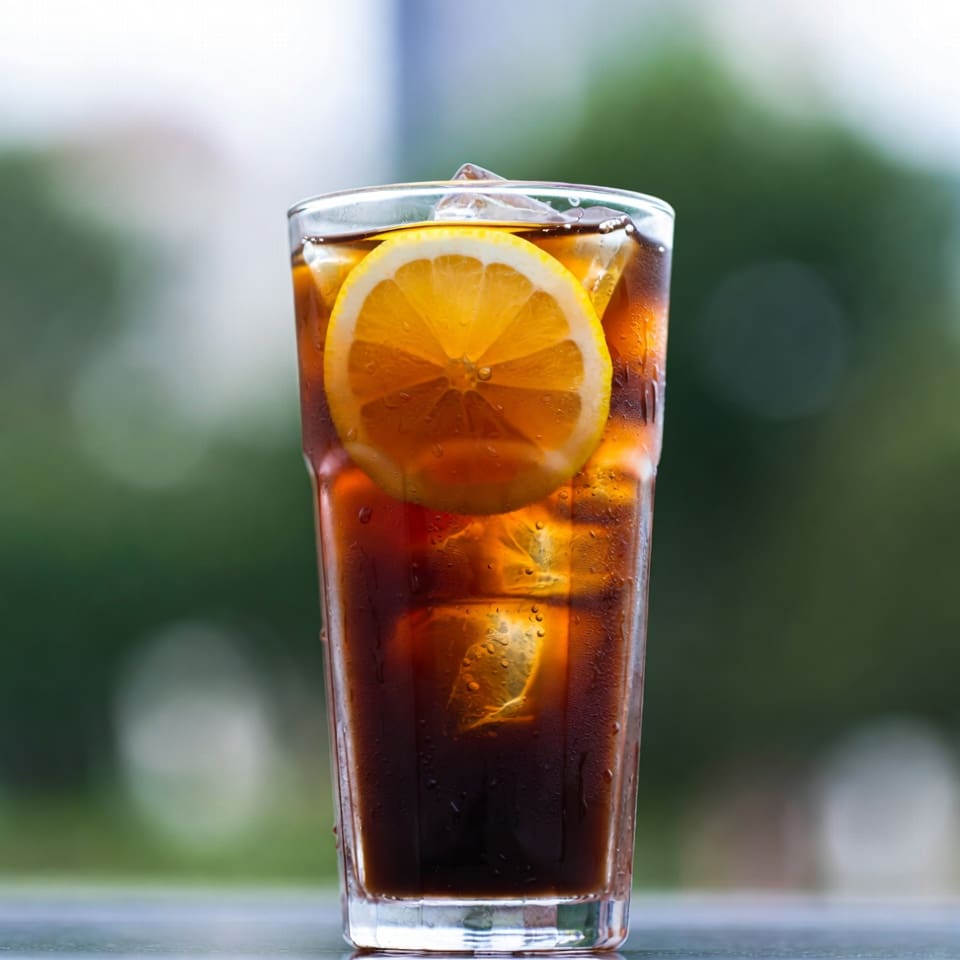
Pack the glass with ice, pour the slightly-cooled espresso over it, then add 60–90ml of cold still water to lengthen the drink to your preference. Stir gently once — just enough to combine without diluting excessively. The drink should be layered briefly before stirring: espresso sinking through ice, lemon rising, water threading through. Serve immediately with a lemon wheel on the rim if you want to lean into the occasion.

The classic is worth knowing, but the Mazagran is also a framework for experimentation:
Sparkling Mazagran
Replace still water with sparkling. The carbonation amplifies the citrus brightness and adds a texture that makes the drink feel even more refreshing.
Mint Mazagran
Muddle 4–5 fresh mint leaves with the lemon juice before adding espresso. A North African flavor combination that nods to the drink’s origins.
Blood Orange Version
Substitute blood orange juice for lemon. Less sharp, more complex, deeply colored. Arguably the most visually striking coffee drink you can make at home.
Section 04
From Behind the Bar:
The Drink That Surprises Everyone
The Mazagran represents something important about the history of coffee: the vast majority of innovations in the drink we now consider “modern” are actually rediscoveries. Cold brew, flash-chilled espresso, milk alternatives, citrus pairings — all of these have historical precedents that predate the specialty coffee movement by decades or centuries.
The lemon-espresso combination specifically has been independently arrived at multiple times across multiple cultures. In Portugal, a coffee with lemon peel resting on the cup’s rim is a standard preparation. In parts of Italy, a small twist of lemon peel squeezed over an espresso is traditional. The Mazagran simply made it the centerpiece rather than a garnish.
Section 05
Full Flavor Profile:
What to Expect
| Dimension | Character | Intensity |
|---|---|---|
| Brightness / Acidity | The defining characteristic — citrus-lifted, clean, vivid | High |
| Refreshment | Exceptional — cold temperature + citric acid = genuinely thirst-quenching | High |
| Bitterness | Significantly reduced — citric acid and cold temperature both suppress it | Low |
| Sweetness | Light — present if syrup is used, absent otherwise; coffee fruit notes emerge | Low–Med |
| Roast Depth | Present as a background note — grounding the citrus without dominating | Medium |
| Complexity | Surprisingly layered — citrus front, espresso mid, lingering mineral finish | High |
| Historical Resonance | You’re drinking something 180 years old. That counts for something. | Unique |
The Original.
Still the Best.
180 years of history. Two ingredients. One of the most refreshing coffee drinks ever conceived.
The Mazagran earns its place not just as a novelty or a historical curiosity, but as a genuinely excellent drink that holds up on its own merits. The acid pairing works. The cold temperature amplifies everything good about espresso and suppresses everything harsh. And the lemon does something to the coffee that no amount of milk, sugar, or syrup can replicate — it makes it taste alive. Give it a try on a hot day, with a light-roast espresso and a freshly squeezed lemon. You’ll understand why French soldiers kept making it for 180 years.
