

11 min read
Café con Queso
Colombian Cheese CoffeePutting cheese in coffee sounds insane to most Americans. It sounds like a mistake. In Colombia, it’s a daily breakfast ritual — and a masterclass in flavor balancing.
If you enjoy salted caramel lattes, sea salt chocolate, or cheddar on apple pie, you already understand the science behind this drink. It’s the contrast. The savory, salty richness of the cheese cuts through the bitterness of the coffee and amplifies the sweetness of the panela — unrefined Colombian cane sugar — in ways that no creamer or syrup can replicate.
This isn’t a TikTok stunt or a fusion experiment. Café con Queso has been served in the Colombian Andes for generations. It is comfort food, fuel, and ritual in a single cup. The skepticism is understandable. The conversion, once you try it, is complete.
Quick Summary
Get the 21-Day Coffee Glow-Up Recipe Book
Make your morning coffee feel like a treat again: 21 coffee-shop-style recipes you can make at home, with hot, iced, creamy, cozy, and Java Burn-friendly options.
- 21 craveable coffee recipes
- Simple flavor formulas and shopping list
- 7-day coffee glow-up plan
You are in. Grab the recipe book, then check your inbox to confirm the coffee newsletter.
Download the free recipe bookAlready subscribed? Open the recipe book here.
Why readers save it: It gives them recipes first, not hype first. Java Burn stays optional and label-directed, while the download gives them a better coffee routine they can use right away.
What happens next: MailPoet adds them to the Golden Lamb Coffee Newsletter, sends the welcome email, and includes them in the weekly coffee tips nurture sequence.
Educational download. Not medical advice. Java Burn is a dietary supplement; read the label and ask a qualified professional if you use supplements, take medication, or manage a health condition.
Why It Works:
The Salty-Sweet Science
The first reaction is always skepticism. But the flavor science here is the same as every beloved salty-sweet combination in Western food — salted caramel, cheddar on apple pie, chocolate-covered pretzels. Salt suppresses bitterness. Fat smooths texture. Sweetness amplifies both.
Colombian specialty coffee has high natural acidity and a robust body when brewed strong. The panela base makes it sweet. Drop in a cube of semi-soft, slightly salty cheese and three things happen at once:
Salt Suppresses Bitterness
Salt is a flavor enhancer that directly suppresses bitter taste receptor activation. The cheese delivers salt into the coffee gradually as it warms — a slow, even effect that’s more nuanced than simply adding salt to the grounds.
Fat Smooths the Mouthfeel
As the cheese warms, it releases a small amount of butterfat into the coffee. This works exactly like adding cream — coating the palate, reducing perceived bitterness, and giving the drink a richer, fuller body.
The Texture Prize
This is what the drink is really about. After two minutes, the cheese at the bottom has softened into a stretchy, melty, coffee-infused mass that you scoop up with a spoon. It tastes like a sweet, savory coffee dessert. It is the point of the whole ritual.
Sweet Amplifies Everything
The panela sweetness doesn’t just flavor the drink — it bridges the gap between the savory cheese and the bitter coffee, making both elements taste more of what they are. Without sufficient sweetness, the combination falls flat.
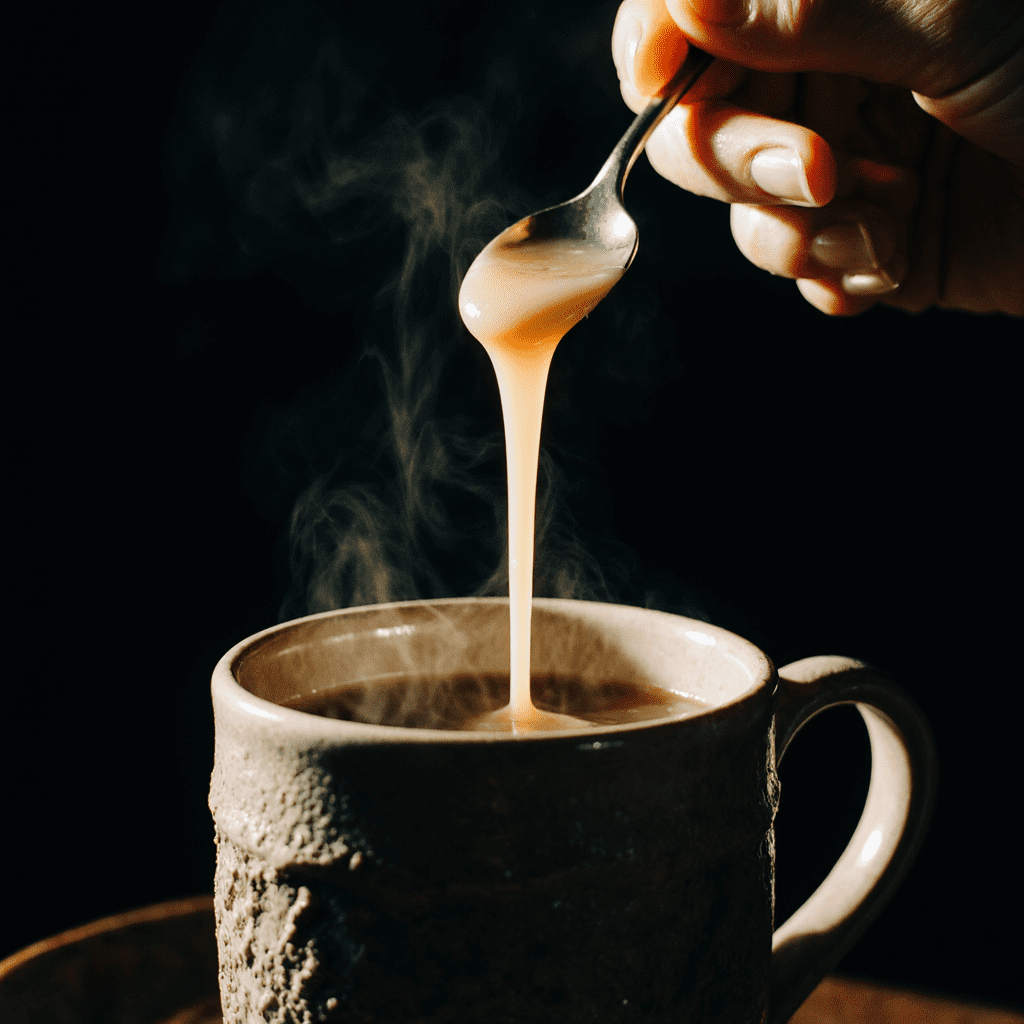
The Cheese:
What to Use and What to Avoid
This is the most important decision in the recipe. The wrong cheese will either dissolve completely into a milky soup, release a greasy film on the surface, or add a flavor profile that fights the coffee rather than working with it. You need a cheese that softens, holds its structure, and has the right salt level.
Queso Doble Crema
The Colombian standard. A semi-soft fresh cheese with high fat, high acidity, and moderate salt. It softens beautifully in hot coffee without dissolving, and pulls into satisfying strings. Find it at any Latin American grocery store.
Low-Moisture Mozzarella
The block kind — not fresh, not the wet ball. Low-moisture mozzarella has a very similar melt behavior and a mild, milky flavor that doesn’t overpower the coffee. It’s widely available and almost as good as the real thing.
⚠️ Cheeses to Avoid
The Recipe:
Like an Abuela in the Andes
Authentic Café con Queso
Colombian · Traditional · 8 minutes
Ingredients
-
1
Brew your coffee hot
Make a strong cup — a medium-dark Colombian roast is ideal. The coffee must be genuinely hot when you add the cheese; it needs to be above 80°C to properly soften the cheese. Don’t let it sit. Brew and use immediately.
-
2
Sweeten with panela while hot
Stir in one to two teaspoons of panela or brown sugar while the coffee is still at peak temperature. This is not optional — authentic Café con Queso is sweet. The sweetness is what bridges the gap between the coffee’s bitterness and the cheese’s saltiness. Without it, the combination doesn’t work as well.
-
3
Cut the cheese into 1-inch cubes and dunk
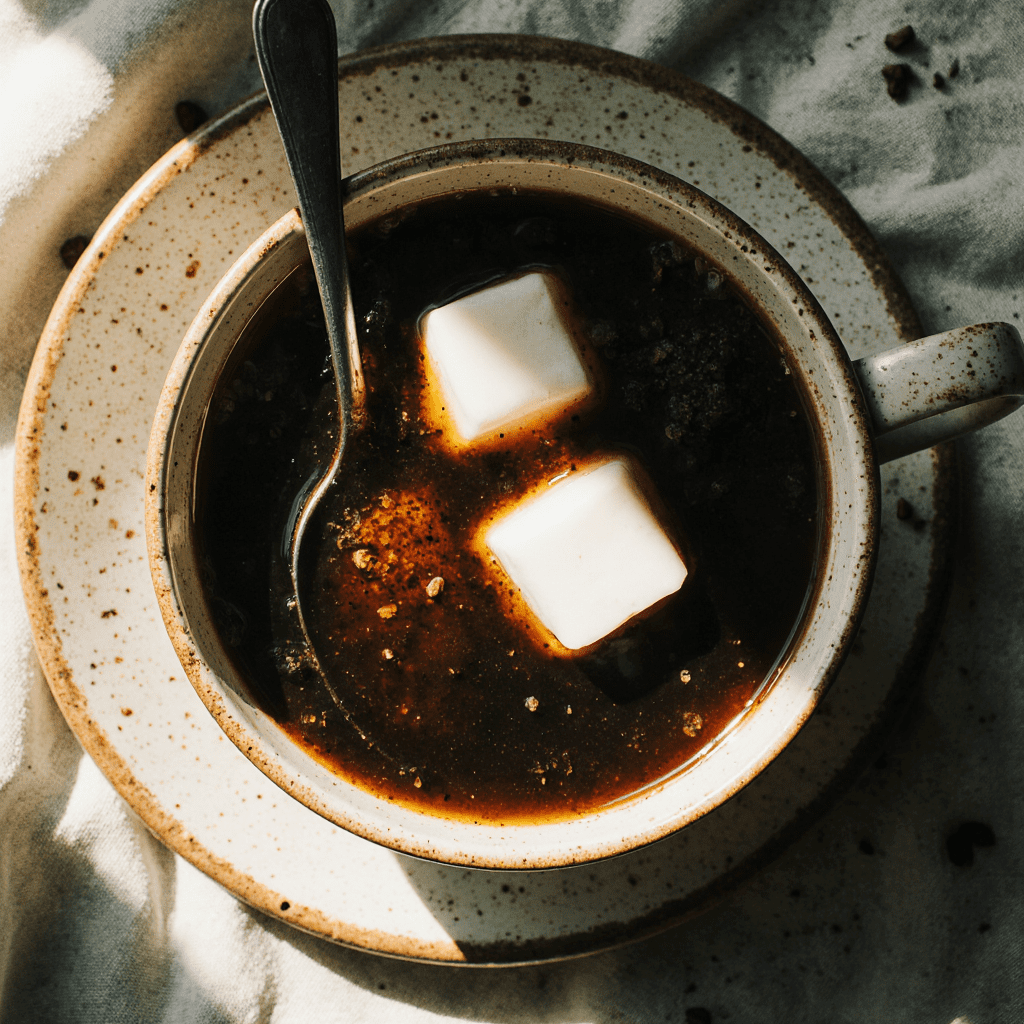
Dice your Queso Doble Crema or mozzarella into 1-inch cubes, or slice into 1/4-inch thick slices. Drop them directly into the hot, sweetened coffee. You may hear a faint sizzle. This is correct.
-
4
Wait 1–2 minutes — this is the most important step
Set a timer. Let the cheese sit undisturbed in the hot coffee for a full one to two minutes. Resist the urge to stir. The cheese is slowly softening, releasing its fat and salt into the coffee, and building the stretchy texture at the bottom. If you rush this, you lose the prize.
-
5
Drink the coffee, then scoop the cheese
Drink the coffee as you normally would — it will taste noticeably smoother, slightly richer, with a subtle savory note. When you reach the bottom, use the spoon to scoop up the melted cheese. It should stretch like a pizza commercial. This is the whole point. The cheese at the bottom has absorbed coffee flavor and become something entirely its own.

Variations:
The Chocolate Upgrade
While this post focuses on the coffee version, it would be incomplete without mentioning Chocolate Santafereño — the heavyweight of the Colombian breakfast table, and arguably the more famous expression of the same tradition.
Chocolate Santafereño (Chocolate Completo)
This is the definitive version of cheese-in-hot-drink. Hot chocolate made with water (not milk), cheese dipped directly inside, served alongside almojábanas — warm cheese bread. The hot chocolate’s natural sweetness and fat provide an even more forgiving base for the cheese than coffee does. If you try one version first, make it this one.
The coffee version — known in Colombia as taking a “Tinto” or “Perico” with cheese — is the lighter, faster, weekday variant. Less ceremonial, equally satisfying.
Cultural Context:
The Original Bulletproof Coffee
🏔️ High Altitude Fuel
Bogotá sits at 2,600 meters above sea level. Mornings in the Andes are cold. Café con Queso delivers sugar for energy, caffeine for alertness, and fat and protein for satiety — in a single cup. It is the original functional coffee, centuries ahead of the keto movement’s “Bulletproof Coffee.”
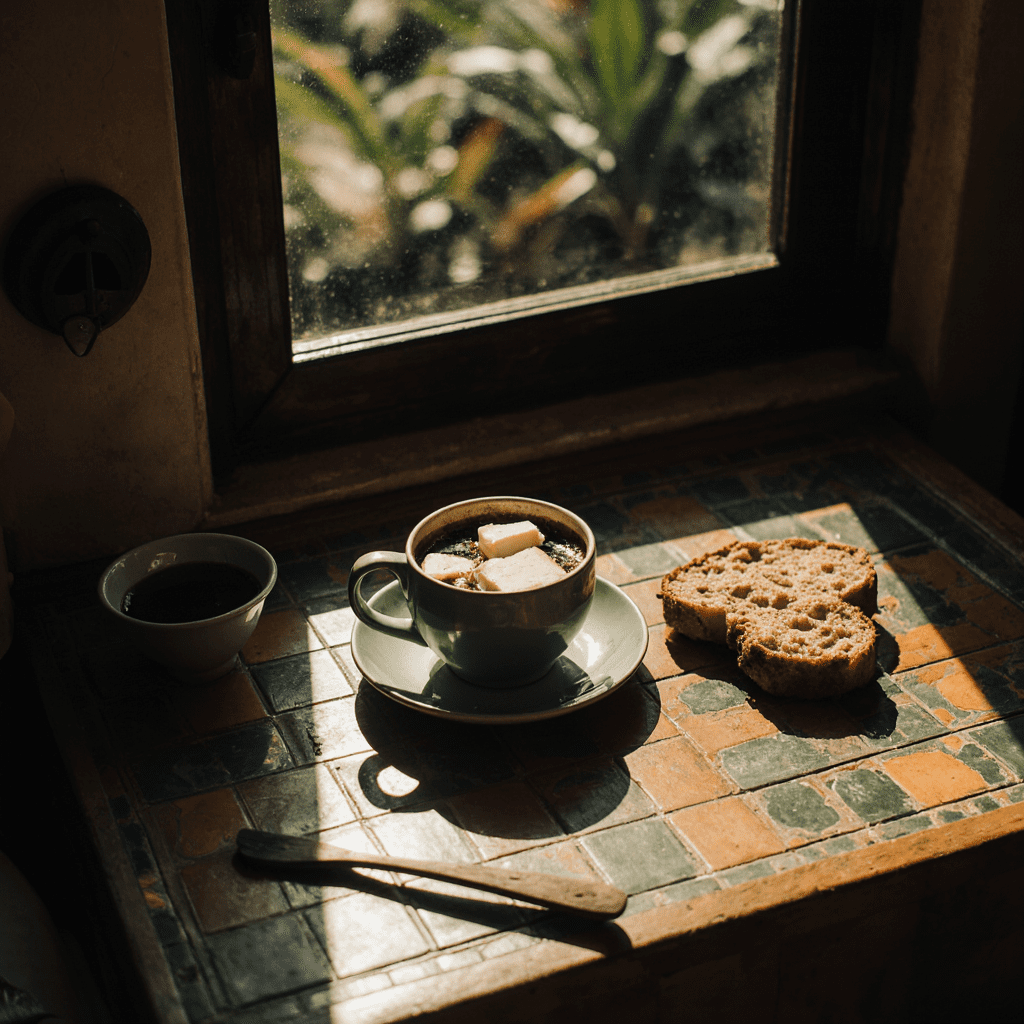
In Bogotá, scooping the cheese from the bottom is not considered playing with your food. It is the functional purpose of the drink. The ritual — brew, sweeten, dunk, wait, drink, scoop — is part of what makes it a ritual rather than just a beverage. There’s a reason it has survived unchanged for generations.
Americans who encounter it for the first time almost always follow the same arc: skepticism, reluctant curiosity, first sip, surprise, and then the scoop. The scoop converts everyone.
Full Flavor Breakdown:
What to Expect
| Dimension | Character | Intensity |
|---|---|---|
| Savory Depth | Subtle, buttery salinity — not sharp, not overwhelming | Medium |
| Sweetness | Panela’s deep, molasses-tinged sweetness — richer than cane sugar | High |
| Bitterness | Significantly reduced — salt and fat work together to suppress it | Low |
| Creaminess | Butterfat release creates a latte-like richness without any dairy added | Medium |
| Texture Prize | Stretchy, melty, coffee-soaked cheese at the bottom — entirely unique | Unforgettable |
| Satiety | Protein and fat make this genuinely filling — a real breakfast | High |
| Cultural Weight | Centuries of Colombian tradition in a single cup | Unique |
Yes.
Give it a try.
At worst, you ruined a cup of coffee. At best, you just unlocked a new comfort food.
If you like savory breakfasts, this is for you. If you need a super-sweet Frappuccino to enjoy coffee, this might be a stretch. Start with a small amount of good mozzarella. Brew a strong cup. Sweeten it properly. Drop in the cheese. Wait the full two minutes. Use a spoon. The skepticism won’t survive the scoop.
