
12 min read
.hero, .verdict { left: auto; right: auto; margin-left: 0; margin-right: 0; width: 100%; }There’s a particular kind of misery in earning a stunning ridgeline view and then choking down instant coffee that tastes like brown water. You don’t have to live that way.
The right backpacking coffee maker adds almost nothing to your pack weight and makes the difference between a good morning and a great one. The catch is that “backpacking coffee maker” covers a wide range of gear — from a $10 paper filter cone to a stainless steel moka pot that brews something close to espresso.
This guide cuts through the noise, explains what actually matters, and gives you specific picks by brew style so you can match the right tool to how you actually camp.
| Type | Top Pick | Best For | Buy |
|---|---|---|---|
| Pour-Over | GSI Outdoors Ultralight Java Drip | Ultralight solo backpackers | Buy ↗ |
| French Press | GSI Outdoors Commuter Java Press | Rich brew, solo or small groups | Buy ↗ |
| Espresso-Style | Bialetti Moka Express (1- or 2-cup) | Strong coffee lovers | Buy ↗ |
| Percolator | GSI Outdoors Glacier Stainless | Groups of 4+ | Buy ↗ |
| Minimalist | Collapsible silicone pour-over cone | Gram-counters, thru-hikers | Buy ↗ |
Section 01
What to Look for Before You Buy
This is the filter that matters most on trail. Most solo backpackers should target under 4 oz for a coffee setup. Collapsible designs that nest inside a pot or mug are ideal.
Different methods produce genuinely different cups. French press is rich and full-bodied. Pour-over is clean and light. Moka pot is concentrated and strong. Know what you want before you choose.
At camp you have limited water, no sink, and possibly cold fingers. Gear that requires careful disassembly is a liability. Simple designs with a quick rinse win on trail even if they’re less impressive at home.
Stainless steel is the gold standard — handles drops, doesn’t absorb odors, holds up to camp stove heat. Some lightweight plastic options are fine for occasional use, but stainless pays for itself over multiple seasons.
Capacity matters too. Solo hikers and pairs can get away with single-serve options. If you’re camping with four or more people, a percolator or larger French press becomes worth the extra weight. There’s nothing more annoying than brewing three rounds of pour-over while everyone waits.
Section 02
Best Backpacking Coffee Makers,
Reviewed
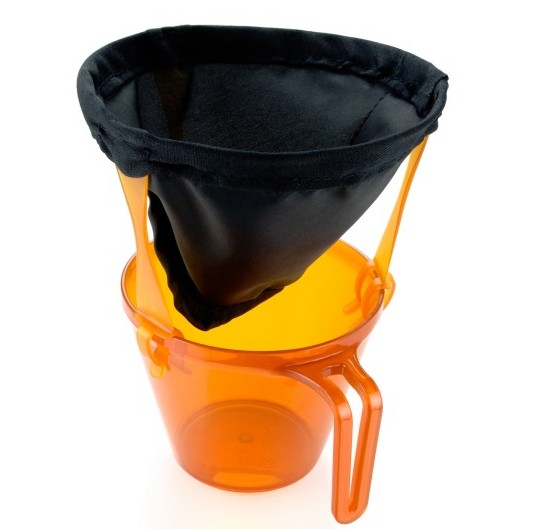
GSI Outdoors Ultralight Java Drip
One of the most consistently recommended pour-over options for backpackers, and for good reason. It collapses flat, weighs almost nothing, and brews a clean, clear cup when you use a proper medium-fine grind. You’ll need to bring coffee filters (or use a reusable one) and hot water from your camp stove. The brewing process is simple: boil water, let it cool slightly off boil, pour slowly over your grounds. Cleanup is a quick rinse.
This is the easiest entry point for backpackers who want better-than-instant coffee without adding meaningful weight.
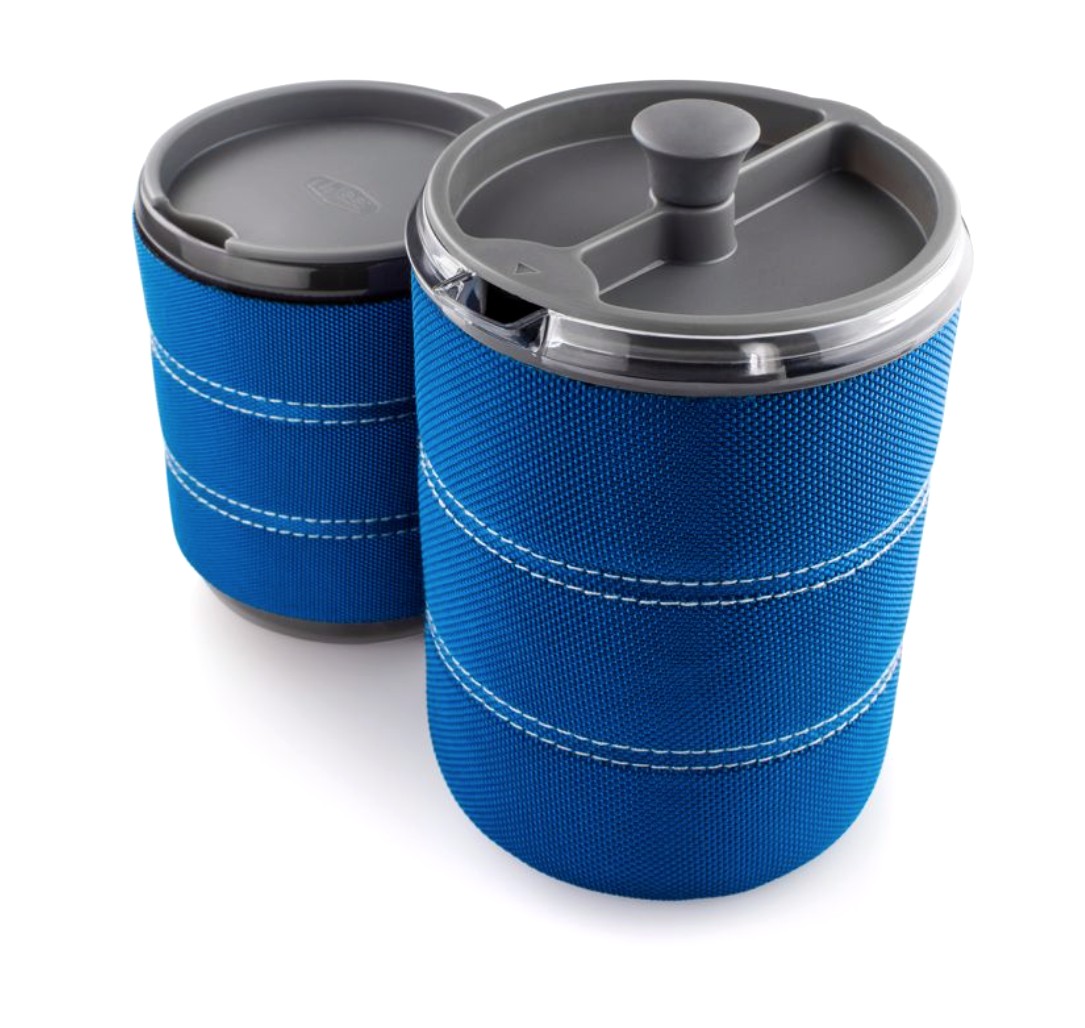
GSI Outdoors Commuter Java Press
French press coffee on trail sounds indulgent, but the GSI Commuter Java Press is genuinely packable and produces a noticeably richer cup than pour-over. The insulated stainless steel body keeps your brew warm longer — a real advantage on cold mornings at elevation. The plunger mechanism is straightforward and the grounds stay contained well.
The tradeoff: French presses require a coarser grind to avoid a gritty cup, so pre-grinding at home is important. Cleanup is slightly more involved than a pour-over cone, but manageable with a quick rinse and shake-out of grounds.
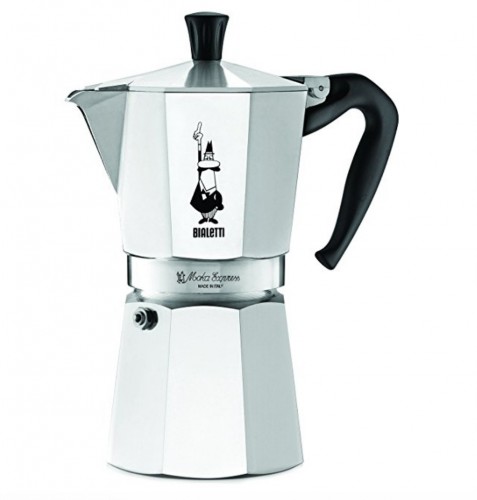
Bialetti Moka Express — Small Format
A small stainless steel moka pot produces a strong, concentrated brew that scratches the espresso itch better than anything else in the backpacking category. It works directly on a camp stove, is virtually indestructible, and makes a cup that would hold its own against many coffee shops.
The downsides: heavier than a pour-over setup, requires more precise heat management to avoid a bitter result, and the aluminum version isn’t as trail-durable as stainless. Look for the stainless steel version if you plan to use it hard. Note: moka pots can behave unpredictably at very high altitude due to lower boiling point of water.
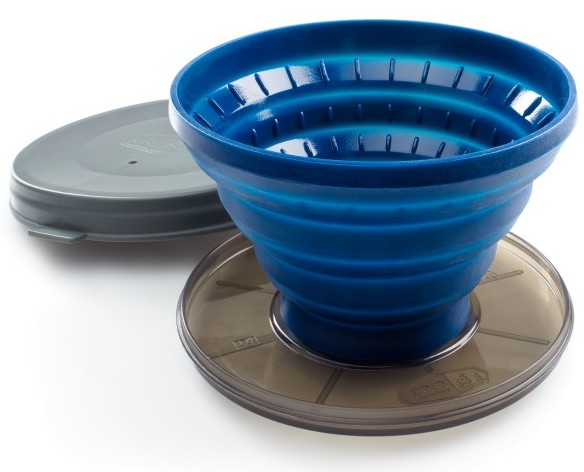
Collapsible Silicone Pour-Over Cone
If you’re a gram-counter or thru-hiker with no room for extras, a collapsible silicone pour-over cone is hard to beat. Many weigh under an ounce, pack completely flat, and work with standard paper filters or a reusable mesh insert. Brew quality is comparable to any other pour-over method — the cone is just a vessel. This is the bare-minimum setup that still produces genuinely good coffee.
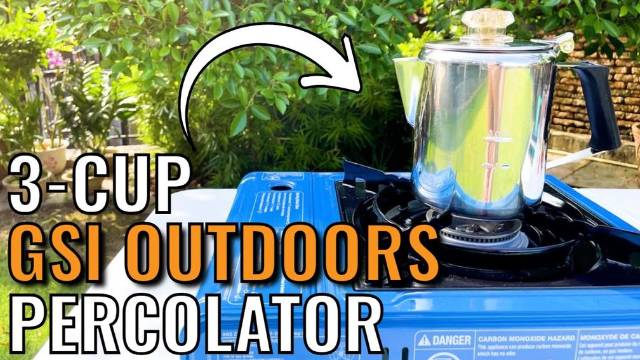
GSI Outdoors Glacier Stainless Percolator
For larger groups of four or more, a stainless steel camp percolator is the most practical solution. It sits directly on a camp stove, brews multiple cups at once, and is nearly impossible to break. The brew style is different from pour-over or French press — percolated coffee runs hotter and can taste slightly more bitter if you let it go too long — but with attention to timing, it produces a perfectly satisfying camp cup.
Weight is higher than single-serve methods, but when you’re splitting it across a group, the per-person penalty is minimal.
Get the 21-Day Coffee Glow-Up Recipe Book
Make your morning coffee feel like a treat again: 21 coffee-shop-style recipes you can make at home, with hot, iced, creamy, cozy, and Java Burn-friendly options.
- 21 craveable coffee recipes
- Simple flavor formulas and shopping list
- 7-day coffee glow-up plan
You are in. Grab the recipe book, then check your inbox to confirm the coffee newsletter.
Download the free recipe bookAlready subscribed? Open the recipe book here.
Why readers save it: It gives them recipes first, not hype first. Java Burn stays optional and label-directed, while the download gives them a better coffee routine they can use right away.
What happens next: MailPoet adds them to the Golden Lamb Coffee Newsletter, sends the welcome email, and includes them in the weekly coffee tips nurture sequence.
Educational download. Not medical advice. Java Burn is a dietary supplement; read the label and ask a qualified professional if you use supplements, take medication, or manage a health condition.
Section 03
Which Brew Method Is Right for You?
Here’s a plain-language comparison to help you decide before you buy:
| Method | Cup Style | Weight | Filters? | Best For |
|---|---|---|---|---|
| Pour-Over | Clean, light, clear | Very light | Yes (or reusable) | Solo, ultralight, simplicity |
| French Press | Rich, full-bodied | Moderate | No | Flavor-focused backpackers |
| Moka Pot | Strong, concentrated | Heaviest | No | Espresso lovers, car campers |
| Percolator | High volume, serviceable | Heavy | No | Groups of 4+ |
| Collapsible Cone | Clean, light | Minimal | Yes (or reusable) | Gram-counters, thru-hikers |
| Cold Brew | Smooth, low-acid | None | Optional | Hot weather trips, if planning ahead |
Section 04
Tips for Brewing Great Coffee on Trail
Even the best backpacking coffee maker can’t save a bad cup if the fundamentals are off. A few things that actually matter:
-
Water temperature matters. Boiling water (212°F) is too hot for pour-over and French press — it over-extracts and turns bitter. Let it sit off the boil for 30–45 seconds, aiming for around 195–205°F. Moka pots are an exception — they use steam pressure.
-
Grind size is non-negotiable. Use a coarse grind for French press, medium-fine for pour-over, and fine for moka pot. Pre-grinding at home in a quality burr grinder makes a significant difference — stale, pre-ground grocery store coffee underperforms at altitude too.
-
Ratio: 1g coffee per 15–17g water. At altitude, the lower boiling point of water means a slightly weaker extraction. Brewing a bit stronger compensates for this. Bring a small scale or measure by tablespoon (roughly 1 tbsp per 6 oz water).
-
Pack out your grounds. Don’t scatter coffee grounds in the backcountry — they’re not as biodegradable as they look and they attract wildlife. A small zip-lock bag for used grounds adds almost nothing to your pack and keeps your site clean.
Section 05
Frequently Asked Questions
-
What is the lightest backpacking coffee maker?
A collapsible silicone pour-over cone or the GSI Outdoors Ultralight Java Drip are among the lightest options available, often weighing under 1–2 ounces. If you’re willing to use a small reusable filter and nothing else, a simple mesh filter cone is about as minimal as it gets.
-
Can you use a French press for backpacking?
Yes. Compact, insulated French press models like the GSI Commuter Java Press are designed specifically for trail use. They’re slightly heavier than a pour-over setup but produce a noticeably richer cup and require no filters.
-
Is a moka pot good for backpacking?
A small moka pot works well for backpackers who want strong coffee and don’t mind the extra weight. Stainless steel versions are more durable than aluminum for trail use. Note that moka pots can be tricky at very high altitude due to changes in water’s boiling point.
-
Do I need to bring coffee filters backpacking?
Only if you’re using a pour-over method. French presses, moka pots, and percolators don’t require paper filters. Some pour-over cones accept reusable metal mesh filters, which eliminate the need to pack disposables.
-
What’s the best backpacking coffee maker for a group?
A stainless steel camp percolator is the most practical choice for groups of four or more. It brews multiple cups at once, works directly on a camp stove, and is nearly indestructible.
The right tool for how
you actually camp.
The best backpacking coffee maker is the one that matches how you actually camp — not the one with the most features or the highest price. Solo ultralight hikers will be happiest with a collapsible pour-over cone or the GSI Ultralight Java Drip. Backpackers who care most about brew quality should look at a compact French press. Strong coffee drinkers who don’t mind extra weight will appreciate a small moka pot. And anyone camping with a group should reach for a stainless steel percolator.
Start with your brew preference, then let weight and pack size narrow the field. Any of these methods, done right with quality coffee beans and properly heated water, will produce a cup worth waking up for.
