

8 min read
Medically Reviewed by: Leah Swartwout, MD
The trend of adding fat to coffee, popularized by “bulletproof” style brews, has taken the wellness world by storm. At the center of this trend is coconut oil, an ingredient praised for its high concentration of medium-chain triglycerides (MCTs) and their purported fat-burning and metabolism-boosting properties.

Adding coconut oil in coffee for weight loss has become a popular practice among health enthusiasts.
But what does the science say? Can a spoonful of coconut oil in your morning coffee genuinely accelerate weight loss, or is its impact overstated?
This article provides a detailed, evidence-based examination of the claims, breaking down the science of MCTs, comparing coconut oil to pure MCT oil, and evaluating its true effect on metabolism and fat loss. It specifically addresses the benefits of coconut oil in coffee for weight loss.
Table of Contents
Coconut Oil in Coffee for Weight Loss
Understanding the Science: What Are Medium-Chain Triglycerides (MCTs)?
To understand the debate, we must first understand the primary active component: medium-chain triglycerides (MCTs).
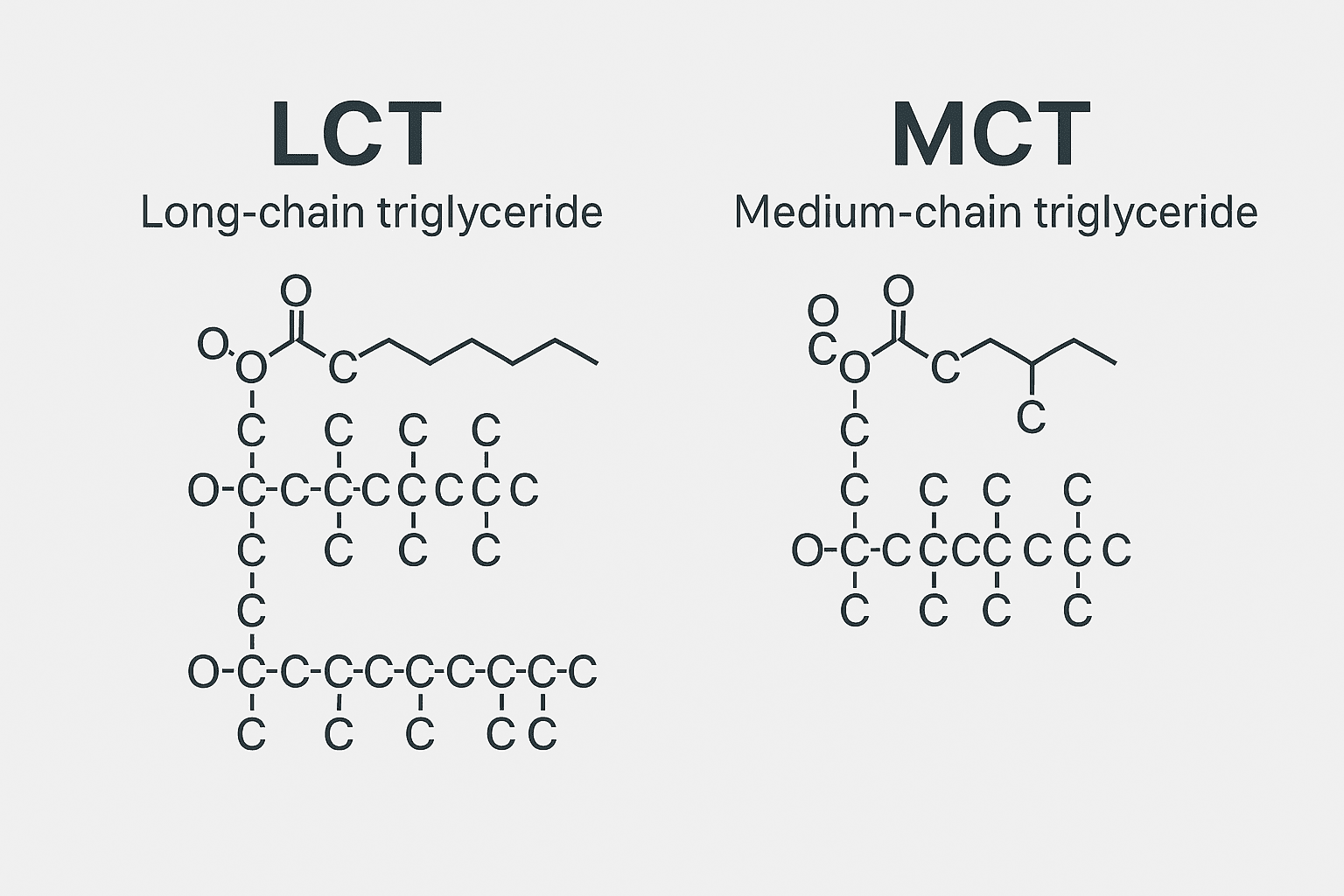
Fats are made of carbon chains. Most dietary fats, like those in olive oil, nuts, and avocados, are long-chain triglycerides (LCTs), containing 13 to 21 carbon atoms. Your body digests these through a complex process involving the lymphatic system before they can be used for energy.
MCTs, however, have a shorter carbon chain (6 to 12 carbons). This structural difference enables them to be directly absorbed into the bloodstream and transported to the liver. There, they are rapidly converted into energy or ketones, a process that is far more efficient than the metabolism of LCTs.
This rapid conversion is the basis for most of the health claims associated with them.

Key Distinction: Coconut Oil vs. Pure MCT Oil
While coconut oil is a source of MCTs, it is not a concentrated source of the most effective ones. This is a critical point that is often missed.
- Coconut Oil: Roughly 50-60% of the fats in coconut oil are MCTs. However, the dominant MCT is lauric acid (C12), which behaves metabolically more like a long-chain fat. The most potent MCTs for energy and ketone production—caprylic acid (C8) and capric acid (C10)—are present in much smaller amounts.
- MCT Oil: This is a manufactured supplement that extracts and concentrates the most effective MCTs, primarily C8 and C10.
A 2017 study published in Physiology & Behavior demonstrated this difference clearly. Researchers found that pure MCT oil (specifically, tricaprylin C8) increased ketone production at a rate nearly four times higher than coconut oil (Vandenberghe et al., 2017). For those seeking the ketogenic and thermogenic benefits, this makes pure MCT oil a significantly more potent option.
Evaluating the Claims: Does Adding Coconut Oil to Coffee Aid Weight Loss?
Let’s examine the three primary claims associated with adding coconut oil or MCTs to coffee.

1. Claim: Coconut Oil Boosts Metabolism and Fat Oxidation
The Theory: Because MCTs are metabolized so quickly, they create a thermic effect, meaning the body burns more calories to digest them compared to LCTs. This can lead to a temporary increase in metabolic rate, encouraging the body to use fat for fuel (fat oxidation).
The Evidence: Research supports that MCTs increase fat oxidation and energy expenditure more effectively than LCTs (Watanabe & Tsujino, 2022). However, studies focusing specifically on coconut oil have shown inconsistent and often insignificant results regarding overall weight loss (Clegg, 2017).
The modest metabolic boost from the small amount of effective MCTs in a spoonful of coconut oil is unlikely to produce dramatic weight loss on its own.
2. Claim: Coconut Oil Suppresses Appetite and Controls Hunger
The Theory: The rapid production of ketones from MCTs can have a satiating effect, helping to reduce overall calorie intake.
The Evidence: Pure MCT oil is significantly more ketogenic than coconut oil, and studies suggest this state of ketosis can help control appetite (Norgren et al., 2020).
While some users report feeling fuller after adding coconut oil to their coffee, this effect is likely less pronounced than what could be achieved with concentrated MCT oil.
Furthermore, it’s essential to remember that coconut oil is a pure fat, containing approximately 120 calories per tablespoon, which could offset any appetite-suppressing benefits if not accounted for.
3. Claim: Coconut Oil Enhances Exercise Endurance
The Theory: By providing a readily available energy source, MCTs can help spare the body’s glycogen (stored carbohydrates) stores during exercise, potentially improving endurance.
The Evidence: Several studies have demonstrated that MCTs can improve fat metabolism during physical activity (Manio et al., 2018). However, the evidence for coconut oil specifically improving endurance is weak and inconsistent.
A Personal Anecdote: My Journey to a Better Coffee Booster
As a health writer, I’m always willing to experiment. I tried adding coconut oil to my coffee for several weeks. I did notice a slight reduction in mid-morning cravings, but the tangible results on my energy and body composition were minimal. The oily texture was also not something I grew to love.
My research into the limitations of coconut oil led me to seek alternatives explicitly designed to support metabolism. That’s when I discovered Java Burn, a tasteless, dissolvable powder. Unlike adding a simple fat, Java Burn is a proprietary blend of ingredients like green tea extract, chromium, and L-theanine, formulated to work synergistically with caffeine to:
- Enhance metabolic rate and fat oxidation without adding 120+ calories of liquid fat.
- Support stable energy levels and mental clarity, thanks to ingredients like L-theanine, which can smooth out caffeine jitters.
- Improve insulin sensitivity, which is crucial for effective weight management.
My results after 60 days using Java Burn with my coffee:


After 60 days of consistent use, the difference was clear. My energy was more sustained, and my progress felt more supported. While this is my personal experience, it highlighted that a scientifically formulated product can be more effective than a single-ingredient folk remedy.
(Disclaimer: This section reflects my personal experience. Results can vary. Links to products may be affiliate links.)
Practical Recommendations for a Healthier Coffee Routine
If your goal is to optimize your coffee for metabolic health, consider these evidence-based strategies:
- Opt for Pure MCT Oil Over Coconut Oil: For a more potent ketogenic and thermogenic effect, a high-quality MCT oil containing C8 and C10 is scientifically proven to be superior. Start with a small dose (e.g., one teaspoon) to assess digestive tolerance, as too much too soon can cause gastrointestinal distress.
✅ Tip: If you’re blending coffee at home, a sturdy and affordable Hamilton Beach blender makes the process so much easier — it whips the oil into a creamy texture instead of leaving it oily on top.
- Focus on a Balanced Diet: No supplement can outwork a poor diet. Coffee additives should complement, not replace, a foundation of whole foods, lean protein, and high-fiber vegetables.
- Time Your Coffee Strategically: Consuming caffeinated coffee about 30-60 minutes before a workout has been shown to enhance fat oxidation and improve performance.

Conclusion: Should You Add Coconut Oil to Your Coffee?
Adding coconut oil to coffee is a popular trend, but a critical examination of the scientific evidence reveals its limitations for achieving significant weight loss.
- Key Takeaway: Pure MCT oil is a far more effective choice than coconut oil for boosting ketone production and metabolic rate.
- The Verdict on Coconut Oil: While not harmful in moderation, its effects on fat loss are inconsistent and often overstated. Its high-calorie content can easily counteract any minor metabolic benefits.
- A Formulated Alternative: For those serious about enhancing coffee’s fat-burning potential, a scientifically backed metabolism booster like Java Burn may offer a more comprehensive and effective solution without the added fat and calories.
Ultimately, the most effective path to sustainable weight management involves a holistic approach to diet, exercise, and lifestyle. While optimizing your daily coffee can be a part of that strategy, it’s essential to choose your additions based on scientific evidence, not just popular trends.
References
- Clegg, M. (2017). They say coconut oil can aid weight loss, but can it really? — Abstract on PubMed: https://pubmed.ncbi.nlm.nih.gov/28589949/ PubMed
- Clegg, M. (2017). — PDF (accepted manuscript) via CentAUR (University of Reading): https://centaur.reading.ac.uk/80389/3/Revised%20Manuscript%20-%20Marked%20Up.pdf CentAUR
- Vandenberghe, C., et al. (2017). Tricaprylin Alone Increases Plasma Ketone Response More Than Coconut Oil… — PubMed record: https://pubmed.ncbi.nlm.nih.gov/29955698/ PubMed
- Vandenberghe, C., et al. (2017). Tricaprylin… — Full text via OUP/Current Developments in Nutrition: https://cdn.nutrition.org/article/S2475-2991(22)14456-2/fulltext
