
7 min read
Coffee Recipes Hub · Comparison · Coffee Basics
Mocha
vs
Coffee
Ingredients, caffeine, flavor, and calories — compared
They’re made from the same beans. But they’re completely different drinks. Here’s how they stack up.
When you compare a mocha with coffee, you’re really comparing two different kinds of drinks.
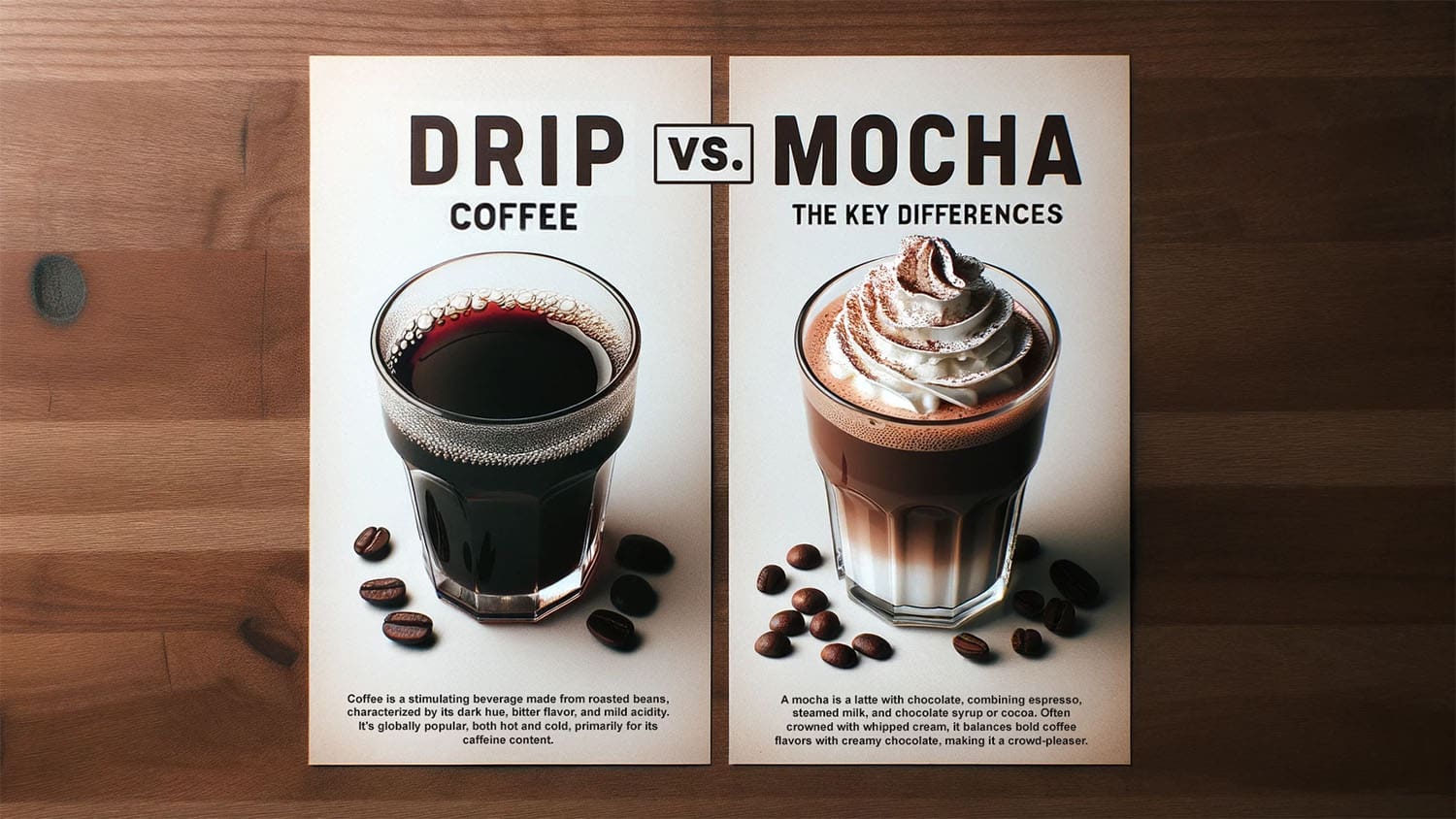
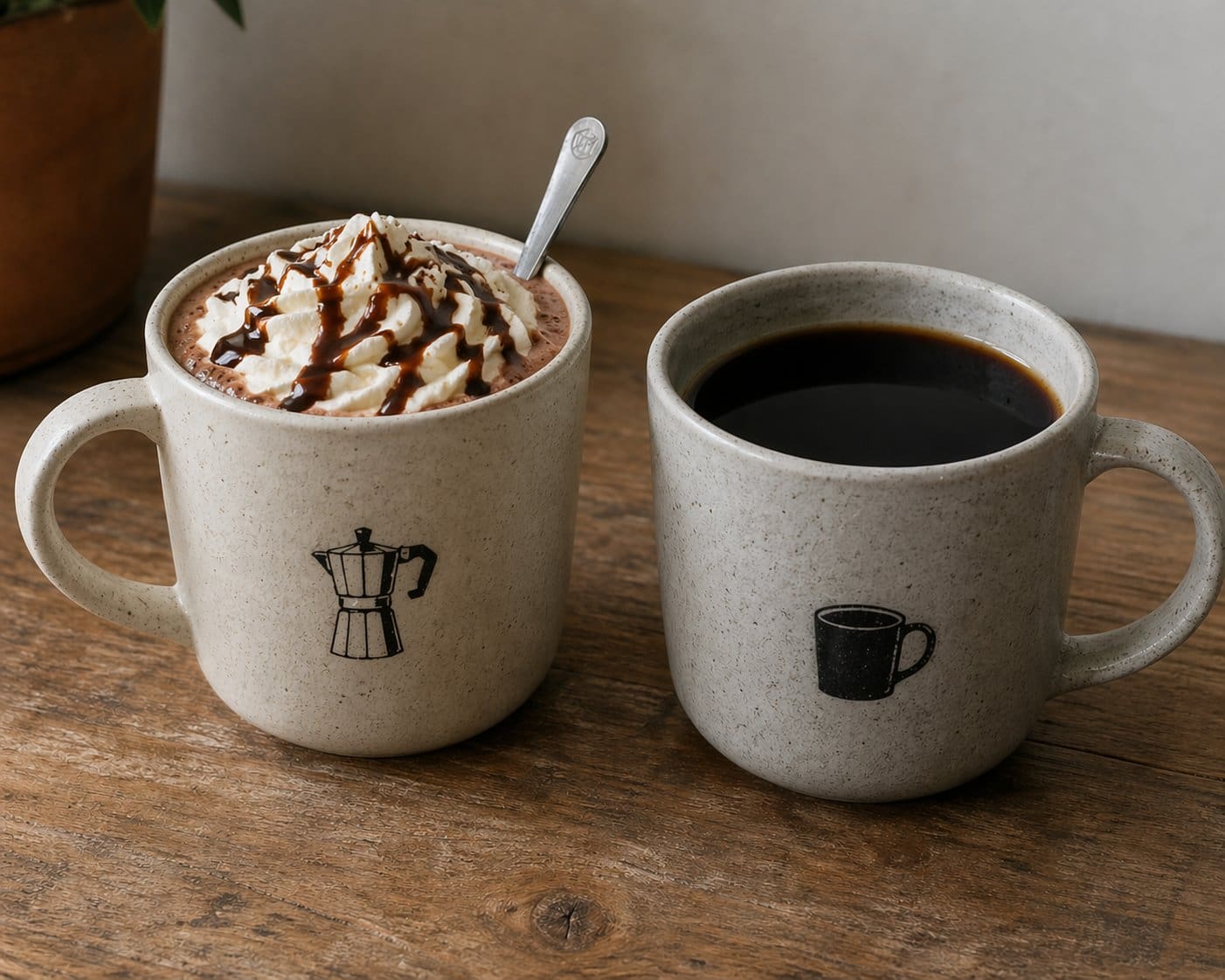
Coffee usually means brewed coffee served black or with a little milk. A mocha is an espresso drink made with chocolate and steamed milk — sweeter, richer, and more dessert-like. They share the same origins but diverge almost immediately from there.
This guide breaks down ingredients, caffeine, flavor, and calories so you can decide which fits you best. If you want the standalone drink definition first, see what a mocha is. If you’re comparing café drinks instead, see cappuccino vs mocha.
A mocha is a chocolate-flavored coffee made with espresso, steamed milk, and chocolate syrup or cocoa powder. Coffee is simply hot water filtered through ground roasted coffee beans — no chocolate, no milk required. A mocha is made with milk, espresso, and chocolate; coffee is just ground beans and water.
What Is Coffee? What Is a Mocha?
Same beans at the source — very different drinks at the end.
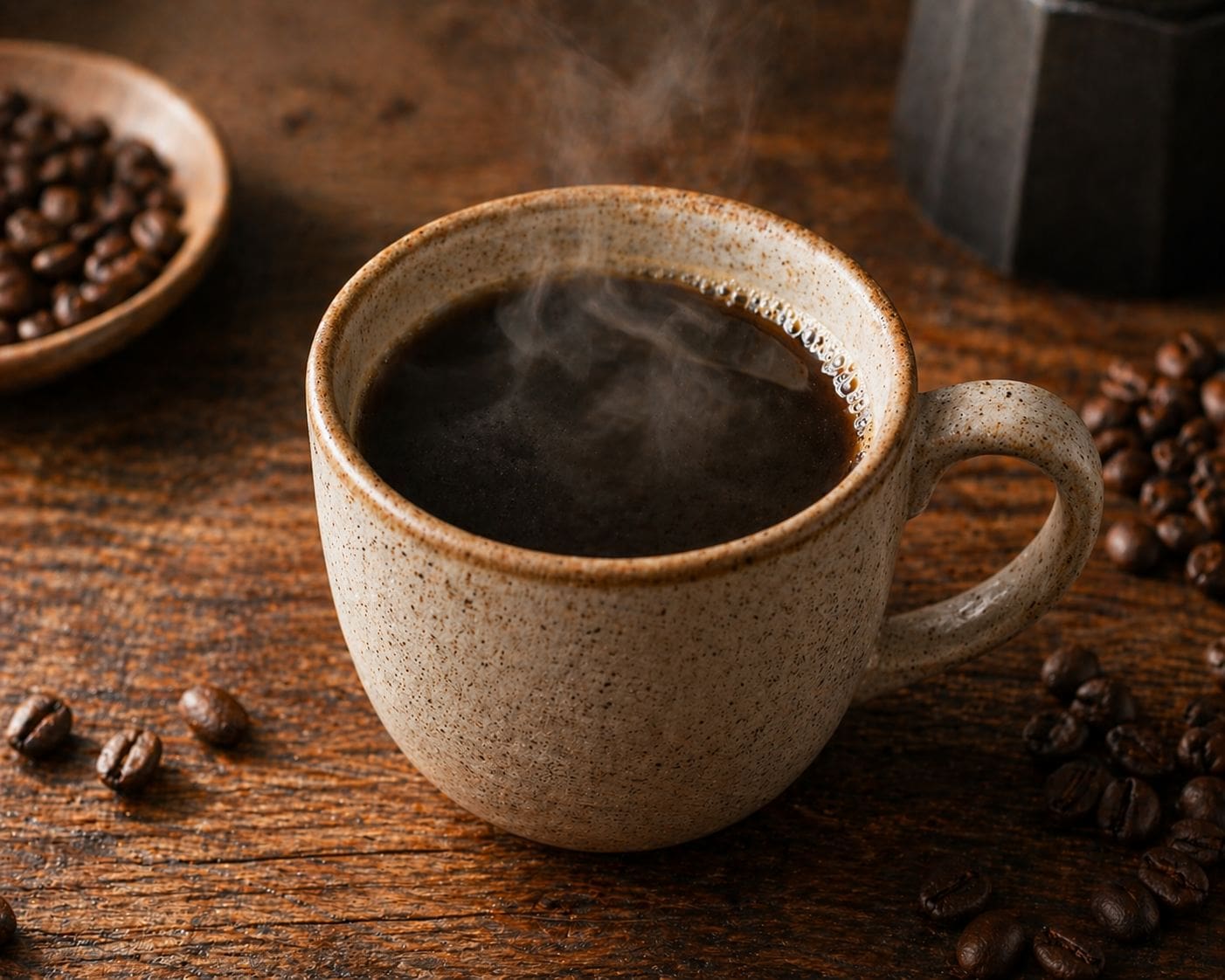
A drink crafted from roasted coffee beans brewed with hot water. Known for its dark color, bitter taste, and a touch of acidity, coffee energizes mainly through caffeine. It traces its roots to Yemen, where it was first consumed in religious ceremonies. The word “coffee” comes from the Arabic qahwa.
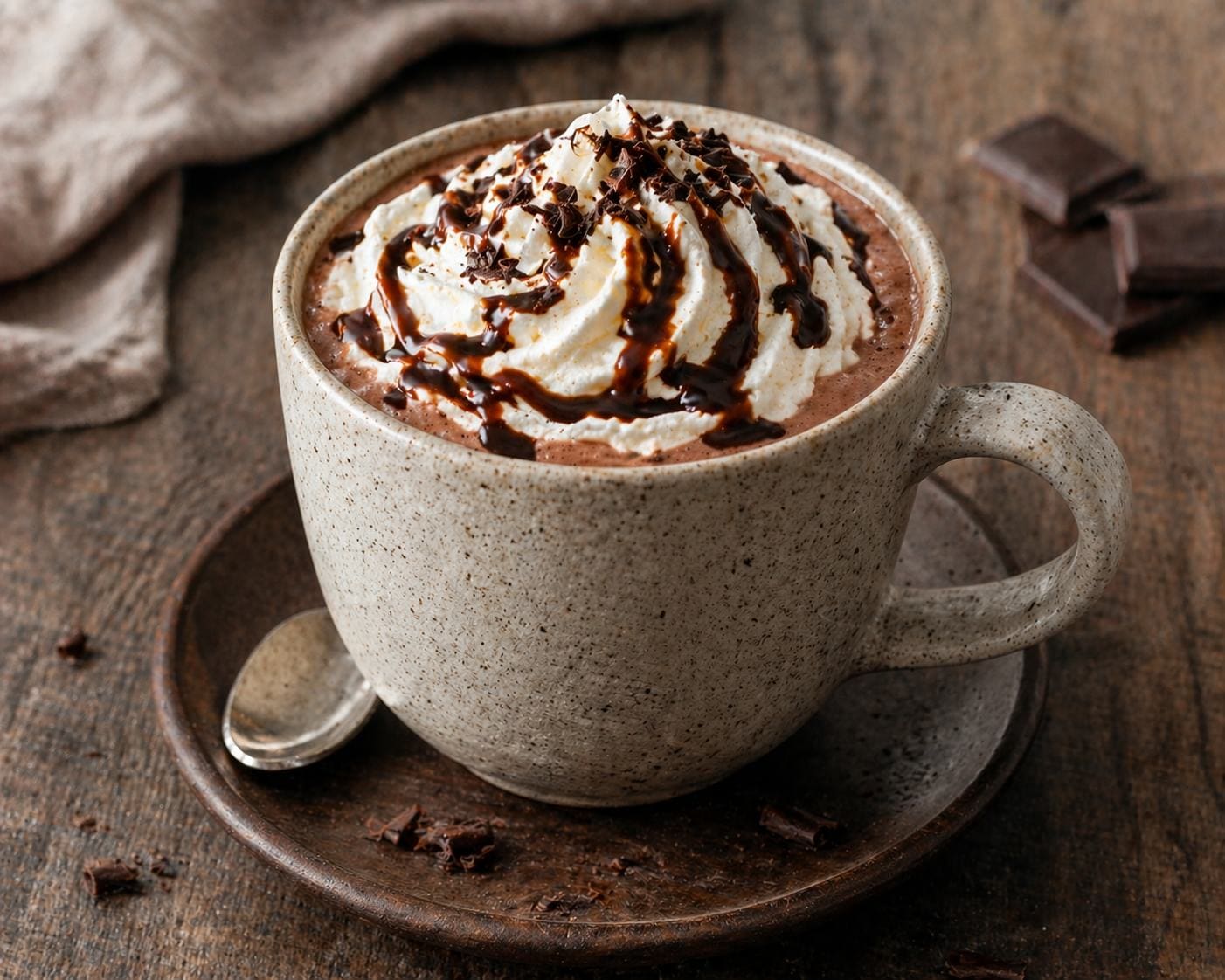
A chocolate-flavored variant of a latte — one part espresso, two parts steamed milk, chocolate syrup or cocoa powder, often topped with whipped cream. Sweet, creamy, and more dessert-like than a straight cup of coffee. The name comes from the port of Al Mokka in Yemen, which exported beans known for a distinct chocolatey flavor. For the full definition, see what a mocha is.
What They Have in Common
Despite tasting completely different, mochas and coffee share three core characteristics.
Both mochas and coffee originate from roasted coffee beans — technically the same beans could be used for both. The distinction is in roasting: mochas use espresso beans roasted to a deep dark hue, while regular coffee beans are typically roasted to a medium to dark brown shade.
Both drinks deliver caffeine from their coffee bean base. Mochas get a small additional caffeine contribution from the chocolate, but a cup of drip coffee still packs about double the caffeine of a mocha. If caffeine is the goal, coffee wins clearly.
| Beverage (12 oz) | Total Caffeine |
|---|---|
| Mocha | 63 mg |
| Coffee | 136 mg |
In summer, iced coffee (often made from cold brew — coffee steeped in cold water for 24+ hours, producing a smoother, slightly fruitier result) and iced mochas are equally popular. An iced caffe mocha is essentially chocolate milk with espresso shots. Hot mochas use steamed milk; iced mochas use cold milk — but the core ingredients stay the same.
What Sets Them Apart
Five meaningful differences — ingredients, caffeine, brewing, flavor, and nutrition.
Drip coffee is made with 2 ingredients — ground coffee and water. A mocha requires espresso, steamed milk, and chocolate syrup or cocoa powder. That’s the whole story at the ingredient level.
A 12-ounce cup of coffee has more than double the caffeine of a 12-ounce mocha — roughly 136 mg vs 63 mg. Coffee is the clear choice if caffeine output is the primary goal. The mocha’s richer flavor makes it feel more intense, but that’s the chocolate talking.
Coffee is flexible — it can be brewed many ways, each producing distinct flavor profiles. A mocha is more standardized: it needs an espresso machine and follows a consistent formula across cafés.
(Mr. Coffee)
(Keurig)
Coffee
Press
Brew
Mocha’s brewing method — espresso machine — is largely fixed. The variation in a mocha comes from the chocolate used (a higher-end Dilettante-style chocolate produces noticeably richer results) rather than from the brewing approach.
Coffee flavor spans a wide range — nutty, chocolaty, fruity, or floral — depending on the bean’s origin, roast level, and brewing method. Single-origin beans deliver unique regional flavors; blends mix beans for a specific target profile. Mochas use medium to dark roasted beans for the espresso base, which standardizes the coffee flavor. The mocha’s variability comes from the chocolate instead — and the overall result is rich, sweet, and dessert-like rather than earthy. Compare further at cappuccino vs mocha or mocha vs latte.
Black coffee has almost no calories. A mocha, with steamed milk and chocolate syrup, adds significant calories, fat, and sugar. The difference is substantial at the 12-ounce level:
| Nutrient | 12 oz Black Coffee | 12 oz 2% Mocha (no whip) |
|---|---|---|
| Calories | 2 | 200–250 |
| Total Fat | 0g | 7–11g |
| Saturated Fat | 0g | 4–7g |
| Cholesterol | 0mg | 20–35mg |
| Sodium | 5mg | 100–150mg |
| Total Carbohydrates | 0g | 30–45g |
| Sugars | 0g | 27–40g |
| Protein | 0g | 8–12g |
| Caffeine | 136mg | 63mg |
Frequently Asked Questions
Not exactly. Mocha refers to two things: a high-quality coffee bean from Yemen’s Mocha region, and a coffee drink made with espresso, chocolate, and steamed milk. A plain cup of coffee is simply brewed grounds and water. See the full definition at what is a mocha.
Generally no. A standard 12 oz cup of coffee has roughly 136 mg of caffeine; a 12 oz mocha has about 63 mg. Coffee is significantly more caffeinated despite the mocha’s bolder, richer flavor — which comes from the chocolate, not extra caffeine.
Essentially yes — espresso, steamed milk, and chocolate syrup or powder, often topped with whipped cream. Think of it as a cappuccino with a chocolate element. The chocolate shifts the whole flavor character toward sweet and creamy.
The term comes from Mocha beans, shipped from Yemen’s port of Al Mokka. Those beans had a naturally chocolatey flavor, and the name carried over to coffee-chocolate drink combinations. The geographic and flavor connection stuck.
A mocha typically tastes more like chocolate. The syrup or powder blended with espresso creates a rich, sweet profile that reads as dessert-like rather than straight coffee. The espresso is there — but the chocolate leads.
Same beans.
Very different cups.
Both coffee and mocha start with the same roasted beans, but diverge immediately after that. Coffee’s flavor is shaped by bean origin, roast level, and brewing method — and it delivers meaningfully more caffeine. Mocha’s sweet, creamy character comes from the added chocolate and milk, making it more dessert than beverage. Black coffee has almost no calories; a mocha adds sugar, fat, and a significant calorie load. Both can be served hot or cold. Your choice comes down to what you actually want in the cup — a functional caffeine hit or a rich, chocolatey treat.
Related: For a related glossary follow-up, read What Is a Mocha? Definition, Ingredients, and How It Tastes next.
