
10 min read
Plastic-Free
Coffee
The complete guide to brewing a cleaner, purer cup — no plastic in the path, no compromises in the cup.
The quest for a plastic-free lifestyle isn’t a fleeting trend — it’s a conscious shift toward sustainability and health. And when it comes to coffee, the stakes are particularly high.
Hot water and plastic are a bad combination. When the two meet inside your coffee maker, you get more than just coffee — you get a slow drip of chemical exposure that, over years and thousands of brews, adds up to something worth paying attention to.
The good news: switching to plastic-free brewing is easier and more affordable than most people think. This guide walks through the science, the alternatives, and exactly what to buy to brew a genuinely clean cup.
Why Plastic in Coffee Makers
Is a Problem
Many coffee aficionados notice taste differences when brewing with plastic-heavy equipment — subtle bitterness, a faint chemical undertone, or a flatness in the cup that shouldn’t be there. That isn’t imaginary. It has a mechanism.
When hot water contacts plastic — especially lower-grade or non-heat-resistant types — it can cause bisphenol A (BPA) and related compounds like phthalates to migrate into the liquid. This process accelerates with temperature: the closer your brewing water is to boiling (195–205°F for pour-over, 200–212°F for French press), the greater the potential transfer. Over time and thousands of brews, cumulative exposure adds up.
The constraint is that many traditional coffee makers incorporate plastic precisely in the parts that touch hot water — lids, carafes, filter baskets, and internal tubing. Even “BPA-free” plastics often substitute compounds like BPS and BPF, which emerging research suggests may carry similar concerns.
The actionable fix is simple: choose brewing equipment where no plastic ever contacts hot water. Glass, ceramic, and high-grade stainless steel are your materials.
The 3 Best Plastic-Free
Brewing Methods
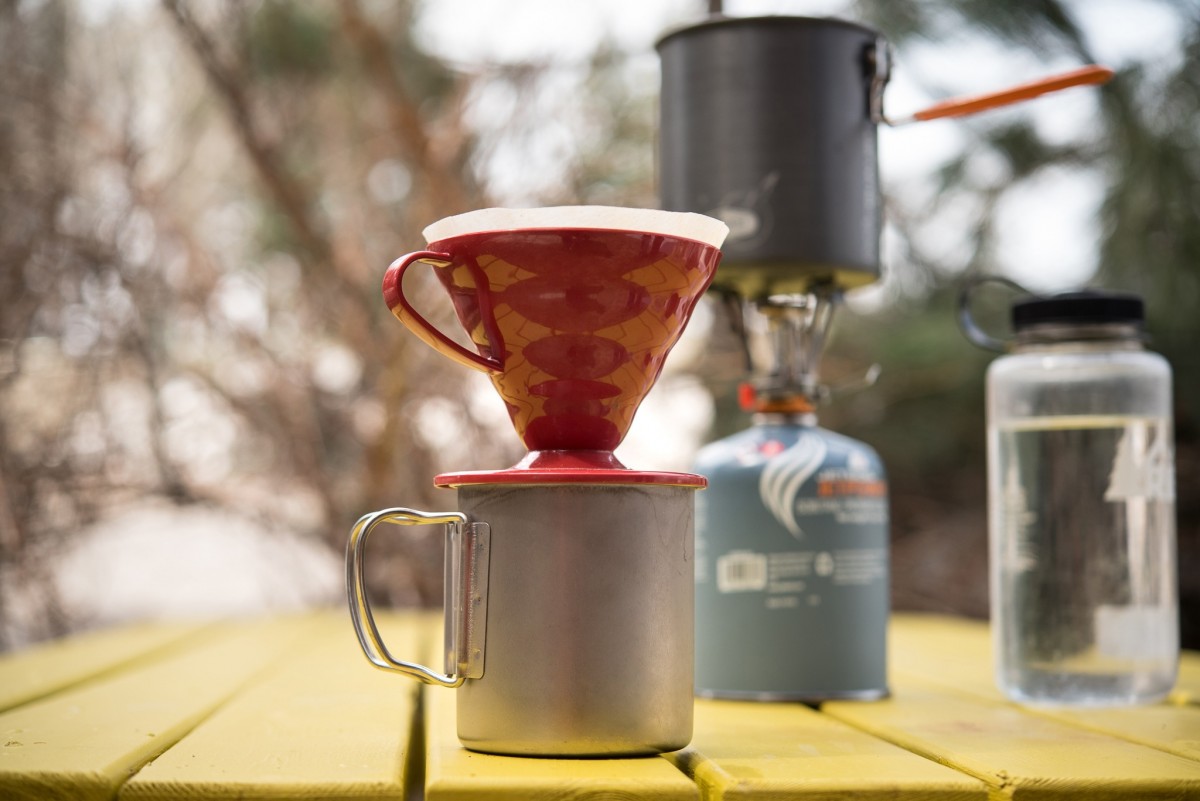
Glass Clever Dripper
The Clever Dripper is a hybrid brewer that combines full-immersion steeping with a controlled pour-over release — you add your grounds and hot water, let them steep like a French press, then set the dripper on a cup to trigger the valve and drain. The borosilicate glass construction means zero plastic ever contacts your brew water, and the silicone valve seal is food-safe at high temperatures.
The result is a clean, balanced cup that’s more forgiving than a standard V60 (immersion compensates for uneven pouring technique) but cleaner than a French press (the filter catches sediment). Easy to clean, dishwasher-safe, and deeply satisfying to use.
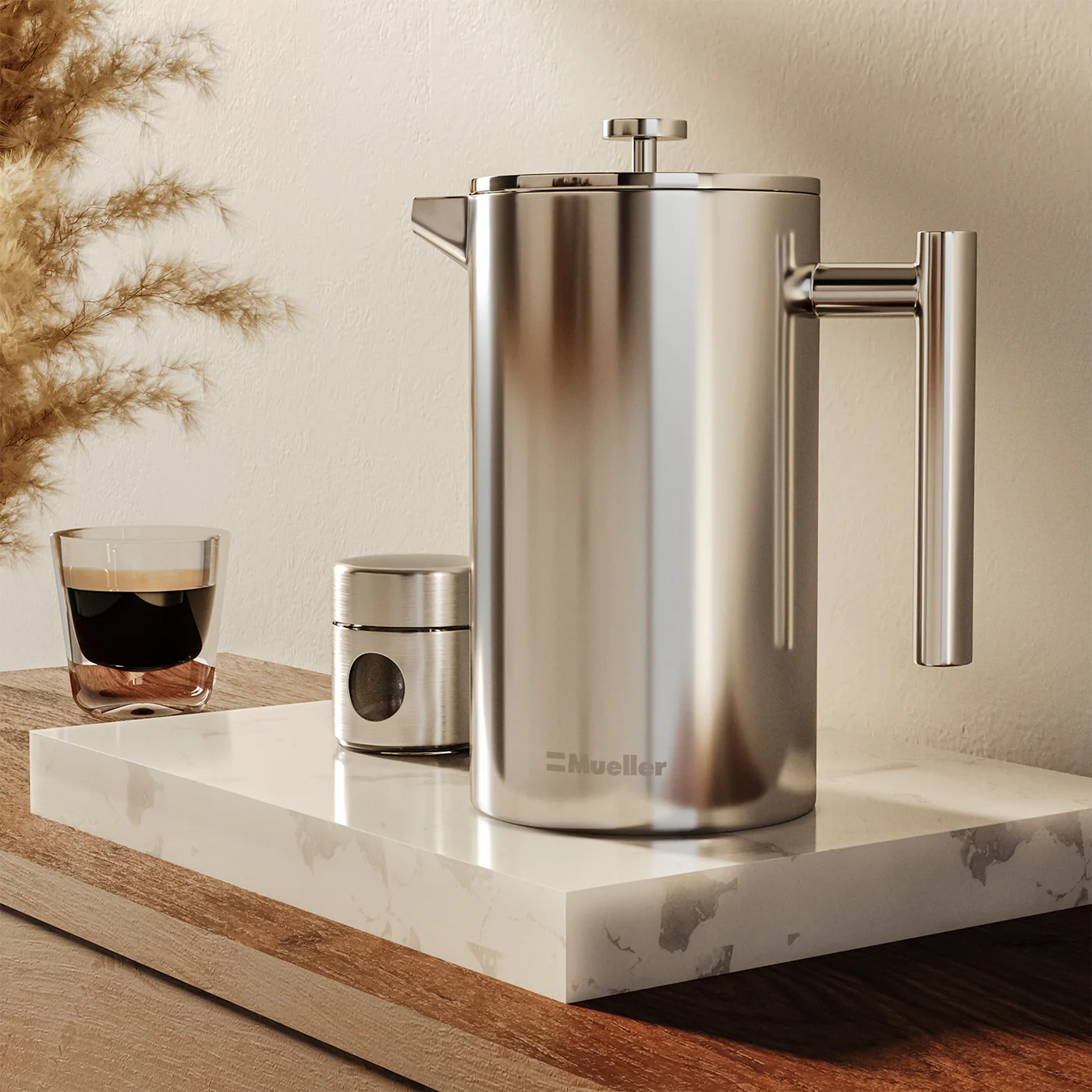
Stainless Steel French Press
A high-grade stainless steel French press is the workhorse of plastic-free brewing. No plastic, no paper filters, no electricity — just coarsely ground coffee, hot water, four minutes, and a plunge. The full-immersion method preserves the coffee’s natural oils, producing a rich, full-bodied cup with a satisfying mouthfeel that lighter methods can’t replicate.
Look specifically for models where the plunger frame, filter screen, and body are all stainless — some presses use a plastic lid or plastic plunger rod, which defeats the purpose. The double-wall insulated versions also keep your brew hot for 30+ minutes, which is a genuine quality-of-life improvement over glass.
Ceramic V60 (Hario or equivalent)
The ceramic V60 is the brewer coffee professionals reach for when they want to taste everything a bean has to offer. The high-fire ceramic body retains and distributes heat evenly, keeping the brewing temperature stable across the full pour without the heat loss you get from plastic or even glass. The result is a cup with exceptional clarity, pronounced acidity, and complexity that reveals origin character.
It rewards technique — your grind size, pour rate, and water temperature all matter — but that control is precisely the point. The Hario ceramic V60 is a benchmarked standard in specialty coffee. Buy the ceramic model explicitly; the plastic and glass versions are also available but miss the point here.
Get the 21-Day Coffee Glow-Up Recipe Book
Make your morning coffee feel like a treat again: 21 coffee-shop-style recipes you can make at home, with hot, iced, creamy, cozy, and Java Burn-friendly options.
- 21 craveable coffee recipes
- Simple flavor formulas and shopping list
- 7-day coffee glow-up plan
You are in. Grab the recipe book, then check your inbox to confirm the coffee newsletter.
Download the free recipe bookAlready subscribed? Open the recipe book here.
Why readers save it: It gives them recipes first, not hype first. Java Burn stays optional and label-directed, while the download gives them a better coffee routine they can use right away.
What happens next: MailPoet adds them to the Golden Lamb Coffee Newsletter, sends the welcome email, and includes them in the weekly coffee tips nurture sequence.
Educational download. Not medical advice. Java Burn is a dietary supplement; read the label and ask a qualified professional if you use supplements, take medication, or manage a health condition.
Additional Considerations
Switching your brewer is the biggest step, but a few supporting choices complete the picture:
Choose natural, unbleached paper filters or reusable metal mesh ones. Some bleached paper filters use chlorine treatment that can impart a faint taste. Reusable metal filters are the most sustainable option and eliminate filter-buying entirely.
Use a stainless steel kettle — ideally gooseneck for pour-over control. Many electric kettles have plastic-lined reservoirs or plastic water sensors. All-stainless interiors are available from brands like Fellow, Hario, and Bonavita.
Store your beans in airtight glass jars with metal lids or dedicated stainless steel canisters. Avoid any container with a plastic interior or plastic-lined lid. Coffee absorbs odors and off-flavors from its surroundings, so this matters more than it seems.
Filtered water makes a meaningful difference. Use a stainless steel or ceramic water filter pitcher rather than plastic-bodied options. If you have access to soft, filtered tap water that’s already high quality, that’s ideal — just let it off-boil before pouring.
Frequently Asked Questions
-
Does plastic in coffee makers actually leach chemicals?
Yes. When hot water contacts plastic — especially lower-grade or non-heat-resistant types — compounds like BPA and phthalates can migrate into the liquid. Higher brewing temperatures accelerate this process. Switching to glass, ceramic, or stainless steel eliminates this risk entirely.
-
What is the best plastic-free coffee maker?
It depends on your brew style. For a clean, balanced cup the glass Clever Dripper or ceramic V60 are excellent. For a rich, full-bodied brew without filters, a stainless steel French press is hard to beat. All three eliminate plastic from the brewing path entirely.
-
Are paper coffee filters plastic-free?
Most natural, unbleached paper filters are plastic-free. Some bleached filters use chlorine treatment that can affect taste. Reusable metal mesh or cloth filters are the most sustainable option. Always check the packaging if unsure.
-
Is the Hario V60 plastic version safe?
Hario uses heat-resistant resin (Tritan) in its plastic models. The ceramic and glass V60s are fully plastic-free. If avoiding all plastic contact is your goal, choose the ceramic or glass model explicitly — both are widely available and only slightly more expensive.
-
What coffee storage containers are plastic-free?
Airtight glass jars with metal lids, stainless steel canisters, and ceramic crocks are all excellent options. Avoid any container with a plastic interior or plastic-lined lid if you want to stay fully plastic-free.
Brew purer.
Taste the difference.
The mechanism of chemical leaching from plastic components is real — both for flavor integrity and long-term health considerations. Switching to glass, ceramic, or stainless steel brewers eliminates this risk entirely while simultaneously improving the quality of your cup. These materials don’t absorb odors, don’t degrade with heat, and don’t contribute anything to your coffee except excellent heat retention.
If you want the most forgiving entry point, start with a stainless steel French press — no filters, no technique required, just great coffee. If you want the most refined cup, the ceramic V60 rewards patience and practice. And if you want the best of both worlds, the glass Clever Dripper bridges the gap beautifully.
Whichever you choose, your morning ritual deserves materials as clean as the coffee itself.
