
9 min read
Discover the best coffee filter for your brewing setup—paper, metal, or cloth. Learn the real differences, who each type suits, and what actually improves your cup.
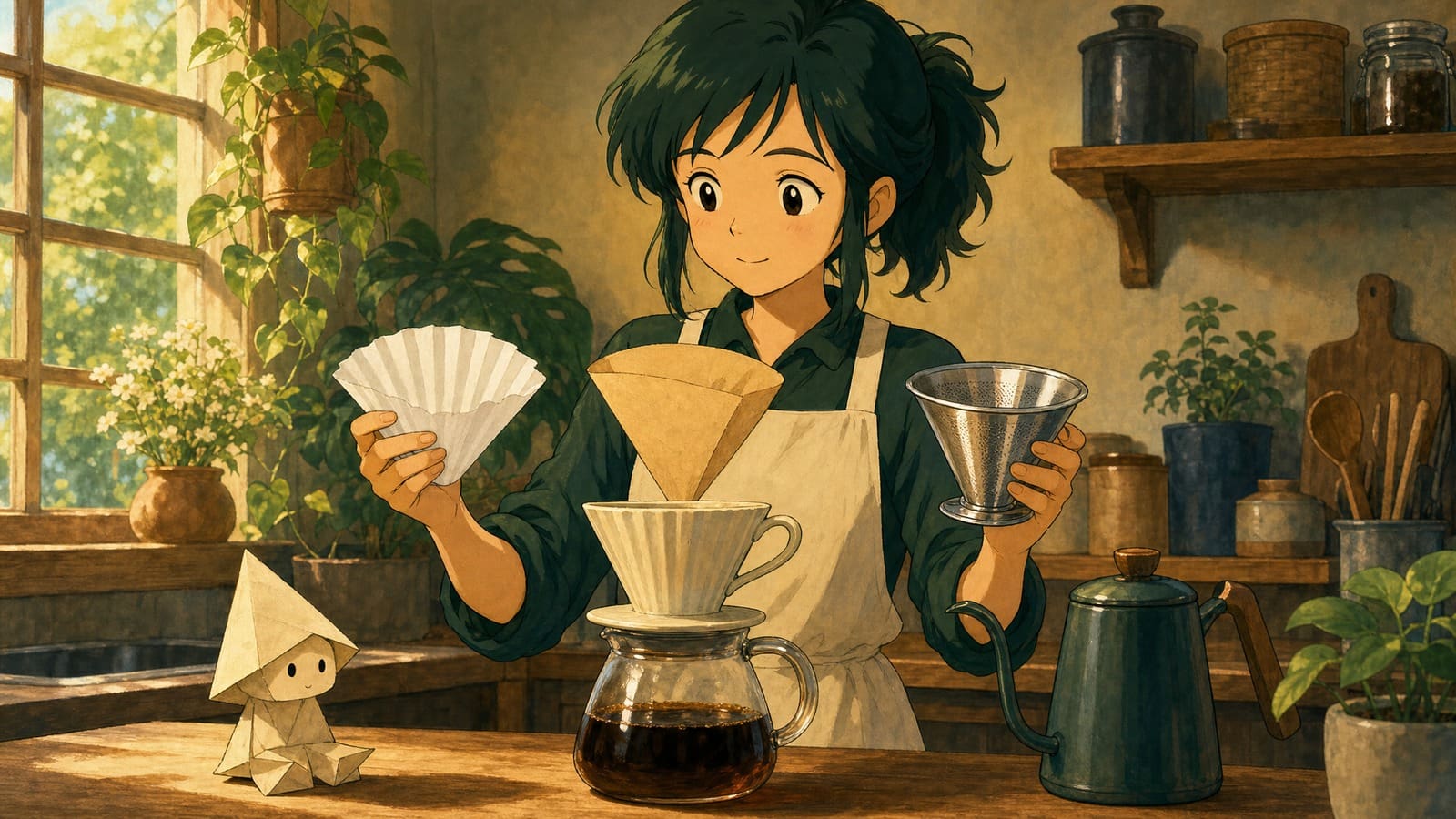
The coffee filter is one of those things most people never think twice about—and then one day they swap it out and notice an immediate difference in their cup. Whether you’re using a drip coffee maker, dialing in a pour-over, or exploring reusable options to cut down on waste, the filter you choose quietly shapes the flavor, body, and clarity of everything you brew.
This guide breaks down the best coffee filter types available, who each one is for, and what genuinely matters when you’re choosing between them.
In This Guide
Quick Answer: Which Filter Type Is Right for You?
- Paper filters deliver the cleanest, brightest cup and are best for people who want clarity and low-maintenance brewing.
- Metal and stainless steel filters let more oils and fine particles through, producing a fuller-bodied, richer brew—ideal for those who love a bolder flavor and want to cut down on waste.
- Cloth filters fall in between: they filter more than metal but less than paper, offering a smooth, nuanced cup with a reusable format.
Your brewing method, flavor preference, and environmental priorities will determine which one wins for you.
Why Your Coffee Filter Matters More Than You Think

Coffee is mostly water, and everything that happens between hot water and your cup is filtration. The filter controls which compounds make it through—oils, fine coffee grounds, sediment, and dissolved solids all behave differently depending on the material doing the filtering.
Paper filters, for example, trap oils and micro-fines that metal filters let pass freely. Those oils carry significant flavor and mouthfeel. Whether you want them in your cup or not is a matter of personal taste, but understanding that the filter is making that decision for you is the first step to brewing intentionally.
The Main Types of Coffee Filters
Paper Coffee Filters
Paper is still the most widely used filter material, and for good reason. Bleached or unbleached paper filters produce a clean, clear brew with no sediment and bright, distinct flavors. They’re inexpensive, widely available in different sizes, and disposable—which makes cleanup effortless.
The tradeoff is waste. If you brew daily, that adds up. Some people also notice a faint papery taste with lower-quality paper filters, though a quick rinse with hot water before brewing largely eliminates it.
Who paper filters are for: Drinkers who prioritize clarity, brightness, and ease of use. Also a strong choice for anyone brewing with a drip coffee maker or pour-over setup like a Hario V60 or Kalita Wave, where filter quality directly affects flavor extraction.
Who should skip them: Anyone trying to reduce single-use waste, or those who specifically enjoy the heavier body and oil-forward character of unfiltered coffee.
Metal and Stainless Steel Filters

A reusable metal filter—often called a permanent filter or goldtone filter—is a fine mesh screen, usually made from stainless steel, that replaces disposable paper. These are common in drip coffee makers, pour-over setups, and as standalone filter baskets.
Because the mesh can’t trap fine particles the way paper does, more coffee oils and micro-grounds pass through into your cup. The result is a fuller body, a slightly heavier mouthfeel, and a flavor profile closer to what you’d get from a French press. Some tasters find this richer and more satisfying; others find it murkier than they prefer.
The environmental case for metal filters is straightforward: buy once, use indefinitely. The cleanup is a rinse and occasional scrub, which takes only a few seconds.
Who metal filters are for: Coffee drinkers who want a bolder, oil-rich cup and care about reducing waste. Also practical for anyone who doesn’t want to run out of paper filters mid-week.
Who should skip them: Those who prefer a clean, bright cup, or anyone whose grinder produces a lot of fine powder—very fine grounds can slip through mesh and create a gritty texture.
Cloth Filters
Cloth filters—typically made from cotton or hemp—are the least common of the three but have a dedicated following among specialty coffee drinkers. They filter more thoroughly than metal but less aggressively than paper, which means some oils come through while most sediment stays behind. The result is a smooth, rounded cup that many describe as the most balanced of all filter styles.
Cloth filters require more care than paper or metal. They need to be rinsed immediately after use, stored wet in the refrigerator, and replaced every few months as they absorb coffee oils and begin to affect flavor.
Who cloth filters are for: Adventurous home brewers who want a nuanced middle ground between paper and metal, and who don’t mind the extra maintenance.
Who should skip them: Anyone who wants low-effort brewing or doesn’t want to commit to the upkeep routine.
Filter Shape Also Matters: Cone vs. Basket

Beyond material, the shape of your filter affects how water flows through your grounds—and that affects extraction.
Cone filters (cone-shaped, pointed at the bottom) concentrate water through a narrower channel, which can produce more even extraction and a more nuanced flavor. They’re standard for pour-over brewers and many drip machines.
Basket filters (flat-bottomed, cylindrical) spread water across a wider surface area. They’re common in larger drip coffee makers and tend to be more forgiving with grind size. A flat bottom filter basket is often easier to use consistently, especially for newer home brewers.
Neither is objectively better—it depends on your coffee machine and your preferred brewing style. The key is matching the filter shape to your specific brew basket, since using the wrong shape can cause overflow, uneven extraction, or poor sealing.
Matching Your Filter to Your Brewing Method
| Brewing Method | Best Filter Type | Notes |
|---|---|---|
| Drip coffee maker | Paper or permanent metal | Check whether your machine uses a cone or basket shape |
| Pour-over (V60, Kalita Wave) | Paper (method-specific) | Use filters designed for your dripper model |
| French press | No filter needed | Built-in metal mesh plunger does the work |
| Espresso machine | Portafilter basket (built-in) | Paper puck screens can be added for easier cleanup |
| Cold brew | Cloth or paper | Cloth is popular for cold brew due to its smooth filtration |
What to Think About Before You Buy
Flavor preference first. If you love a clean, bright cup, paper is your friend. If you want body and richness, lean toward metal or cloth.
Your specific coffee machine matters. Not all filters are universal. Check the size (most drip makers use #2 or #4 cone filters, or basket filters in specific dimensions) and confirm the shape before buying.
Environmental impact is real but not the whole story. Reusable metal and cloth filters reduce waste meaningfully over time. That said, the best filter is the one you’ll actually use correctly and consistently—a neglected cloth filter stored improperly can harm your brew more than a fresh paper filter ever would.
Coffee grounds and grind size interact with filter type. Finer grinds work better with paper; coarser grinds pair well with metal. If your grind produces a lot of dust, a paper filter will catch it cleanly.
Cost over time. Paper filters cost pennies each but accumulate. A quality stainless steel permanent filter costs more upfront but pays for itself quickly.
Frequently Asked Questions
What is the best coffee filter for a drip coffee maker?
Most drip coffee makers work well with either paper filters or a reusable metal permanent filter. Paper gives you a cleaner cup; metal gives you more body. Check your machine’s filter basket shape—cone or flat bottom—before purchasing.
Are reusable coffee filters worth it?
Yes, for most people. A quality stainless steel or goldtone filter pays for itself within weeks compared to buying paper filters regularly, and the environmental benefit is meaningful over time. The cup will taste slightly different—richer and fuller—which most drinkers enjoy.
Do paper coffee filters affect taste?
They can, slightly. Lower-quality paper filters may impart a faint papery flavor. Rinsing the filter with hot water before adding grounds eliminates this in most cases. Higher-quality paper filters (like those used with Hario V60 or Kalita Wave drippers) are designed to be flavor-neutral.
What’s the difference between cone and basket coffee filters?
Cone filters are pointed at the bottom and designed for cone-shaped filter baskets, common in many pour-over and drip setups. Basket filters are flat-bottomed and wider, used in larger drip machines. Using the wrong shape for your machine can cause poor extraction or overflow.
Can I use a metal filter for pour-over coffee?
Yes. Several pour-over brewers are designed specifically for reusable metal filters. The result is a fuller-bodied cup than paper produces. If you’re using a Hario V60 or Kalita Wave, look for metal filters made specifically for those drippers to ensure proper fit and flow rate.
What Actually Matters Most
There’s no single best coffee filter that works for every brewer, every machine, or every taste preference. But the decision is simpler than it looks once you know what each type actually does to your cup.
Start with your brewing method and flavor goals. If you want clarity and ease, go paper. If you want richness and sustainability, go metal. If you want something in between and don’t mind a little maintenance, cloth is worth exploring. Get the shape right for your machine, match your grind to your filter, and the improvement in your daily cup will be immediate.
