

9 min read
How to Clean
a Coffee Grinder
Old grounds turn rancid and quietly sour every cup that follows. Here’s how to clear them out the right way — without wrecking your burrs.
Coffee grounds are oily, and oil goes stale. Every time you grind, a thin film of those oils coats the inside of the machine — the chamber, the blades or burrs, the chute. Leave it long enough and that residue turns rancid, so your fresh beans get a stale, slightly bitter head start before they ever hit hot water.
A clean grinder is one of the cheapest upgrades to your coffee, and it takes about ten minutes. The catch is that blade and burr grinders need to be cleaned differently — and the most-repeated internet tip (grind some rice) is genuinely risky for a lot of burr grinders. Let’s do it properly.

Blade grinder: unplug it, pulse a few tablespoons of uncooked rice (or a dose of grinder cleaning tablets) to scrub out oils and dislodge grounds, tip it out, then wipe with a dry cloth.
Burr grinder: unplug it, empty the hopper, brush the burrs and chute clean, then run a dose of grinder cleaning tablets through it. Skip the rice — many burr makers warn it’s too hard and can damage the burrs.
Never use water on metal burrs or any electrical part. Keep it dry.

Why a dirty grinder hurts your coffee
Three things happen as residue builds up — and you taste all of them.
1. Rancid oils. Coffee’s oils go stale and bitter over time. A coating of old oil inside the grinder seasons every fresh grind with that off, cardboard-and-bitter note. It’s the single biggest reason a good bean can taste flat.
2. Stale clumps and clogs. Old grounds pack into corners, the chute, and around the burrs. They mix into your fresh dose, and in bad cases they choke the flow so the grinder runs hot or jams.
3. Drifting grind size. Built-up gunk around burrs can throw off how evenly they cut, which quietly nudges your grind coarser or more uneven than the setting says — and grind consistency is most of what makes coffee taste dialed-in.
If your coffee suddenly tastes duller than the bag promises, clean the grinder before you blame the beans.
Blade and burr clean differently
This is the part most guides skip — and it’s the part that protects your machine.
Spinning blade, one chamber
The cheap, propeller-style grinder. It’s basically one open bowl with a blade. There’s nothing precise to damage, so the rice trick is fine here — the rice scours oils and knocks grounds loose. Tablets work too.
Two burrs, tight tolerances
Beans are crushed between two precision burrs set to an exact gap. Rice is much harder than coffee, and several makers (Baratza among them) warn it can damage burrs or void the warranty. Use purpose-made cleaning tablets instead.
Not sure which you have? If the grind size is set by a dial or collar and beans sit in a hopper on top, it’s a burr grinder. If you just hold down a button and time it by eye, it’s almost certainly a blade.
Cleaning a blade grinder
The fastest job in coffee. Five minutes, start to finish.

- Unplug it. Always, before anything else goes near the blade.
- Tip out the loose grounds and knock the unit gently to free what’s stuck in the corners.
- Add 2–3 tablespoons of uncooked rice (white rice is fine) and pulse for 20–30 seconds. The rice grinds down, scrubbing oils off the blade and walls.
- Dump the rice powder out and wipe the inside with a dry cloth or a barely-damp one. Get into the corners.
- Let it air-dry fully if you used anything damp, then it’s ready. For a deeper job, swap the rice for grinder cleaning tablets.
Cleaning a burr grinder, step by step
A little more care, because there are real parts to protect — but still about ten minutes.
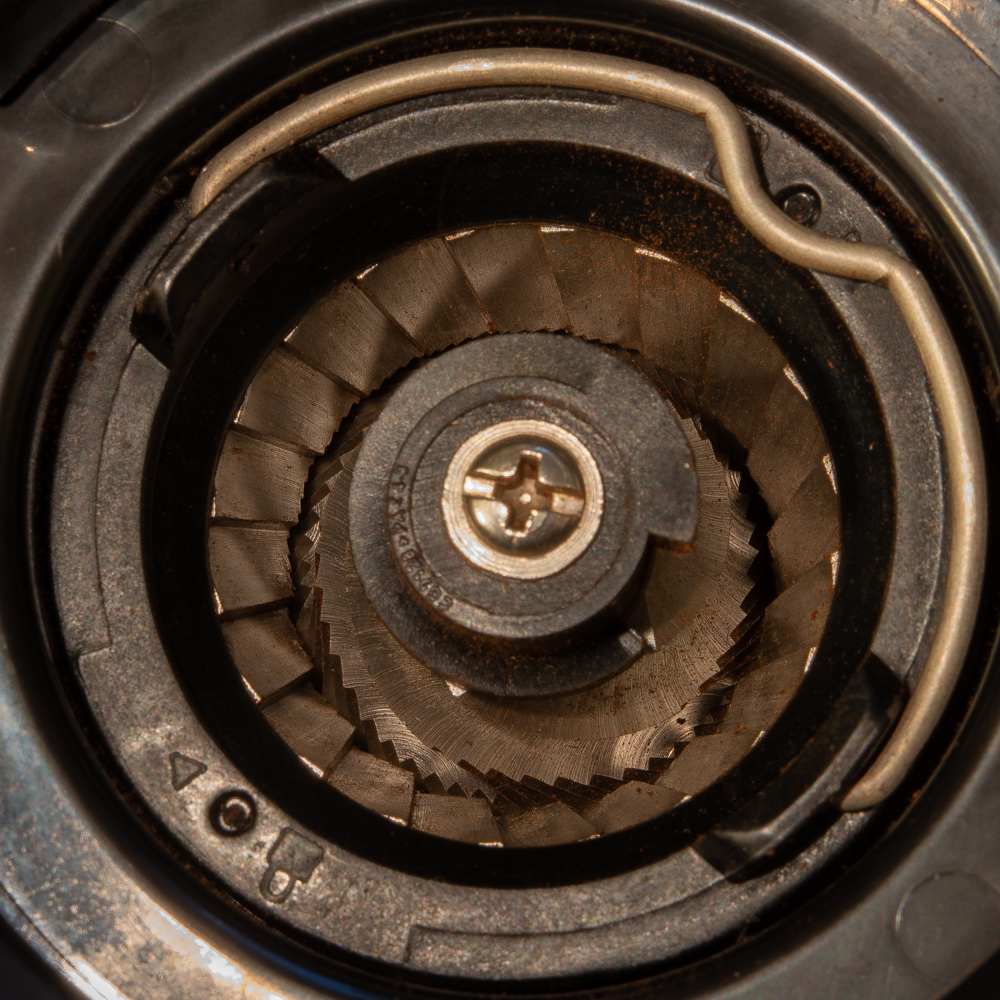
- Unplug it and empty the hopper. Pour any leftover beans back into their bag — grinding them after cleaning wastes them.
- Remove the top burr. Most consumer grinders let you twist out the hopper and lift off the upper burr ring by hand. Check your manual; it’s usually tool-free.
- Brush everything down. Use a stiff, dry grinder brush to clear grounds from both burrs, the threads, and the chute. A toothpick clears packed corners. A quick puff of air or a small vacuum helps.
- Reassemble and run cleaning tablets. Pour in a dose of grinder cleaning tablets and grind them through like beans. They’re soft, food-safe grain that absorbs oil and carries out fines — the burr-safe alternative to rice.
- Grind a small “flush” of cheap beans. A tablespoon or two clears any tablet residue so it doesn’t reach your next real cup.
- Wipe down and dry fully. A dry or barely-damp cloth on the outside and hopper only. Keep water off the burrs and motor — metal burrs rust — then make sure every part is bone-dry before reassembling.
The short tool list
You don’t need much. This covers both grinder types.
Grinder cleaning tablets
The main event for burr grinders — soft grain pellets that absorb oils and sweep out fines without harming burrs. Find them on Amazon.
A stiff cleaning brush
A natural-bristle grinder brush reaches burrs and the chute. A cheap dry paintbrush works in a pinch.
Uncooked rice
Fine for blade grinders only. A few tablespoons pulsed for 30 seconds scrubs oils loose. Keep it away from burr grinders.
A dry microfiber cloth
For the hopper, lid, and outer housing. Barely damp at most — and never near the burrs or electronics.
How often you should do it
It depends on how much you grind and how oily your beans are.
| Task | How often | Why |
|---|---|---|
| Quick brush-out | Weekly-ish | Stops grounds from packing into the chute and burrs |
| Tablet / rice deep clean | Every 2–4 weeks | Strips the rancid oil film before it taints flavor |
| Full disassembly & wipe | Every few months | Resets a heavily used grinder; check burrs for wear |
| After oily / dark / flavored beans | Sooner | Dark roasts and flavored beans gum up grinders faster |
If you drink a couple of cups a day with normal medium-roast beans, a brush-out every week or so and a tablet clean once a month keeps everything tasting honest.
Mistakes that wreck grinders
A few honest warnings worth more than any single tip above.
Never wash burrs or the grinding chamber with water. Steel burrs rust, and trapped moisture ruins both flavor and the machine. Dry methods only.
Rice is far harder than coffee. In a precision burr grinder it can chip burrs or strain the motor — and may void your warranty. Tablets exist for exactly this reason.
Obvious but worth saying: unplug before your fingers or a brush go near a blade or burr. A bumped switch is a bad surprise.
When reassembling, seat the burr the way it came out and don’t crank past the gentle stop. A misaligned burr grinds unevenly or won’t run.
Questions people actually ask
Can I use rice to clean any coffee grinder?
Only a blade grinder. Rice is harder than coffee, so in a precision burr grinder it can damage the burrs and may void the warranty. For burr grinders, use grinder cleaning tablets, which are softer and made for the job.
Can I wash the burrs with water?
No. Metal burrs rust and any trapped water can damage the grinder and sour the flavor. Clean burrs dry — brush them out and run cleaning tablets. Only the outer housing and hopper should ever get a barely-damp wipe.
How often should I clean my grinder?
A quick brush-out weekly and a tablet (or rice, for blade grinders) deep clean every two to four weeks suits most home setups. Clean sooner if you grind oily dark roasts or flavored beans, which gum things up faster.
What can I use instead of grinder cleaning tablets?
For a blade grinder, uncooked rice works. For a burr grinder, brushing thoroughly and grinding a small flush of cheap beans helps between deep cleans — but tablets do the real oil-stripping job that rice can’t safely do in burrs.
My coffee tastes bitter and flat — is the grinder to blame?
Often, yes. Rancid oil residue inside the grinder adds a stale, bitter edge to fresh beans. Before changing beans or brew method, give the grinder a proper clean and taste again.
The bottom line
Cleaning a grinder is ten minutes that pays off in every cup afterward. Brush it out regularly, deep-clean it on a schedule, and match the method to the machine — rice for blades, tablets for burrs, water for neither.
If you only buy one thing, make it a tub of grinder cleaning tablets: they’re the burr-safe way to strip the oils that brushing alone can’t reach, and one container lasts a long time.
This post contains affiliate links. We may earn a commission at no extra cost to you.
