
6 min read
There’s a shade of green that has quietly colonized cities across two continents — a calm, muted sage that signals something affordable, photogenic, and extremely good at going viral. That color belongs to Blank Street Coffee, and if you haven’t noticed one yet, you will soon.
What started as a single battery-powered cart parked in Williamsburg, Brooklyn in August 2020 has grown into one of the most talked-about coffee chains in the world. Today it operates more than 90 locations across New York, Boston, Washington D.C., London, Birmingham, Manchester, Edinburgh, and Glasgow — with Los Angeles arriving this June. It’s valued at roughly half a billion dollars.
A Cart. A Thesis. A Coffee Empire.
The origin story is almost too good. Two founders — Issam Freiha from Lebanon and Vinay Menda from the UAE — met in New York while studying at Columbia and NYU respectively. Both had backgrounds in venture capital. Both had noticed how cities across Asia had transformed food and beverage retail: small-format, mobile-first, efficient, and obsessively branded. They looked at names like Hey Tea in China and Kopi Kenangan in Indonesia and asked a simple question: why doesn’t New York have this?
“Make good coffee cheaper.” That was the whole idea. Not boutique, not premium, not aspirational-but-inaccessible. By focusing on small footprints, automated espresso equipment, and minimalist branding, Blank Street could deliver specialty coffee at a price point that actually competed with the corner bodega — not just the artisan café down the block.
Fortuitous timing helped. COVID-19 had emptied storefronts across New York, and prime locations were suddenly affordable. The cart became a kiosk. The kiosk became a storefront. Investors — including General Catalyst, Tiger Global, Tishman Speyer, and the founders of Allbirds, Harry’s, and Warby Parker — took notice fast. By the end of 2021, the brand had raised over $32 million. By 2023, total funding had cleared $90 million.
Matcha as a Movement
Ask anyone what Blank Street is known for and the answer is rarely espresso. It’s matcha. Specifically, it’s matcha in colors and combinations that read like a mood board: blueberry matcha in dusty lavender, strawberry shortcake matcha in blush pink, cookies-and-cream in layered cream and green. These drinks didn’t just sell — they traveled. TikTok did the rest.
“If you’ve spent any time on TikTok, you’ve probably seen their signature blueberry matcha — a pastel-hued drink that’s become something of a social media fixture.”
The matcha strategy was never accidental. Blank Street understood early that Gen Z was moving away from the traditional espresso hierarchy toward drinks that are sweet, seasonal, and shareable. By building a menu that felt like fashion — rotating, limited, drop-driven — they created a reason to keep coming back that had nothing to do with caffeine dependence and everything to do with FOMO.
Signature Drinks Worth Knowing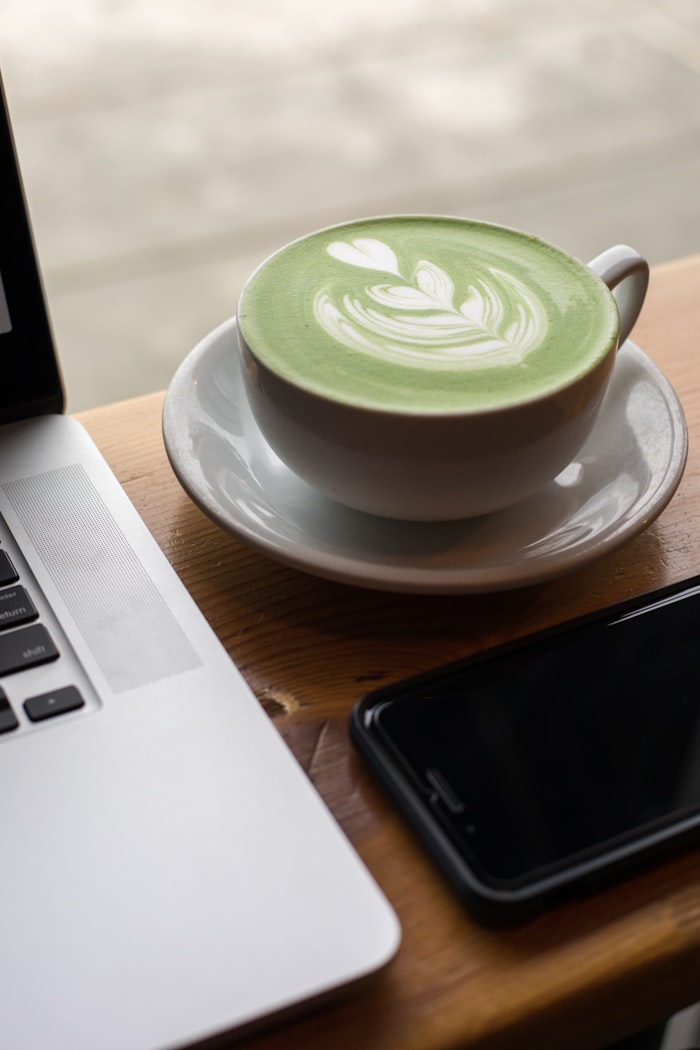

The Brand Machine
It would be easy to dismiss Blank Street as trend-chasing, but the operational thinking underneath is genuinely sophisticated. Original stores clocked in under 500 square feet. Automated espresso equipment reduces the skill barrier and keeps labor costs down. Small footprints mean lower rent. Faster throughput means higher revenue per square foot. This is a coffee business built by people who think in spreadsheets, not just roast profiles.
The aesthetic language is equally deliberate. That sage green — muted, warm, slightly vintage — projects calm without being boring. It photographs well against nearly any backdrop. It feels local even when it isn’t. It’s one of the most effective pieces of passive marketing in food and beverage right now: the storefront is the ad.
“Its distinctive green carts spread through dense urban neighborhoods at a pace that felt less like a café expansion and more like a software rollout.”
Pop Culture, Pressed into Service
Blank Street has cultivated a celebrity orbit that most brands spend millions trying to manufacture. Sabrina Carpenter worked a barista shift at their London location to promote her single “Espresso.” Kendall Jenner collaborated through her 818 tequila brand on coffee-based cocktails. Emma Chamberlain has been in the mix. These aren’t paid placements in the traditional sense — they’re cultural alignments that feel organic because the brand has made itself worth aligning with.
More recently, Blank Street stepped into lifestyle product territory with “The Sleeve” — a fashion-forward cup sleeve launched during fashion week. It’s a small move with a big signal: this brand sees itself as a lifestyle company that happens to serve excellent coffee, not a coffee company trying to have a personality.
Growing Up: From Cart to Concept
The original Blank Street model — get in, get out, no seats, no fuss — is quietly evolving. A new flagship in lower Manhattan runs about 1,300 square feet, three times larger than a typical location. It features large mirrors for selfies, mint green ceilings engineered to pop in photos, and dedicated staging areas with optimal lighting for recording orders. It is, in other words, a content studio that also makes coffee.
Expansion is accelerating. Philadelphia is getting two locations in summer 2026 — including a Penn campus spot slated to be one of the largest Blank Street footprints in the country. Los Angeles gets its first stores in Beverly Hills and Studio City in June. The question isn’t whether Blank Street will be in your city soon. It’s whether there’s a Starbucks nearby that should be nervous.
The Bottom Line
Blank Street Coffee is one of the more interesting things to happen to American coffee culture in years — not because it makes the most technically perfect espresso, but because it identified a gap between indie café craft and fast-food chain mediocrity and drove a very well-funded, very green truck right through it. The coffee is genuinely good. The matcha is genuinely great. The brand is, by almost any measure, genuinely smart.
Whether you’re discovering it for the first time or you’ve had the blueberry matcha enough times that it feels like a personality trait, Blank Street is worth understanding — as a café, as a case study, and as a signal of where coffee culture is heading next.
