

8 min read
Brewing Guides · Cold Extraction
Flash-Chilled vs Cold Brew
Which Preserves More Aroma?
A side-by-side breakdown for home brewers who care about what’s in the glass.
Both produce cold coffee. That’s where the similarities end — one preserves bright aromatics, the other smooths everything down.
If you care about coffee aroma — the florals, fruit notes, chocolate, spice — then the brewing method matters more than most people realize.
In the debate of flash chilled vs cold brew, the real question isn’t just which tastes better. It’s which method preserves volatile aromatics, maintains clarity, and delivers the experience you actually want in the cup.
Both produce cold coffee. That’s where the similarities end.
Let’s break it down in practical terms so you can choose the right method for your home setup.
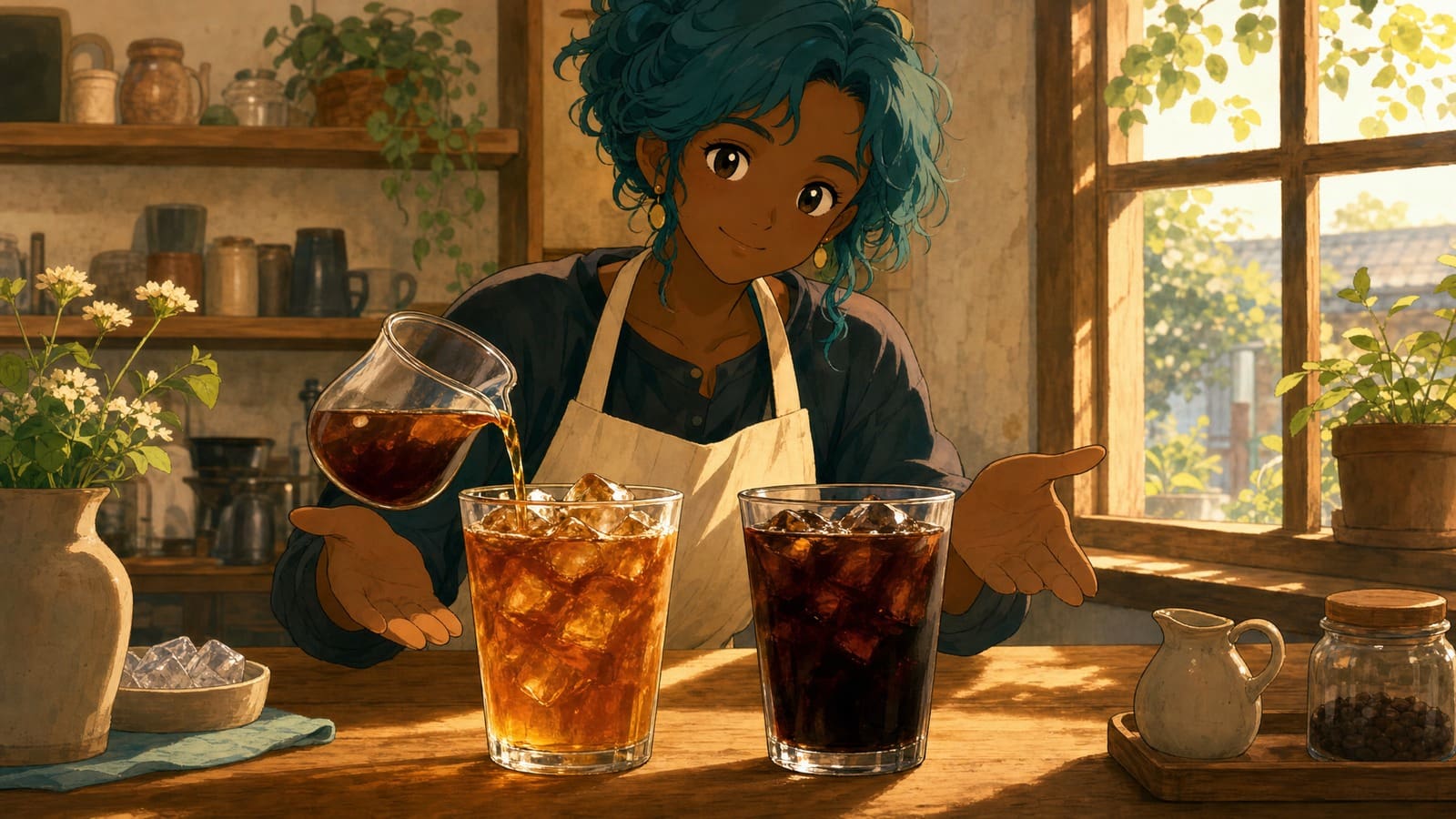
Flash-chilled coffee preserves more aroma than cold brew. Hot water extracts the full spectrum of aromatic compounds, and rapid cooling on ice locks them in. Cold brew is smoother and lower in perceived acidity — but those bright florals, citrus, and stone-fruit notes simply don’t make it into the cup the same way.
What Is Flash-Chilled Coffee?
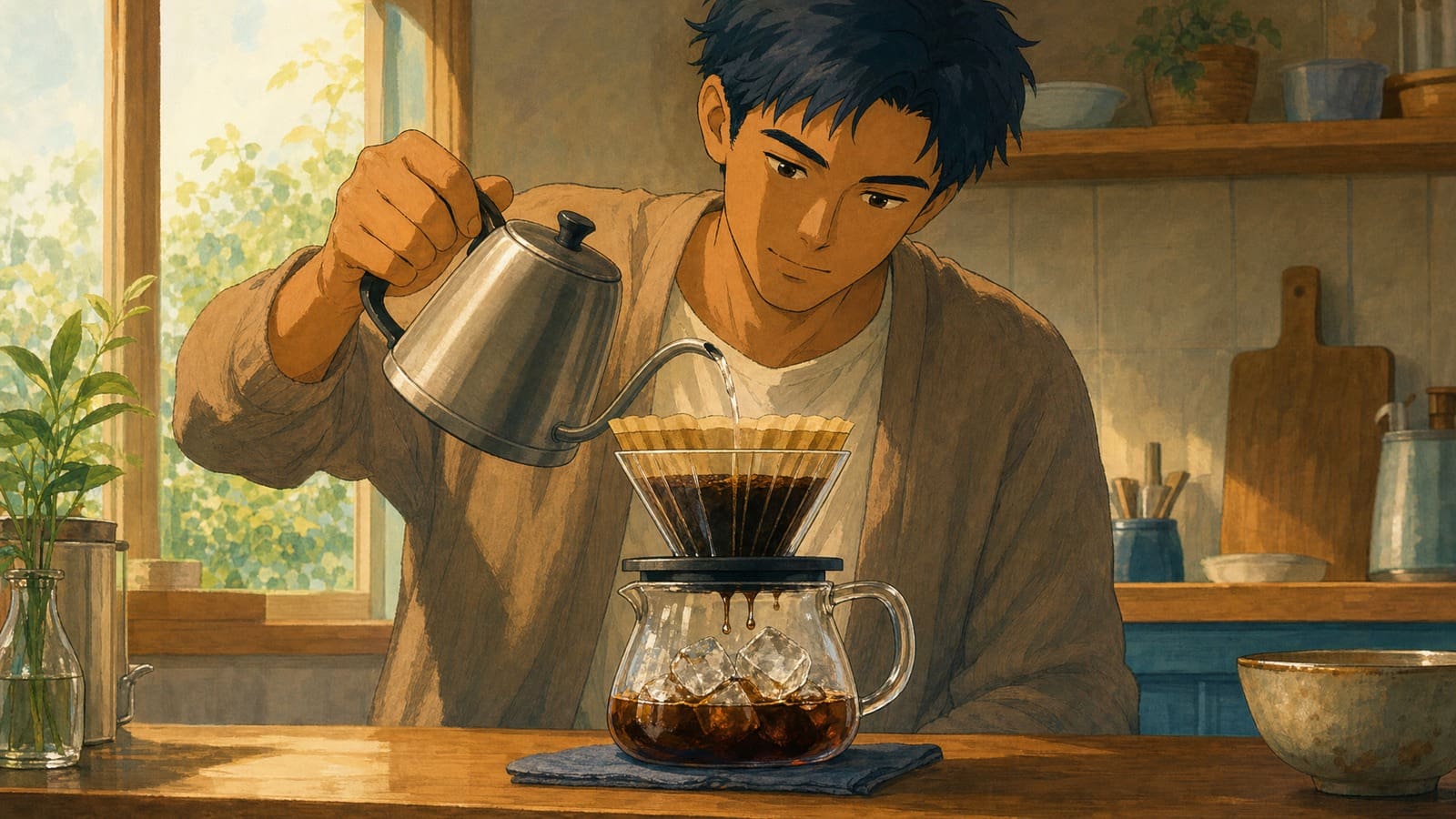
Flash-chilled coffee (sometimes called Japanese iced coffee) is brewed hot directly over ice. You brew a concentrated hot coffee and let it immediately cool by melting ice in the server.
How It Works
Flash-Chilled
Hot water extracts at standard brewing temperatures. The brew drips directly onto ice. Rapid cooling halts further extraction and preserves volatile compounds.
- Full hot extraction
- Immediate temperature drop
- Aromatics locked in fast
- Total time: 3–5 minutes
Flavor & Aroma
In the Cup
Hot water extracts acids and aromatics efficiently. If your Ethiopian smells like jasmine and stone fruit when hot, you’ll still smell it over ice.
- Bright acidity
- Clear flavor separation
- Pronounced aromatics
- Crisp, defined finish
What Is Cold Brew?
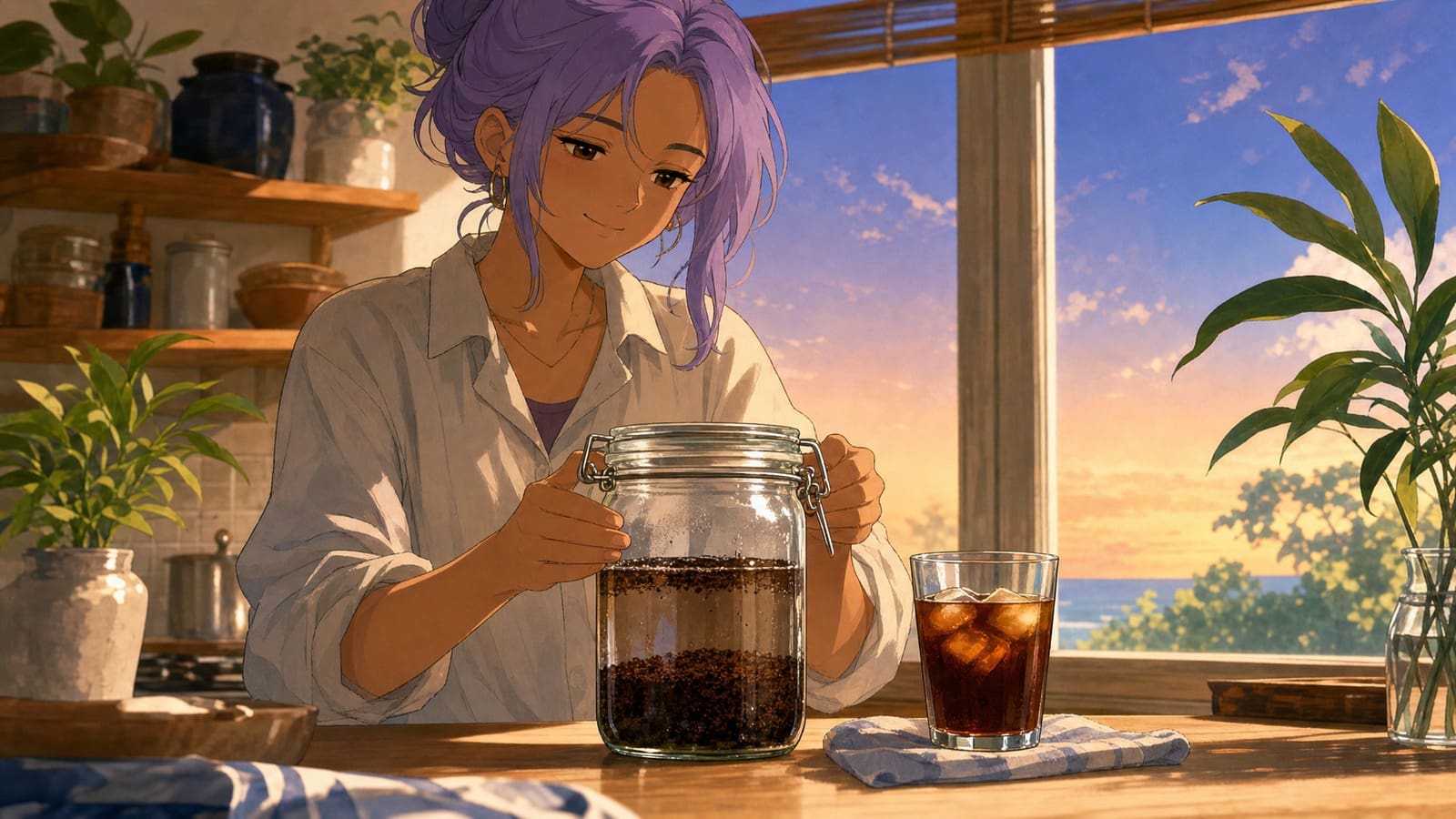
Cold brew is made by steeping coarse coffee grounds in cold or room-temperature water for an extended period (typically 12–24 hours), then filtering. No heat. Long extraction window. Often brewed as a concentrate and diluted before serving.
How It Works
Cold Brew
Cold water extracts different compounds — and fewer volatile aromatics — than hot water. The long steep favors heavier, rounder flavor compounds.
- No heat at any stage
- Long, slow extraction
- Often a concentrate
- Total time: 12–24 hours
Flavor & Aroma
In the Cup
Often tastes chocolatey, nutty, or mellow — even with bright beans. That’s not a flaw. It’s the design of slow extraction.
- Low perceived acidity
- Heavy, coating body
- Smooth, rounded sweetness
- Muted aromatics
The Five-Round Comparison
Here’s the practical breakdown home brewers actually need. Five rounds, one winner per round.
Aroma Retention
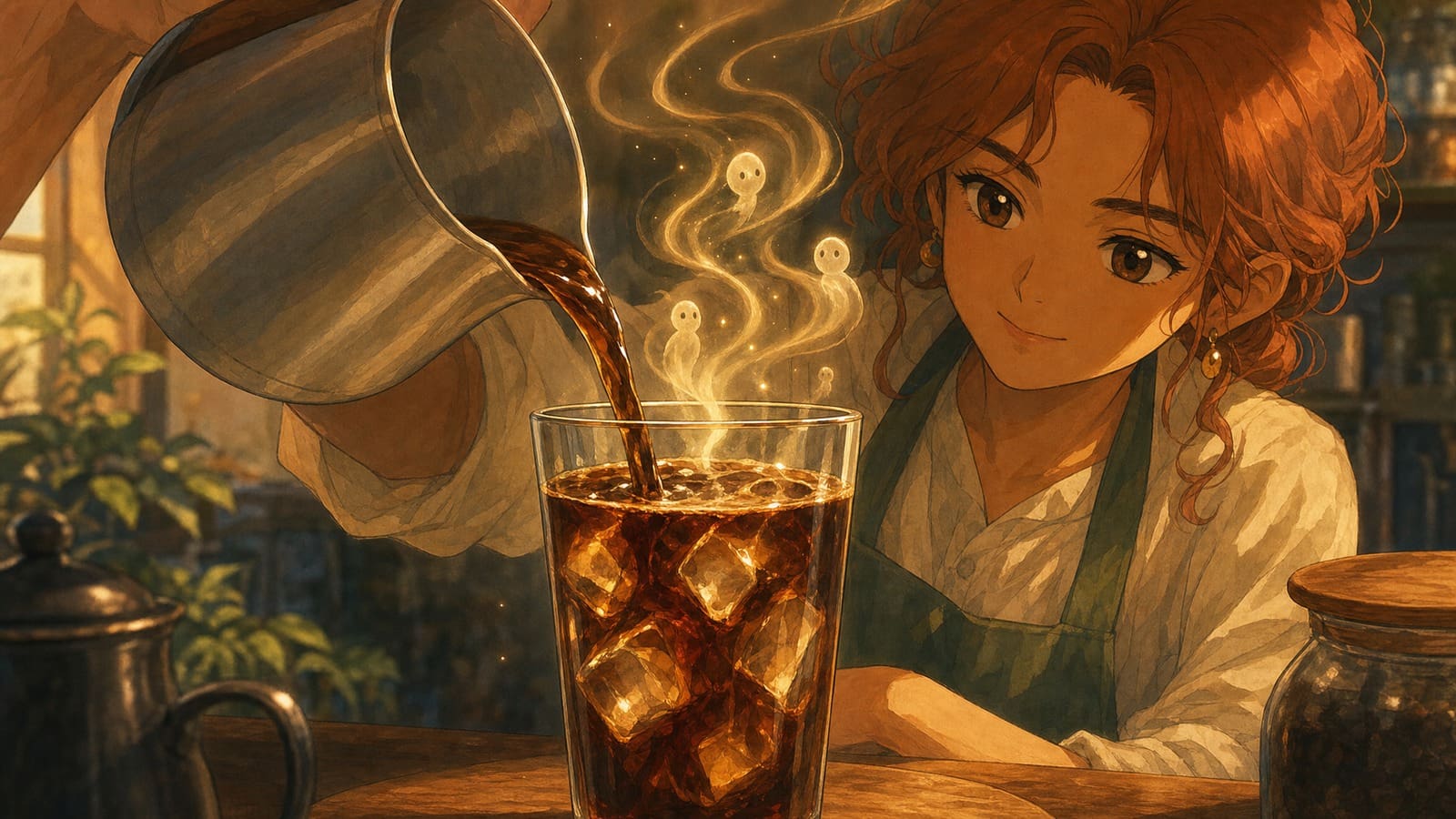
This is where flash chilled vs cold brew shows the biggest difference. Hot water extracts aromatic oils and volatile compounds quickly and completely. Flash chilling then rapidly cools the coffee, reducing further evaporation.
Cold brew never fully extracts those high-tone aromatics in the first place. If you want your coffee to smell alive in the glass, flash chilling preserves more complexity.
Acidity
Hot extraction pulls organic acids more efficiently. That means flash chilled lands with brighter acidity, while cold brew presents as smoother and lower in perceived acidity.
Cold brew isn’t necessarily lower in actual acid content — it just extracts and presents acids differently. If you’re sensitive to brightness or sharpness, cold brew will feel gentler on your palate.
Clarity & Body
Flash-chilled coffee behaves like hot pour-over — just cold. Expect a clean cup structure, clear flavor definition, and a lighter body.
Cold brew feels thicker, heavier, and more coating on the palate. Extended steeping extracts more heavy compounds and suspended solids.
Sweetness & Bitterness
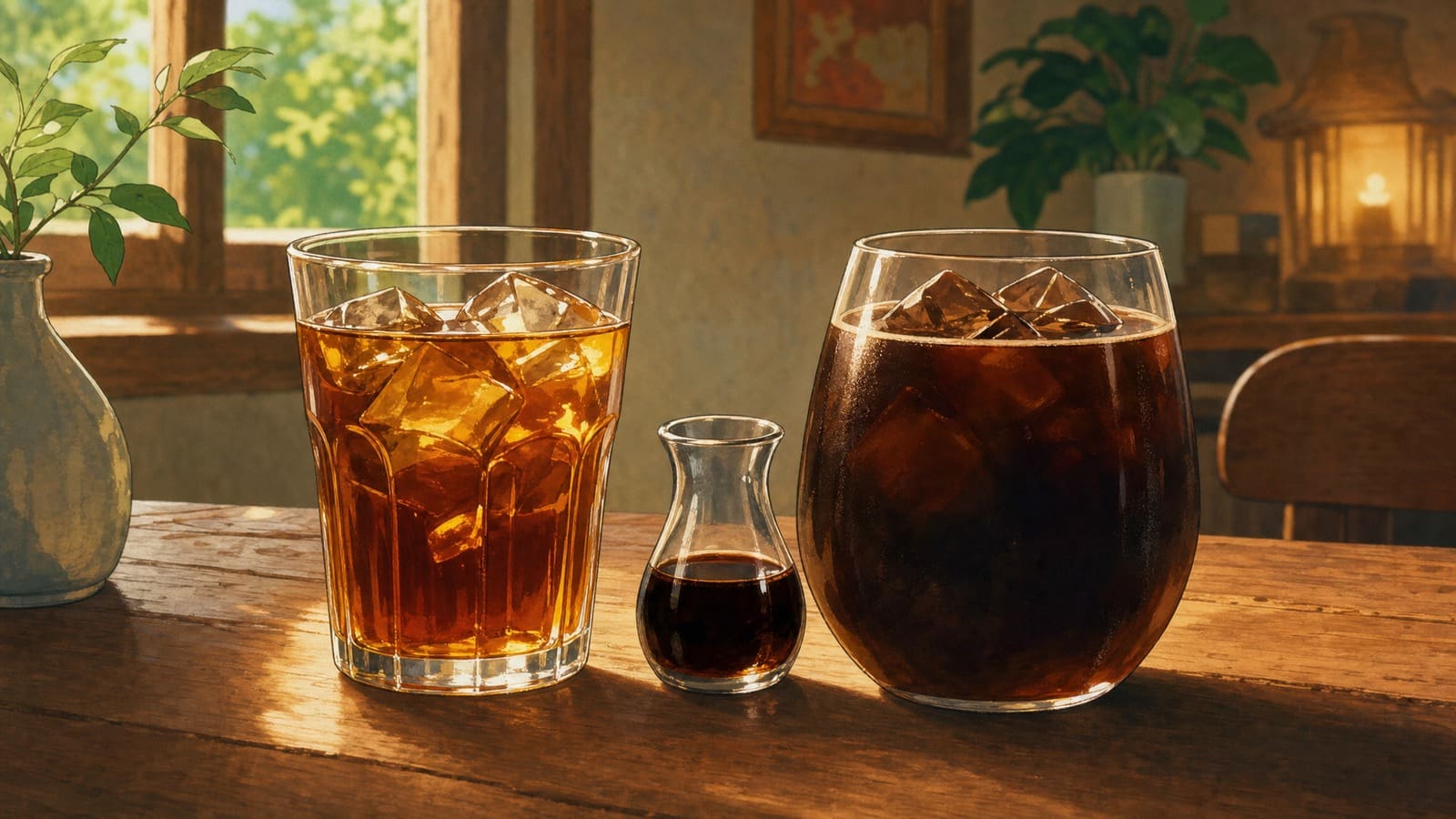
Cold brew often tastes sweeter because it extracts fewer sharp acidic compounds, and bitterness is softened by the slow extraction curve.
Flash-chilled coffee can taste more dynamic — but also sharper if poorly dialed in. If you brew carefully, flash chilled delivers balanced sweetness with brightness. If you want built-in smoothness with minimal risk, cold brew is far more forgiving.
Brew Time & Convenience
This one isn’t subtle. Flash chilled takes 3–5 minutes. Cold brew takes 12–24 hours.
Flash chilled is immediate — coffee on demand. Cold brew wins for batch convenience: brew a large concentrate once and drink it all week.
Which Should You Choose at Home?
Here’s the decision framework most people actually need. Pick the method that matches what you want out of the cup.
Choose Flash-Chilled If You
Want aroma and brightness
- Buy light or medium roast specialty beans
- Care about origin character
- Love aroma and brightness in the cup
- Already brew pour-over or AeroPress
- Want coffee right now, not tomorrow
If you’ve invested in quality beans, flash chilling lets you taste what you paid for.
Choose Cold Brew If You
Want smooth and low-acid
- Prefer smooth, low-acid coffee
- Add milk or sweeteners regularly
- Want a make-ahead option in the fridge
- Brew for multiple people in the house
- Don’t want to dial in daily recipes
Cold brew shines as a practical refrigerator staple you can rely on all week.
Common Mistakes That Kill Aroma
Even the best method fails with poor execution. These are the moves that quietly drain flavor out of either brew.
Mistake
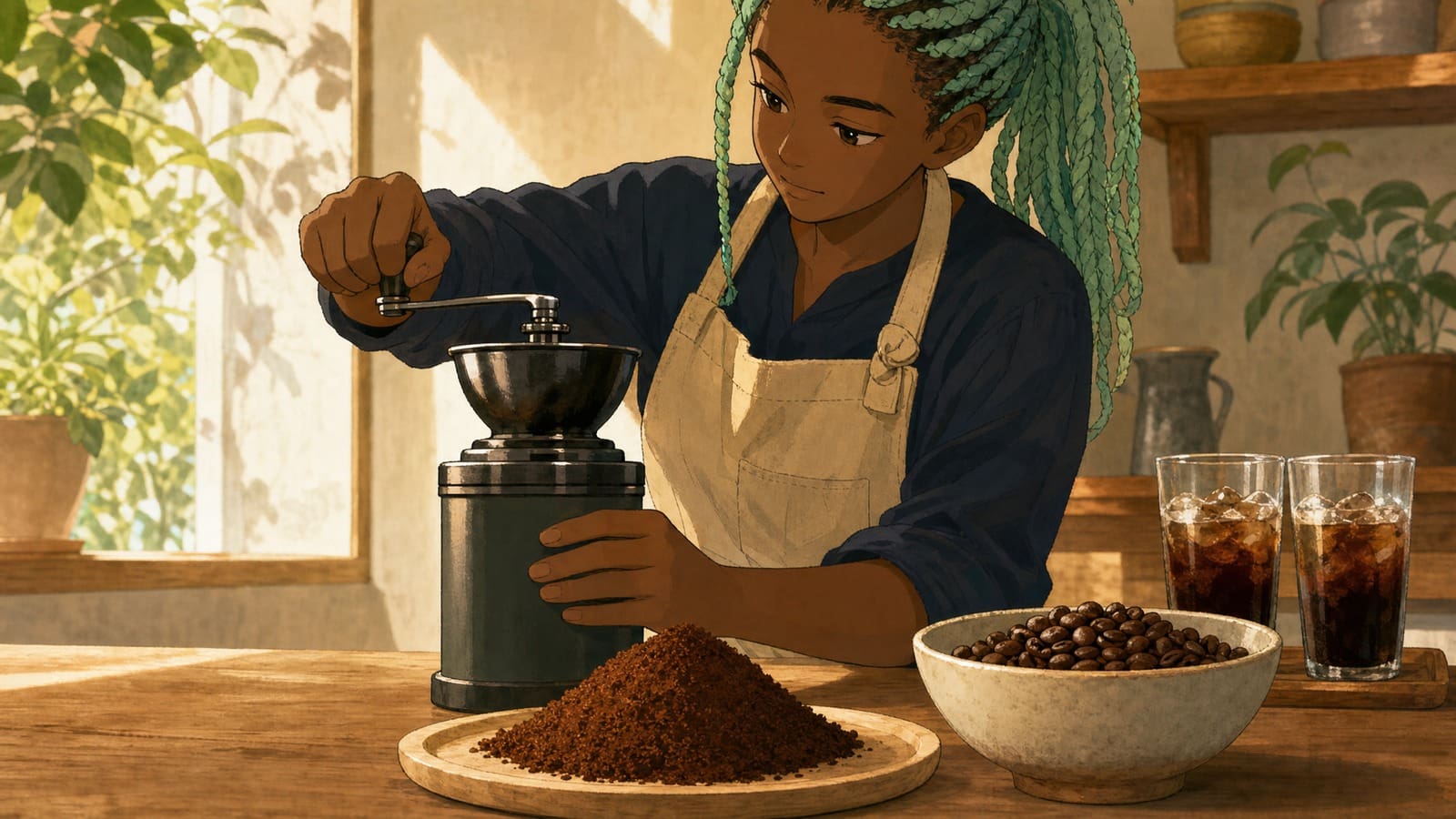
Using stale beans
Aroma fades rapidly after roasting and grinding. Always grind fresh, and buy beans roasted within the last 2–3 weeks.
Mistake
Pre-grinding for cold brew days ahead
Extended air exposure strips aromatics before extraction even begins. Grind right before you steep.
Mistake
Wrong ice ratio in flash chilling
Too much ice dilutes the cup. Too little fails to cool quickly enough. Aim for ice equal to about 30–50% of total brew weight.
Mistake
Storing cold brew uncovered
Oxidation dulls flavor fast. Always seal tightly and keep refrigerated. If aroma is your goal, treat oxygen as the enemy.
FAQ
Does flash-chilled coffee taste stronger than cold brew?
Not necessarily. Strength depends on brew ratio and dilution. Flash-chilled coffee often tastes brighter and more intense aromatically, while cold brew can feel heavier and smoother in body.
Is cold brew less acidic than flash-chilled coffee?
Cold brew typically has lower perceived acidity because cold water extracts acids differently. Flash-chilled coffee retains the acidity profile of hot-brewed coffee, which reads as brighter on the palate.
Which method is better for light roast beans?
Flash-chilled coffee usually showcases light roasts better because it preserves the brightness and aromatic complexity that light roasts are designed to highlight.
Can I make flash-chilled coffee without a pour-over setup?
Yes. Any hot brewing method — drip machine, AeroPress, or manual brewer — can be brewed concentrated and poured over measured ice for similar results.
Cold Extraction Hub
Keep Going
Final Verdict
It’s about what you want to preserve.
Flash-chilled wins on aroma and clarity. Cold brew wins on smoothness and low acidity. Flash chilled is coffee now. Cold brew is coffee all week. Flash-chilled coffee highlights complexity. Cold brew prioritizes approachability. Both are valid — but they are not interchangeable. Choose based on your taste goals, not trends.
