
10 min read
The Golden Lamb Coffee · Coffee Syrups
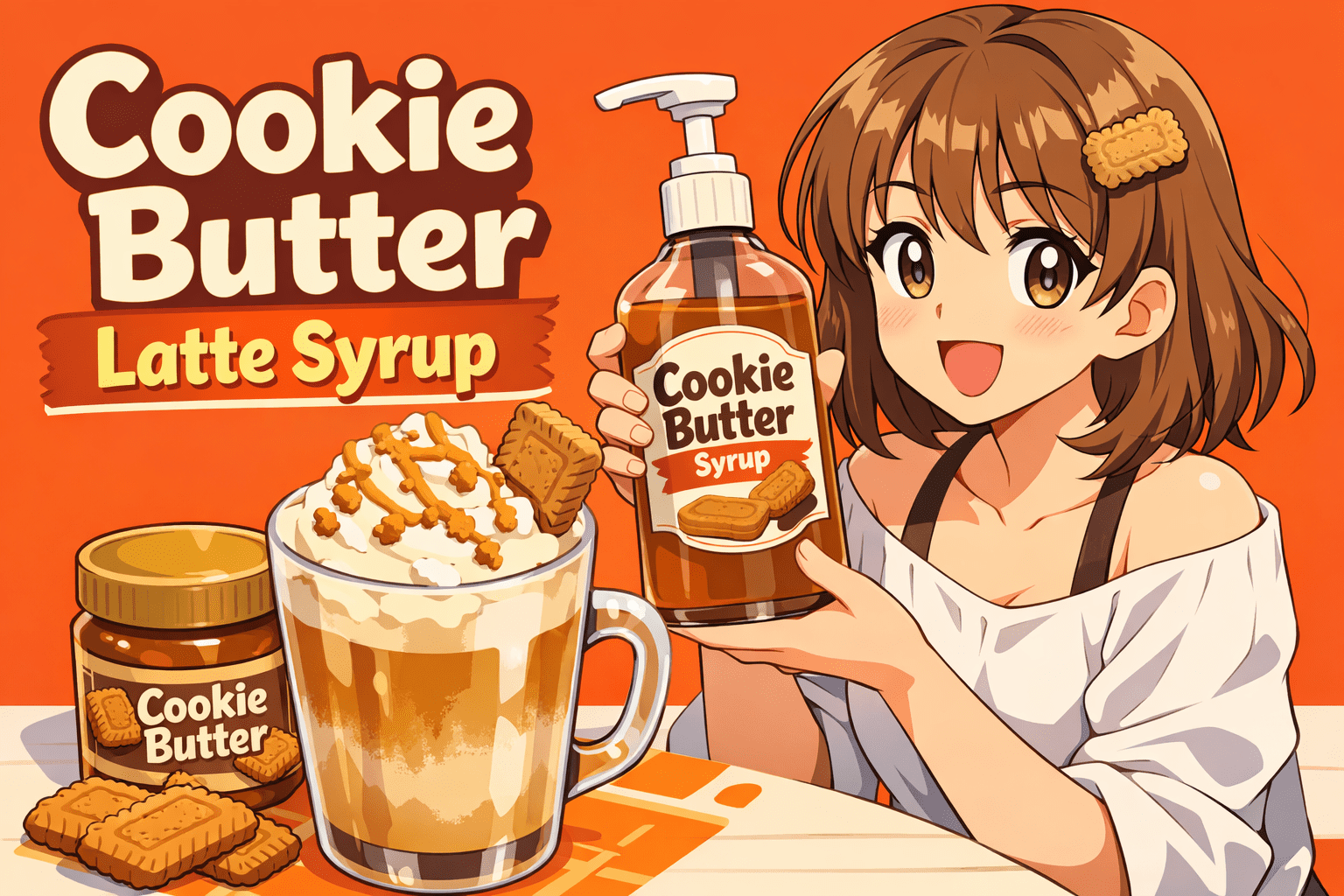
Cookie Butter
Latte Syrup
Speculoos Spice in a Smooth, Pourable Syrup
Cinnamon, nutmeg, ginger, cloves — everything that makes a Biscoff cookie what it is, melted into a syrup you can pour into any latte.
If you’ve ever eaten a Biscoff cookie on a plane and wondered what that flavor would taste like dissolved into your morning latte, this is the answer.
Speculoos — the Belgian spiced shortcrust biscuit that became Lotus Biscoff — has a flavor profile that’s weirdly perfect for coffee. The caramelized sweetness, the cinnamon warmth, the nutmeg and ginger edge — it all plays directly into what makes a good latte good. Turning the spread into a syrup takes 15 minutes and makes a latte that tastes genuinely impressive.
The technique is simple: melt the speculoos cookie butter into a sugar-water base, simmer until smooth and slightly thickened, add vanilla off the heat. Stir constantly and don’t let it boil hard — that’s the whole recipe.
Combine 1 cup cookie butter, ½ cup water, ¼ cup sugar, cinnamon, and salt. Heat over medium, stirring constantly until smooth and simmering. Reduce to low, simmer 8–10 minutes. Off heat, stir in vanilla. Cool and refrigerate. Add 1–2 tablespoons per latte. Keeps two weeks.
For more homemade flavor bases, try lavender coffee syrup, pistachio coffee syrup, or brown butter coffee creamer.
The Spice Profile
Four spices do all the work in a speculoos cookie. Here’s what each one contributes — and which one to be careful with.
The dominant note — warm, sweet, slightly woody. The recipe calls for ½ tsp but you can go up to 1 tsp if you want a more pronounced spice. This one is forgiving.
Adds a warm, slightly sweet depth that reads as “holiday” to most people. A pinch goes far — it’s already present in the cookie butter itself, so you’re amplifying rather than introducing it.
Provides the slight sharp, bright edge that keeps speculoos from tasting flat or one-dimensional. A small pinch is enough — it’s a background note, not the lead.
The most powerful spice in the speculoos profile — and the easiest to overdo. A very small pinch if you want it. Too much and it takes over everything else entirely. When in doubt, leave it out.
What You’ll Need
Six ingredients — the cookie butter is the one to buy well.

Use the creamy variety, not crunchy — the smooth texture melts into the syrup evenly. Lotus Biscoff and Trader Joe’s Cookie Butter are the best options. Generic versions vary and may produce a grainier result.

The ¼ cup of sugar adds structure and a little more sweetness on top of what’s already in the cookie butter. The ½ cup of water loosens everything into a pourable syrup. Don’t add more water or the syrup will be too thin to coat a latte properly.

Vanilla rounds the spices into something cohesive. Extra cinnamon amplifies the base spice level. Salt is essential — it sharpens all the flavors and balances the sweetness. Don’t skip it.
Get the 21-Day Coffee Glow-Up Recipe Book
Make your morning coffee feel like a treat again: 21 coffee-shop-style recipes you can make at home, with hot, iced, creamy, cozy, and Java Burn-friendly options.
- 21 craveable coffee recipes
- Simple flavor formulas and shopping list
- 7-day coffee glow-up plan
You are in. Grab the recipe book, then check your inbox to confirm the coffee newsletter.
Download the free recipe bookAlready subscribed? Open the recipe book here.
Why readers save it: It gives them recipes first, not hype first. Java Burn stays optional and label-directed, while the download gives them a better coffee routine they can use right away.
What happens next: MailPoet adds them to the Golden Lamb Coffee Newsletter, sends the welcome email, and includes them in the weekly coffee tips nurture sequence.
Educational download. Not medical advice. Java Burn is a dietary supplement; read the label and ask a qualified professional if you use supplements, take medication, or manage a health condition.
The Recipe
Fifteen minutes, one pan. Stir constantly and keep the heat low.
Cookie Butter Latte Syrup (Speculoos)
- 1 cup speculoos cookie butter creamy, not crunchy
- ½ cup water
- ¼ cup granulated sugar
- 1 tsp vanilla extract added off heat
- ½ tsp cinnamon
- ¼ tsp salt
- ¼ tsp xanthan gum optional — prevents oil separation
- Combine cookie butter, water, sugar, cinnamon, and salt in a small saucepan. Don’t add the vanilla yet.
- Heat over medium, stirring constantly. The cookie butter will loosen and begin to incorporate as it warms. Keep stirring — it can stick.
- Once smooth and just simmering, reduce to low. Simmer gently for 8–10 minutes, stirring frequently. Don’t let it boil hard.
- If using xanthan gum, whisk it in now while still warm. It dissolves better in warm syrup.
- Off heat, stir in vanilla extract. Cool to room temperature before bottling.
- Refrigerate in a sealed jar. Stir or shake before each use. Keeps 2 weeks.
Tips for the Best Syrup
Three things to watch — all easy once you know them.
Cookie butter syrup can become grainy or separate if the heat is too high. A gentle simmer — lazy bubbles around the edges — is exactly right. If it starts boiling hard, pull the pan off heat for a moment and reduce the temperature before continuing. The slower simmer gives you a smoother, more consistent result.
The cookie butter will want to clump and stick to the bottom of the pan as it first heats. Stir constantly for the first 3–4 minutes until it’s fully incorporated and smooth. Once the mixture is homogeneous, you can reduce to stirring every minute or so for the rest of the simmer.
The syrup will look thinner than you expect coming off the heat. Don’t keep simmering to thicken it further — it’ll be significantly thicker once refrigerated. Let it cool to room temperature before judging the consistency. If after refrigerating it’s still thinner than you’d like, a pinch of xanthan gum stirred into a warmed batch will fix it.
A thin film of oil on the surface after refrigerating is the natural oils from the cookie butter separating out. This doesn’t mean anything has gone wrong — a good shake brings it right back together. For a more stable emulsion that stays mixed longer, whisk in xanthan gum while the syrup is still warm.
How to Use It
Start with 1 tablespoon per shot. This syrup is rich and assertive — build up from there.
1–2 tbsp + 2 shots espresso + steamed oat or whole milk. The classic — exactly what you’d order at a coffee shop for $7.
2 tbsp + espresso over ice + cold oat milk. Shake or stir before adding — the cold makes the syrup thicker and it needs help dispersing.
1–2 tbsp stirred into cold brew over ice. The low-acid sweetness of cold brew and the caramelized spice are a natural pairing.
1 tbsp + oat milk cappuccino. Oat milk’s natural mild sweetness is the best non-dairy match for speculoos spice.
½ tbsp alongside regular chai syrup. The overlapping spice profiles work together — adds a caramelized richness chai can sometimes lack.
1 tbsp + sparkling water + a squeeze of orange. The cinnamon and orange together are unexpectedly good over ice.
Questions Worth Answering
Lotus Biscoff spread (creamy) is the gold standard — it has the right spice profile and fat content to make a smooth, stable syrup. Trader Joe’s Cookie Butter is also excellent. Generic versions vary more in quality and may produce a grainier result. Always use the creamy variety, not crunchy.
The natural oils in cookie butter separate from the syrup when cold — this is completely normal. A good shake or stir brings it right back together. For a more stable emulsion, whisk in ¼ teaspoon of xanthan gum while the syrup is still warm. It makes a noticeable difference in how long the syrup stays homogenous.
Yes — the recipe is a starting point. You can increase the cinnamon up to 1 teaspoon freely. For other spices, add them in small amounts: a pinch of nutmeg or ginger. Go very carefully with cloves — even a tiny pinch can dominate everything else. Add extra spices at the beginning with the other dry ingredients.
Two weeks refrigerated in a sealed container. The fat content means it can absorb fridge odors, so use an airtight jar. Stir or shake before each use. Discard if it smells off or develops any mold.
Yes — the cookie butter is already sweet, so you can reduce or omit the added sugar. Without extra sugar the syrup will be thinner and less stable, but it’ll work. If you want thickness without the extra sweetness, xanthan gum is your friend here — a small amount adds body without sweetening.
Oat milk is the best match — its natural mild sweetness and creamy texture complement the spiced cookie butter better than most alternatives. Whole dairy milk is excellent too. Avoid highly flavored nut milks that compete with the speculoos spices.
15 Minutes.
Two Weeks of
Biscoff Lattes.
Make a batch, put it in the fridge, and you’ve got two weeks of lattes that taste like the Biscoff latte at any coffee shop — except you made it, you know what’s in it, and you can adjust the spice level exactly how you want it. Use good cookie butter, keep the heat low, and stir. That’s the whole recipe.
