
6 min read
How long can coffee sit out before it kills you or just tastes bad? In most homes and offices, it’s a flavor problem first and a food-safety problem second. But the moment milk, cream, or sweetened dairy hits your cup, the clock changes. What was a stale-taste issue can quickly become a discard-it decision.
Quick answer
Black coffee left at room temperature is mostly about quality loss over a few hours. It turns flat, bitter, and stale long before it becomes dangerous. Coffee with milk, cream, or sweetened dairy should be treated as perishable and discarded if left unrefrigerated beyond a short, uncertain window. When in doubt, throw it out.
Why You Can Trust This Guide
- We focus on real-world kitchen and office conditions, not idealized lab scenarios.
- We separate taste decline from actual spoilage risk so you can make fast decisions.
- We give you repeatable workflows you can use daily, not vague rules of thumb.
The real difference: quality decline vs. safety risk
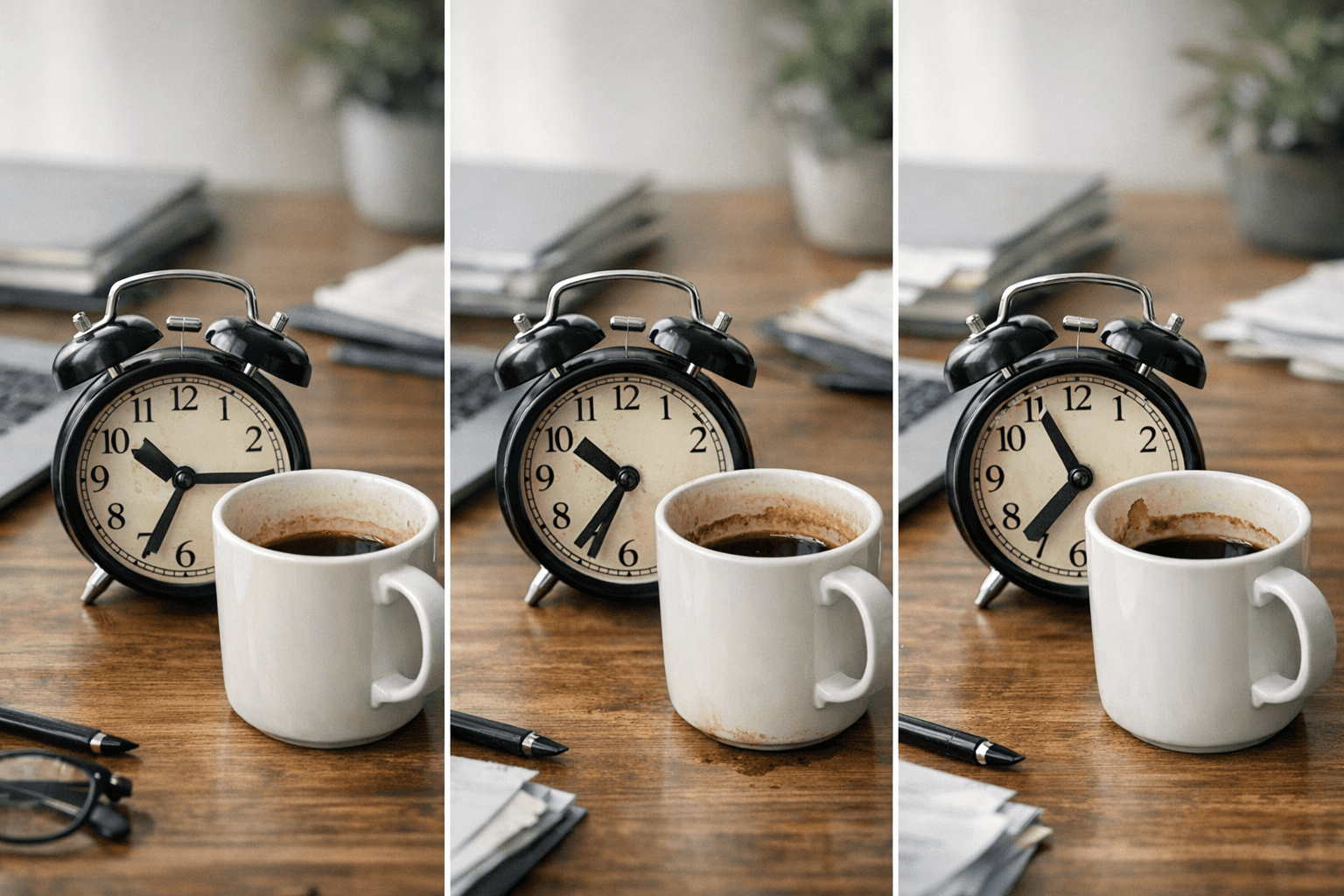
When people ask how long coffee can sit out, they’re usually mixing two different questions. First: Will it taste bad? Second: Can it make me sick? For black coffee, the first question dominates. For dairy-based drinks, the second becomes critical.
Black coffee is brewed at high temperatures, which reduces initial microbial risk. But once it sits exposed to air, oxidation starts immediately. Aromatic compounds degrade. Bitterness rises. Acidity shifts. Within a few hours at room temperature, most cups taste noticeably stale. That doesn’t mean it’s deadly. It means it’s no longer good.
Add milk, half-and-half, or flavored creamers, and the equation changes. Dairy introduces protein, fat, and sugar—the exact combination bacteria love. Left at room temperature, these drinks can enter a temperature danger zone where microbial growth accelerates. That’s why milk-based coffee is a food-safety decision, not just a flavor decision.
How long coffee can sit out: decision matrix
Use this table as your fast filter. Identify your drink type, then follow the action column. If timing is uncertain, default to the safer choice.
| Coffee state | Primary concern | What typically happens | Best action |
|---|---|---|---|
| Black, open mug | Oxidation and flavor loss | Turns flat and bitter within hours | Drink fresh or chill quickly |
| Black in thermal carafe | Gradual flavor flattening | Holds heat and aroma longer | Keep sealed; avoid hot plate burn |
| Milk or cream added | Perishability risk | Bacterial growth if left out | Discard if unrefrigerated too long |
| Iced sweet dairy drink | High spoilage sensitivity | Warms quickly; sugars accelerate risk | Consume promptly or refrigerate |
What actually makes coffee “go bad”?
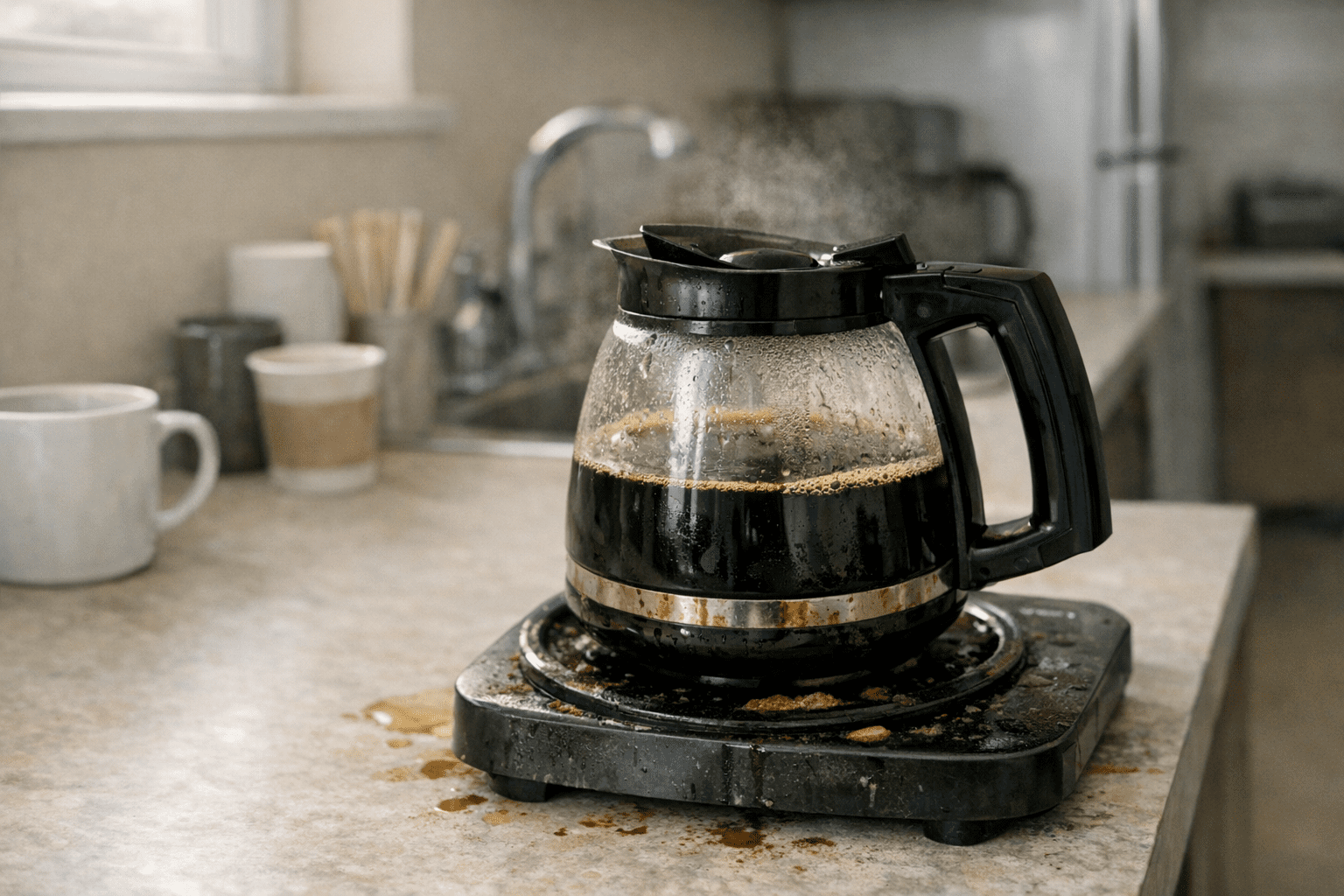
For black coffee, the enemy is oxygen. Once brewed, volatile compounds begin to degrade. Bitterness intensifies, sweetness fades, and subtle notes disappear. If left on a hot plate, the damage compounds. Constant heat accelerates chemical breakdown and creates a harsh, burnt profile.
For milk-based drinks, the issue is microbial growth. Bacteria multiply fastest between typical room and warm temperatures. A latte forgotten on a desk for hours is no longer just stale—it may be unsafe. Smell is not a reliable test. Many harmful microbes do not produce obvious odors early on.
Cold brew deserves special mention. Because it’s brewed cold, people assume it’s safer. In reality, once diluted or mixed with milk, it behaves like any other perishable beverage. Cold does not mean immune. Storage conditions still matter.
The biggest mistakes people make
- Using taste alone as a safety test: Dairy drinks can harbor risk before obvious sourness appears.
- Leaving coffee on a hot plate all morning: Heat preserves temperature, not flavor integrity.
- Brewing oversized batches: Large volume forces long holding times and wasted cups.
- Repeated reheating: Microwaving restores warmth, not freshness.
- Ignoring summer temperatures: Warmer rooms shorten safe windows dramatically.
Each of these errors stems from one assumption: that coffee is shelf-stable. It isn’t. Brewed coffee is a prepared beverage, and once you modify it with dairy or sugar, you’ve created a time-sensitive food product.
A practical home workflow that prevents problems
If you want consistently good coffee without waste, simplify your system. Brew smaller batches more often. Store extra coffee in an insulated, sealed carafe instead of an open pot. If you plan iced coffee, cool it quickly and refrigerate immediately.
Adopt a simple safety script: Black and unsure? Taste cautiously. Dairy and unsure? Discard. This rule eliminates risky guesswork and protects against false confidence.
For offices, avoid communal hot plates that cook coffee for hours. Encourage thermal dispensers with clear brew-time labeling. Small operational upgrades lead to better flavor, less waste, and lower risk.
Who should be more cautious
Certain groups should default to stricter handling. Pregnant individuals, older adults, people with diabetes, and those with compromised immune systems face higher consequences from foodborne illness. For them, conservative discard rules are wise.
If you have GERD, anxiety sensitivity, or cardiovascular conditions, caffeine timing also matters. Stale coffee often tastes harsher, which can lead to adding more sugar or cream. That adjustment compounds metabolic impact. Fresh coffee supports better portion control and more predictable caffeine dosing.
Myths about coffee sitting out
- Myth: Black coffee cannot go bad. Reality: It degrades quickly and can become contaminated with poor handling.
- Myth: Reheating makes it fresh again. Reality: Heat cannot reverse oxidation.
- Myth: If it smells fine, it’s safe. Reality: Odor is not a dependable safety indicator for dairy drinks.
- Myth: Bigger batches save time. Reality: Overproduction often means lower quality and more waste.
When evaluating claims, convert them into observable actions. If advice cannot translate into a clear storage step or a defined discard rule, it’s not actionable.
FAQ
Can I drink black coffee left out overnight?
It is usually extremely stale and unpleasant. While it may not automatically be dangerous, quality will be severely degraded, and contamination risk increases with time and exposure. It’s rarely worth drinking.
What about cold brew left on the counter?
Undiluted cold brew concentrate may hold slightly better due to strength, but once mixed with water or milk, it should be treated like any other prepared beverage. Refrigeration is the safer default.
Is microwaving old coffee okay?
Microwaving restores temperature, not aroma or chemical balance. If it’s black and only slightly stale, reheating may be tolerable. If dairy was involved and timing is unclear, do not rely on heat to make it safe.
How do cafés manage coffee safely?
Professional shops use strict turnover schedules, insulated holding systems, and sanitation protocols. Brew times are monitored, and dairy is kept refrigerated until service.
What is the safest, best-tasting home strategy?
Brew smaller volumes, store in a sealed thermal carafe, and refrigerate any milk-based drink immediately if not consumed. Fresh brewing beats long holding every time.
Final verdict
Black coffee left out is mostly a quality issue. It becomes stale, bitter, and flat within hours. Coffee with milk or cream is a safety issue. If it sits unrefrigerated and timing is uncertain, discard it without hesitation.
The simplest rule wins: protect flavor with smaller batches and insulated storage, and protect health by treating dairy coffee as perishable. Clear distinctions prevent both wasted beans and unnecessary risk.
Editorial note: This content is for educational purposes and does not replace individualized medical advice. If you have specific health conditions or concerns about food safety, consult a licensed healthcare professional.
