
11 min read
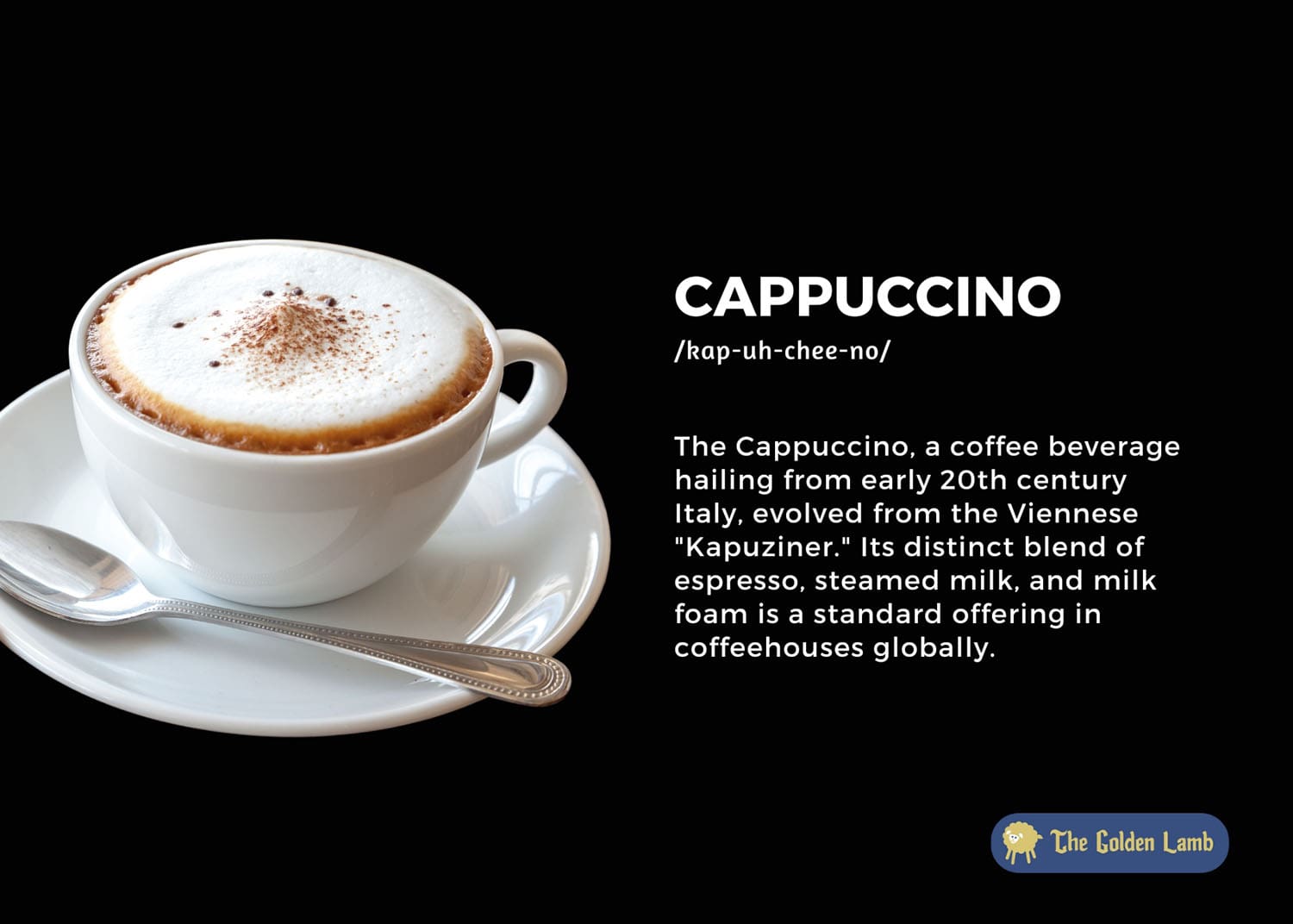
A cappuccino is an espresso drink made with a balanced mix of espresso, steamed milk, and milk foam. This guide covers the classic ratio, how it tastes, how to make one at home, and how it differs from a latte and similar milk-based coffee drinks.
Key Takeaways
- A traditional cappuccino uses roughly equal parts espresso, steamed milk, and milk foam.
- It usually tastes stronger and foamier than a latte because it contains less milk.
- Common variations include wet, dry, iced, and flavored cappuccinos.
- If you want the simplest comparison, think: smaller and foamier than a latte.
Origins
The term “cappuccino” first appeared in Italy at a time when espresso machines were gaining popularity in the country (the early 1900s). The name is said to be inspired by the Capuchin monks, whose distinctive brown robes resembled the color of coffee mixed with milk.

However, an earlier version known as the “Kapuziner” was popular in 18th-century Vienna, which consisted of coffee with cream and sugar. It is probable that the Viennese coffee culture played a role in influencing the creation of the modern cappuccino1.
Key Ingredients
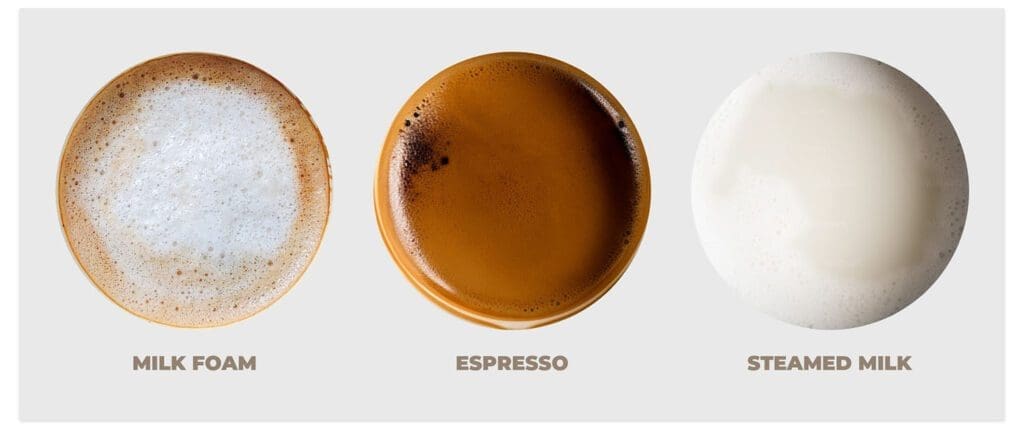
The classic cappuccino has three key ingredients, espresso, steamed milk, and milk foam.
- Espresso: This is a shot of finely ground coffee beans brewed under pressure, providing the base flavor.
- Steamed Milk: Cold milk is heated and frothed using an espresso machine’s steam wand, creating a creamy texture.
- Milk Foam: The steamed milk is aerated to create a velvety microfoam layer on top, adding light and foamy texture to the drink.
How to Make a Cappuccino at Home
- Brew Espresso: Pull a double shot of espresso, ensuring a 18-24 second extraction time.
- Steam Milk: Begin steaming your milk until it starts to bubble, then slightly raise the steam wand to continue until you have half the foam.
- Finish Foam: Move the wand to the side and submerge deeper to create the rest of the foam with tiny bubbles for creaminess.
- Monitor Temperature: Once the milk hits 150°F, stop steaming; it will rise to 160°F on its own.
- Refine Milk: Tap the pitcher to remove big bubbles and swirl to perfect the milk’s texture.
- Combine: Pour the milk into the espresso, letting the foam top the drink.
Optional: Sprinkle with cinnamon or chocolate for an extra touch.
💡 Pro Tip: Large coffee chains may oversteam milk for cappuccinos and use a spoon to hold back foam. The proper technique is to froth milk until thick and airy, then pour it immediately to prevent separation, creating a well-balanced cappuccino without the need for spoon manipulation.
Cappuccino Milk to Foam Ratio
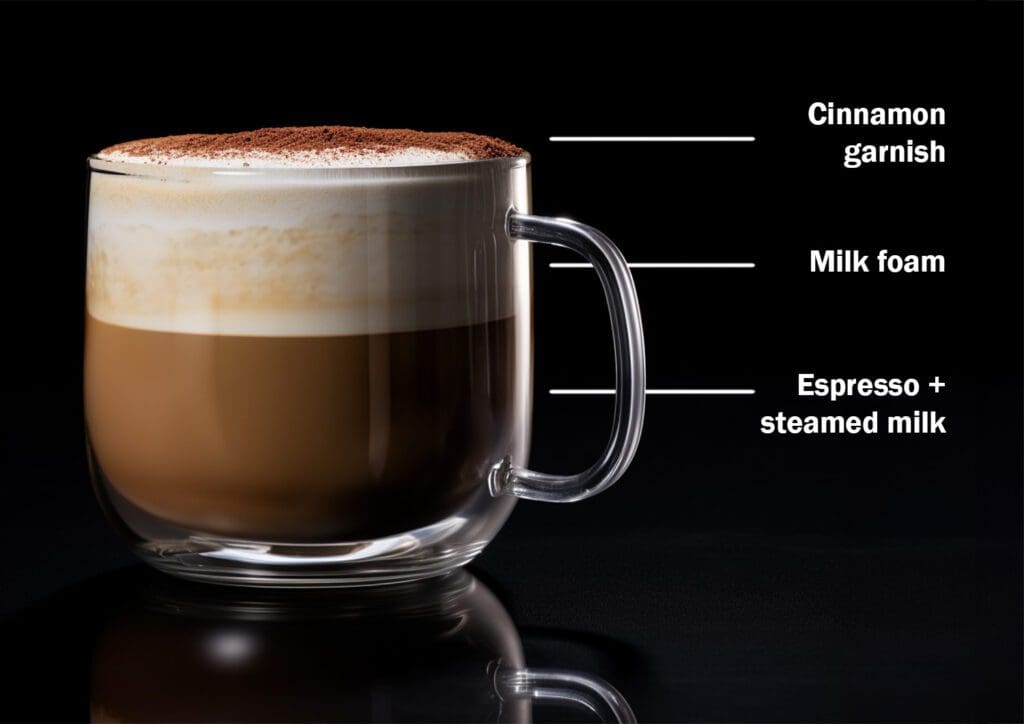
A traditional cappuccino adheres to a precise ratio: 1/3 espresso, 1/3 steamed milk, and 1/3 airy milk foam. This typically translates to a 1-2 oz double espresso shot paired with 4-5 oz of milk, which expands to the required volume upon frothing.
Exploring Cappuccino Varieties
Discover the world of cappuccino twists that add a unique touch to the classic:
Common in America:
- Wet Cappuccino: More steamed milk, less foam, for a creamier texture.
- Dry Cappuccino: Foam-heavy, with less milk for a fluffier sip.
- Flavored Cappuccino: Infused with syrups like caramel or vanilla for added sweetness.
Common in Europe:
- Cappuccino Chiaro (“Light Cappuccino”): A milkier, smoother variant with less espresso.
- Cappuccino Scuro (“Dark Cappuccino”): Stronger, with more espresso and a denser foam layer.
- Cappuccino Freddo: Popular in Greece, served with a cool froth on top.

Cappuccino vs Latte and Similar Drinks
Cappuccinos are easiest to understand when you compare them with other milk-based espresso drinks. The biggest difference is the milk-to-foam balance.
- Lattes have more steamed milk and much less foam, so they taste creamier and usually come in larger sizes.
- Macchiatos are more espresso-forward, with just a small amount of milk or foam.
- Cortados use equal parts espresso and warm milk, with little to no foam.
- Flat whites have a finer microfoam texture and usually feel silkier and more espresso-forward than a cappuccino.
Cappuccino Nutrition by Milk Type
These Starbucks nutrition tables give you a practical reference point for cappuccino calories, sugar, protein, and caffeine across different milk options.
2% Milk
| Size | Cal | Fat (g) | Carbs (g) | Sugars (g) | Protein (g) | Caffeine (mg) |
|---|---|---|---|---|---|---|
| Short | 80 | 3 | 8 | 7 | 5 | 75 |
| Tall | 90 | 3.5 | 9 | 8 | 6 | 75 |
| Grande | 120 | 4 | 12 | 10 | 8 | 150 |
| Venti | 150 | 6 | 16 | 14 | 10 | 150 |
Whole Milk
| Size | Cal | Fat (g) | Carbs (g) | Sugars (g) | Protein (g) | Caffeine (mg) |
|---|---|---|---|---|---|---|
| Short | 90 | 4.5 | 8 | 7 | 5 | 75 |
| Tall | 110 | 6 | 9 | 8 | 6 | 75 |
| Grande | 140 | 7 | 12 | 10 | 7 | 150 |
| Venti | 190 | 9 | 16 | 14 | 10 | 150 |
Soy Milk
| Size | Cal | Fat (g) | Carbs (g) | Sugars (g) | Protein (g) | Caffeine (mg) |
|---|---|---|---|---|---|---|
| Short | 50 | 1.5 | 4 | 3 | 3 | 75 |
| Tall | 70 | 3 | 7 | 4 | 5 | 75 |
| Grande | 100 | 3.5 | 9 | 5 | 7 | 150 |
| Venti | 120 | 4.5 | 11 | 7 | 9 | 150 |
Coconut Milk
| Size | Cal | Fat (g) | Carbs (g) | Sugars (g) | Protein (g) | Caffeine (mg) |
|---|---|---|---|---|---|---|
| Short | 70 | 4 | 7 | 6 | 1 | 75 |
| Tall | 100 | 6 | 11 | 9 | 1 | 75 |
| Grande | 130 | 8 | 14 | 12 | 1 | 150 |
| Venti | 170 | 10 | 18 | 15 | 2 | 150 |
Almond Milk
| Size | Cal | Fat (g) | Carbs (g) | Protein (g) | Caffeine (mg) |
|---|---|---|---|---|---|
| Tall | 100 | 6 | 11 | 1 | 75 |
| Grande | 130 | 8 | 14 | 1 | 150 |
| Venti | 170 | 10 | 18 | 2 | 150 |
💡 Pro Tip: Creating a cappuccino with coconut milk can be challenging due to its difficulty in producing quality foam. As a general guideline, milk with higher fat content tends to produce better foam.
Cappuccino Health Benefits
Cappuccinos can fit into a balanced diet in moderation, especially if you keep sweeteners and syrups light. Here are the main nutrition-related upsides people usually care about:
1. Caffeine
Caffeine, the primary active component in espresso, enhances alertness, cognitive function, and exercise performance2 and may reduce the risk of type 2 diabetes and Parkinson’s disease, according to research.
2. Antioxidants
Coffee is high in antioxidants like chlorogenic acid and quinic acid. These compounds can help reduce inflammation and oxidative stress in the body3.
3. Riboflavin
An 8 oz cappuccino provides about 15% of the RDI for riboflavin (vitamin B2), which supports energy production and cellular function4.
4. Magnesium
Cappuccinos contain 6% of the RDI for magnesium per 8 oz serving. Magnesium is involved in over 300 processes in the body and may lower blood pressure5,6.
Things to Watch For With Cappuccinos
1. Anxiety and Insomnia
High caffeine intake can cause some individuals jitteriness, anxiety, and sleep issues. According to the Mayo Clinic, more than 400mg per day may cause side effects7.
2. Digestive issues
Caffeine can stimulate acid production in the stomach leading to heartburn or upset stomach in some people8.
3. High blood pressure
Although small amounts of caffeine temporarily raise blood pressure, this effect diminishes with regular use. However, those with high blood pressure may be more susceptible9.
4. Sugar and saturated fat
Added sugar and high-fat milk can make cappuccinos unhealthy. For heart health, choosing skim or low-fat milk and without added sweeteners is best10.
Espresso Beans I Like for Cappuccinos
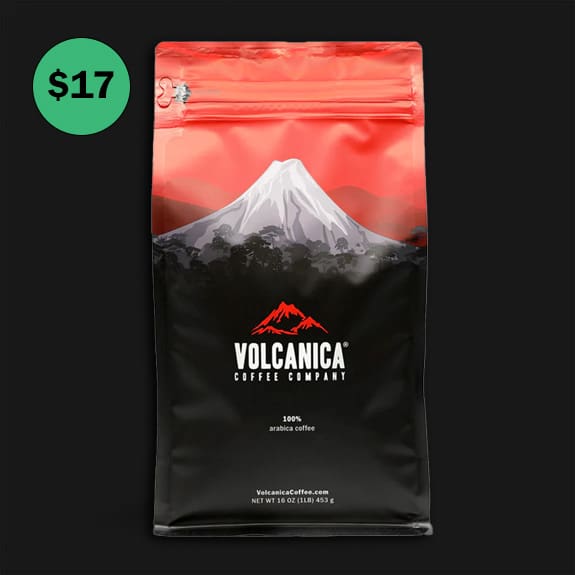
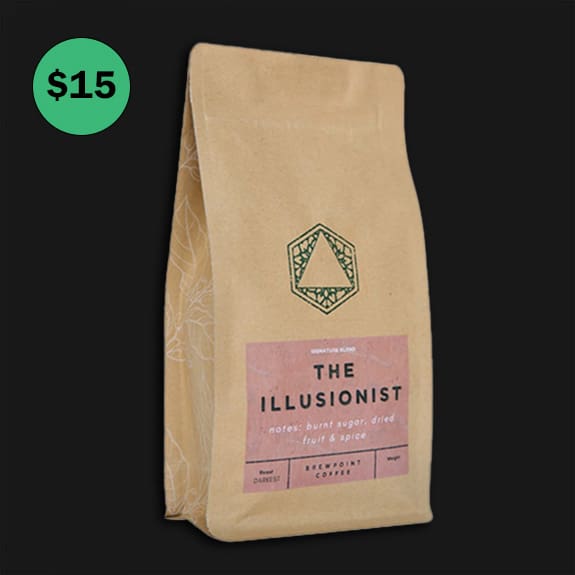
My top pick for espresso beans is Volcanica Dark Roast. You might see it in grocery stores, but I recommend ordering directly from their website for the freshest beans. That’s because the site’s beans, often dispatched for coffee subscriptions, are typically more recent than the ones in stores.
Cappuccino Machines and Buying Questions
Cappuccino Machines & Makers:
1. What‘s the best cappuccino machine?
The De’Longhi Stilosa is the go-to choice for making cappuccinos at home in 2023. This user-friendly machine lets you manually brew espresso and froth milk, giving you control over your coffee and the satisfaction of a coffee shop experience without leaving your house.
2. What is the best cappuccino machine for home use?
The Breville Espresso Pro is a standout for at-home baristas aiming to recreate that authentic coffee shop vibe. Since purchasing mine used from Facebook Marketplace, it’s been a game-changer. Its built-in burr grinder, steam wand, and hot water feature make it unparalleled in convenience and quality.
Plus, it’s been a real money-saver, cutting out our usual Starbucks runs and saving us roughly $1200 annually. It’s the perfect addition to any coffee lover’s kitchen.
3. What type of coffee maker is used to make a cappuccino?
For a top-notch cappuccino, look for a coffee maker espresso machine that excels at brewing strong espresso and frothing milk into smooth foam. A good machine is an investment, as cheaper models might not deliver that coffee shop quality, especially when it comes to the froth.
4. Can I make a cappuccino with a Nespresso machine?
Yes, you can make a cappuccino with a Nespresso machine. The machine creates a strong espresso base, and then you can froth your milk with a separate device. The Nespresso VertuoPlus comes with both machines and is what I’d recommend.
5. What type of Keurig machine can brew a cappuccino?
Keurig’s K-Café is praised on Amazon for its cappuccino prowess, thanks to its espresso and milk frothing capabilities. While I haven’t experienced it firsthand, for an authentic cappuccino with that perfect espresso flavor and creamy froth, I’d consider adding an extra $50 for the Nespresso VertuoPlus to elevate the at-home coffee experience.
Cappuccino Serveware & Accessories:
Cappuccino Cups and Mugs Use: The contents of a standard cappuccino are particularly designed to fit into cappuccino cups and mugs. This keeps the drink’s temperature stable and guarantees the ideal ratio of espresso to milk and foam.
What are the best options for buying Cappuccino K cups?
Amazon is my go-to for buying anything Keurig-related. The great thing about K-cups is that they’re fairly ubiquitous and are therefore available almost anywhere. Even local coffee roasters have the ability to sell Keurig pods with their own roasts and brews.
What are the best cappuccino pods for Keurig machines?
According to my own research, the best-selling cappuccino pods on Amazon for 2023 are the Grove Square Cappuccino French Vanilla k-cups and the Gevalia Frothy Cappuccino k-cups.
What is the best set of cappuccino cups available?
The “best” is a matter of taste, but let me clue you in on my personal picks. Top of the list? Sheldon Ceramics’ Farmhouse Latte Mug. Fork over $40 and pick from nine lush glazes—each one a blend of modern and timeless. Next up, KÄHLER’s Hammershøi Coffee Cups & Saucers. They’ll set you back $50, but that price tag includes a saucer, and they ooze elegance. Find them lounging over at AfternoonLight.com—it’s my go-to haunt for all things classy in the mug department, even if it’s mostly window shopping for me.
Related milk-drink guides: If you’re comparing similar drinks, start with What Is a Latte?, What Is Café au Lait?, What Is a Breve Latte?, and What Is a Flat White?.
FAQ
Can you make an iced cappuccino?
No, it is not possible to make an iced cappuccino because one of its essential components is milk foam, which is not typically included in a cold beverage.
Why is my cappuccino lighter/smaller than expected?
The foam in a cappuccino contributes to its volume but not its weight. As a result, they may appear lighter and smaller than other drinks.
How can I order a cappuccino to my preferences?
When ordering a cappuccino, you can customize it according to your preferences. You can request more or less foam, choose a different type of milk, or ask for extra shots of espresso.
What’s the difference between a cappuccino and other espresso drinks?
Cappuccino is differentiated from other espresso drinks by its specific composition. It typically has more foam than a latte and less milk than a cafe macchiato or cortado.
Is cappuccino stronger than regular coffee?
The strength of a coffee drink is determined by the amount of espresso or coffee relative to other ingredients. A cappuccino, with its equal parts of espresso, steamed milk, and froth, may taste stronger than a regular coffee if the same amount of coffee beans is used for the espresso shot and the regular coffee.
What impacts the taste and texture of a cappuccino?
Several factors can impact the taste and texture of a cappuccino. These include the technique used to steam the milk, the ratio of milk to foam, and the number of espresso shots used.
Related: For a related coffee basics follow-up, read Flat White vs. Latte vs. Cappuccino: Understanding the Microfoam Ratio next.
Conclusion
The cappuccino remains one of the clearest classic espresso drinks to understand: equal parts espresso, steamed milk, and foam, with a stronger and airier profile than a latte. Once you know that ratio, most cappuccino variations make a lot more sense.
If you are comparing milk-based espresso drinks, cappuccino is a great starting point because it sits right in the middle between espresso intensity and milk softness.
References
- https://en.wikipedia.org/wiki/Cappuccino
- https://medlineplus.gov/caffeine.html
- https://www.hsph.harvard.edu/nutritionsource/food-features/coffee/
- https://www.healthbenefitstimes.com/cappuccino
- https://www.healthbenefitstimes.com/cappuccino
- https://ods.od.nih.gov/factsheets/Magnesium-HealthProfessional/
- https://www.mayoclinic.org/healthy-lifestyle/nutrition-and-healthy-eating/in-depth/caffeine/art-20045678
- https://www.healthline.com/health/caffeine-effects-on-body
- https://www.mayoclinic.org/diseases-conditions/high-blood-pressure/expert-answers/blood-pressure/faq-20058543
- https://www.medicalnewstoday.com/articles/317748
