

7 min read
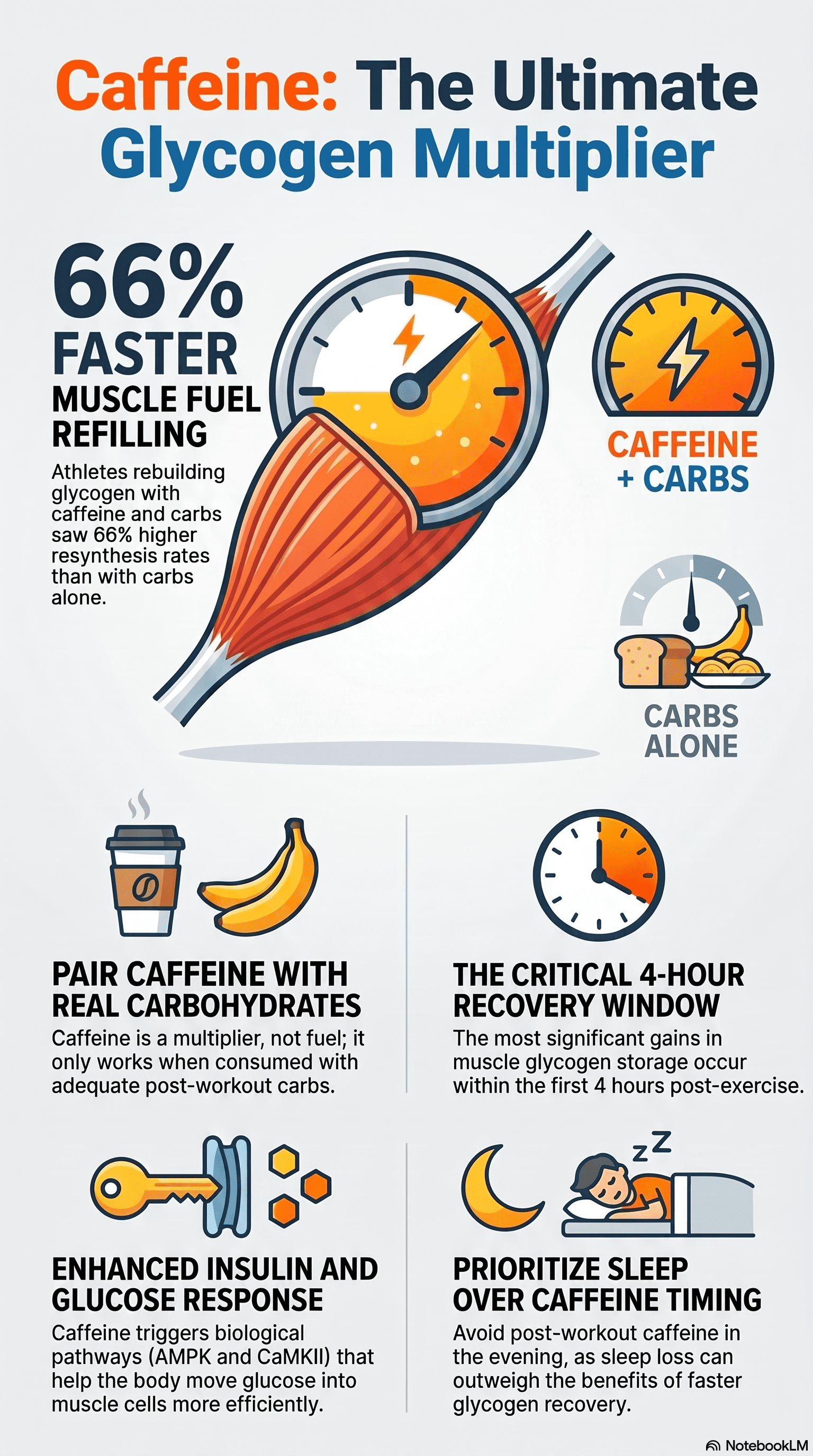
As a professional athlete, recovery is everything, and one habit has stuck with me: coffee with sweetened milk after a hard session. It is not just a ritual. A randomized trial found that pairing coffee with a carbohydrate-rich drink sped up muscle glycogen recovery compared with the same drink without coffee.
The important detail, and the one most writeups skip: the coffee was added on top of carbohydrates, not used in place of them. Here is what the study actually found, why it works, and how I put it to use.

The study, in plain terms
The research comes from a double-blind, randomized, crossover trial published in the journal Nutrients. Fourteen endurance-trained men first rode a cycle ergometer to exhaustion to drain their muscle glycogen. The next morning they completed a second cycling protocol, then spent four hours recovering while drinking either the test beverage, coffee plus sweetened milk, or the control, sweetened milk alone, alongside a breakfast meal.
Researchers took blood samples and muscle biopsies at the start and end of that four-hour window, so they were measuring glycogen directly inside the muscle, not guessing from performance. Eleven of the fourteen men ended up in the final analysis.
The setup that matters: both drinks carried the same carbohydrates. The only variable was the coffee. So the study is not “coffee versus carbs,” it is “carbs plus coffee versus carbs alone.”
What they found
The coffee group rebuilt meaningfully more muscle glycogen over the four hours. The gap was not subtle.
On top of the glycogen result, the coffee group also showed a greater glucose response (p = 0.02) and a greater insulin response (p = 0.03) across the recovery period. In plain language: adding coffee to a carb-containing drink helped the body move glucose into muscle and store it as glycogen more effectively.
Why coffee seems to help
Coffee is more than caffeine. It carries bioactive compounds, including caffeic acid and cafestol, that have been linked to improved glucose metabolism. The working idea is that these compounds help the body take up and use glucose more efficiently during recovery, which supports faster glycogen resynthesis when the carbohydrates are there to be stored.
The carbs refill the tank. The coffee seems to help the body pump faster.
That framing matters. None of this works without adequate carbohydrate in the drink. Coffee is the multiplier here, not the fuel.

How I put it to use
I am not mixing anything exotic. After a hard ride or a long run, I want carbohydrates and protein in fairly quickly, and I want the coffee with them rather than on an empty stomach. A few principles I stick to:
- Pair, don’t replace Carbs first
- The coffee goes into a drink that already has real carbohydrates. Black coffee alone will not refill glycogen.
- Front-load it 0 to 4 hours
- The early recovery window is when glycogen synthesis runs fastest, so I drink it soon after finishing rather than hours later.
- Mind the milk Carbs and protein
- Sweetened or chocolate milk is a convenient carb-and-protein base. Dairy also helps with rehydration and muscle repair.
- Watch the clock Sleep is recovery too
- If I train in the evening, I weigh the caffeine against my sleep, because rest does more for recovery than any drink.
What I reach for
None of this needs special equipment, but a few things make the habit easier to stick to. These are the kinds of products I keep around.
If you would rather a ready-made option, I have also written about switching to Chike protein coffee, which folds the coffee and protein into one scoop.
Who this is really for
This is most useful for endurance athletes facing short recovery windows or back-to-back efforts: stage cyclists, triathletes, runners doing doubles. If you have a full day or more between hard sessions, your body refills glycogen comfortably on a normal diet and the coffee timing matters far less.
And a few honest limits are worth stating. This was a single, small study of trained men, eleven in the final analysis, so it is a promising signal rather than the last word. It does not say coffee is magic, it does not apply to a drink without carbohydrates, and it says nothing about replacing a balanced recovery diet.
I am sharing my own routine and one study, not medical or dietary advice. Caffeine affects people differently, and timing it badly can cost you sleep, which is its own recovery cost. If you have a heart condition, are pregnant, or are sensitive to caffeine, check with a professional about what makes sense for you.
Frequently asked questions
Does coffee actually help muscle recovery?
In this trial, adding coffee to a carbohydrate-containing recovery drink increased muscle glycogen resynthesis over four hours compared with milk alone. The key is that the coffee was paired with carbs, not used in place of them.
Does the milk need to be sweetened?
The carbohydrates are what matter. Both drinks in the study were carb-matched, so the benefit came from coffee on top of an adequate carb dose. Plain black coffee with no carbs will not refill glycogen.
How much coffee did the study use?
A coffee dose standardized to body weight, alongside carbohydrate-rich milk and a breakfast meal during a four-hour recovery window. A moderate, practical amount, not megadosed caffeine.
Who is this most useful for?
Endurance athletes with short recovery windows or back-to-back sessions, like cyclists, triathletes, and runners doing two-a-days, where refilling glycogen quickly matters most.
Is caffeine right after a hard session safe?
For most healthy adults a normal coffee is fine, but caffeine late in the day can disrupt sleep, which is itself a major recovery tool. If you train in the evening, weigh the timing against your rest.
The bottom line
Coffee has always been a performance tool for its caffeine. What is newer is the evidence that, paired with carbohydrates, it may help you recover faster too. For me the takeaway is simple: after a hard session, the coffee goes in with the carbs, early in the window. I will keep drinking my coffee with sweetened milk after workouts, knowing it is doing a little more than waking me up.
Source
- Loureiro LMR, et al. Coffee Increases Post-Exercise Muscle Glycogen Recovery in Endurance Athletes: A Randomized Clinical Trial. Nutrients, 2021;13(10):3335.
